
Key takeaways
What's inside
Best olympic barbell for home gym use is a different question from which bar is best overall, because a garage brings problems a commercial gym does not: damp, a fixed rack width, a concrete floor and no bumper plates to protect it.
As an Amazon Associate we earn from qualifying purchases at no extra cost to you. Product prices and availability are accurate as of the date shown and are subject to change.
As an Amazon Associate we earn from qualifying purchases at no extra cost to you. Product prices and availability are accurate as of the date shown and are subject to change.


By Chris Parker
🛒 Best Price Today on Amazon
Prime members get fast, free shipping on everything above, plus member-only deals. New members get a 30-day free trial — cancel anytime.
Start 30-Day Prime Free Trial →See Today’s Amazon DealsWhat Makes the Best Olympic Barbell for Home Gym Use
The best olympic barbell for home gym use starts with a definition: Olympic simply means 50 mm sleeves that take plates with a 2 in hole, which is the standard almost everything uses. Beyond that, the best olympic barbell for home gym use is decided by coating, rack fit and how the bar survives being dropped onto safeties.
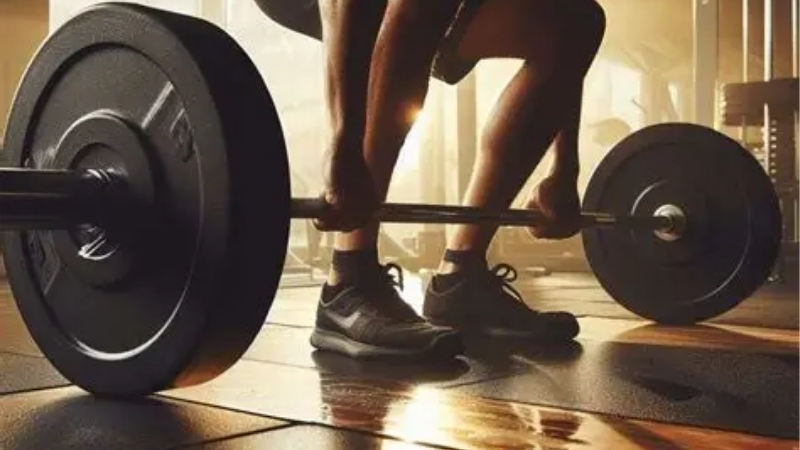
Rack Fit and Storage Footprint
A full-length bar is about 7.2 ft (2.2 m) long, and it has to sit securely in both J-cups with margin to spare. Measure your rack’s inside width first, because a bar that barely reaches is genuinely dangerous.
Storage needs a clear run of 7.2 ft on a wall or a horizontal hanger, plus room to walk past it. In a narrow garage that run is often the constraint that pushes people toward a shorter bar, and it is worth measuring before ordering.
Coating Choice for a Damp Garage
Bare steel grips best and rusts fastest, which makes it a poor default for an unheated garage. Zinc offers a middle ground, while Cerakote and stainless resist corrosion well enough to survive a British winter without weekly attention.
The maintenance difference is real rather than theoretical. A bare steel bar in a damp garage needs oiling every few weeks and brushing after chalky sessions; a stainless or Cerakote bar needs a wipe down and little else.
Tensile Strength and Dropping Onto Safeties
Home gyms bend bars in one specific way: a failed rep dropped onto pin safeties. That is a point load in the middle of the shaft, and it is why tensile strength matters more at home than the weights being lifted suggest.
Around 165,000 PSI covers general training and 190,000 PSI or above gives real margin for anyone squatting or benching close to failure alone. Strap safeties reduce the risk considerably compared with steel pins.
Plate Compatibility and Sleeve Length
Loadable sleeve length is around 415 mm on a full-length bar, which holds far more iron than bumper plates. Each 20 kg bumper takes several times the sleeve of a 20 kg iron plate, so bumper users hit the limit sooner.
Sleeve diameter is the other detail. Olympic sleeves are 50 mm, and standard bars use 25 mm sleeves that will not take Olympic plates at all. Check which plates you already own before choosing a bar.
Knurl Choice When One Bar Does Everything
A home gym usually has one bar doing squats, presses, rows and deadlifts, which argues for a moderate knurl rather than an aggressive one. Sharp knurl secures a maximal deadlift and shreds hands during high-rep rowing.
Centre knurl follows the same logic. It helps the bar stay put on your back under a heavy squat and scrapes the sternum during cleans and front squats, so the best olympic barbell for home gym use usually omits it or uses a passive version.
Market Context for Home Gym Bars
The mid tier now offers 190,000 PSI steel, bronze bushings and a moderate knurl as ordinary specifications rather than premium ones, which is the meaningful change in this category over the last few years.
Below that tier the compromises are consistent: lower tensile steel that takes a permanent bend, sleeve collars that develop play, and knurl that is either sharp enough to shred hands or so shallow it does nothing. Check the sleeves for lateral movement on arrival.
Bars are heavy to ship, so freight rather than manufacturing dominates the pricing. Discounts cluster around the late-year sales period for that reason, which makes timing more relevant here than for smaller equipment.
Top Picks: Best Olympic Barbell for Home Gym
These seven span budget through premium, plus the shorter and specialist options that suit small rooms. Each entry gives the coating and rotation type plus the honest weakness.
| Bar | Shaft | Coating Options | Rotation | Best For |
|---|---|---|---|---|
| Rogue Ohio Bar | 28.5 mm | Bare, zinc, Cerakote, stainless | Bronze bushings | Long-term benchmark |
| REP Fitness Basic Bar | 28.5 mm | Zinc or Cerakote | Bushings | Mid-tier value |
| Titan Fitness Performance Bar | 28.5 mm | Zinc or black oxide | Bushings | Budget all-rounder |
| Bells of Steel Utility Bar | 28.5 mm | Zinc or Cerakote | Bushings | Value pick |
| Synergee Regional Bar | 28 mm | Chrome or black | Needle bearings | Olympic lifting |
| CAP Barbell Olympic Bar | 28 mm | Chrome | Bushings | Entry level |
| Short Olympic Bar | Varies | Chrome or black | Bushings | Small garages |
Rogue Ohio Bar
The bar most home gyms end up with eventually. A 28.5 mm shaft with bronze bushings and a moderate dual-marked knurl handles squats, presses, pulls and occasional cleans, and the stainless and Cerakote options solve the damp garage problem outright.
It costs more than most home lifters need to spend, and the bare steel version rusts quickly without regular oiling. The moderate knurl is also less secure than a power bar on maximal deadlifts, which is the trade for versatility.
REP Fitness Basic Bar
The value option that hits the specifications that matter and skips the ones that do not. For a garage doing general strength training it delivers most of what a premium bar does at a noticeably lower price.
Finish quality sits a step below premium bars and the knurl leans gentle, which some lifters find insufficient for heavy pulling. Availability also fluctuates more than mass-market alternatives, so stock is not guaranteed.
Titan Fitness Performance Bar
The budget all-rounder that most home gyms would be entirely fine with. Bushings, a workable knurl and adequate steel cover general training, and the saving over a premium bar buys a useful stack of plates.
Quality control varies more than higher tiers, and sleeve play is the most commonly reported issue. Check the sleeves for lateral movement when it arrives rather than discovering it under a loaded squat.
Bells of Steel Utility Bar
A sensible all-rounder that matches mid-tier specifications while usually costing less, with Cerakote options that suit an unheated garage. Bushings and a moderate knurl handle mixed training without a weak point.
The knurl is milder than some lifters want for deadlifts and the finish is functional rather than refined. As with every value bar, inspect the sleeve collars for play on arrival.
Synergee Regional Bar
Needle bearings and a 28 mm shaft push this toward Olympic lifting, where fast sleeve rotation and shaft whip both matter. If cleans and snatches are regular in your programme, this is the better fit in a home setting.
Bearings cost more and need more care in a damp garage, and the thinner shaft flexes more than ideal under heavy squats. It is a specialist purchase rather than a general home gym bar.
CAP Barbell Olympic Bar
Widely available and adequate for moderate loading, which makes it a reasonable first bar when the budget needs to stretch to a rack and plates as well. It gets a home gym running for very little.
Lower tensile steel means a permanent bend is possible if it is dropped loaded onto pin safeties, and the light knurl offers little grip once hands sweat. Treat it as a starting bar rather than a keeper.
Short Olympic Bar
Bars around 5-6 ft (1.5-1.8 m) with 50 mm sleeves take standard Olympic plates and fit garages where a full-length bar cannot be stored or racked. For pressing and rowing they work perfectly well.
The shorter span means they cannot be used safely in most racks, and they hold fewer plates. Shaft diameter and tensile strength also vary widely across these, so confirm both rather than assuming.
Frequently Asked Questions
These questions come up whenever someone is fitting a first barbell into a garage rather than choosing one in the abstract.
What does Olympic actually mean?
Fifty millimetre sleeves that accept plates with a 2 in hole, which is the standard almost all modern plates use. The best olympic barbell for home gym use is therefore about coating, steel and rack fit rather than about the sleeve standard itself.
Which coating for an unheated garage?
Stainless or Cerakote if the budget allows, zinc as a reasonable compromise. Bare steel grips best but needs oiling every few weeks in damp conditions, which most people stop doing within a couple of months.
Will a 7 ft bar fit my rack?
Measure the inside width first. The bar must rest in both J-cups with clear margin at each end, and a bar that only just reaches is unsafe. Shorter bars solve the storage problem but usually cannot be racked.
Do I need bumper plates?
Only if you drop the bar from height, which mostly means Olympic lifting. For squats, presses and deadlifts, iron plates on a rubber mat are cheaper, take far less sleeve length and do the same job.
See More:
- Ankle weights best
- Best rated ankle weights
- Best home workout equipment budget
- Best resistance bands for men
Final Thoughts
The best olympic barbell for home gym use is a 20 kg multipurpose bar with 50 mm sleeves, bushings, at least 165,000 PSI steel and a coating that suits your climate. Rack fit and storage run decide it as much as the specifications do, so measure both before you compare bars.


Write Your Review
No reviews yet. Be the first to share your experience!