
Key takeaways
What's inside
Best exercise bike for weight loss listings advertise app connectivity while many of the bikes underneath measure almost nothing. A console with no cadence sensor cannot report effort, only elapsed time. This guide explains what each console actually reads, then compares five bikes on measurement. Read the sensor list, not the app.
As an Amazon Associate we earn from qualifying purchases at no extra cost to you. Product prices and availability are accurate as of the date shown and are subject to change.


As an Amazon Associate we earn from qualifying purchases at no extra cost to you. Product prices and availability are accurate as of the date shown and are subject to change.
By Chris Parker
🛒 Best Price Today on Amazon
Prime members get fast, free shipping on everything above, plus member-only deals. New members get a 30-day free trial — cancel anytime.
How to Choose the Best Exercise Bike for Weight Loss
No machine determines body composition, and that subject belongs with a doctor or registered dietitian. What a bike determines is what you can measure and repeat, so shoppers in the best exercise bike for weight loss category get most value from reading the console specification closely.
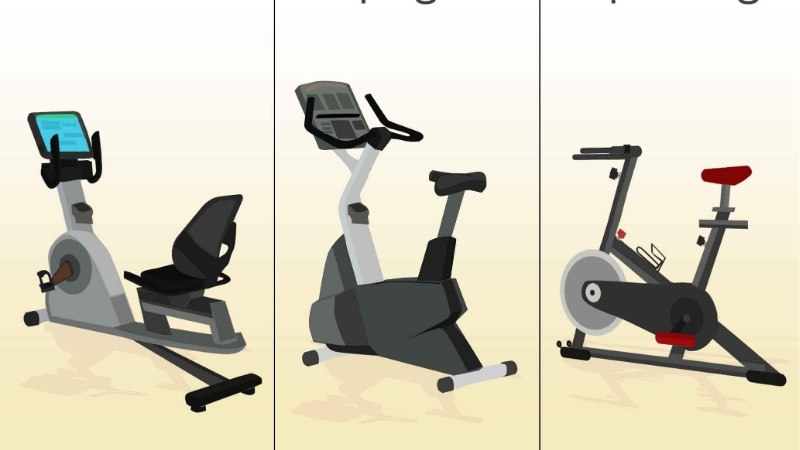
What the Console Actually Measures
Budget console readouts fall into two groups. Genuine measurements come from a sensor on the machine: cadence in revolutions per minute, and heart rate from contact grips or a chest strap. Everything else is calculated from those, or from nothing at all.
Distance and calorie figures on cheap bikes are frequently estimates derived from time and a fixed assumption, not from anything the bike detects. That is not a defect so much as a design limit, but it does mean two bikes showing the same number may be measuring completely different things.
The practical consequence is repeatability. If the console reports only elapsed time, you cannot return to the same effort next week except by feel. If it reports cadence alongside a numbered resistance level, you have two figures that together describe a repeatable session.
Cadence Sensors and Why Many Bikes Lack One
A cadence sensor is a small magnet-and-reed assembly reading crank revolutions. It costs very little, which makes its absence on budget bikes a decision rather than an oversight: leaving it out removes wiring, a console and a failure point from the build.
Several manufacturers sell the sensor separately and pair it with a free app, which is a sensible retrofit if you already own the bike. The cost is usually modest, and it converts a machine that reported nothing into one that reports the number that matters most.
Connected features have drifted down into this tier, and it pays to read carefully. A listing can advertise app integration when the app simply streams a class on your phone, with no data flowing back from the machine at any point in the session.
Bluetooth, Standards and Third-Party Apps
Bluetooth on a bike can mean two very different things. On some machines it drives speakers so you can play audio through the console, which is convenient and measures nothing. On others it broadcasts cadence and heart rate to any app that accepts them.
The second kind is what gives you options. A bike broadcasting to third-party apps is not locked to one company’s subscription, so your data still works if you stop paying or if the manufacturer changes its platform. That is worth checking before the flywheel weight.
Footprint, Ceiling and Console Readability
Footprint in the best exercise bike for weight loss category runs near 40 x 21 in (102 x 53 cm) on a compact indoor cycle, roughly 6 sq ft (0.55 sq m), plus about 24 in (61 cm) behind for mounting and a foot at each side.
Console readability changes with position. Standing on the pedals raises your eyeline 10 to 12 in (25 to 30 cm), which puts a low-mounted console below comfortable sightlines. Extendable tablet holders solve this on some bikes and are fixed too low on others.
Ceiling clearance follows the same figure: standing efforts need your height plus roughly 12 in (30 cm). Under a sloped ceiling that rules out riding out of the saddle entirely. Measure the floor area and ceiling with someone standing on the pedals before ordering.
What Works With Nothing Subscribed
Every bike in this guide functions fully as a bike with nothing paid. A subscription adds guided sessions and stored history, and on machines with no sensor there is no data for it to store in the first place, which is the part worth confirming before purchase.
Warranty terms are the other honest signal. Many budget bikes cover the frame for a year and moving parts for only three months. Consoles and sensors typically fall under the shorter term. Speak to a doctor before starting a new programme.
Top Picks in the Best Exercise Bike for Weight Loss Category
Five best exercise bike for weight loss picks below, ranked by what they measure rather than by features listed on the box. A retrofit sensor is included because on two of these bikes it is the cheapest way to turn a silent console into a useful one.
| Pick | Cadence | Heart rate | Broadcasts data |
|---|---|---|---|
| Schwinn IC4 | Yes, built in | Yes, via Bluetooth | To third-party apps |
| YOSUDA Pro | Basic LCD readout | Contact grips | No |
| YOSUDA YB001R | Basic LCD readout | Contact grips | No |
| Sunny Health SF-B1002 | No console fitted | No | With optional sensor |
| Sunny Bike Cadence Sensor | Adds cadence | No | To the free app |
Schwinn IC4: Most Measured Out of the Box
A 40 lb (18 kg) magnetic flywheel with resistance across 100 micro-increments and Bluetooth that broadcasts cadence and heart rate to third-party apps. That combination gives you a numbered resistance level and a measured cadence, which together describe a session you can repeat exactly.
It costs considerably more than everything else here and sits at the edge of budget. It is heavy to relocate despite transport wheels. Its own class subscription is promoted heavily, so confirm which functions remain unpaid. Mid tier.
YOSUDA Pro: Best Screen Position
The upper model in the YOSUDA range, rated to 350 lb (159 kg) where most budget bikes stop near 270 lb (122 kg), with an extendable tablet holder that keeps a screen at eye level when you stand on the pedals rather than forcing you to look down.
The console is a basic LCD with no data broadcast, so nothing leaves the machine. It is the largest and heaviest bike in the range, increasing footprint and relocation effort. Rider height range remains unpublished as across the range. Budget to mid tier.
YOSUDA YB001R: Quiet With a Basic Readout
A 35 lb (16 kg) magnetic flywheel with no pad contact, paired with a simple LCD showing time and estimated figures. The magnetic system is the appeal here rather than the console: nothing wears, nothing squeaks and it runs quietly enough for early sessions.
Resistance steps through fixed levels rather than adjusting continuously, and the console does not broadcast anything. YOSUDA does not publish a rider height range, and taller testers have maxed the seatpost. Rated near 270 lb (122 kg). Budget to mid tier.
Sunny Health SF-B1002: Best Ride, No Console
A 49 lb (22 kg) chrome flywheel on a chain drive, which gives the most continuous stroke in this group by a clear margin. It ships without a console at all, which is honest rather than misleading: the bike is sold as a bike and the data is optional.
That means no readout of any kind out of the box. Chain drive is louder and needs lubrication, and the chain stretches over time. Warranty is frame one year and parts three months, and capacity is around 275 lb (125 kg). Budget tier.
Sunny Bike Cadence Sensor: The Cheap Retrofit
A separate sensor that mounts to a compatible Sunny bike and pairs with the manufacturer’s free app, adding measured cadence to a machine that reported nothing. For anyone who bought on ride quality and then wanted data, it is by far the cheapest route.
It only fits compatible frames, so check the model before ordering. It measures cadence rather than power, so it describes leg speed and not effort against resistance. It adds a battery and a pairing step to the routine. Budget tier.
Frequently Asked Questions
These questions cover what people ask about the best exercise bike for weight loss category, mostly about measurement. Answers stay with equipment; for anything about health or body composition, speak to a doctor or registered dietitian.
Do budget bikes measure anything real?
Some do and many do not. Genuine measurements come from a cadence sensor and a heart rate input. Distance and calorie readouts on cheap consoles are frequently estimated from elapsed time and a fixed assumption rather than detected by the machine.
Can I add a cadence sensor later?
On some models, yes. Several manufacturers sell a compatible sensor that pairs with their free app, which converts a silent console into a useful one for modest cost. Check compatibility with your exact frame before ordering, since mountings differ between models.
What does Bluetooth actually do on these bikes?
It varies. On some it only drives console speakers for audio, which measures nothing. On others it broadcasts cadence and heart rate to third-party apps, which keeps your data usable regardless of which platform you pay for. The listings rarely distinguish the two.
Do I need a subscription?
No. Every bike here works fully unpaid. A subscription adds guided sessions and stored history, and on machines without a sensor there is nothing for it to store. Confirm what the hardware measures before assuming an app will fill the gap.
See More:
- Best beginner jump rope
- Best boxing jump rope
- Best boxer jump rope
- Best cheapest yoga mat
- Best workout exercise equipment
Final Thoughts
Shopping the best exercise bike for weight loss category is easier once you separate measurement from marketing. Look for a cadence sensor and a numbered resistance level, prefer a bike that broadcasts to third-party apps, and measure your floor and ceiling standing on the pedals.


Write Your Review
No reviews yet. Be the first to share your experience!