
Key takeaways
What's inside
Best resistance bands for beginners is mostly a question of which of three band types you buy, because loops, tubes and flat bands do completely different jobs. This guide explains what each type is actually for, the resistance levels to start at, the space you need to use them, and six sets that are worth the money.
As an Amazon Associate we earn from qualifying purchases at no extra cost to you. Product prices and availability are accurate as of the date shown and are subject to change.
As an Amazon Associate we earn from qualifying purchases at no extra cost to you. Product prices and availability are accurate as of the date shown and are subject to change.


By Chris Parker
🛒 Best Price Today on Amazon
Prime members get fast, free shipping on everything above, plus member-only deals. New members get a 30-day free trial — cancel anytime.
Start 30-Day Prime Free Trial →See Today’s Amazon DealsHow to Choose Your First Resistance Bands
Almost every disappointing band purchase comes from buying the wrong type rather than the wrong brand. A set of mini loops cannot press, and a power band cannot do lateral raises. The four criteria below sort out the best resistance bands for beginners before price enters the picture.
The Three Band Types and What Each Does
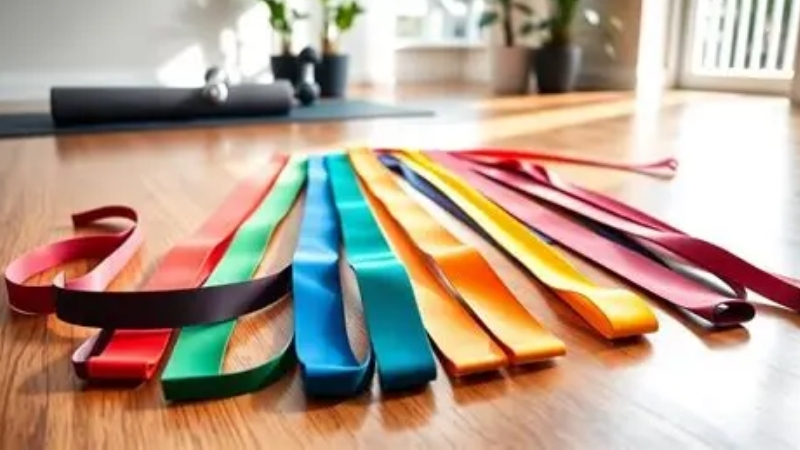
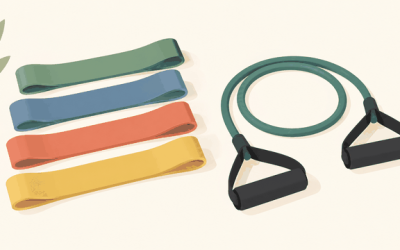
Among the best resistance bands for beginners, mini loops are small closed circles used around the thighs or ankles for hip and glute work. Tube sets with handles and a door anchor cover pressing, rowing and curling, which makes them the closest thing to a full gym in a bag. Flat therapy bands suit shoulder and rehabilitation-style work.
Long power bands, the 41 in (104 cm) closed loops, are a fourth category aimed at pull-up assistance and heavy accessory work. They are excellent tools but rarely the right first purchase, since even the lightest is too strong for most upper-body isolation.
Resistance Levels and Where to Start
Band resistance is usually printed as a range rather than a fixed number, because tension depends on how far you stretch it. A typical beginner set runs from about 5 lb to 30 lb (2.3-14 kg) across five bands, which covers the useful band for a first few months of training.
Buy a set with several graduated levels rather than one single band. Progression with bands comes from moving up a level or shortening the working length, so the best resistance bands for beginners always arrive as a graduated set rather than one strength you will outgrow.
Material, Layering and How Long They Last
The best resistance bands for beginners use layered natural latex, which stretches further before failing; cheap single-layer bands snap sooner, particularly where they pass over a doorframe or anchor point. Fabric loops do not roll up on the thighs the way thin rubber ones do, which is their main advantage.
Latex allergy is worth checking before you order, since the great majority of bands are natural latex and non-latex alternatives exist but are considerably less common. Store bands out of direct sunlight and away from heat, because ultraviolet exposure degrades rubber far faster than use does.
Footprint: The One Category That Needs No Floor Space
A full band set, anchor and handles fits in a bag around 10 x 8 x 4 in (25 x 20 x 10 cm) and weighs roughly 3 lb (1.4 kg), which is why bands suit apartments and travel better than any other equipment. Nothing needs to be left out between sessions.
The training area is what to measure. Standing rows and presses need about 6 x 6 ft (1.8 x 1.8 m) of clear space, and door-anchored work needs a door that opens away from you and stays firmly shut. Check both before you plan a programme around anchored movements.
Top Picks: Best Resistance Bands for Beginners
The six sets below cover all four band types so you can match the purchase to the training you actually want to do rather than to a price point. The table gives the type and resistance band for each, and the write-ups explain who each set suits and where it falls short.
| Set | Type | Typical resistance | Best for | Price tier |
|---|---|---|---|---|
| Fit Simplify Loop Bands | Mini loops | 5-30 lb (2.3-14 kg) | Hips and glutes | Budget |
| WHATAFIT Tube Set | Tubes with handles | Stackable to 150 lb | Full-body training | Budget |
| Bodylastics Stackable Set | Tubes with handles | Stackable, anchored | Serious tube training | Mid |
| TheraBand Flat Band | Flat therapy band | Graded by colour | Shoulders, light work | Budget |
| Recredo Fabric Loops | Fabric mini loops | Light to heavy | Non-rolling hip work | Budget |
| Serious Steel Power Band | 41 in loop | Heavy, by width | Pull-up assistance | Mid |
Fit Simplify Resistance Loop Bands
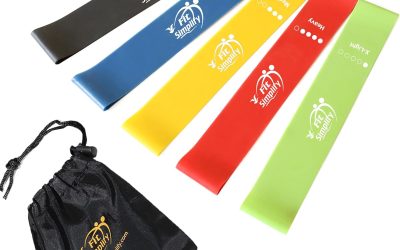
Five graduated mini loops for the price of a coffee round, and the most common first band purchase for good reason. They cover hip abduction, glute bridges, monster walks and warm-up work, and the five levels give genuine progression rather than one token strength.
Thin rubber loops roll up on the thighs during squats and walks, which is the standard complaint about this style. They also wear at the edges within a year of frequent use, though at this price replacing them is barely a consideration.
WHATAFIT Resistance Bands Set
The full kit in a bag: five stackable tubes, handles, ankle straps and a door anchor. Stacking the tubes together gives a wide resistance range from one purchase, which makes this the most complete option for someone who wants to train the whole body without weights.
Clip quality is the weak point at this price, and the carabiners are the part most likely to fail long before any of the tubes do. Inspect them regularly, and never let a stacked set snap back toward your face during pressing movements.
Bodylastics Stackable Resistance Bands Set
The upgrade within the tube category, and the difference is the internal safety cord running through each tube so a failure does not release the band at speed. For anchored pressing and rowing at higher resistance, that detail matters more than the extra cost.
It is several times the price of a basic tube set, which is hard to justify if you are unsure whether bands will stick as part of your training. The handles are also bulkier than some people like for curls and lateral raises.
TheraBand Flat Resistance Band
The flat band is the tool for shoulder work, external rotation and controlled light training, and TheraBand’s colour grading is the standard most instructions reference. It is also the easiest band to cut to a length that suits your own limb proportions.
It offers no handles and no anchor, so it is a complement rather than a complete solution. Flat bands also degrade faster than tubes with regular use, and they can pinch skin if wrapped tightly around a hand without a wrist wrap or cloth underneath.
Recredo Fabric Resistance Loops
Fabric loops solve the single most irritating problem with rubber mini bands: they do not roll up on the thighs during squats and walks. For anyone who found cheap loops annoying rather than useful, this is the fix, and the resistance levels are clearly graded.
Fabric bands offer less stretch range than rubber, so they suit hip work but not much else. They are also considerably more expensive than rubber loops and need washing periodically, since they sit against skin during every set.
Serious Steel Power Band
The 41 in loop that assists pull-ups, adds resistance to squats and presses, and doubles as a stretching tool. If a pull-up bar is already in your gym, one medium power band is arguably the highest-value band purchase available at any price.
Even the lightest widths are too strong for most isolation work, so this is not a general-purpose beginner band. Power bands also snap eventually, and when they do it happens with real force, so inspect the surface for nicks before every session.
Frequently Asked Questions
These four questions cover what people most want confirmed about the best resistance bands for beginners before a first purchase — which type to start with, whether bands build real strength, how to progress and how long a set should last.
Which band type should I buy first?
A tube set with handles and a door anchor if you want full-body training, or mini loops if hips and glutes are the focus. Buying both costs less than most single pieces of gym equipment, and they overlap very little in what they can actually do.
Can resistance bands build real strength?
Yes, particularly in the first year of training and for smaller muscle groups where the loads required are modest. What bands cannot easily replicate is heavy lower-body loading, because the resistance you can generate tops out well below what legs need.
How do I progress with the best resistance bands for beginners?
Move up a resistance level, shorten the working length by standing further onto the band, or stack two tubes together. Adding repetitions works too, but level changes are what keep the training productive once you pass twenty reps comfortably.
How long do resistance bands last?
One to three years with regular use, depending on storage more than training volume. Keep them out of direct sunlight, away from heat sources and clear of rough concrete, and inspect for small nicks before each session, since that is where a band eventually tears.
See More:
- Ankle weights best
- Best rated ankle weights
- Best home workout equipment budget
- Best resistance bands for men
Final Thoughts
The best resistance bands for beginners are a graduated set rather than a single band, and the type matters more than the brand: tubes with an anchor for full-body training, mini loops for hips, flat bands for shoulders. Check the door you plan to anchor to, inspect bands for nicks before each session, and speak to a doctor before starting a new programme.


Write Your Review
No reviews yet. Be the first to share your experience!