
Key takeaways
- Choosing by color alone: Colors are not consistent. One brand’s green band may be light, while another’s may be heavy. Read the dimensions and resistance description.
- Buying only one very heavy band: Heavy resistance is not suitable for every exercise. A multi-level set provides better progression and makes warmups possible.
- Confusing circumference with length: A loop band’s listed length may be its full circumference, while some sellers list the length when laid flat. Confirm how the measurement is taken.
- Ignoring stretch limits: Do not stretch a band farther than the manufacturer allows. Excessive stretching can cause snapping and premature wear.
- Using a band that is too short: A short band may force awkward joint positions and provide too much resistance too quickly. Start with a longer band that can be adjusted by changing your grip or stance.
- Assuming a pound rating equals free weights: Band resistance increases as the band stretches, so “30 pounds” does not feel identical to lifting a 30-pound dumbbell through the entire movement.
What's inside
The Short Answer
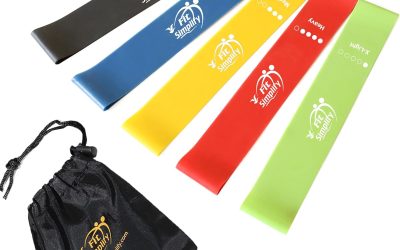
The right resistance band size depends more on your exercise and starting strength than on your height. For general home workouts, a set of five loop bands measuring about 12 inches (30.5 cm) long when laid flat and 2 inches (5 cm) wide is the most versatile choice. These usually progress from extra-light to extra-heavy resistance.
Choose a wider, longer band for pull-ups, assisted dips, deadlifts, and large-muscle exercises. A practical pull-up band is usually 41 to 82 inches (104 to 208 cm) long, 0.5 to 1.25 inches (1.3 to 3.2 cm) wide, and 0.18 to 0.5 inches (0.5 to 1.3 cm) thick. For shoulder mobility, physical therapy, Pilates, and light toning, a flat band 4 to 6 feet (1.2 to 1.8 m) long and 4 to 6 inches (10 to 15 cm) wide is easier to control.
As an Amazon Associate we earn from qualifying purchases at no extra cost to you. Product prices and availability are accurate as of the date shown and are subject to change.


If you are unsure, buy a multi-level set rather than one heavy band. Sets commonly cost about $9 to $25, including basic loop, tube, and pull-up-band options. In 2026, many affordable sets include five resistance levels, a storage bag, handles, or an instruction guide, but accessories should not replace checking the band’s actual dimensions.
Standard Sizes
Resistance bands do not have one universal sizing system. “Light,” “medium,” and “heavy” can mean different things between brands. Width, thickness, length, and whether the band is stretched all affect the resistance. Use the measurements below as buying guidelines, not as an industry standard.
| Band type | Typical dimensions | Common resistance | Best uses |
|---|---|---|---|
| Mini loop band | 8–12 in. (20–30.5 cm) circumference; 1/2–2 in. (1.3–5 cm) wide | Light to heavy; often about 5–40 lb (2.3–18 kg) | Glute activation, lateral walks, warmups, hip exercises |
| Long loop band | 41–82 in. (104–208 cm) long; 1/2–1.25 in. (1.3–3.2 cm) wide | About 10–175 lb (4.5–79 kg), depending on thickness | Pull-up assistance, rows, presses, squats, stretching |
| Flat therapy band | 48–72 in. (122–183 cm) long; 4–6 in. (10–15 cm) wide | Very light to medium; roughly 2–15 lb (0.9–6.8 kg) | Rehabilitation, mobility, Pilates, shoulder work |
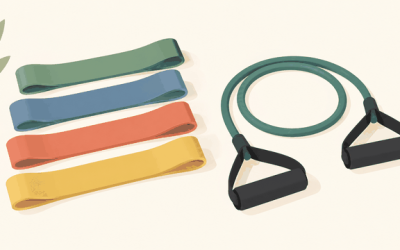
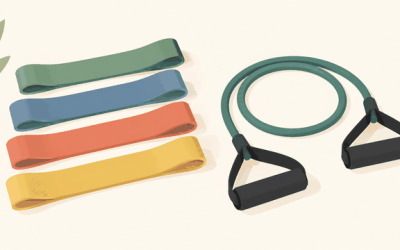
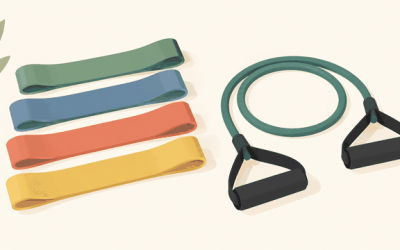
| Tube band with handles | 36–60 in. (91–152 cm) tube length; handles about 4–5 in. (10–13 cm) | About 5–50 lb (2.3–23 kg) per tube | Standing rows, chest presses, curls, and home gym exercises |
| Fabric hip band | 13–16 in. (33–41 cm) circumference; 3–4 in. (7.6–10 cm) wide | Light to extra-heavy; commonly about 10–50 lb (4.5–23 kg) | Glute bridges, squats, hip abductions, and lower-body training |
For beginners, select a band that lets you complete 10 to 15 controlled repetitions without losing form. A light band may be enough for shoulders and arms, while legs and back often need a medium or heavy band. If a band is advertised as having a specific pound rating, treat that number as an approximate resistance at a particular stretch length, not as a fixed weight.
How to Measure Your Space
- Measure your usable floor length. Clear the area where you will stand, lie down, or kneel. For most exercises, allow at least 6 feet (1.8 m) of unobstructed length. Pull-up assistance and full-body stretching may need 8 feet (2.4 m) or more.
- Measure your usable width. Allow at least 3 feet (91 cm) from side to side for standing exercises. If you will perform lateral walks, rows, or exercises with your arms extended, 4 to 6 feet (1.2 to 1.8 m) is more comfortable.
- Check anchor points. A door anchor needs a door that closes securely and has clearance around the hinge and handle. Do not attach a band to a loose chair, lightweight table, or movable furniture. For a wall-mounted anchor, follow the hardware manufacturer’s weight and installation instructions.
- Estimate the required band length. For a standing exercise, a band should usually reach from the anchor or floor to your hands with several inches of spare length. A long loop band is easier to shorten by folding, while a band that is too short can overstretch.
- Check ceiling and overhead clearance. If you plan to practice pull-up assistance or overhead presses, allow at least 12 inches (30.5 cm) above your hands and keep the band away from fans, lights, and sharp edges.
- Inspect the surface. Smooth flooring is generally suitable, but a yoga mat can reduce slipping. Avoid dragging latex or rubber bands across rough concrete, unfinished wood, or sharp grout.
By Room or Use Case
Small bedroom or apartment
Choose mini loops or a compact set of long loop bands. Five bands stored in a bag take little space, and a 41- to 48-inch (104- to 122-cm) band works for many standing exercises. Keep at least 3 feet (91 cm) of side clearance and do not anchor a band to a bed frame unless the attachment is specifically designed for it.
Home gym
A complete setup can include mini loops, long loops, and tube bands with handles. For general strength training, select at least three levels: light for warmups and shoulders, medium for arms and upper body, and heavy for legs and back. A long band around 82 inches (208 cm) offers more options for rows, presses, and assisted movements than a short band.
Pull-up assistance
Use a long, continuous loop rather than a mini band. Beginners often need a thicker band with greater assistance, while stronger users may prefer a thinner band or combine two bands. Check the manufacturer’s recommended user-weight range and inspect the band before every session. The band must fit securely around the pull-up bar and should not be knotted.
Physical therapy and mobility
A flat therapy band 4 to 6 inches (10 to 15 cm) wide and 4 to 6 feet (1.2 to 1.8 m) long is usually the easiest size for controlled movements. Light resistance allows a larger range of motion and helps you focus on alignment. If a clinician or physical therapist prescribed a color or resistance level, follow that recommendation because color coding varies by brand.
Glute and lower-body workouts
A fabric hip band 13 to 16 inches (33 to 41 cm) in circumference is comfortable above the knees for squats and lateral walks. A mini loop is more flexible for ankles and warmups. Wider fabric bands tend to roll less than narrow latex loops, but they may feel too restrictive for users with larger thighs or limited mobility. Measure the intended placement before buying.
Common Sizing Mistakes
- Choosing by color alone: Colors are not consistent. One brand’s green band may be light, while another’s may be heavy. Read the dimensions and resistance description.
- Buying only one very heavy band: Heavy resistance is not suitable for every exercise. A multi-level set provides better progression and makes warmups possible.
- Confusing circumference with length: A loop band’s listed length may be its full circumference, while some sellers list the length when laid flat. Confirm how the measurement is taken.
- Ignoring stretch limits: Do not stretch a band farther than the manufacturer allows. Excessive stretching can cause snapping and premature wear.
- Using a band that is too short: A short band may force awkward joint positions and provide too much resistance too quickly. Start with a longer band that can be adjusted by changing your grip or stance.
- Assuming a pound rating equals free weights: Band resistance increases as the band stretches, so “30 pounds” does not feel identical to lifting a 30-pound dumbbell through the entire movement.
FAQ
What size resistance band should a beginner buy?
Start with a set containing light, medium, and heavy options. For most general workouts, a long loop band around 41 to 82 inches (104 to 208 cm) plus mini loops around 8 to 12 inches (20 to 30.5 cm) covers the greatest range of exercises.
Are thicker resistance bands better?
Thicker bands usually provide more resistance, but they are not automatically better. Choose thickness based on the muscle group and exercise. A lighter band is often safer and more useful for shoulders, rehabilitation, and mobility, while thicker bands suit legs, back training, and pull-up assistance.
How much room do I need to work out with resistance bands?
A minimum area of about 6 by 3 feet (1.8 by 0.9 m) works for many standing and floor exercises. For full-arm movements, lateral walks, or anchored exercises, 6 by 4 feet (1.8 by 1.2 m) or more is preferable. Keep the band away from sharp corners and furniture.
How long do resistance bands last?
There is no fixed lifespan because use, storage, sunlight, heat, and stretching affect wear. Wipe bands clean, keep them dry and out of direct sunlight, and inspect them for cracks, whitening, thinning, or sticky areas. Replace a damaged band before using it, even if it still appears to provide resistance.


Write Your Review
No reviews yet. Be the first to share your experience!