
Key takeaways
- Light: approximately 2 to 10 pounds of indicated resistance, suitable for shoulder work, warmups, stretching, and many physical therapy exercises.
- Medium: approximately 10 to 20 pounds, a practical all-around range for rows, presses, curls, and Pilates movements.
- Heavy: approximately 20 to 35 pounds, useful for stronger users, lower-body exercises, and assisted pull-ups.
- Extra-heavy: 35 pounds or more, generally better for experienced users and large compound movements.
What's inside
- Decide These 3 Things First
- Size and Tension Determine What the Band Can Do
- Material Affects Feel, Durability, and Use Around the Home
- Construction Matters More Than a Color-Coded Label
- Comfort and Performance Should Guide the Final Choice
- Price Tiers: What You Can Reasonably Expect
- Warranty and Replacement Support Reduce Risk
- Delivery and Assembly Are Usually Simple, but Check the Kit
- Spec Checklist
- Red Flags
- FAQ
Choosing a resistance band is less about finding the heaviest option and more about matching tension to your body, exercise, and training goal. A band that feels challenging for a squat may be far too difficult for shoulder rehabilitation, while a band that works for warmups may offer little resistance during a row.
- Decide These 3 Things First
- Size and Tension Determine What the Band Can Do
- Material Affects Feel, Durability, and Use Around the Home
- Construction Matters More Than a Color-Coded Label
- Comfort and Performance Should Guide the Final Choice
- Price Tiers: What You Can Reasonably Expect
- Warranty and Replacement Support Reduce Risk
- Delivery and Assembly Are Usually Simple, but Check the Kit
- Spec Checklist
- Red Flags
- FAQ
The most common mistake is trusting color labels alone. “Medium” and “heavy” are not universal measurements, and two brands can use completely different colors, widths, and stretch lengths. Shoppers also often buy a single high-tension band when a set would be more useful, ignore the band’s length, or overlook whether the material can handle repeated stretching.
As an Amazon Associate we earn from qualifying purchases at no extra cost to you. Product prices and availability are accurate as of the date shown and are subject to change.


If you are asking, “what resistance band tension should I choose,” start with the movement rather than your perceived strength. The right band should let you complete your target repetitions with controlled form, while the final two or three reps feel difficult but possible. This guide explains what matters when shopping in 2026, from tension and dimensions to construction, comfort, price, and long-term value.
Decide These 3 Things First
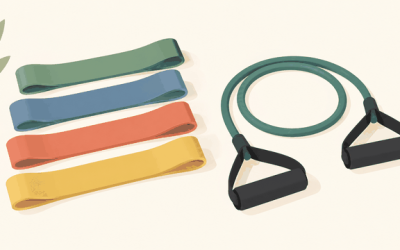
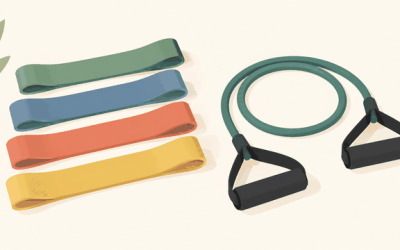
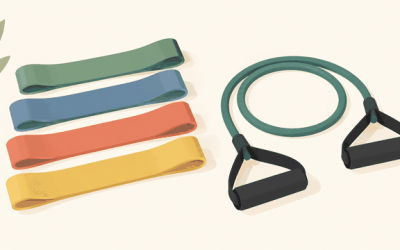
- Choose your exercise type. Long straight bands work well for rows, presses, stretching, physical therapy, and assisted mobility work. Mini loop bands are better for glute activation, lateral walks, and lower-body exercises. Tube bands with handles are useful for home-gym movements that mimic cable exercises.
- Decide whether you need one tension or several. Beginners, people returning from injury, and households sharing equipment usually get more value from a set with at least three resistance levels. A single band can be sufficient if you already know the exact tension you need for one exercise.
- Identify your starting level. For rehabilitation, mobility, and upper-body isolation exercises, start with light resistance. For general strength training, a medium band is usually the most versatile starting point. Stronger users or lower-body compound exercises may require heavy or extra-heavy bands, but multiple lighter bands can also be layered together.
Size and Tension Determine What the Band Can Do
Band tension depends on more than the printed label. A band’s width, thickness, length, and stretch percentage all affect how it feels. A 5-foot band stretched to 6 feet may feel easier than the same band stretched to 5 feet, even if both have the same resistance rating.
For a general-purpose long band, look for a length of approximately 4 to 6 feet and a width between 4 and 6 inches. Narrower bands around 2 to 3 inches can work for lighter exercises, but they may concentrate pressure in your hands. Mini loops commonly measure about 10 to 13 inches in circumference and are designed to sit around the thighs, ankles, or calves.
Resistance ranges vary widely, but the following figures are useful starting points:
- Light: approximately 2 to 10 pounds of indicated resistance, suitable for shoulder work, warmups, stretching, and many physical therapy exercises.
- Medium: approximately 10 to 20 pounds, a practical all-around range for rows, presses, curls, and Pilates movements.
- Heavy: approximately 20 to 35 pounds, useful for stronger users, lower-body exercises, and assisted pull-ups.
- Extra-heavy: 35 pounds or more, generally better for experienced users and large compound movements.
These numbers are not directly comparable across brands. Treat them as approximate guidance, not laboratory measurements. The band should provide noticeable resistance through the exercise’s full range of motion without forcing you to hold your breath or compensate with your back.
Material Affects Feel, Durability, and Use Around the Home
Most resistance bands are made from natural latex, synthetic latex, or non-latex thermoplastic materials. Latex usually offers a smooth, springy feel and is widely available at a lower price. Non-latex bands are worth considering if you have a latex sensitivity or prefer a different surface texture.
For home use, inspect the material description carefully. “Latex-free” should be stated clearly rather than implied by a product title. A band used for rehabilitation or stretching should feel consistent throughout its length and should not have dry, brittle, or tacky spots when new.
Fabric bands are another option, especially for mini loops. They can feel more comfortable against bare skin and are less likely to roll than thin rubber loops. However, fabric construction may not provide the same stretch range as latex, and it can absorb sweat or take longer to dry. For a compact home workout kit, a mix of long latex bands and fabric mini loops can cover more exercises than either style alone.
Construction Matters More Than a Color-Coded Label
Examine the band’s edges, seams, handles, and connection points. A straight band should have clean, even edges without visible nicks. A loop band should have a uniform weld or continuous construction, with no obvious separation at the join. On tube-style bands, check that the handles are firmly attached and that the anchor points are covered or reinforced.
Door anchors add useful versatility, but they also introduce a safety consideration. Look for a padded anchor designed to sit on the hinge side of a closed, sturdy door. Do not use an anchor on a lightweight closet door, a sliding door, or a door that cannot close securely. Keep the band away from sharp corners and inspect it before every workout.
Storage also affects lifespan. A band should be kept indoors, away from direct sunlight, heaters, and temperatures above roughly 100 degrees Fahrenheit. Avoid folding it sharply or storing it under heavy furniture. Wipe sweat from the surface with a damp cloth and allow it to dry before putting it away.
Comfort and Performance Should Guide the Final Choice
The correct tension is one that lets you control both directions of movement. If the band snaps you back at the end of a row or makes your knees cave during a squat, it is too strong, too short, or both. If you can complete more than 25 to 30 repetitions without meaningful fatigue, move up a level or increase the stretch.
For most strength exercises, a useful target is 8 to 15 controlled repetitions. For activation, mobility, and physical therapy, 12 to 20 repetitions may be more appropriate. Beginners can start with one or two sets, while experienced users may perform two to four sets depending on the exercise.
Handles can improve comfort during presses and rows, but they add bulk and may limit how you grip the band. A plain long band is easier to wrap around a post, tie into a loop, or use for stretching. If hand comfort is a priority, choose handles at least 4 to 5 inches long with a surface that does not become slippery when damp.
Price Tiers: What You Can Reasonably Expect
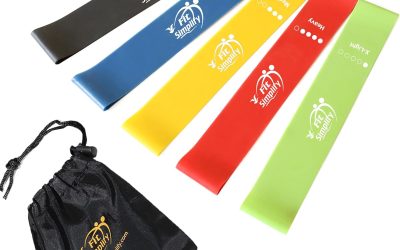
Budget resistance bands typically cost about $6 to $15 per band or set. Examples in this category include the $6.55 AZURELIFE long non-latex-style exercise band listing, a $9.99 general resistance-band set, and the $9.98 Fit Simplify five-loop set. At this price, check the included sizes, resistance labels, and accessories carefully. These products can be excellent for warmups, travel, yoga, Pilates, and light home workouts, but packaging and documentation may be basic.
Midrange options generally cost $15 to $35 for a multi-band kit. They may include a door anchor, handles, carry bag, exercise guide, or more clearly defined resistance levels. The $9.98 RitFit single band with handles and a door anchor demonstrates that accessory bundles can also appear at the low end, so compare the actual band thickness and included components rather than assuming a higher accessory count means better quality.
Premium kits commonly cost $35 to $80 or more. You are paying for better documentation, more robust hardware, a broader resistance range, replacement support, or specialized fabric and tube construction. Premium pricing does not automatically mean higher tension or longer life, so prioritize construction details and warranty terms.
Warranty and Replacement Support Reduce Risk
Many inexpensive bands have limited warranty information, while better-documented brands may offer coverage ranging from 30 days to one year or longer. Before buying, confirm what the warranty covers: manufacturing defects, snapped bands, handles, anchors, or only unopened products.
A replacement policy is particularly valuable for tube bands and kits with several connection points. Keep the receipt, packaging details, and product name. Even when a warranty is available, normal wear, cuts, damage from heat, and misuse may be excluded.
Delivery and Assembly Are Usually Simple, but Check the Kit
Most resistance bands require no assembly. A basic set should be usable immediately after unpacking, while a tube kit may require attaching handles, ankle straps, or a door anchor. Allow about 5 to 10 minutes to inspect and connect the parts before your first workout.
Confirm what is actually included. A product described as a “set” might contain five loop bands but no long band, or one tube band with interchangeable handles rather than several complete bands. Also check package dimensions if storage space is limited. A bag measuring roughly 8 by 12 inches can hold most compact sets, while long bands may need a drawer or wall hook.
Spec Checklist
| Spec | Budget | Mid | Premium |
|---|---|---|---|
| Typical price | $6–$15 | $15–$35 | $35–$80+ |
| Resistance range | 1–3 levels or one band | 3–5 levels | 5 or more levels or stackable bands |
| Long-band length | 4–6 feet | 4–6 feet | 5–7 feet |
| Mini-loop circumference | 10–12 inches | 10–13 inches | 12–14 inches or multiple sizes |
| Accessories | Bag or basic guide | Bag, handles, or anchor | Reinforced hardware and detailed guide |
| Best for | Beginners, mobility, travel | General home strength | Frequent training and broad exercise variety |
Red Flags
- No stated material, dimensions, resistance range, or included accessories.
- Color labels without any explanation of what light, medium, or heavy means.
- Visible seams, uneven edges, cracks, powdery residue, or a strong chemical odor when opened.
- Handles that twist, detach, or leave exposed metal against the band.
- Claims that one compact band replaces every weight range without explaining how tension is measured.
- A door anchor with no usage instructions or warning to secure the door.
- Reviews describing snapping, rolling, or loss of elasticity after only a few uses.
FAQ
What resistance band tension should a beginner choose?
Start with light or medium resistance, usually around 2 to 20 pounds of indicated tension depending on the exercise. Choose a level that allows 8 to 15 controlled repetitions without pain or loss of form. A three- to five-level set is often more useful than one heavy band.
Is a heavier resistance band always better?
No. Heavy bands are useful for squats, deadlift patterns, and assisted pull-ups, but they can be inappropriate for shoulder work, rehabilitation, and beginners. A band is appropriate when it makes the target movement challenging while allowing steady control from start to finish.
Should I buy loop bands or bands with handles?
Choose loop bands for glute work, lateral steps, warmups, and compact storage. Choose long bands with handles for rows, presses, curls, and movements that resemble cable-machine exercises. If your routine includes both styles, a mixed kit offers better coverage.
How often should I replace resistance bands?
There is no fixed replacement schedule. Inspect bands before every use and replace one immediately if you see cuts, cracks, thinning, sticky patches, or permanent stretching. With indoor storage and regular inspection, a quality band can remain useful for years, but frequent daily use may require earlier replacement.


Write Your Review
No reviews yet. Be the first to share your experience!