
Our Top Picks
 Chair Resistant Band Exercises For Seniors: Best Seated6 x 0.12 x 9 inches0.29 poundsCheck on Amazon
The best resistance band exercises for seniors are simple, chair-supported moves that work the big muscle groups: seated rows, chest presses, leg presses, knee extensions, hip abductions and supported side steps. Done two or three times a week with a light band, a 20-minute routine like the one below trains every major muscle without heavy weights, floor work or a gym.
This guide gives a complete full-body routine with sets, reps and rest times, explains how to pick the right band color, and shows how to progress safely. If you have a heart condition, recent surgery, osteoporosis, joint replacements or balance problems, check with your doctor or a physical therapist before starting a new strength program.

Healthy Seniors Chair Exercise Program: Resistance Bands & Handles | Seated Workout Chart & Video: Rehab, Yoga, Stretch, Strength for Seniors
Chosen because it specifies Seated Workout Chart & Video: Rehab and Yoga.
View on Amazon
5 Min Resistance Band Exercises for Seniors: Build Strength, Improve Balance, Lose Weight, Increase Cognitive Function, Flexibility, Health and Mood (Own Your Mind And Body Health)
Chosen because it specifies Improve Balance and Lose Weight.
View on AmazonChair Resistant Band Exercises For Seniors: Best Seated Resistant Band Workout For Seniors To Build Strength, Improved Mobility, Flexibility, Balance, and Joint Health
Chosen because it specifies Improved Mobility and Flexibility.
View on Amazon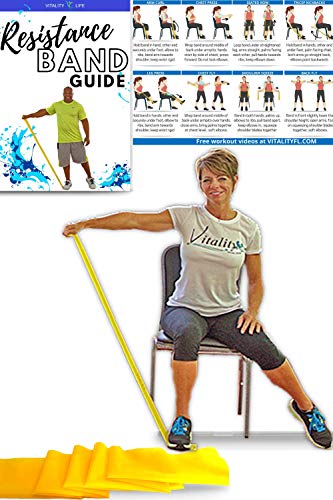
Vitality 4 Life with Curtis Adams Senior Resistance Band: Light Resistance, Longer Length + Instruction Guide. Latex Free. Exercise, Stretching, Physical Therapy
Chosen because it specifies Longer Length + Instruction Guide. Latex Free. Exercise and Stretching.
View on AmazonKey takeaways
- Public health guidance for adults 65 and older, including the CDC’s, calls for muscle-strengthening activity on at least 2 days a week, plus balance work.
- Start with a light band (often yellow or red) and 1 set of 10-12 reps per exercise; add a second set before moving to a heavier band.
- Most moves can be done seated, so they suit people with limited balance.
- Move slowly: about 2 seconds to stretch the band and 2-3 seconds to return.
- Breathe out as you pull or push, and never hold your breath.
Why Resistance Band Exercises for Elderly Adults Work So Well
Muscle mass and strength decline with age, and that loss shows up in everyday tasks: getting out of a chair, carrying groceries, climbing stairs or catching yourself after a stumble. Strength training is the main way to slow that decline. Bands have a few advantages over dumbbells for older beginners:
- Low starting load. A light band can start at just a few pounds of resistance, lighter than most dumbbells.
- No dropping risk. There is no heavy object to drop on a foot or lift off the floor.
- Smooth resistance. Tension builds gradually as the band stretches, which is gentle on joints at the start of each movement.
- Seated-friendly. Almost every exercise can be done from a sturdy chair.
- Portable and inexpensive. A band set fits in a drawer or suitcase.
Choosing the Right Band
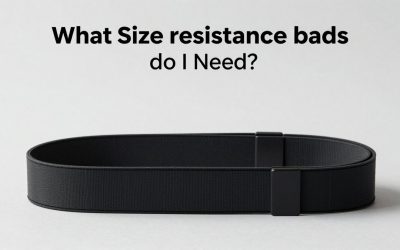
Bands are color-coded by resistance, though colors vary between brands. TheraBand, one of the most widely used rehab brands, publishes approximate resistance at 100% stretch (the band pulled to twice its resting length):
| Color | Level | Approx. resistance | Typical senior use |
|---|---|---|---|
| Yellow | Extra light | About 3.0 lb | Shoulders, beginners, post-rehab |
| Red | Light | About 3.7 lb | Most upper-body moves to start |
| Green | Medium | About 4.6 lb | Rows and leg presses once comfortable |
| Blue | Heavy | About 5.8 lb | Leg presses, stronger users |
| Black | Extra heavy | About 7.3 lb | Leg work for experienced users |
Resistance rises as you stretch the band further, so you can also make an exercise easier by holding the band with more slack. Other band types you will see:
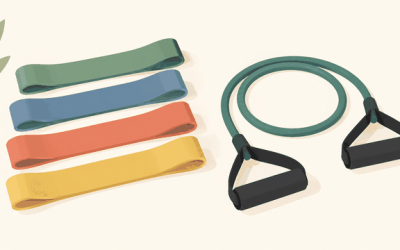
- Flat therapy bands: long latex or latex-free strips; versatile and gentle, but can be hard to grip with arthritic hands (wrap the ends or tie a loop).
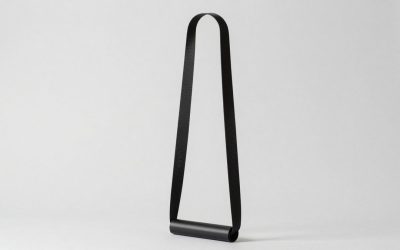
- Tube bands with handles: easier to hold, and many include a door anchor. Good for rows and presses.
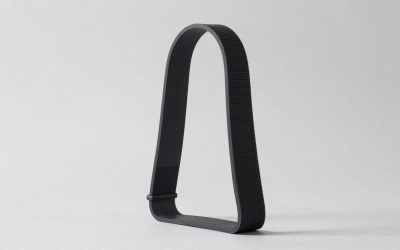
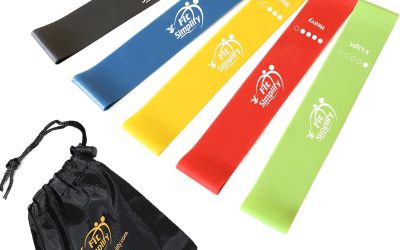
- Mini loop bands: short loops placed around the thighs or ankles for hip and knee work.
If you have a latex allergy, choose bands labeled latex-free.
Before You Start: Setup and Safety
- Pick a sturdy chair without wheels or arms that get in the way, and place it against a wall so it cannot slide.
- Check the band for nicks, sticky spots or thin areas before every session; a damaged band can snap.
- Warm up for 5 minutes: march in place while seated, roll the shoulders, circle the ankles and swing the arms gently.
- Anchor safely. If you use a door anchor, place it on the hinge side of a closed door that opens away from you.
- Use the “talk rule.” You should be able to speak in short sentences. Choose a band that makes the last 2-3 reps feel challenging, but stop well before your form breaks down.
- Stop if you feel chest pain, dizziness, unusual shortness of breath or sharp joint pain, and contact your doctor.
Resistance Band Exercises for Seniors: The Full-Body Routine
Do the exercises in order. Beginners: 1 set of 10-12 reps each, resting 30-60 seconds between exercises. After two to three weeks, add a second set. Total time is about 20-25 minutes including warm-up.
1. Seated Row (back and posture)
- Sit tall with legs straight out or knees slightly bent. Loop the middle of the band around the soles of both feet.
- Hold an end in each hand, arms straight, palms facing each other.
- Pull the hands toward your lower ribs, squeezing the shoulder blades together. Keep elbows close to your sides.
- Return slowly. Breathe out as you pull.
Why it helps: strengthens the upper back muscles that support upright posture.
2. Seated Chest Press
- Sit tall. Wrap the band behind your upper back, under the armpits, holding an end in each hand at chest level.
- Press both hands straight forward until the arms are nearly straight.
- Return slowly to the start.
Why it helps: builds pushing strength for getting up from a chair or bed using the arms.
3. Seated Bicep Curl
- Sit with feet flat, the band under both feet (or one foot for less tension).
- Hold the ends with palms up, elbows at your sides.
- Curl the hands toward your shoulders, then lower slowly.
Why it helps: carrying bags, lifting a kettle, holding grandchildren.
4. Band Pull-Apart
- Sit or stand. Hold the band in front of your chest at shoulder height, hands about shoulder-width apart.
- Pull the hands outward until the band touches the chest or the arms are out to the sides.
- Return slowly. Use a light band; shoulders tire quickly here.
Why it helps: counters rounded shoulders and supports the rotator cuff.
5. Seated Triceps Extension
- Sit tall. Hold one end of the band against your opposite shoulder with one hand.
- With the other hand, hold the band with the elbow bent at your side, then straighten the arm down and slightly back.
- Return slowly; switch sides.
Why it helps: the triceps push you up from a chair and stabilize you on a walker or cane.
6. Seated Leg Press
- Sit near the front of the chair. Loop the band around the sole of one foot and hold the ends at your hips.
- Bring the knee toward the chest, then press the foot forward until the leg is straight.
- Return slowly; complete reps, then switch legs.
Why it helps: strengthens thighs and hips for stairs and standing up.
7. Seated Knee Extension
- Tie a loop band around both ankles, or anchor a flat band to the chair leg behind you and around one ankle.
- Straighten one knee, lifting the foot until the leg is level, hold for 1 second.
- Lower slowly; switch legs.
Why it helps: targets the quadriceps, which protect the knees.
8. Seated Hip Abduction
- Place a mini loop band just above your knees. Sit tall with feet hip-width apart.
- Push the knees outward against the band, hold for 1-2 seconds.
- Return slowly.
Why it helps: the outer hip muscles help keep you steady side to side.
9. Ankle Press (calf and ankle strength)
- Sit with one leg straight out, heel on the floor. Loop the band around the ball of the foot and hold the ends.
- Point the toes away like pressing a gas pedal, then return.
Why it helps: ankle strength contributes to push-off when walking and to balance recovery.
10. Supported Side Steps (standing balance)
- Stand behind a sturdy chair or at a kitchen counter, holding on. Place a loop band above the knees or around the ankles.
- Step sideways 3-5 steps, keeping toes forward, then step back.
- Skip this one if standing balance is poor, and do it only with support in reach.
Why it helps: works the hips while practicing controlled weight shifting.
Chair Resistance Band Exercises: Sets, Reps and Weekly Plan
| Exercise | Weeks 1-2 | Weeks 3-6 | After week 6 |
|---|---|---|---|
| Seated row | 1 x 10 | 2 x 10-12 | 2 x 12-15 or next band |
| Seated chest press | 1 x 10 | 2 x 10-12 | 2 x 12-15 |
| Bicep curl | 1 x 10 | 2 x 10-12 | 2 x 12-15 |
| Pull-apart | 1 x 8 | 2 x 10 | 2 x 12 |
| Triceps extension | 1 x 8 each | 2 x 10 each | 2 x 12 each |
| Seated leg press | 1 x 10 each | 2 x 10-12 each | 2 x 12-15 or next band |
| Knee extension | 1 x 8 each | 2 x 10 each | 2 x 12 each |
| Hip abduction | 1 x 10 | 2 x 12 | 2 x 15 |
| Ankle press | 1 x 12 each | 2 x 12 each | 2 x 15 each |
| Supported side steps | 2 trips | 3 trips | 4 trips |
Sample week: Monday and Thursday full routine; Tuesday and Saturday a 20-30 minute walk; Wednesday and Sunday light stretching and balance practice (standing on one foot holding the counter, heel-to-toe walking along the counter). Rest or gentle activity on Friday. This pattern lines up with the common guidance of 150 minutes of moderate activity per week, 2 strength days and regular balance work.
How to Progress Safely
- Add reps before resistance. When you can do 2 sets of 15 with good form, it is time to move up.
- Shorten the band first. Choke up on the band or step further from the anchor before switching to a heavier color.
- Move up one color at a time and drop back to 1 set of 10 for the first week on a new band.
- Keep the tempo slow. Slower returns increase the challenge without adding load.
- Track sessions on a calendar. Consistency matters more than intensity.
Common Mistakes
- Letting the band snap back. Control the return; this half of the movement builds strength too.
- Shrugging the shoulders during rows and presses. Keep shoulders down, away from the ears.
- Holding the breath. Exhale on effort, inhale on return; breath-holding raises blood pressure.
- Locking the elbows or knees at the end of a press. Stop just short of fully locked.
- Wrapping the band around fingers tightly, which can pinch circulation. Use handles or a loose wrap around the palm.
Gear That Helps
- Vitality 4 Life Senior Resistance Band (light resistance · longer length · latex-free · instruction guide): designed for seated routines and easier to wrap than short bands.
- Healthy Seniors Chair Exercise Program bands (bands with handles · seated workout chart and video): handles help arthritic hands, and the chart gives a ready-made routine.
- THERABAND Resistance Band, Red (light · flat band · widely used in physical therapy): a reliable single band to start with.
- Black Mountain Products Resistance Band Set (five tube bands · handles · door anchor): room to progress as strength improves.
Frequently Asked Questions
How often should seniors do resistance band exercises?
Two to three non-consecutive days per week is a common target, matching public health guidance of at least 2 days of muscle-strengthening activity. Rest a day between sessions so muscles can recover.
What color resistance band should a senior start with?
Most beginners start with yellow or red for upper-body moves and red or green for leg presses. Choose a band that lets you do 10-12 slow reps with the last few feeling challenging.
Can resistance band exercises be done sitting down?
Yes. Rows, chest presses, curls, triceps extensions, leg presses, knee extensions and hip abductions all work well from a sturdy chair, which makes them suitable for people with limited balance.
Are resistance bands as effective as weights for older adults?
Studies of older adults have found that band training can improve strength and physical function, and for beginners the difference from free weights is small. Bands are often easier to start with because the load is light and there is nothing to drop.
How long until I notice results?
Many people notice that daily tasks such as standing up from a chair feel easier after several weeks of consistent training. Strength gains continue with steady, gradual progression.
Is it safe to do band exercises with arthritis?
Gentle strengthening is commonly recommended for people with arthritis, but the right exercises depend on the joints involved. Ask your doctor or physical therapist which moves suit you, and stop any exercise that causes sharp pain.

Write Your Review
No reviews yet. Be the first to share your experience!