
Key takeaways
- Resistance levels labeled only “light,” “medium,” and “heavy,” with no dimensions or approximate range.
- Visible cracks, powdery residue, thinning spots, frayed fabric, or uneven tube thickness upon arrival.
- Door anchors without clear safety instructions or with small, flimsy foam stops.
- Plastic clips used for a kit marketed for very heavy combined resistance.
- Claims that one band replaces all weights or is suitable for every exercise and fitness level.
- No mention of latex content, especially if you or someone in your household has an allergy.
- A set with five nearly identical bands instead of meaningful progression between levels.
What's inside
Resistance bands look simple, which is why shoppers often buy the wrong kind. The most common mistake is choosing by the number of bands in a set rather than the resistance range, band style, and exercises planned. A five-piece set may be excellent for shoulder mobility and physical therapy but nearly useless for assisted pull-ups. Conversely, a thick 2- to 3-inch pull-up band can be too strong and awkward for Pilates, glute work, or small upper-body movements.
Another frequent error is treating stated resistance numbers as perfectly standardized. A band labeled “20 to 40 pounds” does not necessarily feel identical to one from another brand. Resistance increases as the band stretches, and material thickness, length, and manufacturing all affect the feel. In 2026, the best way to choose resistance bands is still to match the band’s format and usable resistance range to your body, training level, and available space.
As an Amazon Associate we earn from qualifying purchases at no extra cost to you. Product prices and availability are accurate as of the date shown and are subject to change.


Decide These 3 Things First
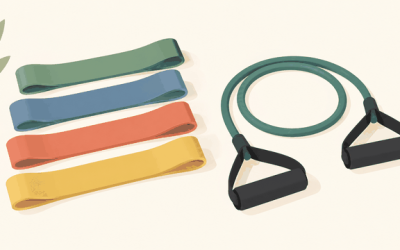
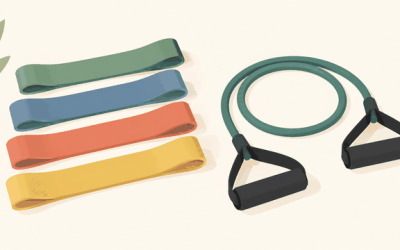
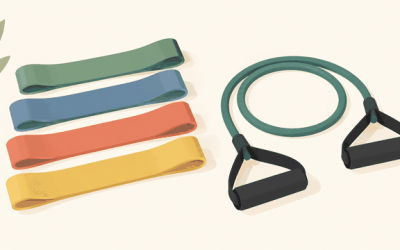
- Choose your primary use. Loop bands are best for warmups, mobility, lower-body activation, and light strength work. Long pull-up bands suit assisted pull-ups, stretching, rows, presses, and heavier resistance training. Tube bands with handles feel more familiar for beginners who prefer a cable-machine-style grip. Therapy bands and fabric mini bands work well for rehabilitation, Pilates, and controlled glute exercises.
- Set your useful resistance range. Beginners generally benefit from several light-to-medium options, such as 5 to 30 pounds for loops or 10 to 50 pounds for tube sets. Stronger users doing pull-up assistance, deadlift variations, or banded barbell work may need a long band rated from roughly 30 to 80 pounds or more. Buy resistance you can control for 8 to 15 repetitions—not simply the heaviest band available.
- Measure your workout setup. Long bands need room to stretch. For a standing chest press or row, plan for about 6 to 8 feet of clear space from anchor to body. If you live in a small apartment, compact 9- to 12-inch loop bands or 4-foot therapy bands may be more practical than a full door-anchor system.
Size and Band Style
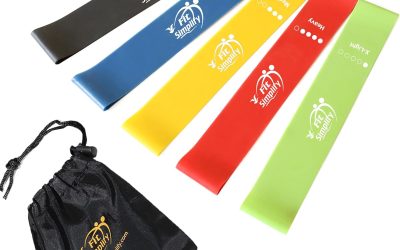
Band dimensions determine what movements feel natural. Mini loop bands typically measure 9 to 12 inches long when laid flat, or about 18 to 24 inches around. They are designed for shorter-range exercises: lateral walks, clamshells, glute bridges, shoulder activation, and ankle work. A set such as the Fit Simplify five-loop package, priced around $9.98, is a sensible format for this category.
Long flat therapy bands are commonly 4 to 6 feet long and 4 to 6 inches wide. Their open-ended design makes them versatile for rehabilitation, stretching, Pilates, and gentle strength work, but they do not offer the secure grip of handles or the closed-loop convenience of pull-up bands.
Closed long-loop pull-up bands generally measure 41 inches long when laid flat, creating an 82-inch circumference. Width often ranges from 0.5 inch for light assistance to 2.5 inches or more for heavy assistance. A 0.5-inch band may provide roughly 5 to 15 pounds of resistance, while a wide 2-inch model may be marketed around 35 to 80 pounds. These ranges overlap substantially by brand, so use them as a starting point rather than a universal rule.
Tube bands usually run 36 to 48 inches before stretching and may include detachable handles, ankle straps, and a door anchor. They are a good all-purpose choice if you want presses, curls, rows, and triceps extensions without holding a flat strip of latex.
Material and Elastic Feel
Natural latex remains the most common material in resistance bands because it has a smooth, springy stretch and can provide substantial resistance without excessive bulk. It is especially common in pull-up bands and tube bands. The downside is latex sensitivity: anyone with a latex allergy should choose a clearly labeled latex-free thermoplastic elastomer (TPE), fabric, or other non-latex option.
TPE bands are often less expensive and may have a slightly firmer or less fluid stretch than natural latex. They can work well for light loops and therapy-style bands, especially when stored properly, but very inexpensive TPE can feel thin or become tacky over time.
Fabric bands usually have an elastic core wrapped in woven textile. They are most useful for lower-body work because they resist rolling and do not pull leg hair. Look for bands about 3 to 3.5 inches wide for glute exercises. Fabric bands are not a replacement for long latex pull-up bands: their limited stretch makes them less adaptable for overhead movements, chest presses, and pull-up assistance.
Whatever material you choose, avoid leaving bands in direct sunlight, a hot car, or near a radiator. Heat and ultraviolet exposure can degrade elastic materials faster than normal workouts do.
Construction and Safety Features
Inspect how the band is made, especially if you will stretch it under meaningful tension. Continuous one-piece loop bands should have smooth, even edges and consistent thickness. Avoid obvious seams, thin translucent spots, sticky patches, nicks, or uneven coloring. These can signal weak points.
For tube systems, the connection points matter as much as the tubing. Prefer metal carabiner-style clips, reinforced handle straps, and handles with a solid core. Lightweight plastic clips can be fine for gentle rehabilitation, but they are less reassuring for heavy rows or presses. Door anchors should have a dense foam stop at least 1.5 inches across and a strap that does not look frayed or overly thin.
Check the stated maximum resistance for a complete tube setup, not just one tube. If five tubes are advertised at 10 pounds each, the theoretical combined total may be around 50 pounds at a specified stretch length, but actual feel changes as the tubes elongate. Do not stack every band immediately. Start with one or two, test the anchor and clips, and keep your face out of the potential recoil path.
For pull-up bands, avoid attaching a band to damaged doorway bars, unstable furniture, or sharp-edged metal. A band that slips can snap back with force.
Comfort and Performance in Real Workouts
The right band should stay put without distracting you. Flat latex mini loops can roll during squats or lateral walks, particularly when worn over bare skin. Wider fabric loops are usually more comfortable for those exercises. For arm work, however, fabric can feel bulky; a 0.5- to 1-inch latex loop is easier to grip and position.
Handles should be large enough for a full grip. A handle opening of about 4 inches long accommodates most hands comfortably, while soft foam or textured rubber reduces slipping. If you have sensitive hands, bands without handles can still work, but consider using exercise gloves or looping the band around your palm rather than gripping a narrow, stretched edge.
Performance also means having enough progression. A practical starter set includes at least five resistance levels with clearly different tension. For example, a colorful pull-up band set around $22.49 may offer a broader training range than a single band, while a basic five-level pull-up assistance set around $16.99 can be a good value if its individual widths and ranges are clearly labeled.
Remember that bands become harder through the range of motion. This is useful for glute bridges, presses, and rows, where you may want greater tension near lockout. It can be less ideal for movements requiring steady load at every point, so bands work best as a flexible training tool rather than a perfect substitute for every dumbbell or machine exercise.
Price Tiers and What You Get
Budget: $8 to $15. Expect simple mini loops, a basic therapy band, or lightweight tube bands. A $9.99 general-purpose Pilates or physical therapy band can be enough for stretching, mobility, recovery exercises, and beginner lower-body work. At this price, packaging and instructions may be minimal, and resistance labeling may be less precise.
Mid-range: $16 to $35. This is the sweet spot for most home users. You can find five-level long-loop sets, more durable tube kits with handles and door anchors, or better fabric glute-band sets. Look for a carry bag, a usable exercise guide, multiple clearly labeled resistance levels, and decent hardware.
Premium: $35 to $80 or more. Higher-priced systems may offer thicker, more consistent bands, stronger connectors, modular attachments, better warranties, and individual replacement components. Premium makes sense for frequent training, physical therapy programs, or households where several people need different resistance levels. It is not necessary for occasional stretching.
Warranty, Returns, and Replacement Options
Resistance bands are wear items, so a lifetime promise deserves careful reading. A useful warranty should explain whether it covers manufacturing defects, broken clips, split seams, or premature material failure. Coverage of 30 days to one year is common for basic sets; longer coverage is more meaningful when individual bands, handles, and anchors can be replaced.
Before opening a set, check the return window and whether used fitness items are returnable. A 30-day return period is generally adequate to test comfort, resistance levels, and fit with your door or pull-up bar. Keep the packaging until you know the set works for your routine.
Replace any band that develops cracks, tears, deep surface abrasions, fraying fabric, damaged stitching, loose clips, or a noticeably uneven stretch. Do not try to tape a damaged elastic band and continue using it under tension.
Delivery, Storage, and Setup
Most resistance-band sets arrive in a small box or pouch weighing 1 to 4 pounds. There is no furniture-style assembly, but setup still matters. A basic loop set is ready immediately. Tube systems may take 2 to 5 minutes to attach handles, ankle straps, or a door anchor before each workout.
Door anchors should be placed on the hinge side of a closed door whenever possible. Close and lock the door, then pull lightly on the anchor before applying full tension. Never anchor to a sliding door, glass door, loose cabinet, or door that someone could open from the other side.
For storage, keep bands dry in their bag or a drawer away from pets and sharp objects. Avoid folding a band tightly around a metal clip for months at a time. A small 12-by-8-inch pouch is enough for most loop or tube sets; wide pull-up bands may store better loosely coiled on a shelf.
Spec Checklist
| Spec | Budget | Mid | Premium |
|---|---|---|---|
| Typical price | $8–$15 | $16–$35 | $35–$80+ |
| Best format | Mini loops or therapy band | 5-level loop set or tube kit | Modular system or heavy-duty long loops |
| Resistance range | About 5–30 lb | About 5–80 lb across a set | About 5–120+ lb across a set |
| Typical accessories | Carry bag, basic guide | Bag, handles or anchor, guide | Replacement parts, multiple anchors, advanced attachments |
| Best for | Mobility, rehab, light glute work | Most home workouts | Frequent training and multi-user setups |
Red Flags
- Resistance levels labeled only “light,” “medium,” and “heavy,” with no dimensions or approximate range.
- Visible cracks, powdery residue, thinning spots, frayed fabric, or uneven tube thickness upon arrival.
- Door anchors without clear safety instructions or with small, flimsy foam stops.
- Plastic clips used for a kit marketed for very heavy combined resistance.
- Claims that one band replaces all weights or is suitable for every exercise and fitness level.
- No mention of latex content, especially if you or someone in your household has an allergy.
- A set with five nearly identical bands instead of meaningful progression between levels.
FAQ
What resistance band should a beginner buy?
A beginner should usually buy a five-level mini-loop set or a light-to-medium tube set with handles. Look for resistance starting around 5 to 10 pounds and progressing to roughly 25 to 40 pounds. This provides manageable options for mobility, squats, rows, presses, and rehabilitation-style movements.
Are pull-up bands good for strength training?
Yes. Long 41-inch loop bands are among the most versatile options for strength training because they can assist pull-ups and add resistance to rows, presses, squats, deadlifts, and barbell exercises. Choose at least three levels if you want room to progress.
Should I choose latex or fabric resistance bands?
Choose latex for the broadest exercise selection and a smoother stretch. Choose fabric for lower-body exercises when you want a wide band that is less likely to roll or pinch. If you have a latex allergy, select clearly labeled latex-free TPE or fabric bands.
How long do resistance bands last?
With regular indoor use and proper storage, a quality set can last from several months to several years. Lifespan depends on material, frequency of use, stretch intensity, and exposure to heat or sunlight. Inspect bands before every workout and replace them at the first sign of cracking, tearing, fraying, or damaged hardware.


Write Your Review
No reviews yet. Be the first to share your experience!