
Key takeaways
What's inside
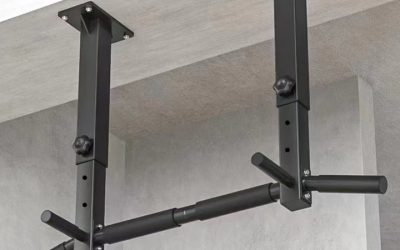
Best pull-up bar wall mounted setups beat doorway bars for one reason: bolted into studs or masonry, they take weighted reps, kipping and rings without flexing. The specs that decide safety are steel gauge, weight capacity and wall clearance, so those come before grips or looks, and the wall you drill into matters just as much as the bar.
As an Amazon Associate we earn from qualifying purchases at no extra cost to you. Product prices and availability are accurate as of the date shown and are subject to change.
By Chris Parker
🛒 Best Price Today on Amazon
Prime members get fast, free shipping on everything above, plus member-only deals. New members get a 30-day free trial — cancel anytime.
Start 30-Day Prime Free Trial →See Today’s Amazon DealsHow to Choose the Right Best Pull-Up Bar Wall Mounted
A permanently mounted bar is only as safe as its steel and its anchors, so read the capacity, gauge and clearance first. The best pull-up bar wall mounted for you also depends on your ceiling height and the wall you are drilling into.
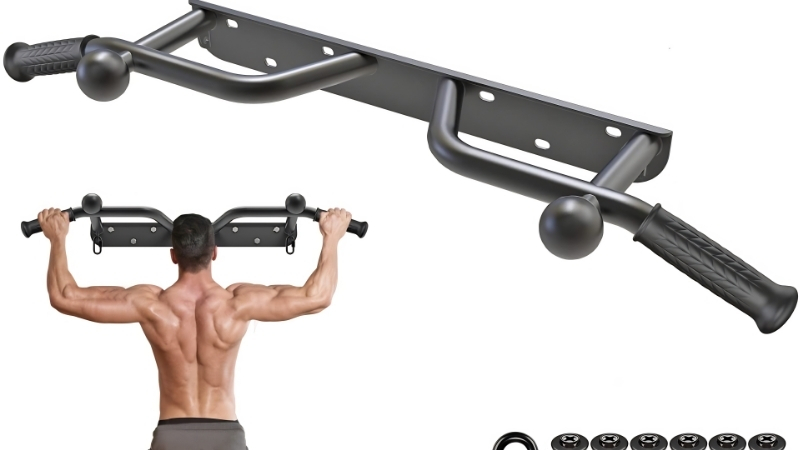
Steel Gauge and Weight Capacity
Gauge is the honest strength number: 11-gauge steel is the preferred grade for strength gear, thicker and stiffer than lighter tubing. It shows up on the sturdiest bars and resists the wobble that cheap frames develop under load.
Capacity ranges from about 300 lb (136 kg) on compact bars to 500 lb (227 kg) and up to 700 lb (318 kg) on heavy-duty ones. If you add a weight belt or plan kipping, buy well above your bodyweight — a 300 lb rating leaves little margin for a 200 lb (91 kg) lifter loading extra plates.
Wall Clearance and Footprint
Depth from the wall is the footprint number people overlook. Strict pull-ups need only a modest reach, but kipping and muscle-ups want 34 in (86 cm) or so of clearance to swing safely. Too close to the wall and your knees or the bar itself become a hazard.
Some bars offer adjustable or multiple depth options — for example 14 or 22 in (36 or 56 cm) — to fit low ceilings or tight garages. Measure your actual space, including how far the bar juts out and how much headroom you have above it, before ordering.
Grip Options and Bar Diameter
Multi-grip bars give you wide, neutral and close positions for chin-ups, neutral-grip pulls and variety, which keeps training from stalling. A single straight bar is cheaper and cleaner but limits you to one or two hand positions.
Bar diameter changes the feel: many bars use a 1.25 in (32 mm) tube, while some run a slightly thicker 32 mm that adds grip challenge. Powder coating or light knurling helps you hold on during high-rep or weighted sets without your hands slipping.
Mounting Surface and Hardware
Wood studs at 16 or 24 in (41 or 61 cm) spacing, concrete or masonry all mount bars differently, and some listings include hardware while others do not — a common budget catch. Confirm what anchors and bolts you need before checkout so the bar is not unusable on arrival.
Never rely on drywall alone; a wall bar must reach framing or solid masonry, and if you are unsure about studs, headers or load-bearing walls, use a qualified contractor. Getting the anchor right is where the best pull-up bar wall mounted earns its safety margin over a doorway model.
On price, the mid tier is the sweet spot: a solid 11-gauge multi-grip bar with clear mounting specs costs a fraction of a full rack while doing the same core job. Drop below that band and you trade steel mass for foam grips and vague hardware lists, which is exactly where budget bars lose points. Spend the difference on capacity and included anchors rather than colour or gimmicks.
Top Picks for the Best Pull-Up Bar Wall Mounted
These six span the range of the best pull-up bar wall mounted category, from a compact 300 lb bar to a 700 lb multi-grip beast. Match the capacity and clearance to your training style and the mounting to your wall. All are widely available on Amazon.
| Bar | Steel / capacity | Clearance | Best for |
|---|---|---|---|
| REP Fitness Multi-Grip | 11-ga / 700 lb (318 kg) | 21.5 in (55 cm) | Weighted, multi-grip |
| Titan Fitness Wall-Mounted | 11-ga / 500 lb (227 kg) | 34 in (86 cm) | Kipping pull-ups |
| Rogue P-3 | Heavy-duty | 14 or 22 in (36/56 cm) | Low ceilings |
| Ultimate Body Press | 300 lb (136 kg) | Compact | Renters, tight budgets |
| ZHNSYDN Wall-Mounted | 500 lb (227 kg) | 19-27 in (48-69 cm) | Adjustable depth |
| Yes4All Adjustable | Standard | Adjustable | Simple, affordable |
REP Fitness Wall-Mounted Multi-Grip Pull-Up Bar
The all-rounder pick: 11-gauge steel, a listed 700 lb (318 kg) capacity, a 50.75 in (129 cm) width and 1.25 in (32 mm) bars with more than five grip positions. You can even invert the unit to lower the grips for shorter athletes, and the sturdy brackets inspire confidence for weighted work.
The depth is 21.5 in (55 cm), which is plenty for strict and neutral-grip pulls but tight for full kipping or muscle-ups. It needs a solid wall and is not ideal for renters. Best for lifters who want one bar covering every grip plus weighted reps.
Titan Fitness Wall-Mounted Pull-Up Bar
Titan’s bar uses a thicker 11-gauge frame with a 500 lb (227 kg) capacity, a 53.5 in (136 cm) bar and a 32 mm diameter. Its standout is a generous 34 in (86 cm) of depth, which gives the room needed for kipping pull-ups and muscle-ups.
You must buy the anchors, bolts and nuts separately, and the thicker bar adds grip challenge that beginners feel. For the money it is a lot of steel. Best for athletes doing high-rep kipping who need real swing clearance.
Rogue P-3 Pull-Up Bar
The P-3 is Rogue’s answer to lower ceilings and tighter garages, offering 14 or 22 in (36 or 56 cm) depth options instead of a fixed long reach. That flexibility can rescue a setup where headroom, not floor space, is the limiting factor.
It is a premium-priced, no-frills straight bar, so you pay for Rogue build quality rather than multiple grips. Best for lifters in low-ceiling spaces who want a rock-solid bar sized to fit.
Ultimate Body Press Wall-Mounted Bar
The compact, budget-friendly choice: a much cheaper and smaller bar with foam grips and a 300 lb (136 kg) listed capacity. For strict bodyweight pull-ups in a small room, it does the core job without dominating the wall.
Skip it if you plan to add weight, use rings, train high-volume kipping, or weigh near the rating — 300 lb (136 kg) leaves little margin, and foam grips age less gracefully than powder-coated steel. Best for renters and beginners on a tight budget.
ZHNSYDN Wall-Mounted Pull-Up Bar
This heavy-frame bar lists a 500 lb (227 kg) capacity with a 1.27 in (32 mm) steel bar and, usefully, an adjustable depth from 19 to 27 in (48 to 69 cm) so you can dial in clearance for compact or extended moves. Dual steel rings add band and boxing options.
As a value brand, the hardware and finish are a step below the premium names, so inspect the welds and re-torque bolts after the first sessions. Best for buyers who want adjustable clearance and ring anchors without a premium price.
Yes4All Adjustable Wall-Mounted Bar
A simple, affordable adjustable wall bar that covers basic pull-ups and chin-ups for a home setup. It is an easy entry point for anyone who wants a fixed bar without the cost or bulk of a multi-grip station.
Capacity and steel are modest, so it is not the pick for heavy weighted reps or aggressive kipping. Confirm the included hardware suits your wall. Best for straightforward, low-cost strict pull-up training.
Frequently Asked Questions
The questions that come up most before installing the best pull-up bar wall mounted at home.
Can I mount a pull-up bar into drywall only?
No. A wall bar must anchor into wood studs, a header or solid masonry — drywall alone will tear out under load. Locate framing at 16 or 24 in (41 or 61 cm) spacing, or use a ledger board, and call a contractor if you are unsure.
How much wall clearance do I need for kipping?
Aim for around 34 in (86 cm) of depth for kipping pull-ups and muscle-ups so you can swing without hitting the wall or your knees. Strict pull-ups need far less, so a 21.5 in (55 cm) bar is fine if you never kip.
What capacity do I need for weighted pull-ups?
Buy well above your bodyweight plus any added load. A 200 lb (91 kg) lifter adding a 50 lb (23 kg) belt should choose a 500 lb (227 kg) or 700 lb (318 kg) bar for margin, not a 300 lb (136 kg) model that sits close to the total.
Does it matter if my wall is studs or masonry?
Yes — the anchors differ. Studs take lag bolts into wood; concrete or brick needs masonry anchors rated for the load. Match the hardware to the wall, and follow the product manual, because the mount is the weakest link if it is wrong. When in doubt about the anchor rating or the wall itself, have a qualified contractor confirm it before you load the bar.
See More:
- Best flooring for home gym over concrete
- Best collapsible exercise bike
- Best fold away exercise bike
- Best exercise bike folding
- Best home upright exercise bike
Final Thoughts
The best pull-up bar wall mounted is the one whose steel, capacity and clearance match how you train and where you drill. Choose 11-gauge and a generous capacity for weighted or kipping work, size the depth to your ceiling, and anchor into real framing. Do that and the best pull-up bar wall mounted becomes the most reliable station in the room.
As an Amazon Associate we earn from qualifying purchases at no extra cost to you. Product prices and availability are accurate as of the date shown and are subject to change.





Write Your Review
No reviews yet. Be the first to share your experience!