
Key takeaways
What's inside
Yoga block best comparisons focus on colour and skip the one property that matters: density. A block that compresses under your body weight has stopped being a block. This guide covers foam against cork against wood, the three working heights, then six picks. Density is the one specification nobody prints.
As an Amazon Associate we earn from qualifying purchases at no extra cost to you. Product prices and availability are accurate as of the date shown and are subject to change.


As an Amazon Associate we earn from qualifying purchases at no extra cost to you. Product prices and availability are accurate as of the date shown and are subject to change.
By Chris Parker
🛒 Best Price Today on Amazon
Prime members get fast, free shipping on everything above, plus member-only deals. New members get a 30-day free trial — cancel anytime.
How to Choose the Yoga Block Best Suited to Your Practice
Blocks look interchangeable and behave differently under load. Working out which yoga block best fits your practice means comparing material density first, then size and the three heights a single block provides, then how much weight you are willing to carry and store.
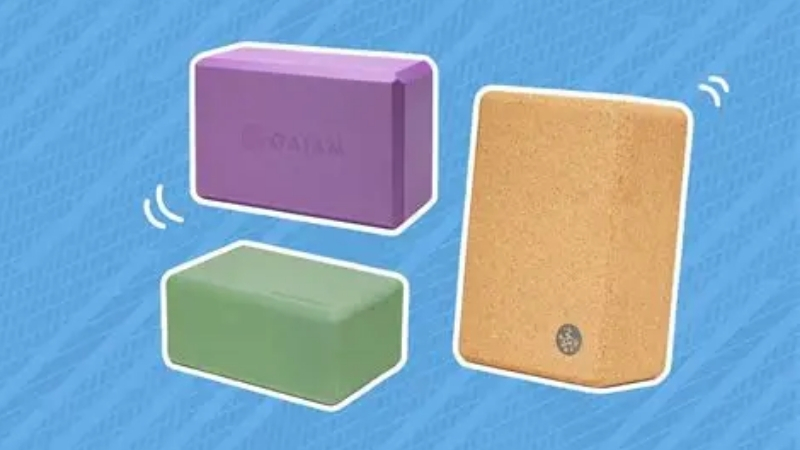
Material: Foam, Cork or Wood
EVA foam is the default. It weighs roughly 0.3 to 0.5 lb (0.14 to 0.23 kg) per block, is soft against the head and hips, and costs the least. The trade is compression: low-density foam gives under body weight, which removes the support you bought it for.
Cork sits at the other end of the useful range, weighing around 1.5 to 2.5 lb (0.7 to 1.1 kg) per block. It does not compress, and it becomes slightly grippier as it dampens because of a natural wax in the material, which is why it suits sweatier practice.
Bamboo and wood blocks are hollow, harder still and heavier again. They offer no give at all, which is ideal for weight-bearing support and unpleasant under the head or hip. They also become slippery once damp, unlike cork, so they suit dry practice better.
Size and the Three Working Heights
The standard block measures 9 x 6 x 4 in (23 x 15 x 10 cm), and that single object gives three heights depending on which face rests on the floor: 4 in (10 cm) flat, 6 in (15 cm) on edge, and 9 in (23 cm) upright.
Thinner blocks at 9 x 6 x 3 in (23 x 15 x 7.6 cm) exist and suit smaller hands or practices where the lowest setting is used most. They are lighter to carry and give less at the top height, so they are a narrower tool rather than a cheaper one.
Most people need two blocks rather than one, because a large share of the poses blocks are used for are symmetrical. Buying a single block and discovering that halfway through is the most common mistake in this category, and pairs are usually cheaper than two singles.
Storage Footprint and Carrying Weight
Footprint for the yoga block best suited to you is small but multiplies. A pair of standard blocks occupies roughly 9 x 12 x 4 in (23 x 30 x 10 cm) stacked, which fits a shelf or a basket easily. Adding a strap and a bolster to that is what turns props into a storage question.
Carrying weight is where material shows. A foam pair adds under 1 lb (0.45 kg) to a studio bag; a cork pair adds 3 to 5 lb (1.4 to 2.3 kg), on top of a mat that may already weigh 5 lb (2.3 kg). For commuting practice that difference is felt every session.
At home, allow the mat length plus about 12 in (30 cm) of clearance at each side for arm sweeps, with props within reach rather than across the room. Measure your practice area and the shelf you intend to use before ordering.
Density, Grip and How Long Blocks Last
Density is where the budget tier shows itself. Below a certain price, foam density drops and blocks dent permanently under a knee or compress under body weight in supported poses, which is precisely the situation they exist to handle. Weight per block is a rough proxy for it.
Wear differs by material. Foam picks up dents and chips at the edges, and colour transfers onto sweaty hands on some cheaper blocks. Cork sheds a little dust early and then stabilises, and it wipes clean rather than absorbing. Wood is effectively permanent and chips if dropped on tile.
Prop placement is worth learning properly rather than guessing. If you are new to using blocks, or working around an existing injury, a qualified instructor will position them more usefully than a diagram, and your doctor is the right first stop for anything injury-related.
Top Picks: Yoga Block Best Options Compared
Six yoga block best candidates below, spanning foam, cork and one companion prop. Density and weight are the two variables that separate them in use, and both are easier to judge from the stated block weight than from any description in a listing.
| Block | Material | Size | Best for |
|---|---|---|---|
| Manduka Cork Yoga Block | Cork | 9 x 6 x 4 in (23 x 15 x 10 cm) | Weight-bearing support |
| Yoga Design Lab Cork Block | Cork | Standard | Sweaty practice |
| Hugger Mugger 4-Inch Foam | High-density foam | 9 x 6 x 4 in (23 x 15 x 10 cm) | Firm foam without cork weight |
| Gaiam Essentials 2-Pack | EVA foam | Standard | Cheapest usable pair |
| REEHUT High Density 2-Pack | EVA foam | Standard | Budget alternative |
| Manduka Align Yoga Strap | Cotton webbing | Length varies | The other prop |
Manduka Cork Yoga Block: Best Overall
A standard 9 x 6 x 4 in (23 x 15 x 10 cm) cork block weighing around 2 lb (0.9 kg). It does not compress under body weight, which is the entire point in supported poses, and the surface holds better as it dampens rather than becoming slick.
Cork is hard against the head and hips, so it suits weight-bearing over restorative use. The weight is significant in a studio bag, particularly as a pair. It sheds a small amount of dust in the first weeks and costs several times a foam block. Mid tier.
Yoga Design Lab Cork Block: Best for Sweaty Practice
A cork block in standard dimensions with the same non-compressing behaviour and a finish aimed at heated practice, where a foam block becomes slippery under damp hands. Cork wipes clean rather than absorbing, which matters when props are used every session.
It carries the same drawbacks as any cork block: hard under the head, heavy to carry as a pair, and considerably more expensive than foam. Cork surfaces can also feel abrasive against bare skin in longer holds. Mid tier.
Hugger Mugger 4-Inch Foam Block: Firmest Foam
A high-density foam block in standard dimensions, noticeably firmer under load than budget EVA while staying light enough to carry two without thinking about it. For most people this is the sensible middle: enough density to hold, none of the cork weight.
It still compresses more than cork under full body weight in supported standing poses. Foam picks up permanent dents where a knee lands repeatedly. Edges chip over time. It costs more than a budget two-pack. Budget to mid tier.
Gaiam Essentials Yoga Block 2-Pack: Cheapest Usable Pair
A pair of standard EVA foam blocks at roughly 0.4 lb (0.18 kg) each, sold together, which matters because most block work needs two. It is the lowest-cost way to find out whether you use blocks at all before spending on cork.
Foam density is moderate, so the blocks give under body weight in supported poses. Colour can transfer onto sweaty hands on some batches. Dents at knee and elbow contact points become permanent within months of regular use. Budget tier.
REEHUT High Density Blocks 2-Pack: Budget Alternative
A two-pack of standard EVA foam blocks with a slightly denser feel than the cheapest options and bevelled edges that are kinder to the hands. As a first pair for someone still deciding how they practise, it does the job for very little money.
Density varies between production runs, which is the main risk at this price. Foam still compresses in weight-bearing use and dents permanently at contact points. The surface becomes slippery once damp, so it suits dry practice. Budget tier.
Manduka Align Yoga Strap: The Other Prop
A cotton webbing strap with a secure buckle, included here because blocks and straps solve different halves of the same problem. Where a block brings the floor up, a strap extends reach, and most practices that need one eventually need the other.
It is not a block and does not substitute for one in any weight-bearing pose. Cotton webbing stretches slightly under sustained load compared with synthetic. Buckle types differ and some are fiddly to release one-handed. Budget tier.
Frequently Asked Questions
These four questions cover what people ask when working out which yoga block best suits them, mostly about material and quantity. Answers stay with the props; for placement or an existing injury, work with a qualified instructor and your doctor.
Cork or foam?
Cork if the block takes body weight, since it does not compress and grips better as it dampens. Foam if you carry props to a studio or use blocks mainly under the head and hips, where cork is uncomfortably hard. Many people end up owning both.
Do I need one block or two?
Two, in most cases. A large share of the poses blocks are used for are symmetrical, and pairs are usually cheaper than buying two singles. Starting with one and discovering the gap halfway through a session is the most common mistake here.
What size should I buy?
The standard 9 x 6 x 4 in (23 x 15 x 10 cm) block covers most needs, because a single block gives three heights depending on which face is down. Thinner 3 in (7.6 cm) blocks suit smaller hands and practices that mostly use the lowest setting.
Why does my block feel like it sinks?
Low foam density. Cheaper EVA compresses under body weight, which removes the support the block exists to provide. Block weight is a rough proxy: a foam block much under 0.3 lb (0.14 kg) is likely to give, and cork does not compress at all.
See More:
- Best beginner jump rope
- Best boxing jump rope
- Best boxer jump rope
- Best cheapest yoga mat
- Best workout exercise equipment
Final Thoughts
Working out the yoga block best for you is a density decision before a colour one. Cork holds under body weight and grips when damp; dense foam is lighter to carry and kinder under the head. Buy a pair rather than one, and check your shelf space before ordering.

Write Your Review
No reviews yet. Be the first to share your experience!