
Key takeaways
What's inside
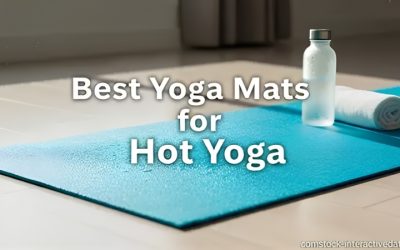
Best yoga mat bikram shopping has one governing variable: what the surface does once it is soaked. A room held near 105F (40.6C) at roughly 40 percent humidity for 90 minutes defeats most mats that grip perfectly when dry. This guide covers wet traction, then six mats. Dry grip tells you nothing about wet grip.
As an Amazon Associate we earn from qualifying purchases at no extra cost to you. Product prices and availability are accurate as of the date shown and are subject to change.


As an Amazon Associate we earn from qualifying purchases at no extra cost to you. Product prices and availability are accurate as of the date shown and are subject to change.
By Chris Parker
🛒 Best Price Today on Amazon
Prime members get fast, free shipping on everything above, plus member-only deals. New members get a 30-day free trial — cancel anytime.
How to Choose the Best Yoga Mat Bikram Classes Need
Dry grip and wet grip are separate properties, and a mat can be excellent at one and useless at the other. Picking the best yoga mat bikram sessions require means reading the surface material first, then thickness, then how the mat has to be dried and stored afterwards.
Wet Grip: Open Cell, Closed Cell and PU
Closed-cell surfaces, typically dense PVC, keep sweat on top of the mat. That makes them easy to wipe clean and extremely durable, but traction drops sharply once a puddle forms, which is why closed-cell mats in heated rooms almost always need a towel over them.
Open-cell natural rubber absorbs moisture instead, so it stays grippy as it dampens. The trade-off is permeability: the mat also absorbs bacteria, is harder to clean thoroughly and generally wears faster than a closed-cell mat under daily heated use.
Polyurethane top layers over a rubber base are the current standard for heated practice. PU absorbs moisture into the surface and becomes more tacky as you sweat, which is the only construction that reliably grips wet without a towel. It has drifted down in price but remains the premium option.
Thickness, Weight and Studio Carrying
Between 4 mm and 5 mm is the working range for heated practice. At 6 mm the extra cushion compresses unevenly under a standing foot, which makes balance poses harder in a room where you are already fighting a slick surface and reduced grip in the hands.
Weight decides whether you actually take it to class. A 5 mm PU and rubber mat at 71 x 26 in (180 x 66 cm) runs around 5.8 lb (2.6 kg), and the 79 in (201 cm) long version closer to 6.5 lb (2.9 kg). Rubber mats are heavier than PVC of the same thickness.
Size, Rolled Footprint and Home Practice Space
Sizes for the best yoga mat bikram studios expect split at two points. Standard mats run 68 to 72 in (173 to 183 cm) long, while heated-practice mats often go to 71 or 79 in (180 or 201 cm) and widen to 26 in (66 cm), which is genuinely useful when your hands are sliding and you need margin at the edges.
Rolled, a 5 mm mat is roughly 5 to 6 in (13 to 15 cm) in diameter, which fits most studio bags but is bulkier than a 4 mm travel mat. At home, allow the mat length plus about 12 in (30 cm) of clearance at each end and side for arm sweeps.
Storage is where PU mats are fussier than PVC. They must dry fully before rolling, are rolled with the top surface facing inward, and degrade under direct sunlight or heat. Measure your practice area and your drying space before ordering anything.
Latex, Cleaning and How Long Mats Last
Natural rubber and most PU-topped mats contain latex, which matters if you have a latex sensitivity. A small number of heated-practice mats use rubber-free, latex-free absorbent surfaces instead, and those are the ones to look for if that applies to you.
Cleaning routine drives lifespan more than price does. Wipe after every heated session, let the mat dry flat rather than rolled, and expect the PU layer to lose some tack over a year or two of daily practice. Open-cell rubber holds odour more readily than closed-cell PVC.
Heated rooms place demands on the body that a mat cannot address, so speak to a doctor before starting a heated practice, particularly if you have any condition affected by heat or dehydration.
Top Picks: Best Yoga Mat Bikram Options Compared
Six best yoga mat bikram picks below, judged on wet traction first and everything else second. A towel is included at the end, because the cheapest way to make a closed-cell mat usable in a heated room is to cover it rather than to replace it.
| Mat | Surface | Thickness | Wet grip |
|---|---|---|---|
| Manduka GRP Adapt | PU over natural rubber | 5 mm | Excellent, no towel needed |
| Liforme Yoga Mat | Eco-PU over rubber | 4.2 mm | Excellent |
| Gaiam Sol Dry-Grip | Latex-free absorbent | About 5 mm | Very good, latex free |
| Jade Harmony | Open-cell natural rubber | About 4.8 mm | Good when damp |
| Manduka PRO | Closed-cell PVC | 6 mm | Poor without a towel |
| Manduka Yogitoes Towel | Microfibre with grip dots | Overlay | Fixes a slippery mat |
Manduka GRP Adapt: Best Overall for Heated Rooms
A polyurethane top layer over natural rubber at 5 mm, measuring 71 x 26 in (180 x 66 cm) and weighing about 5.8 lb (2.6 kg), with a 79 in (201 cm) long version at roughly 6.5 lb (2.9 kg). The surface absorbs moisture and becomes tackier as you sweat, so no towel is required.
It contains latex, which rules it out for anyone with a sensitivity. The PU surface is sensitive to sunlight and heat, must dry fully before rolling and is rolled top-side in. It is heavy to carry and sits at the premium end of the price range. Premium tier.
Liforme Yoga Mat: Best for Alignment
An eco-polyurethane top over a natural rubber base at 4.2 mm, with etched alignment markers across the surface. The thinner profile keeps you stable in balance poses, and the PU grip performs in wet conditions as reliably as any construction on the market.
It contains natural rubber and therefore latex. The alignment markings suit some practitioners and distract others, which is a personal call rather than a flaw. It is expensive, heavy for its thickness and needs the same careful drying and storage as any PU mat. Premium tier.
Gaiam Sol Dry-Grip: Best Latex-Free Option
A 68 x 24 in (173 x 61 cm) mat using a rubber-free, latex-free absorbent surface that holds traction when soaked. For anyone with a latex sensitivity this is the practical answer, because most high-grip heated-practice mats are built on a rubber base.
Cushioning and surface texture are minimal compared with a rubber-based mat, so joint comfort suffers on kneeling work. At 68 in it is short for taller practitioners, and the narrower 24 in width gives less margin at the edges. Mid tier.
Jade Harmony: Best Natural Rubber
Open-cell natural rubber around 4.8 mm thick, available in 68, 71 and 74 in (173, 180 and 188 cm) lengths. The open-cell structure absorbs sweat and stays grippy as it dampens, and the material has more spring underfoot than any closed-cell mat.
Permeability is the cost. It absorbs bacteria as well as moisture, is harder to clean thoroughly and generally wears faster under daily heated use than a closed-cell mat. It contains natural rubber latex and carries a distinct rubber smell when new. Mid to premium tier.
Manduka PRO: Best Durability, With a Caveat
A 6 mm closed-cell PVC mat with a dense feel and a lifetime guarantee, available in 71 and 85 in (180 and 216 cm) lengths. It is close to indestructible, wipes clean in seconds and holds its shape for years of daily use, which no rubber mat matches.
It does not hold traction when wet, which is disqualifying for heated practice unless you use a towel over it. New mats need a break-in period before the dry grip develops. It is heavy at around 7.5 lb (3.4 kg) and the 6 mm thickness is less stable in balance poses. Premium tier.
Manduka Yogitoes Skidless Towel: The Cheapest Fix
A microfibre towel with silicone grip dots on the underside, sized to cover a standard mat. It converts a closed-cell PVC mat into something usable in a heated room for a fraction of the cost of replacing the mat, and it washes in a machine after every class.
It needs to be damp to grip properly, so the first few minutes of a class can be slippery. It bunches during fast transitions if not laid flat. It adds a laundry step after every session, and it does nothing for a mat that also lacks cushioning. Budget tier.
Frequently Asked Questions
These four questions cover what people ask when choosing the best yoga mat bikram classes call for, mostly about wet grip and care. Answers stay with materials; for anything about practising in heat, speak to a doctor or a qualified instructor.
Why does my mat get slippery when I sweat?
Almost always a closed-cell surface. Dense PVC keeps moisture on top rather than absorbing it, so a film of sweat sits between your hand and the mat. Either switch to a PU-topped or open-cell mat, or lay a grip towel over the one you own.
What thickness works best in a heated room?
Between 4 mm and 5 mm. That range gives enough joint padding without the uneven compression that makes 6 mm mats unstable in balance poses. If you have sensitive knees, a folded towel under them is steadier than moving up to a thicker mat overall.
Are natural rubber mats a problem for latex allergies?
Yes, and so are most PU-topped mats, since the PU sits over a rubber base. If that applies to you, look specifically for a rubber-free, latex-free absorbent surface, and check the listing rather than assuming, since materials vary between production runs.
How do I store a PU mat?
Let it dry completely flat before rolling, roll it with the top surface facing inward, and keep it out of direct sunlight and away from heat sources. Rolling a damp PU mat traps moisture against the surface and shortens its usable life considerably.
See More:
- Best beginner jump rope
- Best boxing jump rope
- Best boxer jump rope
- Best cheapest yoga mat
- Best workout exercise equipment
Final Thoughts
The best yoga mat bikram practice demands is one with sweat-activated grip: a PU top layer over rubber, or a latex-free absorbent surface if rubber is out. Stay between 4 mm and 5 mm, budget for careful drying, and measure your practice area and storage space before ordering.

Write Your Review
No reviews yet. Be the first to share your experience!