
Key takeaways
What's inside
Best home gym set up mistakes are almost always sequencing mistakes rather than product mistakes. People buy three tools that cover the same movement, discover the gap months later, and end up with a corner full of equipment that still cannot train a vertical pull or a loaded hip hinge properly. Order matters more than brand.
As an Amazon Associate we earn from qualifying purchases at no extra cost to you. Product prices and availability are accurate as of the date shown and are subject to change.


As an Amazon Associate we earn from qualifying purchases at no extra cost to you. Product prices and availability are accurate as of the date shown and are subject to change.
By Chris Parker
🛒 Best Price Today on Amazon
Prime members get fast, free shipping on everything above, plus member-only deals. New members get a 30-day free trial — cancel anytime.
How to Build the Best Home Gym Set Up in Order
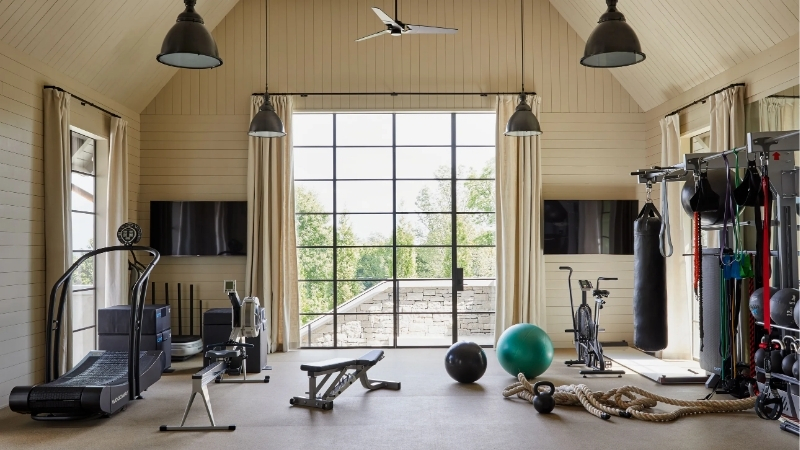
The best home gym set up is assembled one gap at a time rather than bought as a package. Three principles get you there without waste: buy by movement pattern, buy the pattern you cannot currently train, and let the footprint grow only when the previous stage has genuinely run out of capability.
Buy by Movement Pattern, Not by Muscle
Six patterns cover almost everything the best home gym set up needs to handle: horizontal push, vertical pull, hip hinge, knee-dominant leg work, a carry, and something for conditioning. Muscle-group thinking produces duplicated tools, because a second band set and a second pair of dumbbells both press and both row.
Start by listing what you can already train with nothing at all. Push-ups, squats, lunges and planks are free. That leaves the vertical pull and the loaded hinge as the honest first gaps for most people, which is why a doorway bar and a kettlebell outrank almost anything else as opening purchases.
The Three Phases and What Each Unlocks
Phase one costs the least and covers the most ground: a doorway pull-up bar, a band set and one kettlebell. Together those handle every major pattern at a level that will challenge most people for several months, and the whole lot stores under a bed when the room has another job.
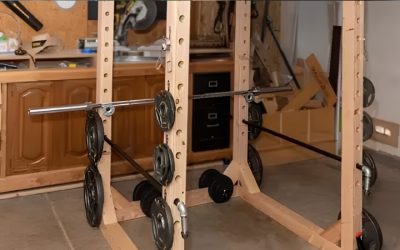
Phase two adds load rather than variety. Adjustable dumbbells give real progression on legs and pressing where bands run out, and a bench converts them into a full pressing and rowing setup. Phase three means a rack, a barbell and plates, which is a completely different commitment in space, floor loading and money.
Footprint Grows Faster Than the Kit List
Each phase of a best home gym set up roughly doubles the working envelope even though the item count barely changes. Phase one needs about 6 x 6 ft (183 x 183 cm) of clear floor. Phase two needs closer to 8 x 8 ft (244 x 244 cm) once a bench and lifting space are included, and phase three needs a dedicated room.
Storage grows differently again. Bands and a bar disappear entirely, dumbbell cradles claim a permanent corner of roughly 2 x 1.5 ft (61 x 46 cm), and a bench folds but still has to live somewhere. Measure the real floor area of the room before committing to any phase beyond the first.
Why Home Kit Got Better and Trickier at Once
Home training stopped being a temporary arrangement several years ago, and the equipment market followed. Cast iron, decent latex, adjustable dumbbells and usable benches are all available at prices that would have bought very little a decade ago, which is why a serious setup now fits a modest budget.
What arrived alongside that is a large volume of gear that photographs better than it performs. Thin tubing on benches, plastic where load-bearing parts should be steel, and selector mechanisms that fail after a year are all common, and none of it is visible in a product listing.
The filter that works is to spend where the load path runs and economise everywhere else. Benches, racks, band anchors and dumbbell mechanisms deserve the money. Mats, ropes, storage stands and accessories do not. Budgets spent that way tend to last years rather than being replaced piece by piece.
Top Picks: 6 Pieces in the Order to Buy Them
The list below is sequenced rather than ranked, because the best home gym set up depends on what you already own. The table gives the phase, the pattern each piece unlocks, and the condition that tells you it is time to move to the next item rather than a fixed timeline.
| Item | Phase | Pattern Unlocked | Footprint | Move On When |
|---|---|---|---|---|
| ProsourceFit Pull-Up Bar | One | Vertical pull | Doorway only | Never, it stays useful |
| Whatafit Resistance Bands | One | Push, row, press | Stores in a box | Legs stop being challenged |
| Amazon Basics Kettlebell | One | Hinge, squat, carry | Under a desk | Swings feel easy at reps |
| Bowflex SelectTech 552 | Two | Loaded legs and press | Permanent corner | You reach 52.5 lb (24 kg) |
| Flybird Adjustable Bench | Two | Bench, incline, rows | Folds, needs 7 x 5 ft | Not until phase three |
| Sunny Health SF-B1805 | Three | Conditioning | Approx. 4 x 2 ft (122 x 61 cm) | Optional throughout |
ProsourceFit Multi-Grip Lite Pull-Up Bar
The first purchase for most people, because the vertical pull is the one major pattern bodyweight training cannot cover on its own. Listed at 300 lb (136 kg), fitting openings of roughly 24-32 in (61-81 cm), and offering wide, neutral and close grips so hand position can rotate through the week.
It hooks over the door casing, so flush modern frames rule it out and painted trim marks unless the contact points are padded. Foam grips flatten within a season. Treat the rating as static: no kipping, no swinging, and no dropping off the bar onto a hard floor below.
Whatafit Resistance Bands Set
The cheapest way to make pressing and rowing loadable, and the item that covers the most patterns for the least space. Five stackable tubes with handles, ankle straps and a door anchor handle chest press, rows, overhead press and curls, with combined resistance typically quoted around 150 lb (68 kg).
Stacked figures are measured near full stretch, so the working range delivers less than the headline. The plastic clips fail before the latex does, so inspect them and never stretch a band towards your face. Legs are where bands run out first, usually within a few months of consistent training.
Amazon Basics Cast Iron Kettlebell
One kettlebell closes the hip hinge gap that bands and bodyweight both leave open. Single-piece cast iron with a wide handle covers swings, goblet squats, carries and get-ups, and a single sensible weight keeps working for a long time before a second one is justified.
Fixed weight means progression comes from reps and tempo until you buy another. Cast iron is loud on a hard floor and unforgiving of a dropped rep, so a mat is not optional. Handle castings vary between production runs and occasionally need light sanding to stop them tearing calluses.
Bowflex SelectTech 552
Phase two starts here. Fifteen settings from 5 to 52.5 lb (2.3 to 24 kg) per dumbbell replace roughly fifteen fixed pairs, and the 2.5 lb (1.1 kg) increments up to 25 lb (11 kg) are fine enough for genuine progression rather than jumping in steps your presses cannot absorb.
The selector mechanism is why the manual forbids dropping them, since plates disengage in the cradle and impact damages the dial. They are long at full weight, which makes some positions awkward, and above 25 lb (11 kg) the increments widen to 5 lb (2.3 kg). Changing weight is slower than grabbing a fixed pair.
Flybird Adjustable Weight Bench
The piece that converts dumbbells into a training setup rather than a set of tools. Flat and incline pressing, supported rows, step-ups and hip work all become available, and this bench folds flat for storage while listing a combined capacity of around 700 lb (318 kg).
Folding frames flex more than fixed ones under heavier pressing, which is noticeable rather than dangerous at sensible loads, and the pad is firm and narrow by commercial standards. The working envelope of roughly 7 x 5 ft (213 x 152 cm) is considerably larger than the folded size implies.
Sunny Health and Fitness SF-B1805
Conditioning is the pattern most home builds leave until last, and a magnetic indoor cycle is the quietest way to add it. A 40 lb (18 kg) flywheel with belt drive and numbered resistance levels means repeatable sessions and no consumable pad to replace every year or two.
It claims roughly 4 x 2 ft (122 x 61 cm) of floor permanently and is heavy enough that repositioning is a two-person job. Resistance steps are coarse rather than micro-adjustable and the console is basic. On a suspended upstairs floor, a dense rubber mat underneath is close to essential.
Frequently Asked Questions
The recurring questions about the best home gym set up are about order and timing rather than about specification. These four cover what to buy first, when a bench becomes necessary, whether a barbell is ever required at home, and how long a sensible build actually takes.
What should I buy first?
The pattern you cannot currently train. Most people can already do push-ups, squats and lunges with nothing, so the vertical pull is the honest first gap, making a doorway bar the highest-value opening purchase. Bands come second, and a kettlebell third for the loaded hinge.
When do I actually need a bench?
Once you own adjustable dumbbells and pressing on the floor has become the limiting factor rather than the weight. Floor presses work perfectly well up to a point, but they cut the range of motion short. If you are still training with bands and bodyweight, a bench adds very little.
Do I need a barbell and rack at home?
Only if you want to squat and deadlift heavy, and only if you have a dedicated room with the ceiling height and floor loading to support it. Adjustable dumbbells up to 52.5 lb (24 kg) each cover most general training goals for years without any of that commitment.
How long should the whole build take?
Give each phase at least a few months of consistent use before moving on. That is long enough to find out where the current kit genuinely runs out, which is the only reliable signal that the next purchase will be used. Buying phases one and two together usually wastes money.
See More:
- Best home pull-up bar
- Best at home pull up bar
- Best in house pull up bar
- Best rated ab roller
- Best yoga travel mat
Final Thoughts
The best home gym set up is built one gap at a time. Start with a doorway pull-up bar, a band set and one kettlebell, which cover every major pattern and store under a bed. Add dumbbells and a bench when legs outgrow band tension. Measure the working envelope first.

Write Your Review
No reviews yet. Be the first to share your experience!