
Key takeaways
What's inside
Best type of rowing machine is decided by four resistance systems that feel and sound completely different. Air is loud and responsive, magnetic is quiet and flat, water splits the difference, hydraulic is compact and compromised. This guide compares all four on footprint, noise, rail length and stroke quality, then covers six machines worth considering.
As an Amazon Associate we earn from qualifying purchases at no extra cost to you. Product prices and availability are accurate as of the date shown and are subject to change.
As an Amazon Associate we earn from qualifying purchases at no extra cost to you. Product prices and availability are accurate as of the date shown and are subject to change.


By Chris Parker
🛒 Best Price Today on Amazon
Prime members get fast, free shipping on everything above, plus member-only deals. New members get a 30-day free trial — cancel anytime.
Start 30-Day Prime Free Trial →See Today’s Amazon DealsHow to Choose a Rowing Resistance System
On the best type of rowing machine, every other specification follows from the resistance system, including how loud it is, how much floor it needs and whether it stores upright. The four criteria below explain what separates the best type of rowing machine for a garage from one for a flat.
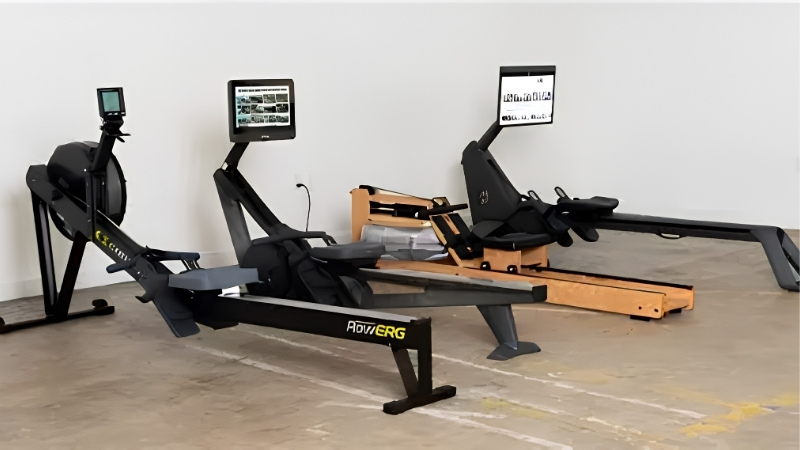
Air, Water, Magnetic and Hydraulic Compared
Air resistance uses a flywheel and an adjustable damper. It responds directly to how hard you pull, which is why it is the standard in competitive rowing, but it is also by far the loudest option and the sound rises with your effort rather than staying constant.
Magnetic resistance sets a fixed level and stays there regardless of stroke speed, which makes it the quietest option and the obvious choice for an apartment. The trade is feel: the stroke lacks the load-up that air and water give you at the catch.
Water resistance uses paddles in a tank and lands between the two, with a smooth stroke and a wash sound that most people find pleasant rather than intrusive. Hydraulic pistons are the compact, cheap option, but the stroke is short and the arms move independently of a real rowing path.
Noise, Neighbours and When You Train
The best type of rowing machine for feel is also the loudest: an air rower at full effort is roughly comparable to a vacuum cleaner, and the noise travels through walls and floors. If you train early or live above someone, that alone rules it out regardless of how good the stroke feels.
Magnetic machines run at conversational volume and water rowers sit between the two. Whichever you choose, a 6-8 mm rubber mat underneath cuts the structural noise transmitted downward, which is usually what neighbours actually complain about rather than the airborne sound.
Rail Length, User Height and Weight Limits
Rail length on the best type of rowing machine determines whether taller users get a full stroke at all. Machines rated to around 6 ft 4 in (193 cm) cover most people, but budget models often stop shorter and a cramped stroke turns the machine into an arm exercise rather than a full-body one.
Weight limits vary from about 250 lb (113 kg) on budget machines up to 500 lb (227 kg) on commercial ones. Check both figures against everyone who will use it, since a limit exceeded is where seat rollers and rails wear out fastest.
Footprint, Storage and Ceiling Height
The best type of rowing machine in full size measures roughly 8 x 2 ft (2.4 x 0.6 m) in use, which is far more floor than most people expect. Air and magnetic machines usually separate or fold to stand upright at about 2 x 2 ft (0.6 x 0.6 m) with 7 ft (2.1 m) of height needed.
Water rowers stand upright too but stay heavy and full of water, so moving one is a two-person job. Measure both the rowing footprint and the upright storage spot including ceiling height before ordering, because these are the hardest machines to return.
Top Picks: Best Type of Rowing Machine by Resistance
The six machines below cover all four resistance systems across different price points. The table lists the specs that decide the purchase, and each write-up names a genuine drawback so you can weigh stroke quality against noise and storage honestly.
| Machine | Resistance | Noise | Storage | Price tier |
|---|---|---|---|---|
| Concept2 RowErg | Air | Loud | Separates in two | Premium |
| Sunny Health SF-RW5515 | Magnetic | Very quiet | Folds upright | Budget |
| WaterRower Natural | Water | Moderate wash | Stands upright | Premium |
| Stamina BodyTrac Glider | Hydraulic | Quiet | Folds small | Budget |
| NordicTrack RW600 | Magnetic with screen | Quiet | Folds upright | Mid to premium |
| Sunny Health Obsidian Surge | Water | Moderate wash | Stands upright | Mid |
Concept2 RowErg
The reference machine, and the one nearly every rowing club and coach uses. Air resistance responds directly to effort, the performance monitor is the standard others are measured against, and parts remain available years after purchase rather than becoming obsolete.
It is loud, and that is the single reason most people end up choosing something else. The footprint in use is also large at roughly 8 ft long, though it separates into two pieces for storage. Pricing sits at the premium end and rarely discounts.
Sunny Health SF-RW5515 Magnetic Rower
The quiet budget answer, and genuinely adequate for general fitness rowing. Eight magnetic resistance levels set a fixed load, the machine folds upright, and it runs quietly enough to use at six in the morning in a flat without complaints.
The stroke lacks the load-up of air or water, so it feels flat compared with a proper rowing action. Rail length also suits shorter users better, and taller rowers will find the stroke cut short at full extension.
WaterRower Natural
The wooden-framed water rower that many people buy as much for how it looks as how it rows. The stroke is smooth, the wash sound is pleasant rather than intrusive, and it stands upright in a corner taking about 2 x 2 ft of floor.
It is expensive, heavy, and the tank must be treated periodically to keep the water clean. Resistance is also fixed by water volume and stroke rate rather than adjustable on a dial, which some people find limiting for interval work.
Stamina BodyTrac Glider
The compact hydraulic option, and the only type here that folds down small enough to slide under a bed. For a very small flat or an occasional user, it delivers a workout at a fraction of the cost and space of a full-size machine.
The stroke is short and the arms move independently rather than following a real rowing path, so the movement is not genuinely comparable. Hydraulic cylinders also heat up and lose consistency during longer sessions.
NordicTrack RW600
Magnetic resistance with a large screen and guided sessions, which is the reason to choose it over a plain magnetic rower. For people who need structure and variety to stay consistent, that content is worth more than a marginally better stroke.
The subscription is where the real cost sits, and much of the screen’s usefulness disappears without it. The machine is also heavier and bulkier than basic magnetic rowers despite folding, so check the upright storage dimensions carefully.
Sunny Health Obsidian Surge Water Rower
Water resistance at a mid-tier price, which makes the smooth stroke and pleasant sound accessible without premium spend. It stands upright for storage and the steel frame is more compact than the traditional wooden designs.
Build finish is a step below the premium water rowers and the seat is less comfortable over longer sessions. The tank still needs periodic treatment, and filling or emptying it is a job you will not want to repeat often.
Frequently Asked Questions
These four questions cover what people most want settled about the best type of rowing machine before committing — which resistance type suits a flat, whether air is worth the noise, water maintenance and how much space is genuinely needed.
Which type is best for an apartment?
Magnetic, by a clear margin. It runs at conversational volume and folds upright, and the fixed resistance is perfectly adequate for general fitness. Add a rubber mat underneath, since structural noise through the floor is what neighbours notice rather than the machine itself.
Is air resistance worth the noise?
If you row seriously or train for rowing specifically, yes, because the stroke responds to effort in a way no other system replicates. For general cardio it is not worth the trade, and a magnetic or water machine will keep you training more consistently.
Do water rowers need maintenance?
Yes. The tank needs a purification treatment periodically to keep the water clear, typically a tablet added every few months. It is a small job, but it is ongoing, and filling or emptying the tank is awkward enough that you will do it rarely.
How much space does the best type of rowing machine need?
About 8 x 2 ft in use plus room to get on and off, so allow roughly 9 x 5 ft (2.7 x 1.5 m) of clear area. Upright storage needs about 2 x 2 ft of floor and 7 ft of ceiling, which rules out some basements entirely.
See More:
- Ankle weights best
- Best rated ankle weights
- Best home workout equipment budget
- Best resistance bands for men
Final Thoughts
The best type of rowing machine follows from your space and your neighbours rather than from the stroke alone: magnetic for a flat, air if you row seriously and have the room, water if you want a middle ground you enjoy using. Measure both the rowing footprint and the upright storage spot before ordering, and put a mat underneath either way.


Write Your Review
No reviews yet. Be the first to share your experience!