
Key takeaways
What's inside
Best resistance exercise bands depends entirely on format, because a stackable tube set and a flat power loop do almost nothing in common. Width, length and anchoring decide what each one can train. This roundup covers six formats, the sizes each comes in, and where every one of them genuinely belongs in a programme.
As an Amazon Associate we earn from qualifying purchases at no extra cost to you. Product prices and availability are accurate as of the date shown and are subject to change.

#1 Pick

#2 Pick

#3 Pick

#4 Pick

#5 Pick

#6 Pick

#7 Pick

As an Amazon Associate we earn from qualifying purchases at no extra cost to you. Product prices and availability are accurate as of the date shown and are subject to change.
By Chris Parker
🛒 Best Price Today on Amazon
Prime members get fast, free shipping on everything above, plus member-only deals. New members get a 30-day free trial — cancel anytime.
How to Choose the Best Resistance Exercise Bands for Your Training
Shopping for the best resistance exercise bands goes wrong when a set bought for one job is used for another. The four criteria below sort formats by what they can anchor to and what they can load, then explain why the resistance numbers printed on the packet are ranges.

Band Format Decides What You Can Train
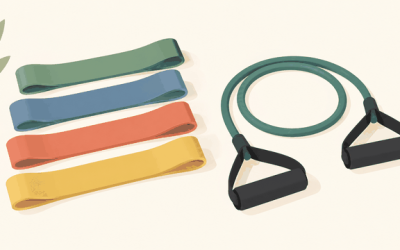
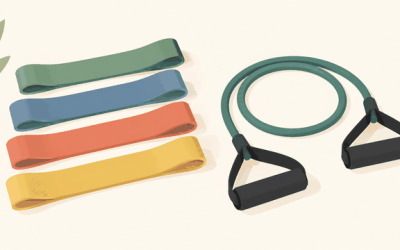
The best resistance exercise bands for cable-style work are stackable tubes, which clip together with handles and a door anchor, which makes them the closest thing to a cable machine. They cover rows, presses, curls and pull-aparts, and resistance builds by adding tubes rather than swapping the whole band.
Flat loop bands are continuous rings, typically 41 in (104 cm) around, sized by width from about 0.5 in (13 mm) to 2.5 in (64 mm). Wider is stronger. They anchor over a bar for pull-up assistance or under the feet for pressing and rowing.
Mini loops sit around 12 in (30 cm) and load hip and shoulder work at low resistance. Flat continuous bands cut to length suit controlled low-load work, and band-powered bars put a rigid handle between two loops for a barbell-style grip.
Why Band Resistance Numbers Are Ranges
A band marked 30 to 60 lb (14 to 27 kg) is not a 30 lb weight. It produces roughly 30 lb of force at one stretch length and roughly 60 lb near the top of its usable range, and the figure between depends on how far you have pulled it.
That variable curve is the defining property of every elastic band. Resistance is lightest at the start of a movement, which is exactly where most lifts are hardest, and heaviest at the end of the range, where you are usually strongest.
The practical consequence is that band loads cannot be logged like weights. Progression comes from changing band, changing anchor distance or changing tempo, none of which is anywhere near as repeatable as adding 2.5 lb to a dumbbell.
Storage, Anchors and the Space You Need
Bands are the only equipment category here with effectively no footprint at all. A full stackable set, handles and ankle straps fit in a drawer, and flat loops hang on a hook. That is the single biggest argument for owning a set in a shared room.
The space you do need is anchoring. Door anchors require a solid door that opens away from you, wall and ceiling anchors need a joist or masonry fixing rather than plasterboard, and pull-up assistance needs a bar rated for the added force.
Measure the actual dimensions of the space you plan to use before deciding on a format, since band work needs clear room in the direction of pull. A row against a door anchor uses more floor length than the same movement on a machine.
Latex, TPE and How Bands Fail
Most of the best resistance exercise bands use layered or continuous natural latex, which contains proteins that cause reactions in some people. Thermoplastic alternatives exist and are worth seeking out if latex is a problem, though they generally feel less elastic.
Latex degrades with ultraviolet light, heat and ozone whether or not the band is used. Store bands away from windows and radiators, inspect them for surface cracking or a chalky bloom every few months, and replace rather than waiting for failure under tension.
The mid price tier is where the differences show. Cheap sets often overstate resistance, use thinner single-layer latex that splits sooner, and fit handles that cannot be replaced. Paying up buys layered construction, honest ratings and separately available components.
Top Picks: 6 of the Best Resistance Exercise Bands by Format
One of the best resistance exercise bands per format, so the right entry depends on what you are trying to anchor and load. The table pairs each format with its typical size, what it anchors to and the job it is genuinely built for.
| Band type | Example | Typical size | Anchors to | Built for |
|---|---|---|---|---|
| Stackable tubes | Bodylastics set | Clip handles, layered | Door anchor | Rows, presses, curls |
| Flat power loops | Serious Steel bands | 41 in (104 cm) loop | Pull-up bar or feet | Pull-up assistance |
| Mini loops, latex | Fit Simplify set | ~12 in (30 cm) | Legs or arms | Hip and shoulder work |
| Mini loops, fabric | Non-roll fabric bands | Wider, ~3 in (76 mm) | Legs | Squat and hip work |
| Flat continuous bands | TheraBand rolls | Cut to length | Hand held or tied | Low-load controlled work |
| Band-powered bar | Gorilla Bow Original | Rigid bar plus loops | Own frame | Barbell-style grip |
1. Bodylastics Stackable Tube Set
The most versatile format and the best first purchase. Clipping tubes together builds resistance in layers instead of forcing a whole-band swap, and with a door anchor the set covers rows, presses, pull-aparts and pull-up assistance from one drawer.
Handles and clips are the failure points rather than the tubes, so check they are sold separately. The door anchor needs a solid door that opens away from you, and a snapped clip under tension is the one genuine hazard in the category.
2. Serious Steel Flat Power Bands
Continuous 41 in (104 cm) loops sized by width, which is the standard format for assisted pull-ups. The band takes most of your body weight at the bottom of the movement, where the pull is hardest, then fades away as you rise toward the bar.
Assistance disappears exactly at the top, which is where many people fail, so it trains the bottom range more than the finish. Wide bands are also strong enough to be genuinely difficult to control if they slip off a bar under tension.
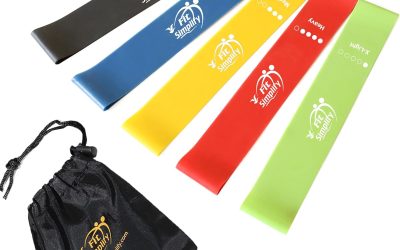
3. Fit Simplify Mini Loop Bands
Small latex loops of around 12 in (30 cm), sold in graded resistances, aimed at hip, glute and shoulder work at relatively low load. They cost very little, weigh almost nothing and cover the accessory work that dumbbells load awkwardly.
Thin latex loops tend to roll and bunch above the knee during squatting, which is the most common complaint about the format, and they wear out faster than thicker bands do. Treat them as consumables rather than as a permanent purchase.
4. Fabric Non-Roll Mini Loops
The direct fix for the rolling problem. A wider fabric band of around 3 in (76 mm) stays flat against the thigh through a full squat, which makes it genuinely usable during compound movements rather than only during isolation drills.
Fabric bands come in fixed resistance steps rather than a smooth range, so progression is coarser, and they cost several times what latex loops do. The stitching is the wear point here, and it cannot be repaired once it starts to go.
5. TheraBand Flat Continuous Bands
Sold on a roll and cut to whatever length suits you, which makes them the most adaptable format available for controlled low-load work. Colour-coded resistances stay consistent across the range, and non-latex versions are widely available.
They are too light for meaningful strength loading and tear at nicks or fingernail marks, so handling matters. If you have an injury or a specific condition, how to use them is a question for a doctor or a certified professional rather than a product guide.
6. Gorilla Bow Original
A rigid bow-shaped bar tensioned by loops, giving a barbell-style grip for presses, rows, squats and curls with total resistance around 110 lb (50 kg) depending on the bands fitted. It hangs flat on a wall bracket when not in use.
Resistance is still variable and lightest where lifts are hardest, so it does not replace a loadable bar. Bands are consumable, and the fixed bar length limits single-arm and rotational work that a cable or tube set handles easily.
Frequently Asked Questions
Most questions about the best resistance exercise bands concern whether they build real strength and how to pick a starting resistance. Each answer below works from how the elastic actually behaves rather than from marketing figures.
Can Bands Replace Weights?
For assistance work, accessory volume and warm-ups, yes. For progressive strength loading, no. Resistance is lightest at the start of the range where most lifts are hardest, and it cannot be measured consistently enough to track week to week.
How Do I Know Which Resistance to Buy?
Buy a graded set rather than a single band, because the useful resistance varies by movement rather than by person. A set spanning light to heavy covers pressing, rowing and hip work, whereas a single band suits only one of the three.
How Long Do Bands Last?
Latex degrades with ultraviolet light, heat and ozone even in storage, so age matters as much as use. Inspect every few months for surface cracking or a chalky bloom, keep them out of direct sun, and treat replacement as a running cost.
Are Bands Safe for Pull-Up Assistance?
With a bar rated for the added force and a band inspected before use, yes. The risks are a band slipping off the bar under tension and a leverage-mounted doorway bar taking more force than it was designed for. Check both before loading.
See More:
- Best changeable dumbbells
- Best rated yoga mat
- Best mat yoga
- Best home gym equipmen
- Best fitness equipment for home gym
Final Thoughts
The best resistance exercise bands are whichever format matches what you can anchor to and what you need to load. Buy graded sets rather than single bands, check that handles and clips are replaceable, and store them away from sunlight and heat.


Write Your Review
No reviews yet. Be the first to share your experience!