
Key takeaways
What's inside
Best pull up bar for doorway selection is a fitting problem before it is a shopping one. Three measurements decide almost everything: inside frame width, the depth of the flat top edge, and the height of the moulding above the door. This guide compares five bars against those numbers rather than against brand claims.
As an Amazon Associate we earn from qualifying purchases at no extra cost to you. Product prices and availability are accurate as of the date shown and are subject to change.

#1 Pick

#2 Pick


#4 Pick

#5 Pick

#6 Pick

#7 Pick

As an Amazon Associate we earn from qualifying purchases at no extra cost to you. Product prices and availability are accurate as of the date shown and are subject to change.
By Chris Parker
🛒 Best Price Today on Amazon
Prime members get fast, free shipping on everything above, plus member-only deals. New members get a 30-day free trial — cancel anytime.
How to Fit the Best Pull Up Bar for Doorway Use
Almost every bad review of a best pull up bar for doorway use is a fitting failure rather than a quality failure. The bar was too wide, the trim was too shallow, or the door was hollow. Four things need settling first: the frame measurements, the space around the doorway, the load rating, and the door type.
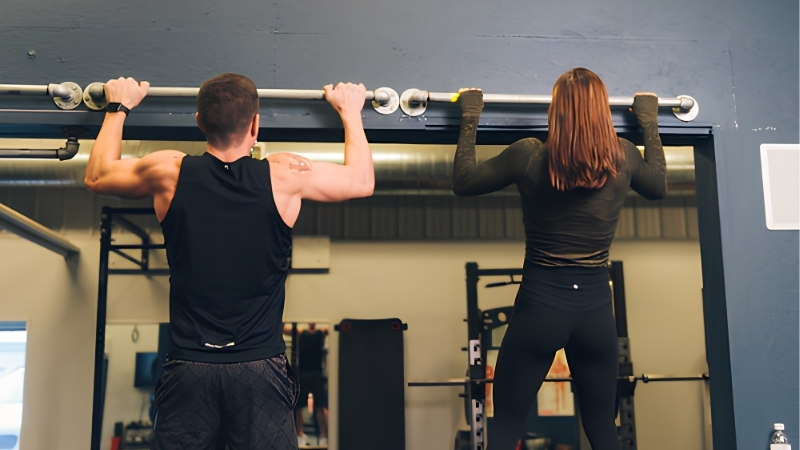
The Three Measurements and the Space Around Them
Start with the inside frame width, since it rules out most options immediately. Mainstream leverage bars cover 24 to 36 in (61 to 91 cm), some reach 24.4 to 36.2 in (62 to 92 cm), and adjustable rods stretch to around 39 in (99 cm). Measure between the architraves rather than across the door itself, because those two are rarely the same figure.
Next comes the depth of the flat top edge that the bar actually hooks over. Many designs need roughly 0.6 to 0.8 in (15 to 20 mm) of flat depth to seat properly, and some also quote a maximum frame depth near 6 in (15 cm). Modern slim architrave often fails this test even when the width is well within range.
Then the space itself. You want head clearance above the bar at the top of a rep and enough floor below to hang without touching down, which a standard 80 in (203 cm) doorway rarely provides for a taller person. Measure the actual doorway before ordering anything, including the wall area above the frame.
Load Rating and What Generates the Force
Rated capacity on a best pull up bar for doorway use runs from about 250 lb (113 kg) on compact handle designs to 440 lb (200 kg) on reinforced frames, with most mainstream bars sitting near 300 lb (136 kg). Choose a bar rated at least 50 lb (23 kg) above your own bodyweight rather than matching it exactly.
The margin is not padding. A controlled hang applies roughly your bodyweight, but explosive pulls, kipping and a weighted vest generate momentary force well above that. The rating also assumes even loading across both contact points, which a one-armed hang or a swinging exit from the bar does not deliver.
Grip layout is the other half of the value here. Multi-grip frames give wide, narrow, neutral and parallel positions from one unit, which covers far more work than a plain straight bar does. Compact handle designs give the least variety but fit frames where a full-width bar simply cannot be made to sit.
Door Type, Frame Condition and Damage
The doorway carries the load, not the bar, and this is the point most listings skate over. Hollow-core doors, glass panels, sliding doors and thin or split timber frames are unsuitable at any rating. A solid frame with sound moulding is the actual requirement here, and it should be inspected carefully before every session.
Damage appears as compressed moulding and paint marks where the rear brace bears on the wall above the door. Wide padded contact points spread that force rather better than narrow steel feet do. If the trim already shows a dent from a previous bar, treat that as a warning sign rather than as cosmetic wear.
Where the Doorway Bar Market Sits Now
The best pull up bar for doorway training sits in a budget category where differences are small but genuine. Mainstream bars cluster tightly on price, and what separates them is fit range, grip comfort and how well the pads protect the frame, rather than any meaningful gap in the strength of one steel tube against another.
Recent movement in the category has been in hook geometry and in quoted capacity. Larger rear braces, wider padded contacts and ratings up to 440 lb (200 kg) have appeared, which mostly buys margin rather than permission to train heavier on the same frame. Folding handles have also arrived, aimed at storage rather than performance.
The category’s honest limit is that a doorway bar is always a compromise against a mounted one. If you own the property and can bolt into studs, a wall or ceiling bar is more stable and it allows ring work. The best pull up bar for doorway use exists for renters and rooms where drilling is not an option.
Top Picks: 5 Bars Chosen by Fit
These five cover the fitting problems that come up most often when choosing the best pull up bar for doorway training, running from standard frames through to awkward trim. Figures below are manufacturer specifications. None of these bars are suitable for hollow-core, glass, sliding or thin timber frames under any circumstances at all.
| Bar | Fits frames | Rated capacity | Fitting problem solved |
|---|---|---|---|
| Iron Gym Total Upper Body | 24-36 in / 61-91 cm | ~300 lb / 136 kg | Standard frames |
| Perfect Fitness Multi-Gym Pro | Up to 33 in / 84 cm wide | ~300 lb / 136 kg | Deep frames, up to 6 in |
| Garren Fitness Maximiza | Non-standard frames | ~300 lb / 136 kg | Unusual trim profiles |
| Sportneer Doorway Pull Up Bar | 24.4-36.2 in / 62-92 cm | ~440 lb / 200 kg | Capacity margin |
| Jayflex CrossGrips | Handle pair, no full bar | ~250 lb / 113 kg | Frames that fit nothing |
Iron Gym Total Upper Body Workout Bar
For a genuinely standard frame this is still the default answer. It fits frames from 24 to 36 in (61 to 91 cm), carries a rating near 300 lb (136 kg), goes up in under a minute with no tools at all, and the multi-grip frame covers wide, narrow, neutral and parallel positions from a single piece of steel.
The bar sits a little narrow for taller users with broad shoulders, which shows up as knuckles brushing the architrave on wide grips. Foam grips harden and split after a few years of steady use. Neither is serious at this sort of price, but both are worth knowing about before the order actually goes in.
Perfect Fitness Multi-Gym Pro
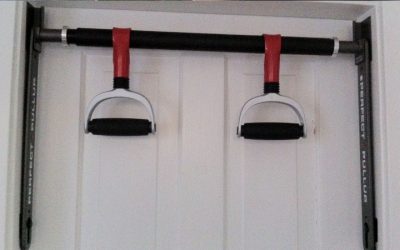
This is the pick for those cases where the moulding is unusually deep, or where a previous bar has already marked up the frame. The patented door frame guard and the two-way adjustable design handle frames up to 33 in (84 cm) wide and up to 6 in (15 cm) deep, in a unit weighing about 6.2 lb (2.8 kg).
Grip foam here is noticeably better than on the budget bars, which matters across longer sets. The trade-offs here are a higher price for the same rated capacity, and a narrower maximum frame width than several competitors offer, so an unusually wide doorway rules this one out before anything else even gets considered.
Garren Fitness Maximiza Pull-Up Bar
When the architrave profile is wrong for a conventional hook, this is the design that usually still manages to work. It is built for non-standard frames, unusual trim shapes and moulding sitting at an awkward height, with a rating around 300 lb (136 kg) that sits in line with the mainstream bars in this guide.
Setup is fiddlier than on a one-piece hook-over bar, because adaptability is exactly what you are paying for, and getting it right the first time takes rather longer. Grip comfort is average rather than good, and it is less convenient to take down and refit daily than a simple leverage frame would be.
Sportneer Doorway Pull Up Bar
Reinforced designs exist to buy margin, and this is much the clearest example in the group. A rating near 440 lb (200 kg), a fit range of 24.4 to 36.2 in (62 to 92 cm), and folding handles that cut the stored profile down. For anyone training with added load, that extra headroom is genuinely reassuring.
The rating is only ever as good as the door frame behind it, so extra steel does not license heavier work on weak or damaged moulding. It needs a flat top edge of roughly 0.6 to 0.8 in (15 to 20 mm), which some modern slim trim simply does not offer, and it costs a good deal more than the standard bars.
Jayflex CrossGrips
When no full-width bar will sit in the frame, a pair of compact handles that brace inside the doorway is the remaining option. They pack down to almost nothing, they travel easily, and they give a neutral grip that suits shoulders which find a straight pronated bar uncomfortable over higher volumes.
Rated capacity around 250 lb (113 kg) is the lowest figure in this guide, and the grip is fixed neutral, so wide and narrow pronated work disappears from the programme entirely. Stability depends entirely on the handles staying braced, which rules out anything explosive. Treat them as a fitting solution rather than as an upgrade on a full bar.
Frequently Asked Questions
These come up most often from people who have measured a doorway once, found the numbers ambiguous, and want to know which figure actually decides the purchase before they commit to anything. The answers below assume a normal house with solid timber frames rather than a new-build fitted with slim architrave throughout.
Which measurement matters most?
The depth of the flat top edge, because the width ranges quoted are generous and the depth ranges are not. Many bars need roughly 0.6 to 0.8 in (15 to 20 mm) of flat trim to seat properly, and modern slim architrave will often fail that test even when the doorway width sits comfortably within range.
Do these bars work in a rented flat?
That is exactly what these bars are designed for, since nothing is drilled and the bar lifts off again in seconds. The risk is cosmetic damage to the moulding rather than anything structural, so choose a design with wide padded contact points and check the trim regularly for compression marks or for flaking paint.
How much clearance do I need above and below?
Enough head room above the bar to finish a rep without ducking, and enough floor below it to hang with bent knees. A standard 80 in (203 cm) doorway leaves most taller people bending their legs throughout, which is entirely normal. Measure the doorway and the wall above it carefully before ordering anything.
Is a mounted bar worth it instead?
If you own the property and have studs or masonry to bolt into, then yes. A mounted bar is more stable, it allows ring work, and it removes the frame damage question completely. A doorway bar still remains the right answer for renters, and for any room where holes in the wall are simply not acceptable.
See More:
- Best gym bench for home
- Best weight benches home gym
- Best at home full body workout equipment
- Best resistance bands workout
- Best resistance bands leggings
Final Thoughts
The best pull up bar for doorway training is whichever one fits the frame you actually have, which is why the tape measure comes before the shortlist. Check inside width, flat trim depth and moulding height, then compare capacity and grip layout. Leave a real margin above bodyweight, and inspect the frame before every session.






Write Your Review
No reviews yet. Be the first to share your experience!