
Key takeaways
What's inside
Best kettlebell decisions come down to the handle long before the weight on the label matters. This guide compares six bells on handle width and diameter, coating and finish, weight jumps in lb and kg, and what each one does to your floor, with the honest limitation of every option spelled out rather than buried.
As an Amazon Associate we earn from qualifying purchases at no extra cost to you. Product prices and availability are accurate as of the date shown and are subject to change.

#1 Pick


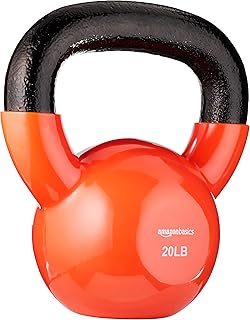


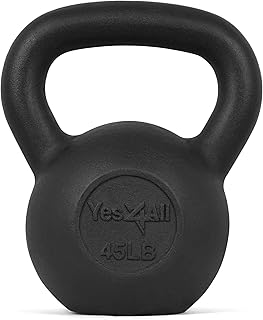
As an Amazon Associate we earn from qualifying purchases at no extra cost to you. Product prices and availability are accurate as of the date shown and are subject to change.
By Chris Parker
🛒 Best Price Today on Amazon
Prime members get fast, free shipping on everything above, plus member-only deals. New members get a 30-day free trial — cancel anytime.
How to Choose the Best Kettlebell for Home Training
A kettlebell is a handle attached to a mass, and almost every complaint about them traces back to the handle rather than the mass. Choose the best kettlebell by getting width, diameter and finish right first, then think about the weight jumps you can afford and where the bell will sit between sessions.
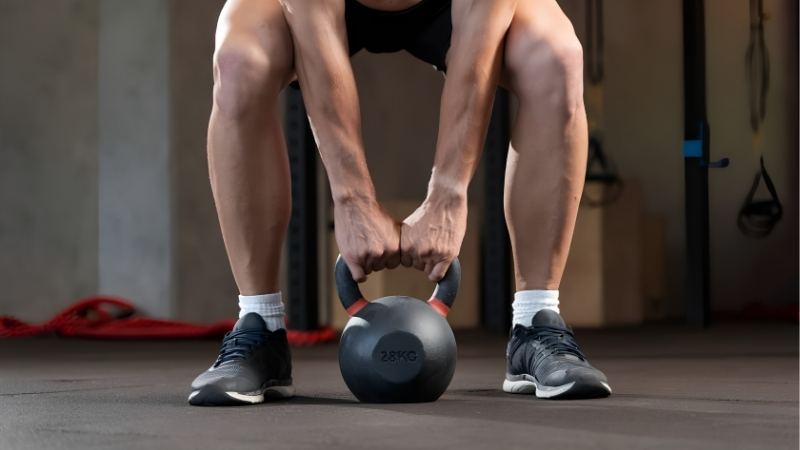
Weight Choice and the Size of the Jumps
Kettlebells traditionally step in 4 kg increments: 8, 12, 16, 20 and 24 kg, which is 18, 26, 35, 44 and 53 lb. Those are big jumps compared with dumbbells, so most people own two or three bells rather than one, and progress by changing exercise or repetitions in between.
A common starting point is 8 to 12 kg (18 to 26 lb) for pressing and get-ups, and 12 to 16 kg (26 to 35 lb) for two-handed swings, since swings tolerate considerably more load than overhead work does. Buying a single bell that is too heavy to press is the most frequent mistake in this category.
Handle Width, Diameter and Coating
Handle diameter usually falls between 33 and 38 mm, and competition bells standardise near 35 mm at every weight in the range. Thicker handles shift work toward the grip, which is fine for swings but limits pressing volume. Width matters just as much, since two-handed swings need room for both hands side by side.
Coating decides how the bell feels once your hands sweat. Powder coat holds chalk well and gives predictable grip, enamel is smooth and can become slick when wet, and vinyl is kind to floors but slippery and noticeably thicker in the hand. Coating also affects how the bell survives contact with concrete.
Footprint, Floor Protection and Durability
A single bell occupies less than 12 x 12 in (30 x 30 cm), but swings need roughly 6 x 6 ft (183 x 183 cm) of clear floor plus about 8 ft (244 cm) of ceiling height for overhead work. Measure the space, including the area behind you, before starting any ballistic movement at home.
Bells should be set down under control rather than dropped, since enamel chips and vinyl splits on hard floors. A rubber mat 3/8 in (10 mm) or thicker protects both bell and floor. Powder coating has moved down into mid tier, which is where the best kettlebell value now sits. The World Health Organization’s 2020 guidance suggests two strengthening sessions weekly.
Top Picks: Best Kettlebell Options by Finish and Format
Six bells covering budget cast iron through competition steel and one adjustable design, so the best kettlebell for a beginner is not confused with one for technique work. Specifications are manufacturer figures for weight range, finish and handle format, and cost is given as a tier rather than a number.
| Kettlebell | Format | Finish | Typical range |
|---|---|---|---|
| Kettlebell Kings Powder Coat | Single-cast | Powder coat | 8–70 lb (4–32 kg) |
| Kettlebell Kings Competition | Steel, uniform size | Painted steel | Colour-coded by weight |
| Bowflex SelectTech 840 | Adjustable | Moulded shell | 8–40 lb (3.6–18 kg) |
| CAP Barbell Cast Iron | Single-cast | Enamel | 5–80 lb (2.3–36 kg) |
| Amazon Basics Cast Iron | Single-cast | Enamel or vinyl | 10–60 lb (4.5–27 kg) |
| Yes4All Vinyl Coated | Single-cast | Vinyl | 5–50 lb (2.3–22.7 kg) |
Kettlebell Kings Powder Coat: Best All-Round Handle
A single-cast bell with a powder-coated finish that holds chalk well and keeps grip predictable as hands get sweaty mid-session. The handle is wide enough for two hands on swings and smooth enough on the underside for cleans, which is the combination most home kettlebell training actually needs.
It sits in the premium tier, so covering three separate weights costs noticeably more than budget cast iron does. Powder coat is also textured, and high-repetition snatch work will abrade skin without chalk or careful technique, which is worth knowing before committing to a heavy bell.
Kettlebell Kings Competition: Best Consistency Across Weights
Competition bells keep identical outer dimensions at every weight, with a handle standardised near 35 mm, so a 16 kg and a 24 kg bell sit on the forearm in exactly the same way. For anyone learning technique across several loads, that consistency removes a real variable from the movement.
The trade-offs are cost and construction. Hollow steel shells dent if dropped on a hard edge, the fixed handle diameter suits pressing more than heavy two-hand swings, and buying a full ladder of weights in this format is the most expensive route in this comparison.
Bowflex SelectTech 840: Best for One-Bell Households
An adjustable bell covering roughly 8 to 40 lb (3.6 to 18 kg) across six settings, replacing several cast iron bells in under 12 x 12 in (30 x 30 cm) of floor space. For a small flat where storing three separate bells is unrealistic, it solves the progression problem neatly in one purchase.
The body is bulkier than cast iron, so it sits differently on the forearm during racked positions and cleans. It must not be dropped, which rules out release work and heavy snatch practice, and the moulded shell and dial are the parts most likely to fail over time.
CAP Barbell Cast Iron: Best Budget Ladder
Classic enamel-coated cast iron across a wide range from about 5 to 80 lb (2.3 to 36 kg), with a flat base that stands stable between sets. Buying three weights here costs less than a single premium bell, which is why it remains the default starting point for most home lifters.
Enamel is smooth, so grip gets slick once hands sweat and chalk helps less than it does on powder coat. The finish also chips where the bell meets the floor, and casting seams on the handle vary between units, so occasional light sanding is simply part of ownership.
Amazon Basics Cast Iron: Best Simple Entry Bell
A straightforward cast iron bell with a flat base and a coated finish, available across roughly 10 to 60 lb (4.5 to 27 kg) in single-weight increments. For a first purchase bought to test whether kettlebell training suits you at all, it delivers the correct shape and weight without unnecessary complication.
The handle finish is the compromise: it is smoother than powder coat and can feel slippery during longer sets of swings. Weight tolerance on budget cast iron also varies slightly between units, which matters if you later train with matched pairs for double bell work.
Yes4All Vinyl Coated: Best for Floor Protection
Vinyl-coated cast iron in colour-coded weights from roughly 5 to 50 lb (2.3 to 22.7 kg), designed to be kinder to hardwood and tile than bare iron is. In an upstairs room without rubber flooring, the softer coating genuinely reduces both damage and noise every time the bell is set down.
The same coating makes the handle thicker and slicker than a bare steel grip, which limits high-repetition swing work considerably. Vinyl also splits at the base after repeated contact with hard floors, and once it has torn it traps grit against the bare iron underneath.
Frequently Asked Questions
These four questions decide most first purchases, and getting the answers right matters considerably more than which brand happens to be stamped on the best kettlebell you eventually choose for the room or how much you paid for it.
What weight should I buy first?
Many beginners start with 8 to 12 kg (18 to 26 lb) if pressing and get-ups are the priority, and 12 to 16 kg (26 to 35 lb) if two-handed swings are the focus instead. Buying a single bell that is too heavy to press overhead is the most common mistake made in this category.
Can I drop a kettlebell?
Not indoors, and certainly not on any of the finishes listed here. Enamel chips, vinyl splits and competition steel dents on a hard edge. Set the bell down under control every time, use a rubber mat 3/8 in (10 mm) or thicker underneath, and treat release work as something reserved for a gym floor that is built to absorb it.
Cast iron or competition steel?
Cast iron is cheaper and the handle grows thicker with the weight, which suits swings well. Competition steel keeps identical dimensions at every load, which suits technique work and pressing. For most home training, cast iron with a powder coat remains the more practical purchase of the two.
Do I need chalk?
It helps on longer sets, particularly with powder-coated handles that hold chalk well. Enamel and vinyl finishes benefit noticeably less. If chalk is impractical indoors, keep a towel nearby and shorten the sets rather than continuing with a grip that has already started slipping mid-swing.
See More:
- Hot yoga mat best
- Best dumbbells exercises
- Best workout dumbbells
- Best back exercises using dumbbells
- Best exercise upright bike
- Best exercise stationary bike
Final Thoughts
The best kettlebell for a home room is the one whose handle suits the work you do most, backed by a finish your floor can live with. Start with one or two weights rather than a full ladder, set bells down under control, and measure the clear space around you before swinging anything.



Write Your Review
No reviews yet. Be the first to share your experience!