
Key takeaways
- No handle dimensions listed. If a listing won’t tell you handle diameter or interior width, the manufacturer doesn’t prioritize grip ergonomics.
- Visible weld seams at the handle. Ask the seller or skip it—a welded handle joint is both a comfort and a durability problem.
- “Chalk required” complaints in reviews. If dozens of buyers report needing chalk to hold a coated handle, the coating is too slick.
- Painted finishes on the handle. Paint chips, chips become sharp edges, and sharp edges belong nowhere near your palms.
- Prices that look too good on heavy weights. A 35-pound bell listed at $15 new almost always means thin, brittle coating, loose tolerance, or mislabeled weight.
- Return shipping on heavy items charged to the buyer. Confirm before ordering anything over 25 pounds.
- Soft bells sold without fill weight or fill material listed. Sand, iron shot, and water-filled bells behave very differently.
What's inside
- Decide These 3 Things First
- Weight and Size: Pick the Right Range, Not the Right Number
- Material: Cast Iron, Steel, Vinyl, or Soft
- Construction: Casting, Handle, and Base
- Comfort and Performance Details That Actually Matter
- Price Tiers: What Each Dollar Buys You
- Warranty and Seller Support
- Delivery and What to Expect on Arrival
- Spec Checklist
- Red Flags
- FAQ
Most first-time kettlebell buyers get it wrong in one of two directions. They either grab the cheapest thing that ships fast, then discover the handle chews up their palms after ten swings, or they over-research competition-grade gear for a garage workout that never needs it. Kettlebells look simple, and that simplicity hides real differences in handle geometry, coating, base flatness, and finish that separate a bell you’ll use for years from one that collects dust in a corner.
- Decide These 3 Things First
- Weight and Size: Pick the Right Range, Not the Right Number
- Material: Cast Iron, Steel, Vinyl, or Soft
- Construction: Casting, Handle, and Base
- Comfort and Performance Details That Actually Matter
- Price Tiers: What Each Dollar Buys You
- Warranty and Seller Support
- Delivery and What to Expect on Arrival
- Spec Checklist
- Red Flags
- FAQ
This guide walks through what actually matters when you buy a kettlebell, whether it’s your first 10-pounder for around $16 or a heavier cast iron bell in the $40–60 range. We’ll cover sizing, material, construction quality, comfort, and where the price tiers split—plus a spec checklist and the red flags that should stop a checkout.
As an Amazon Associate we earn from qualifying purchases at no extra cost to you. Product prices and availability are accurate as of the date shown and are subject to change.


Decide These 3 Things First
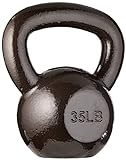
1. Your starting weight. Most beginners—men and women alike—start too light. The standard advice holds up: most women do well starting at 8–12 kg (18–26 lb) for swings and 4–6 kg (9–13 lb) for presses; most men at 12–16 kg (26–35 lb) for swings and 8 kg (18 lb) for presses. A 35-pound bell like the Amazon Basics option is a genuinely useful working weight for swings, not a “later” purchase, if you have any strength-training background.
2. Your primary use. Swings and deadlifts forgive a lot. Presses, goblet squats, and any bell that touches your forearm (cleans, snatches) demand a smoother handle and often a smaller-diameter bell. If you’re training indoors on hardwood or in a shared apartment, a soft or vinyl-coated bell protects floors and dampens noise—a soft kettlebell in the $25–30 range exists precisely for this.
3. How many bells you’ll actually buy. One bell is fine to start. But kettlebell training scales by weight jumps, and standard jumps are 4 kg (about 9 lb). If you plan to buy two or three over a year, buy from one brand or one handle style now so your grip technique transfers between bells. Mixing a wide-handled cast iron bell with a narrow competition-style handle is like switching tennis racket grip sizes mid-season.
Weight and Size: Pick the Right Range, Not the Right Number
Kettlebells are sold in pounds in the US and kilograms everywhere else. The mismatch matters because traditional Russian sizing runs 4 kg, 8 kg, 12 kg, 16 kg, 24 kg, 32 kg—roughly 9, 18, 26, 35, 53, and 70 pounds. A “35-pound” bell is close enough to a 16 kg bell that it works fine, but a 5-pound novelty bell (the bottom of the vinyl-coated range, around $20) is honestly too light for most adults to swing productively. Use it for halo passes, grip work, or physical therapy, not swings.
Size also refers to physical dimensions. A 35-pound cast iron bell typically measures roughly 9–11 inches tall with a bell diameter of 7–8 inches and a handle diameter around 1.2–1.4 inches. Competition bells keep the same dimensions at every weight (a 16 kg competition bell is the same size as a 32 kg one), which is why competitive lifters prefer them. For home use, cast iron is fine—just know that heavier cast iron bells get physically larger, which changes how they rack on your forearm.
Concrete rule of thumb: your first bell should be heavy enough that 10 two-handed swings feel like work by rep 6, but light enough that you can press it overhead at least once. If you can swing it 20 times without breathing harder, go up a size.
Material: Cast Iron, Steel, Vinyl, or Soft
Cast iron is the default for good reason. It’s a single piece of metal, nearly indestructible, and typically runs $0.90–$1.50 per pound at budget tiers. The Yes4All vinyl-coated cast iron line and Amazon Basics cast iron line both fall here. Cast iron bells have a wider, often raw or powder-coated handle that grips well with chalk or dry hands.
Steel (competition style) bells cost more per pound—expect $2–3.50 per pound—and have a uniform 33 mm (1.3 inch) handle diameter at every weight. Worth it only if you train competitively or want identical dimensions across your set.
Vinyl-coated bells wrap cast iron in a plastic shell. This protects floors and resists rust, which matters in humid garages. The trade-off: vinyl can crack if you drop the bell on concrete, and coated handles are slicker than powder-coated ones. For floor protection on a budget, a $20 coated 15-pounder plus a rubber mat is a reasonable setup.
Soft/filled kettlebells (usually around $25–40) use a fabric or cushioned shell over sand or iron filler. They’re genuinely safer for beginners worried about dropping the weight on a foot, and nearly silent. The trade-off is accuracy: soft bells deform slightly on the floor, can feel unstable during renegade rows, and the handles are often narrower or squishier than rigid steel. Treat them as a niche choice for apartments, travel, or rehab—not your main bell.
Construction: Casting, Handle, and Base
This is where cheap and good kettlebells actually differ, and where you should spend your attention since you can’t test in person.
One-piece casting vs. welded handles. The handle should be cast as part of the bell or attached with a single-piece forged design. Welded seams at the handle joint are a failure point and an uncomfortable ridge for your grip. Product pages rarely state this outright—look for “single-piece cast iron” in the description and treat its absence on a sub-$25 bell as a question worth asking.
Handle width. You need room for two hands during swings. Minimum usable interior handle width is about 4.5 inches; 5–6 inches is comfortable for most adults and is standard on wide-handle designs like the Amazon Basics 35-pounder. Narrow handles under 4 inches make two-handed swings awkward.
Handle diameter. 1.2–1.4 inches (30–35 mm) suits most hands. Thinner than 1.1 inches digs into your palm; thicker than 1.5 inches fatigues your grip before your hips. Competition bells standardize at 33 mm.
Flat base. Set the bell down mentally: it should sit flat enough for renegade rows and push-up handles (yes, kettlebell push-up grips are a thing—the cheapest vinyl-coated bells market this use specifically). Check listed base diameter: 5 inches or more on a mid-size bell usually means it sits stable. Rounded “shot-loaded” soft bells wobble intentionally and won’t work for floor exercises.
Finish. Powder coating beats paint. Painted bells chip at the handle, and chips become sharp edges. Powder-coated handles also hold chalk better. If a listing only says “painted,” expect wear within a year of regular use.
Comfort and Performance Details That Actually Matter
Handle texture and corner radius. The transition from handle to bell—the “horns”—should be smooth and generously rounded. Sharp corners tear calluses during cleans and snatches. You can’t judge this from photos, so read reviews that specifically mention cleans or high-rep swings; complaints about “rough handles” or “sharp edges” are a genuine signal, not whining.
Grip and sweat. Raw cast iron and powder coating handle sweat better than vinyl. If you train without chalk, slick vinyl handles force you to re-grip constantly, which is a safety issue during overhead work.
Accuracy of weight. Budget cast iron bells are typically accurate within ±2–3%. That’s fine. Soft bells filled with sand can drift further, and a few reviewers of cheap soft bells report weights noticeably under spec. If exact loading matters to you (progressive programs often call for specific weights), cast iron is the safer bet.
Noise and floor contact. A cast iron bell dropped from a swing finish onto bare concrete makes itself known. Vinyl coating reduces the clang; a $30 horse-stall rubber mat under your training area solves it entirely and also protects the bell’s coating from chipping.
Price Tiers: What Each Dollar Buys You
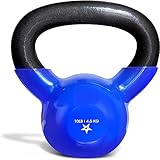
Budget ($15–30 per bell): Vinyl-coated cast iron, often sold in a wide weight range from 5 to 100 pounds so you can scale up within one product line. This tier covers everything a home beginner needs. Expect cosmetic casting imperfections, painted or vinyl handles, and no-frills shipping. The 10-pound Yes4All at $16.12 is a textbook example—fine value for warm-ups, halos, and light presses.
Mid ($30–70 per bell): Better casting consistency, powder-coated handles, wider flat bases, and brands with quality control (Amazon Basics’ 35-pound cast iron at $46.44 sits here). This is the sweet spot for your main working bell—the one you’ll swing thousands of times.
Premium ($2–3.50+ per pound, so $70–200+): Competition steel, precision dimensions, superior finish, and brand warranties. Justified for serious training or if you plan to buy a full rack and want consistency. Overkill for a first bell.
Warranty and Seller Support
Kettlebells rarely break, so warranty matters less than with machines—but coating defects, casting flaws, and shipping damage are real. Look for at least a 1-year warranty; better brands offer 2–5 years or longer on cast iron. Buying through a large retailer with easy returns matters more than the warranty itself: a bell that arrives chipped or with a rough weld should be returnable without a fight. Check whether the listing covers single units or only sets, and confirm the return policy on heavy items—some sellers make buyers pay return freight on a 50-pound bell, which can cost $20–40.
Delivery and What to Expect on Arrival
Kettlebells are heavy freight in small packages, which creates two practical issues. First, shipping cost: some sellers add $10–25 per heavy item, which can double the effective price of a budget bell—compare total delivered price, not list price. Second, arrival condition: cast iron bells ship with minimal packaging, and chipped paint or scuffed coating is the most common complaint. Inspect on arrival and photograph any damage immediately.
Assembly is nonexistent for standard bells—good. Soft kettlebells with adjustable fills require topping up sand, which takes ten minutes and a funnel. There’s nothing else to set up; your main logistics decision is floor space: plan for roughly a 6 by 6 foot clear area to swing safely, with nothing breakable at head height.
Spec Checklist
| Spec | Budget ($15–30) | Mid ($30–70) | Premium ($70+) |
|---|---|---|---|
| Material | Vinyl-coated cast iron or soft fill | Powder-coated cast iron | Competition-grade steel |
| Handle diameter | 1.2–1.5 in | 1.3–1.4 in | Fixed 1.3 in (33 mm) |
| Handle width | 4–5 in | 5–6 in | Standardized sizing |
| Construction | Cast or filled (verify single-piece) | Single-piece cast | Precision steel, uniform dimensions |
| Finish | Vinyl or paint | Powder coat | Premium powder coat or raw steel |
| Weight accuracy | ±2–3% | ±2% | Competition tolerance |
| Warranty | 30–90 days to 1 year | 1–2 years | Lifetime or multi-year |
Red Flags
- No handle dimensions listed. If a listing won’t tell you handle diameter or interior width, the manufacturer doesn’t prioritize grip ergonomics.
- Visible weld seams at the handle. Ask the seller or skip it—a welded handle joint is both a comfort and a durability problem.
- “Chalk required” complaints in reviews. If dozens of buyers report needing chalk to hold a coated handle, the coating is too slick.
- Painted finishes on the handle. Paint chips, chips become sharp edges, and sharp edges belong nowhere near your palms.
- Prices that look too good on heavy weights. A 35-pound bell listed at $15 new almost always means thin, brittle coating, loose tolerance, or mislabeled weight.
- Return shipping on heavy items charged to the buyer. Confirm before ordering anything over 25 pounds.
- Soft bells sold without fill weight or fill material listed. Sand, iron shot, and water-filled bells behave very differently.
FAQ
What weight kettlebell should a beginner buy first?
Most women should start with 18–26 pounds and most men with 26–35 pounds for swings, based on average strength levels. If you already lift, start heavier; if you’re completely new to exercise, start at the low end and buy a second bell within two to three months. A single 35-pound cast iron bell around $45–50 is the most versatile first purchase for most households.
Are vinyl-coated kettlebells as good as plain cast iron?
For swings, goblet squats, and general home use, yes—they protect floors and resist rust for a modest grip-slickness penalty. For high-rep cleans, snatches, or any training where your grip sweats heavily, plain or powder-coated cast iron handles perform better. Vinyl can also crack if you drop the bell on concrete.
Is a soft kettlebell worth it for a home gym?
If you train in an apartment, on tile, or around kids and worry about dropped weights, a $25–30 soft kettlebell is a reasonable safety choice. But it’s a poor main bell: it deforms on the floor, complicates renegade rows, and often has a less precise handle. Most people are better served by a cast iron bell plus a rubber mat.
Do I need competition-style kettlebells?
Only if you train kettlebell sport or want identical bell dimensions across all weights so your technique never changes as you go heavier. Competition steel costs roughly $2–3.50 per pound versus under $1.50 per pound for budget cast iron. For general strength and conditioning, a well-made cast iron bell does everything you need at half the price.



Write Your Review
No reviews yet. Be the first to share your experience!