
Key takeaways
- Women new to strength training: 8 to 12 lb (4 to 6 kg) for learning technique; 15 to 18 lb (7 to 8 kg) may suit those with prior lifting experience.
- Men new to strength training: 15 to 25 lb (7 to 12 kg) for learning technique; 26 to 35 lb (12 to 16 kg) may suit active beginners.
- Older adults, people returning after an injury, or anyone prioritizing balance: 5 to 10 lb (2 to 5 kg), ideally with guidance from a qualified medical or fitness professional when appropriate.
What's inside
The Short Answer
Most beginners should start with a kettlebell that feels challenging but still allows controlled, repeatable movement. For many adults, that means:
- Women new to strength training: 8 to 12 lb (4 to 6 kg) for learning technique; 15 to 18 lb (7 to 8 kg) may suit those with prior lifting experience.
- Men new to strength training: 15 to 25 lb (7 to 12 kg) for learning technique; 26 to 35 lb (12 to 16 kg) may suit active beginners.
- Older adults, people returning after an injury, or anyone prioritizing balance: 5 to 10 lb (2 to 5 kg), ideally with guidance from a qualified medical or fitness professional when appropriate.
If you are asking what size kettlebell should beginners use for a first purchase, a 10 lb or 15 lb bell is often the most approachable choice for general home workouts. A 15 lb bell offers more room to grow for lower-body exercises such as deadlifts and swings, while a 10 lb bell can make presses, rows, and technique practice less intimidating.
As an Amazon Associate we earn from qualifying purchases at no extra cost to you. Product prices and availability are accurate as of the date shown and are subject to change.


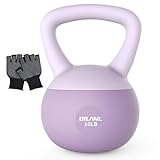

Weight is not the only size consideration. A kettlebell also takes up floor space, needs clearance for swinging, and must have a handle that fits your hands comfortably. In 2026, compact home-gym setups remain popular, so it is worth measuring both the storage footprint and the open exercise area before ordering.
Standard Sizes
Kettlebells are usually sold by pounds or kilograms. The dimensions below are representative measurements for common cast-iron or coated kettlebells. Actual height, base width, and handle opening vary by brand, especially with competition-style and soft kettlebells.
| Common Weight | Metric Equivalent | Typical Overall Dimensions | Typical Handle Opening | Best Beginner Uses |
|---|---|---|---|---|
| 5 lb | 2 kg | 5.0 x 5.0 x 7.0 in 12.7 x 12.7 x 17.8 cm |
3.0 x 2.0 in 7.6 x 5.1 cm |
Rehab-style movement, mobility, balance drills |
| 8 lb | 4 kg | 5.5 x 5.5 x 7.5 in 14.0 x 14.0 x 19.1 cm |
3.2 x 2.1 in 8.1 x 5.3 cm |
Technique work, presses, carries |
| 10 lb | 4.5 kg | 5.8 x 5.8 x 8.0 in 14.7 x 14.7 x 20.3 cm |
3.4 x 2.2 in 8.6 x 5.6 cm |
First-time full-body workouts |
| 15 lb | 7 kg | 6.2 x 6.2 x 8.5 in 15.7 x 15.7 x 21.6 cm |
3.7 x 2.3 in 9.4 x 5.8 cm |
Deadlifts, squats, beginner swings |
| 18 lb | 8 kg | 6.5 x 6.5 x 9.0 in 16.5 x 16.5 x 22.9 cm |
3.9 x 2.4 in 9.9 x 6.1 cm |
Stronger beginners and lower-body training |
| 25 lb | 12 kg | 7.0 x 7.0 x 9.5 in 17.8 x 17.8 x 24.1 cm |
4.1 x 2.5 in 10.4 x 6.4 cm |
Swings, goblet squats, deadlifts |
| 35 lb | 16 kg | 7.5 x 7.5 x 10.0 in 19.1 x 19.1 x 25.4 cm |
4.4 x 2.6 in 11.2 x 6.6 cm |
Active beginners progressing into strength work |
For storage, allow at least a 10 x 10 inch (25 x 25 cm) square for one typical beginner kettlebell. A shelf or rack should be deeper than the bell’s base; 12 inches (30.5 cm) is a practical minimum depth for most 5 to 35 lb models.
How to Measure Your Space
- Measure the storage location. Use a tape measure to check width, depth, and height. For one bell, a 12 x 12 inch area is usually enough. If storing two or three bells, allow 2 to 3 inches (5 to 8 cm) between each one so you can lift them safely.
- Choose a stable surface. Kettlebells should sit on a level floor, a sturdy low shelf, or a purpose-built rack. Avoid narrow floating shelves, lightweight side tables, and furniture with glass tops.
- Mark your workout zone. For stationary movements such as goblet squats, rows, and deadlifts, plan for a clear area of at least 6 x 6 feet (1.8 x 1.8 m).
- Add swing clearance. For kettlebell swings, reserve roughly 8 feet (2.4 m) of clear length and 6 feet (1.8 m) of width. Keep people, pets, furniture, windows, televisions, and fragile decor outside that zone.
- Check ceiling height. Standard swings do not require overhead clearance, but presses, snatches, and overhead carries do. Aim for ceiling height at least 12 inches (30.5 cm) above the kettlebell when your arm is fully extended.
- Protect the floor. On hardwood, tile, or laminate, use a dense rubber mat about 3/8 to 1/2 inch (10 to 13 mm) thick. This helps reduce scuffs and noise if the bell is set down firmly.
By Room or Use Case
Small Apartment or Bedroom
A single 8 to 15 lb kettlebell is the most practical starting point in a compact room. It can store beneath a console table, in a closet, or beside a dresser with a small rubber mat underneath. Focus on controlled exercises: deadlifts, squats, supported rows, floor presses, and suitcase carries. If your room does not have an 8-foot-long clear lane, skip swings and overhead work rather than trying to make them fit.
Living Room Workouts
For a living room, choose a bell with a flat, stable base and a finish that is less likely to scratch floors. Soft kettlebells are worth considering for beginners concerned about contact with furniture, shins, or flooring. A soft 10 lb model may measure closer to 8 to 10 inches wide because of its padded shell, so check listed dimensions before selecting a storage basket or cubby.
Soft models commonly cost about $25 to $45, while basic coated cast-iron beginner bells often fall around $20 to $50, depending on weight and finish.
Garage or Dedicated Home Gym
A garage or dedicated workout room gives beginners more room to progress. Consider starting with two weights rather than one: for example, 10 and 15 lb, 15 and 25 lb, or 18 and 35 lb depending on your current strength. Use the lighter bell for pressing and learning new skills, and the heavier bell for squats, deadlifts, and swings.
A two-tier rack is useful once you own three or more kettlebells. Check its stated weight capacity and place heavier bells on the lower shelf. Do not assume a decorative storage bench or bookcase is designed for concentrated loads.
Technique-First Training
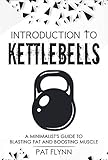
If your main goal is to learn safe form, go lighter than your ego suggests. An 8 to 12 lb bell can be enough for practicing the hip hinge, rack position, clean, and overhead press. Workout cards, instructional books, and guided programs can help organize sessions, but they do not replace careful technique. Printed workout cards often cost about $10 to $20, while kettlebell-focused books are commonly around $20 to $30.
Common Sizing Mistakes
- Buying by gender alone. Gender-based suggestions are broad starting points, not rules. Training history, grip strength, body size, mobility, and exercise selection matter more.
- Choosing one weight for every exercise. A bell that is appropriate for deadlifts may be too heavy for presses. Conversely, a press-friendly bell may feel too light for swings.
- Ignoring handle measurements. A wide handle can be more comfortable for two-hand swings, while a smaller handle may feel better for smaller hands. Check both handle width and opening height.
- Assuming all same-weight bells are the same size. Competition kettlebells often share a uniform outer size across weights, while traditional cast-iron bells get physically larger as weight increases.
- Skipping clearance measurements. The bell itself may be only 6 or 7 inches wide, but the person using it needs several feet of open room.
- Starting too heavy for ballistic exercises. Swings and cleans move quickly. Learn the hinge and maintain control with a manageable weight before increasing load.
FAQ
Is a 10 lb kettlebell too light for a beginner?
No. A 10 lb kettlebell is a sensible first choice for many beginners, especially for presses, rows, carries, and learning movement patterns. It may become too light for deadlifts and swings as your strength improves, but it can remain useful for warm-ups, shoulder work, and higher-repetition training.
Should beginners start with 15 lb or 20 lb?
Choose 15 lb if you have little strength-training experience, are unsure about form, or want to include pressing exercises. Choose 20 lb only if you are already active, can comfortably perform bodyweight squats and hip hinges, and intend to focus mainly on deadlifts and two-hand swings. If possible, test both weights before buying.
How much room do I need to swing a kettlebell safely?
Plan for a clear workout area about 8 feet long by 6 feet wide. Keep the area free of furniture and breakable items. For overhead movements, verify that the raised kettlebell will remain at least 12 inches below the ceiling.
Are soft kettlebells good for beginners?
Soft kettlebells can be a good option for apartment workouts, cautious beginners, and homes with delicate floors. Their padded exterior may feel less intimidating and reduce damage from accidental contact. However, they can be bulkier than cast-iron bells, and the handle feel may differ. Check the listed weight, outer dimensions, grip texture, and return policy before purchasing.



Write Your Review
No reviews yet. Be the first to share your experience!