
Key takeaways
What's inside
Best kettlebell routines fail more often on equipment than on programming. A complex is limited by the weakest movement in the chain, a swing session wants something considerably heavier, and a double-bell routine needs a matched pair, so one bell rarely covers every format well, and the mismatch usually shows up within the first fortnight.
As an Amazon Associate we earn from qualifying purchases at no extra cost to you. Product prices and availability are accurate as of the date shown and are subject to change.


As an Amazon Associate we earn from qualifying purchases at no extra cost to you. Product prices and availability are accurate as of the date shown and are subject to change.
By Chris Parker
🛒 Best Price Today on Amazon
Prime members get fast, free shipping on everything above, plus member-only deals. New members get a 30-day free trial — cancel anytime.
How to Match Bells to the Best Kettlebell Routines
The best kettlebell routines divide into a handful of formats, and each one puts a different demand on the bell. Some are limited by your strongest movement, some by your weakest, and some need two matched bells rather than one. Three questions sort out what to buy before any programming starts.
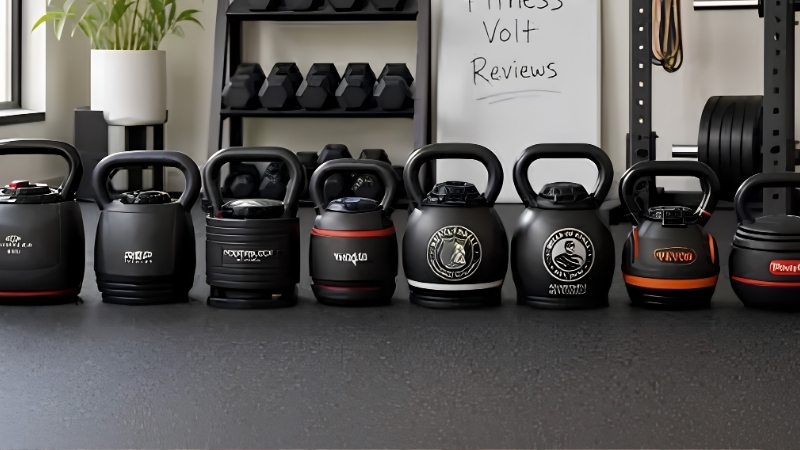
Five Routine Formats and What Each Demands
Single-bell full-body sessions rotate swings, goblet squats, presses, rows and get-ups. Because the press is the weakest link, the bell has to be light enough to press cleanly, which means the swings in the same session will feel easy. It is the most accessible format and the least specific.
Complexes and chains string movements together without setting the bell down, so the weakest movement in the chain caps the load for all of them. Ladders work the opposite way, building reps at a single heavy movement, which means the bell should be chosen for the press or the squat alone.
Interval formats such as every-minute-on-the-minute work sit between the two. They favour a bell heavy enough to make swings or cleans a real effort but light enough to repeat for twenty rounds without form falling apart. Double-bell work simply requires two identical bells rather than one.
One Bell, Two Bells, or an Adjustable
Most people start with one bell and outgrow it in a specific direction rather than all at once. Swings and squats progress fast while presses lag, so the usual second purchase is a heavier bell for the hinge rather than a matched pair, which comes later if double-bell work interests you.
Adjustable kettlebells solve the storage problem and introduce a mechanism. They are noticeably wider through the bell than cast iron, which changes how they sit in the rack position against the forearm, and they should not be dropped. For swings and squats they work; for get-ups the shape takes adjusting to.
Footprint, Ceiling Height and Flooring
Kettlebells store in almost no space, but the best kettlebell routines need a surprising amount of it in use. A swing needs roughly 6 x 6 ft (183 x 183 cm) of clear floor, and a Turkish get-up needs closer to 8 ft (244 cm) of length because you travel across the floor as you stand.
Overhead work needs your standing height plus around 24 in (61 cm) of ceiling, which rules out low basements. Flooring matters more than either: cast iron craters foam matting under point loads, so rubber is the correct surface. Measure the clear floor area and the ceiling before ordering anything heavy.
Why the Weight Jumps Are Still Awkward
The best kettlebell routines are limited by weight steps, and cast iron is typically sold in 5 lb (2.3 kg) or 4 kg jumps, which is a small jump on a swing and an enormous one on a press. Going from 35 to 44 lb (16 to 20 kg) overhead is a step most people cannot absorb in one move, and there is rarely anything in between.
That gap has not been closed by the adjustable designs, most of which also move in 5 lb (2.3 kg) increments and carry a mechanism you cannot drop. The result is that serious kettlebell training still tends towards owning several fixed bells rather than one clever one.
Top Picks: 6 Kettlebells for Different Routine Formats
Each bell below suits a particular way of training rather than being a general recommendation, since the best kettlebell routines make different demands. The table lists handle and coating alongside the format each one suits, because grip is what fails first in a long session.
| Kettlebell | Construction | Suits This Format | Handle | Watch Out For |
|---|---|---|---|---|
| Amazon Basics Cast Iron | Single-piece cast iron | Single-bell full body | Wide, bare or coated | Casting seam on some units |
| Yes4All Cast Iron | Cast iron, painted | Swings, intervals | Wide | Paint chips on the handle |
| CAP Barbell Cast Iron | Cast iron, coated | General and complexes | Moderate width | Coating wears at contact points |
| Titan Competition Kettlebell | Steel, uniform size | Ladders, double-bell work | Consistent across weights | Costs more per bell |
| Kettlebell Kings Powder Coat | Powder-coated cast iron | High-rep swings, snatches | Grippy with chalk | Powder coat is abrasive |
| Bowflex SelectTech 840 | Adjustable, 8-40 lb | Learning, mixed sessions | Wider bell body | Must not be dropped |
Amazon Basics Cast Iron Kettlebell
The sensible default for a single-bell full-body routine. One-piece cast iron with a wide handle takes two hands for swings and one hand for everything else, and the range from 10 to 60 lb (4.5 to 27 kg) covers where most people will start and where they will be a year later.
Casting quality varies between production runs, and a seam across the handle will tear calluses during high-rep work until it is smoothed with fine sandpaper. It is loud on a hard floor, unforgiving of a dropped rep, and craters foam matting, so rubber is the surface it needs underneath.
Yes4All Cast Iron Kettlebell
The budget option with the widest weight range, which matters when you know you will be buying several bells rather than one. For swing-focused and interval formats where the bell spends most of its time in two hands, the painted finish and moderate casting quality are entirely adequate.
Paint on the handle is the weak point. It chips at the contact points within a few months of regular use and can leave the surface slightly uneven, which is more noticeable on high-rep snatches than on swings. Many people sand the handle bare and accept a little surface rust in exchange for grip.
CAP Barbell Cast Iron Kettlebell
A middle option that suits complexes and chains, where the bell moves between rack, overhead and hanging positions repeatedly within a set. The handle width is moderate rather than wide, which makes the transitions cleaner in one hand even though it is less comfortable for two-handed swings.
The coating wears at the handle and at the base where the bell meets the floor, which is cosmetic rather than functional. As with all cast iron, the weight steps are large, so plan the progression before buying, and expect to own two or three bells rather than one.
Titan Fitness Competition Kettlebell
Competition bells have identical external dimensions at every weight, so the bell sits the same way against your forearm whether it is light or heavy. For ladder formats and double-bell work that consistency is genuinely valuable, because the technique does not change when the load does.
They cost considerably more per bell than cast iron, and the uniform size means the lighter ones feel oddly bulky. Steel construction is durable but the handle finish is smoother than powder coat, so chalk matters more. Buy them if you intend to own several and train seriously; otherwise cast iron is fine.
Kettlebell Kings Powder Coat Kettlebell
Powder coating gives the best grip of the common finishes, particularly with chalk, which makes it the choice for high-rep swings and snatch work where the hand is the limiting factor long before the hips are. The finish also resists the chipping that painted bells develop.
That grip is abrasive, so it will take skin off during long snatch sets if your technique is not clean, and it wears gloves quickly. It costs more than plain cast iron. For anyone doing mostly goblet squats and presses, the extra grip is not worth the premium.
Bowflex SelectTech 840 Adjustable Kettlebell
Six settings from 8 to 40 lb (3.6 to 18 kg) in one unit, which covers a beginner’s entire first year in the footprint of a single bell. For mixed sessions where the press wants one weight and the swing wants another, changing in a few seconds is a genuine advantage over owning two bells.
The bell body is wider than cast iron, so the rack position against the forearm feels different and get-ups take adjusting to. It has a mechanism, which means it must not be dropped, and the top weight of 40 lb (18 kg) is reached fairly quickly on swings by most people.
Frequently Asked Questions
Questions about the best kettlebell routines usually turn out to be questions about weight selection and bell shape. These four cover how many bells you need, whether adjustable designs work, what handle width changes, and where to get technique checked before loading anything heavy.
How many kettlebells do I need?
One is enough to start and covers a full-body routine properly. The usual second purchase is a heavier bell for swings, because the hinge progresses faster than the press. A matched pair only becomes necessary if you want double-bell front squats and presses, which is a later decision rather than an early one.
Are adjustable kettlebells any good?
For learning and for mixed sessions, yes. They save space and money over buying three bells, and the change takes seconds. The compromises are a wider bell body that sits differently in the rack position, a mechanism that rules out dropping, and a top weight most people reach on swings within a year.
Does handle width actually matter?
Yes, and in opposite directions. A wide handle is comfortable for two-handed swings and awkward for one-handed cleans, while a narrower handle does the reverse. If your routine is swing-dominant, buy wide; if it involves a lot of cleans, snatches and presses, a moderate handle will suit you better.
Where should I learn the movements?
From a certified instructor, at least for the swing, clean and get-up. Those three are technique-dependent enough that video alone leaves most people with habits that are hard to unpick later. If you have any existing joint or back problem, speak to a doctor before adding load.
See More:
- Best home pull-up bar
- Best at home pull up bar
- Best in house pull up bar
- Best rated ab roller
- Best kettlebell routine
Final Thoughts
The best kettlebell routines are limited by the bell you own rather than the programme you follow. A single-bell session is capped by your press, complexes by the weakest link, and interval work wants something heavier. Start with one bell and add a heavier one for swings.



Write Your Review
No reviews yet. Be the first to share your experience!