
Key takeaways
What's inside
Best kettlebell weight is not one number, because a swing, a press and a goblet squat each want something different. Cast iron also steps in 4 kg jumps, so buying badly means a bell that is unusable for months. This guide covers sizing, gaps and six bells. Size the bell for your swing and accept the rest.
As an Amazon Associate we earn from qualifying purchases at no extra cost to you. Product prices and availability are accurate as of the date shown and are subject to change.





As an Amazon Associate we earn from qualifying purchases at no extra cost to you. Product prices and availability are accurate as of the date shown and are subject to change.
By Chris Parker
🛒 Best Price Today on Amazon
Prime members get fast, free shipping on everything above, plus member-only deals. New members get a 30-day free trial — cancel anytime.
How to Choose the Best Kettlebell Weight
One bell has to serve several movements at once, which is what makes this decision awkward. Working out the best kettlebell weight means accepting that the number sits between what you can press and what you can swing, and then checking handle, coating and floor before ordering.
Sizing Your First Bell
Different movements sit at different loads for the same person. Two-hand swings tolerate the most, goblet squats sit close behind, and overhead pressing and get-ups sit well below both. A single bell will therefore feel heavy on one movement and light on another, which is normal.
Common starting points in the gym are 8 to 12 kg (18 to 26 lb) for many women and around 16 kg (35 lb) for many men on two-hand swings, with pressing typically one or two sizes lighter. Treat those as reference points rather than prescriptions, since limb length and training history shift them considerably.
If you can only buy one bell, size it for the swing and accept lighter accessory work, because swings are the movement most people repeat. Kettlebell swing technique is genuinely worth learning from a certified coach rather than a video, and check with your doctor before starting a new programme.
Increment Size and the 4 kg Problem
Cast iron kettlebells follow a ladder inherited from Russian pood sizing, stepping roughly 4 kg (8.8 lb) at a time: 8, 12, 16, 20, 24 kg and upward. Moving from 12 to 16 kg is a 33 percent increase, which is a very large jump to make in one step.
That gap is the single biggest practical problem in this category. Some ranges now offer 2 kg (4.4 lb) intermediates at the light end, and adjustable bells cover several settings in one unit, but the compact, well-made end of the market remains thinner than the price range suggests.
The usual workaround is to bridge with repetitions and sets rather than load, holding the lighter bell until the volume clearly exceeds what the next size would demand. It works, but it is slower than a smaller increment would be, and worth factoring into which bells you buy.
Footprint, Floor Protection and Storage
Footprint is small once the best kettlebell weight is chosen, at roughly 1 sq ft (0.09 sq m) per bell, but the training area is not. Two-hand swings need about 6 x 6 ft (1.8 x 1.8 m) of clear floor, and overhead work needs your standing height plus around 20 in (50 cm) of ceiling clearance.
The floor matters more than with any other free weight. A 16 kg (35 lb) bell set down on tile chips it, and on a suspended timber floor the impact transmits to the room below. Interlocking tiles or a rubber mat under the working area is effectively mandatory.
Storage is awkward because kettlebells do not stack and roll if left on a hard floor. Most people line them against a wall, which needs clear skirting and a floor that can take the point load. Measure the actual training area and ceiling before ordering anything above 16 kg.
Handle, Coating and What Wears
Handle diameter on cast iron typically runs 33 to 35 mm, with competition bells standardised near 35 mm. Thicker handles tax the grip sooner, which limits swing volume. Window height matters too, since two-hand swings need room for both hands plus movement without pinching.
Coating decides both feel and floor damage. Powder coat gives grip that holds chalk well but can be abrasive on high-rep sets. Vinyl protects floors and is gentler on the hands but wears through at contact points. Casting seams inside the handle are the most common complaint on cheap bells and can be filed smooth.
Top Picks: Best Kettlebell Weight Options and Bells
Six bells below cover every best kettlebell weight bracket: fixed cast iron, floor-friendly vinyl, competition dimensions and one adjustable unit. Which weight you choose matters more than which brand, so the notes focus on handle, coating and where each design genuinely falls short.
| Bell | Type | Handle | Best for |
|---|---|---|---|
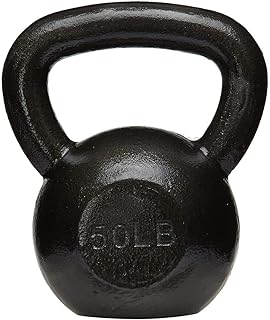
| Yes4All Cast Iron | Fixed, powder coat | About 33-35 mm | Standard first bell |
| CAP Barbell Cast Iron | Fixed, coated | About 33-35 mm | Budget alternative |
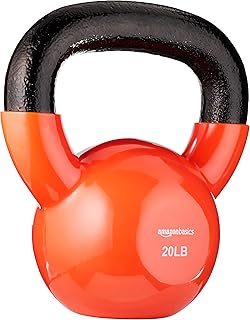
| Amazon Basics Vinyl | Fixed, vinyl coated | Vinyl over cast iron | Light bells on hard floors |
| Kettlebell Kings Powder Coat | Fixed, powder coat | Wide window | High-rep swing volume |
| Bowflex SelectTech 840 | Adjustable | Moulded | Six weights, one footprint |
| Yes4All Competition | Fixed, steel shell | 35 mm standard | Consistent dimensions |
Yes4All Cast Iron Kettlebell: The Standard First Bell
A single-piece cast iron bell with a powder coat finish and a flat base, sold across a wide ladder of weights. Nothing adjusts, nothing wears out mechanically, and it can be set down hard at the end of a set, which is the main advantage over any adjustable design.
The handle casting seam is variable between units and sometimes needs filing smooth before high-rep work is comfortable. Powder coat is abrasive on the palms across long swing sets. Each weight is a separate purchase, so the 4 kg ladder is paid for in full. Budget tier.
CAP Barbell Cast Iron Kettlebell: Budget Alternative
A conventional coated cast iron bell with a flat base and a similar handle profile, widely available across the standard weight ladder. It does the same job as any single-piece bell and is often the cheaper option at a given weight, which matters when buying several.
Coating quality varies noticeably between weights and production runs, and some units arrive with rough handle interiors. The finish chips where bells knock together in storage. As with all cast iron, size changes mean a new purchase each time. Budget tier.
Amazon Basics Vinyl-Coated Kettlebell: Best for Hard Floors
A cast iron core with a vinyl coating, sold mostly in the lighter part of the range. The vinyl is gentler on hands during high repetitions and, more usefully, protects tile and laminate from the small impacts that light bells cause during goblet squats and cleans.
Vinyl wears through at the contact points over time and can split, exposing the iron beneath. The coating adds thickness, so the handle feel differs from bare cast iron. The available weight range stops well below useful swing loads for many people. Budget tier.
Kettlebell Kings Powder Coat: Best Handle for Volume
A powder-coated cast iron bell with a wider handle window and a smoother interior finish than most budget castings. On long swing sets that combination matters, because the hand is not fighting a seam and both hands fit without pinching during two-hand work.
It costs more than the basic cast iron options at every weight. Powder coat still abrades the palms over very high repetitions, and chalk becomes part of the routine. Each weight remains a separate purchase on the same 4 kg ladder. Mid tier.
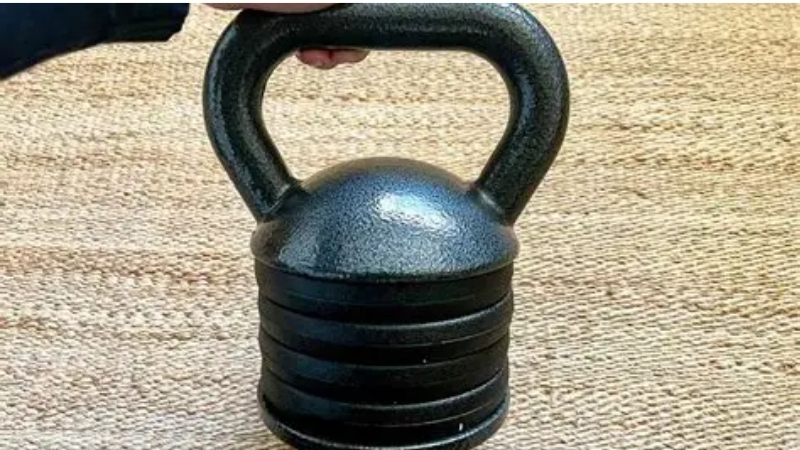
Bowflex SelectTech 840: Six Weights, One Footprint
An adjustable kettlebell covering six settings from 8 to 40 lb (3.6 to 18 kg) by turning a dial on the base. In a flat where storing four separate bells is not realistic, it collapses the whole light-to-middle range into roughly 1 sq ft (0.09 sq m) of floor.
It must not be dropped, which is a serious limitation for a tool used in swings and cleans. The shape and balance differ from a cast iron bell, most noticeably in the rack position. The 40 lb ceiling stops below useful swing loads for many people. Mid tier.
Yes4All Competition Kettlebell: Consistent Dimensions
A steel-shelled competition bell with a 35 mm handle and the same external dimensions at every weight, so the rack position and swing path do not change as you move up the ladder. That consistency is the whole argument for the design.
Uniform sizing means light bells feel oversized and heavy ones feel dense. The 35 mm handle taxes grip sooner than a slimmer cast iron handle on high-rep sets. Steel shells dent rather than chip and cost more than cast iron. Mid tier.
Frequently Asked Questions
These four questions cover what people ask when working out the best kettlebell weight to start with. Answers stay with equipment and sizing conventions; for technique or any existing back or shoulder issue, work with a certified coach and your doctor.
What weight should I buy first?
Size it for two-hand swings, since that is the movement most people repeat. Common gym starting points are 8 to 12 kg (18 to 26 lb) for many women and around 16 kg (35 lb) for many men, with pressing typically one or two sizes lighter. Individual variation is wide.
Why do kettlebells jump 4 kg at a time?
The ladder comes from Russian pood sizing and has stuck as an industry convention. Moving from 12 to 16 kg is a 33 percent increase, which is why some ranges now offer 2 kg intermediates at the light end and why adjustable bells exist at all.
Do I need one bell or two?
One covers swings, goblet squats, presses and get-ups perfectly well to start. A second, lighter bell mainly helps with pressing and get-ups, where the swing weight is too heavy. Double-bell work is a later consideration rather than a starting requirement.
Do I need a mat underneath?
On tile, laminate or an upper floor, yes. A 16 kg bell set down hard chips tile immediately and transmits impact to the room below. Interlocking foam tiles or a rubber mat over the working area solve this cheaply and also stop bells rolling on a hard surface.
See More:
- Best beginner jump rope
- Best boxing jump rope
- Best boxer jump rope
- Best cheapest yoga mat
- Best workout exercise equipment
Final Thoughts
The best kettlebell weight is the one sized for your swing rather than your press, bought with the 4 kg ladder in mind so the next step is not out of reach. Check handle window and coating against how you train, and measure your floor area and ceiling before ordering.



Write Your Review
No reviews yet. Be the first to share your experience!