
Key takeaways
What's inside
Best starter kettlebell weight is the one-bell decision: if you buy a single kettlebell to learn on, which weight should it be, and when do you add a second? Get that first weight right and one bell can carry your training for months before you need a second, which makes the starter weight the most important call you make.
As an Amazon Associate we earn from qualifying purchases at no extra cost to you. Product prices and availability are accurate as of the date shown and are subject to change.
By Chris Parker
🛒 Best Price Today on Amazon
Prime members get fast, free shipping on everything above, plus member-only deals. New members get a 30-day free trial — cancel anytime.
Start 30-Day Prime Free Trial →See Today’s Amazon DealsHow to Choose the Right Best Starter Kettlebell Weight
With one bell, the choice is a compromise between what your swing and your press can handle, since they differ. The best starter kettlebell weight leans toward what you can press cleanly, because you can always scale swing reps up.
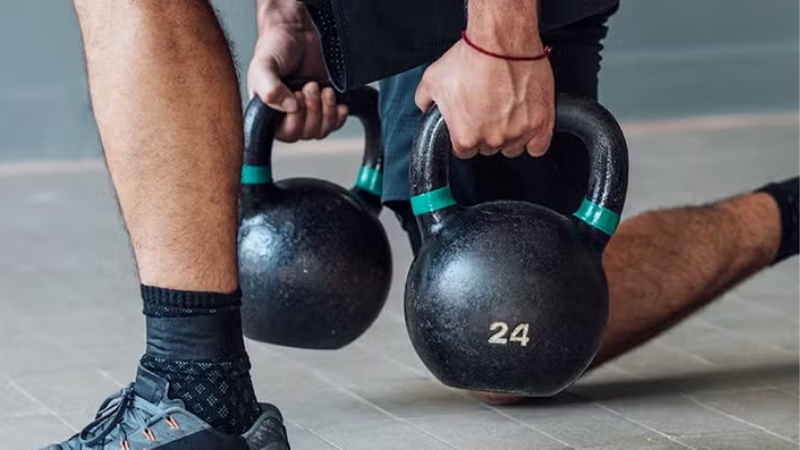
The One-Bell Compromise
A single bell has to press and swing, and those want different loads. Size it to a weight you can press for a few clean reps; your swings will then feel manageable and you simply add reps or rounds to make them harder. This keeps every movement trainable from one bell.
Common single-bell starters are around 8 kg (18 lb) for many women and 12 to 16 kg (26 to 35 lb) for many men, adjusted to size and strength. If torn between two sizes, the heavier usually lasts longer for swings, but only if you can still press it with clean form.
Remember these are general guidelines, not prescriptions. A larger, stronger beginner may press 16 kg (35 lb) comfortably, while someone deconditioned starts lighter. The point is a single weight you can learn every movement with, not the heaviest bell you can lift once.
When to Add a Second Bell
You will outgrow the starter first on swings. When swings feel easy for high reps but your press is still challenged, that is the cue to add a heavier bell for ballistics while keeping the starter for presses and get-ups — the classic two-bell setup.
Double-bell work, like cleans and presses with a pair, is another reason to add a second matching weight later. Most people, though, get months from one bell first, so there is no rush to build a rack before the movements are solid.
A practical progression is to keep the starter for presses, get-ups and skill work while a bell one size up handles swings and cleans as they get easy. From there, a third, heavier bell for two-handed swings and goblet squats rounds out a small, versatile set. Building this way spreads the cost, avoids a shelf of weights you never use, and means each new bell answers a specific need your training has actually reached rather than one you guessed at up front.
Fixed Weight or Adjustable
A fixed bell is simplest and toughest, with nothing to break, and is ideal if you are confident in your starting weight. An adjustable hedges the bet, covering several starter weights in one shell so you can dial in the right load as you learn.
Adjustables add a plastic dial or screw-lock you cannot drop and give you one weight at a time, but they can replace both your starter and your next bell. If cash and space are tight and you expect to progress, an adjustable is the efficient single purchase.
The honest tie-breaker is how sure you are of your weight. If you know you want a 12 kg (26 lb) bell and value a bombproof tool, buy the fixed bell and never think about it again. If you are genuinely uncertain, or two people of different strength will share it, the adjustable earns its extra cost by covering the whole starter range and the first few progressions in one unit, so you are not gambling a purchase on a weight you have not tested.
Footprint, Handle and Value
One bell has a tiny footprint and a good handle carries every movement: aim for a roughly 35 mm diameter, a wide-enough window for two hands, and a smooth coating. Keep a body-length of clear swing space in front and overhead, and measure your actual space before ordering.
On value, buying one sensible starter beats a cheap too-light bell you replace in weeks, so spend on a weight you will grow into. For context, the WHO physical activity guidelines suggest about two muscle-strengthening sessions a week, which a single kettlebell covers. Check with a doctor or certified coach on form before loading heavy, especially with your back.
Top Picks for the Best Starter Kettlebell Weight
These six help you buy the best starter kettlebell weight in one bell, from budget cast iron to an adjustable that covers several starter sizes. Match the weight to your press and the build to your space. All are widely available on Amazon.
| Bell | Type | Range | Best for |
|---|---|---|---|
| REP Adjustable | Adjustable | 20-40 lb (9-18 kg) | Dial in the weight |
| Yes4All Cast Iron | Cast iron | 5-65 lb (2-30 kg) | Exact single size |
| CAP Cast Iron | Cast iron | Graduated | Durable one-bell |
| Amazon Basics Cast Iron | Cast iron | Graduated | Simple value |
| Kettlebell Kings Adjustable | Adjustable | 26-70 lb (12-32 kg) | Starter into strength |
| Signature Fitness Soft | Sand-filled | Color-coded | Quiet starter |
REP Fitness Adjustable Kettlebell
The smart hedge for a starter: a cast-iron-shelled adjustable around 20 to 40 lb (9 to 18 kg) with a powder-coated near-35 mm handle that feels like a fixed bell. Set it to a press-friendly weight, then climb as your swings strengthen, all from one bell.
The dial and base include plastic you cannot drop, and only one weight is in hand at a time. As a single purchase that covers your whole starter range, it is excellent. Best for dialing in the right starting weight.
Yes4All Cast Iron Kettlebell
Single bells across 5 to 65 lb (2.3 to 29.5 kg) let you order the exact starter weight your press can handle, on solid iron with a wide grip and flat base for swings, squats and get-ups. It is the simplest way to buy one right-sized bell.
Handle finish varies between weights and a second bell costs extra later. As a precise single-weight starter, it is ideal. Best for buying one exact size.
CAP Cast Iron Kettlebell
A durable enamel or powder-coated cast-iron bell with a flat base, CAP makes a tough one-bell starter that grips chalk for swings and stays stable for presses as your technique develops.
Finish and handle smoothness vary between weights, so check seams, and there is no adjustable option. Best for a durable single starter bell.
Amazon Basics Cast Iron Kettlebell
A simple painted cast-iron bell with a flat base, easy to buy in the one weight you need and add to later. Widely stocked and inexpensive, it is a low-risk single starter on real iron.
The painted finish grips best when new and wears with chalk, and adding bells later grows the footprint. Best for a simple, value one-bell start.
Kettlebell Kings Adjustable Competition
A 26 to 70 lb (12 to 32 kg) range over seven plates with a 1.38 in (35 mm) handle, this adjustable starts you at a press-friendly weight and climbs into real strength loads, so one unit takes you from first bell to heavy swings.
Plate changes are slower than a dial and the unit is larger, so it is more than a cautious starter needs. Best for going from starter weight into strength with one bell.
Signature Fitness Soft Kettlebell
Sand-filled, vinyl-covered and color-coded with a cushioned base, this is the quiet single starter for apartments, where a bell set down between reps must not mark the floor or disturb neighbours below.
The soft build feels less precise than cast iron and higher weights get bulky. As a quiet one-bell starter, it is sensible. Best for a quiet apartment start.
Frequently Asked Questions
Common questions when choosing the best starter kettlebell weight for a single first bell.
What is a good single starting weight?
Around 8 kg (18 lb) suits many women and 12 to 16 kg (26 to 35 lb) many men, sized to what you can press with clean form. Your swings will feel manageable at that weight, and you make them harder by adding reps or rounds.
Should I size my one bell to the swing or the press?
To the press. The press is the weakest movement, so a bell you can press cleanly will swing fine, whereas a swing-sized bell is often too heavy to press. Scale swing volume up rather than buying a heavier bell too soon.
When should I buy a second kettlebell?
When swings feel easy for high reps but your press is still challenged. Add a heavier bell for swings and cleans while keeping the starter for presses and get-ups, which gives you the classic two-bell range.
Is one kettlebell really enough to start?
Yes. A single, well-sized bell trains swings, squats, cleans, presses, rows and get-ups, which is a complete program for months. Add weight or a second bell only once the movements are solid and the starter feels easy.
See More:
- Best flooring for home gym over concrete
- Best collapsible exercise bike
- Best fold away exercise bike
- Best exercise bike folding
- Best home upright exercise bike
Final Thoughts
The best starter kettlebell weight is a single bell sized to your press, so every movement is trainable and your swings simply need more reps. Lean heavier only if you can still press it cleanly, choose fixed for simplicity or adjustable to hedge, and add a second bell when swings get easy. Pick that first weight well and the best starter kettlebell weight lasts far longer than you expect.
As an Amazon Associate we earn from qualifying purchases at no extra cost to you. Product prices and availability are accurate as of the date shown and are subject to change.



Write Your Review
No reviews yet. Be the first to share your experience!