
Key takeaways
What's inside
Best kettlebell ab workout equipment is chosen for sustained rounds, not for one heavy set. That means a lighter bell than your swing weight, a handle that survives volume, and a floor that tolerates repeated set-downs. This guide covers those variables, then six picks with real limits. Duration decides the weight, not strength.
As an Amazon Associate we earn from qualifying purchases at no extra cost to you. Product prices and availability are accurate as of the date shown and are subject to change.


As an Amazon Associate we earn from qualifying purchases at no extra cost to you. Product prices and availability are accurate as of the date shown and are subject to change.
By Chris Parker
🛒 Best Price Today on Amazon
Prime members get fast, free shipping on everything above, plus member-only deals. New members get a 30-day free trial — cancel anytime.
How to Choose Gear for the Best Kettlebell Ab Workout
Circuit-style midsection work runs long sets with short rests, which is a different demand from single heavy lifts. Kit for the best kettlebell ab workout therefore gets judged on sustained comfort, how quickly you can change load, and what the floor beneath you can take over repeated rounds.
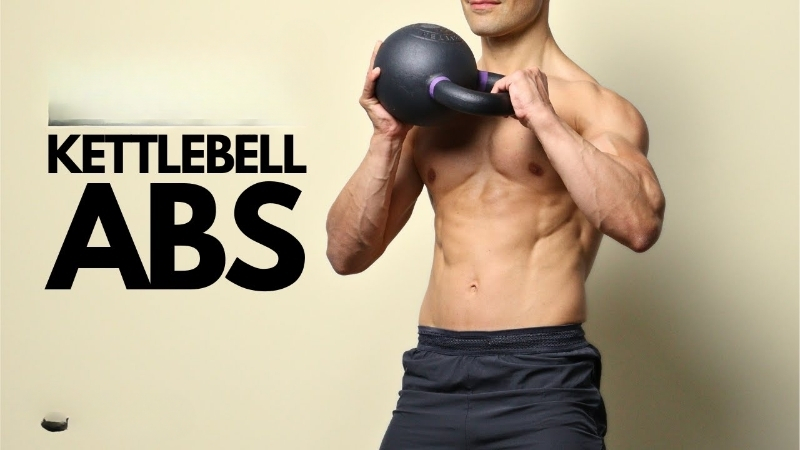
Sizing a Bell for Sustained Rounds
Loads for rotational and anti-rotation work sit well below swing weight for the same person. Where a two-hand swing might use 16 kg (35 lb), the same trainee often works a long circuit at 8 to 12 kg (18 to 26 lb) because the set lasts far longer and the leverage is worse.
That gap is the most common buying mistake in this category. People size their bell for the heaviest movement they can imagine and then find it unusable for anything held out in front of the body. Buying one size down usually produces more usable training, not less.
Technique for loaded rotational work is worth learning from a certified coach rather than a video, particularly if you have any existing back issue. Equipment choice does not determine body composition either, so treat these picks as tools rather than as outcomes.
Changing Load Mid-Circuit and the 4 kg Gap
Cast iron steps roughly 4 kg (8.8 lb) at a time, following a ladder inherited from Russian pood sizing. Inside a circuit that gap is awkward: moving from 12 to 16 kg is a 33 percent jump, which is too much for a movement already running near failure at the end of a round.
Adjustable bells collapse several settings into one unit, which suits circuits specifically because you can drop a size between stations without owning four bells. The trade-off is that no adjustable bell should be dropped, which rules them out of anything ending in a bail.
Floor, Noise and Footprint for Rounds
Footprint for the best kettlebell ab workout is bigger than the bell suggests. A single bell claims roughly 1 sq ft (0.09 sq m), but rotational and floor work needs about 6 x 6 ft (1.8 x 1.8 m) clear, plus your height and around 20 in (50 cm) of ceiling for anything overhead.
Repeated set-downs are what damages floors. A 12 kg (26 lb) bell placed down thirty times in a session marks laminate and transmits impact into the room below, which matters in a flat. Interlocking foam tiles or a rubber mat under the working area solve this cheaply.
Storage is awkward because kettlebells do not stack and roll on hard floors. Most people line them along a wall, which needs clear skirting and a floor rated for the point load. Measure the actual training area, ceiling height and wall run before ordering anything.
Handle, Coating and What Wears Under Volume
Handle diameter on cast iron runs 33 to 35 mm, with competition bells standardised near 35 mm. Thicker handles tax the grip sooner, which ends a long round before the target muscles are fatigued. For high-repetition circuits, the slimmer end of that range is usually the better choice.
Coating decides comfort across volume. Powder coat holds chalk well but abrades palms over long sets, while vinyl is gentler and protects floors but wears through at contact points. Casting seams inside the handle are the most common complaint on cheap bells and can be filed smooth.
Barriers to consistency are usually practical rather than motivational. The CDC reports fewer than one in four US adults meet both the aerobic and muscle-strengthening guidelines, and travel time to a gym is a recurring reason people give. Check with a doctor before starting a new programme.
Top Picks for the Best Kettlebell Ab Workout
Six best kettlebell ab workout picks below, weighted toward sustained comfort and floor protection rather than maximum load. A mat is included deliberately, because on tile or an upper floor it does more for the quality of a circuit than any upgrade to the bell itself.
| Pick | Type | Range | Best for |
|---|---|---|---|
| Bowflex SelectTech 840 | Adjustable | 8-40 lb (3.6-18 kg), six settings | Changing load between stations |
| Yes4All Cast Iron | Fixed, powder coat | Wide weight ladder | The workhorse bell |
| Amazon Basics Vinyl | Fixed, vinyl coated | Mostly lighter weights | Repeated set-downs |
| Kettlebell Kings Powder Coat | Fixed, powder coat | Wide weight ladder | High-volume handle comfort |
| CAP Barbell Cast Iron | Fixed, coated | Wide weight ladder | Cheapest second bell |
| ProsourceFit Puzzle Tiles | Flooring | Interlocking foam | Noise and floor damage |
Bowflex SelectTech 840: Best for Changing Load
An adjustable bell covering six settings from 8 to 40 lb (3.6 to 18 kg) via a dial on the base. Inside a circuit that means dropping a size between stations without owning four separate bells, and the whole range occupies roughly 1 sq ft (0.09 sq m) of floor.
It must not be dropped, which is a genuine limitation for a tool used in movements that sometimes end in a bail. Balance differs from cast iron, most noticeably in the rack position. The 40 lb ceiling stops below useful swing loads for many people. Mid tier.
Yes4All Cast Iron Kettlebell: The Workhorse
A single-piece cast iron bell with a powder coat finish and a flat base, available across the standard ladder. Nothing adjusts and nothing wears mechanically, so it can be set down hard at the end of every round without any thought about the mechanism.
Handle casting seams vary between units and sometimes need filing before long sets are comfortable. Powder coat abrades palms across high-repetition circuits, so chalk becomes part of the routine. Each weight is a separate purchase on the 4 kg ladder. Budget tier.
Amazon Basics Vinyl-Coated Kettlebell: Best for Set-Downs
A cast iron core under a vinyl coating, sold mainly in the lighter half of the range. Vinyl absorbs the small impacts that repeated set-downs create, which protects tile and laminate and cuts the noise transmitted into a room below during circuit work.
The coating wears through at contact points over time and can split, exposing the iron. Added thickness changes the handle feel compared with bare cast iron. The available range stops well below useful swing loads. Budget tier, and best kept for light stations.
Kettlebell Kings Powder Coat: Best Handle for Volume
A powder-coated cast iron bell with a wider handle window and a smoother interior finish than most budget castings. Across a long round that difference is noticeable, because the hand is not fighting a seam and both hands fit without pinching in two-hand positions.
It costs more than the basic cast iron options at every weight. Powder coat still abrades the palms over very high repetitions. Each weight remains a separate purchase on the same 4 kg ladder, so building a circuit range gets expensive. Mid tier.
CAP Barbell Cast Iron Kettlebell: Cheapest Second Bell
A conventional coated cast iron bell with a flat base, widely stocked across the standard ladder. Its real role here is as the second or third weight in a circuit setup, where the marginal cost of adding a size matters more than any refinement in finish.
Coating quality varies noticeably between weights and production runs, and some units arrive with rough handle interiors. The finish chips where bells knock together in storage. There is no adjustment path, so each step is a full purchase. Budget tier.
ProsourceFit Puzzle Exercise Tiles: The Cheapest Fix
Interlocking foam tiles that cover the working area and lift out afterwards. For circuit work they solve the two problems bells create in a home: marking the floor on repeated set-downs, and transmitting impact noise into the room or flat below.
Foam dents permanently under concentrated point loads, so a heavy bell parked in one spot leaves a mark. It is not a substitute for rubber matting under genuinely heavy equipment. Tiles separate at the seams over time and need reseating. Budget tier.
Frequently Asked Questions
These four questions cover what people ask when assembling kit for the best kettlebell ab workout, mostly about weight and flooring. Answers stay with equipment; for technique or any existing back issue, work with a certified coach and your doctor.
What weight should I use for circuit work?
Usually one size below your swing weight. Where a two-hand swing might use 16 kg (35 lb), long rotational and anti-rotation rounds often work better at 8 to 12 kg (18 to 26 lb), because the set lasts longer and the bell is held further from the body.
Is an adjustable kettlebell worth it for circuits?
For changing load between stations, yes, since one unit covers several settings in about 1 sq ft (0.09 sq m). The catch is that adjustable bells must not be dropped, so any movement likely to end in a bail is better served by cast iron.
Do I need a mat?
On tile, laminate or an upper floor, yes. Repeated set-downs mark hard floors quickly and transmit noise downstairs. Interlocking foam tiles or a rubber mat over the working area cost very little and remove the two most common complaints from people living below.
How much clear space do I need?
Around 6 x 6 ft (1.8 x 1.8 m) of floor for rotational and floor-based work, plus your standing height and roughly 20 in (50 cm) of ceiling clearance for anything taken overhead. Measure with your arms extended rather than estimating from the doorway.
See More:
- Best beginner jump rope
- Best boxing jump rope
- Best boxer jump rope
- Best cheapest yoga mat
- Best workout exercise equipment
Final Thoughts
Kit for the best kettlebell ab workout is sized for duration rather than for a single heavy effort. Buy one size below your swing weight, favour a slimmer handle for volume, add tiles before you add another bell, and measure your floor area and ceiling before ordering.



Write Your Review
No reviews yet. Be the first to share your experience!