
Key takeaways
What's inside
Best single kettlebell workout is not a menu of options, it is one session you can run twice a week for months. Twenty minutes, one bell, three blocks, and the whole thing fits in a corner of a living room without any other equipment.
As an Amazon Associate we earn from qualifying purchases at no extra cost to you. Product prices and availability are accurate as of the date shown and are subject to change.
As an Amazon Associate we earn from qualifying purchases at no extra cost to you. Product prices and availability are accurate as of the date shown and are subject to change.


By Chris Parker
🛒 Best Price Today on Amazon
Prime members get fast, free shipping on everything above, plus member-only deals. New members get a 30-day free trial — cancel anytime.
Start 30-Day Prime Free Trial →See Today’s Amazon DealsThe Session: Best Single Kettlebell Workout in Order
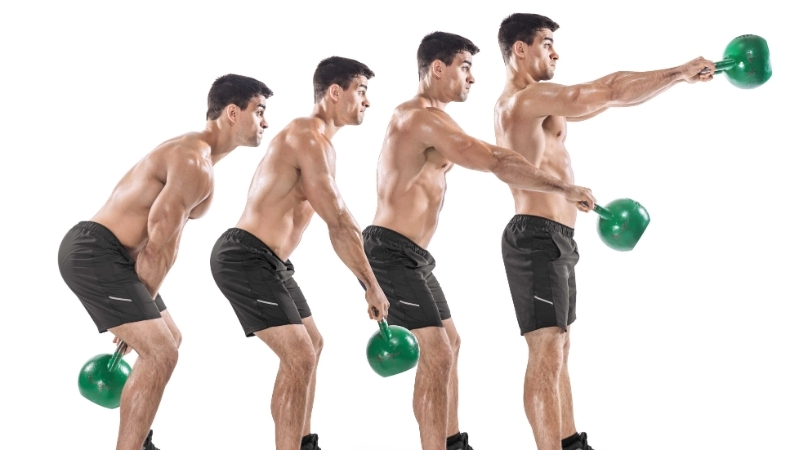
The best single kettlebell workout has a deliberately simple structure: a hinge block, a strength block, then a finisher. The best single kettlebell workout front-loads the swings while you are fresh, because that is where the largest amount of muscle is being asked to produce force quickly.
Block One: Swings, Ten Minutes
Ten sets of ten two-handed swings, one set at the top of each minute, resting for whatever remains of that minute. This is the whole of the first block, and progressing means finishing each set faster rather than adding reps to it.
Stop the set if the hips stop snapping and the arms begin lifting the bell. Ten strict swings with a hard hip extension is worth considerably more than fifteen where the last five are a front raise in disguise.
Block Two: Goblet Squats and Presses, Six Minutes
Alternate three sets of eight goblet squats with three sets of five single-arm presses per side, moving between them with minimal rest. The squats load the legs while the pressing shoulder recovers, which keeps the density high without needing a second bell.
The press is the weakest movement in the session and it dictates your bell size. If five clean reps per side is not possible, reduce to three and add sets rather than reaching for a lighter bell mid-session.
Block Three: Carries and Finisher, Four Minutes
Finish with four rounds of a forty-second suitcase carry, alternating hands each round, walking a loop of the room. Grip and trunk are the targets here, and both are what limit every other kettlebell movement you will do that week.
If the space is too small for a walking carry, substitute a stationary suitcase hold for the same duration. The training effect is nearly identical, and it removes the need for a clear run of floor.
Space, Ceiling Height and Bell Size
Allow roughly 6 x 6 ft (1.8 x 1.8 m) of clear floor for swings and about 8 ft (2.4 m) of ceiling, measured with your arm extended overhead for the press rather than to the top of your head.
Size the bell for the press, not the swing. Most untrained men land at 16 kg (35 lb) and most untrained women at 8-12 kg (18-26 lb), which will feel light on swings and appropriate everywhere else in the session.
Market Context for Kettlebells
Cast iron is heavy to ship, and freight dominates the pricing across the whole category. Deep discounts on heavier bells cluster around the late-year sales period for that reason, so timing a purchase genuinely matters more here than with smaller equipment.
The mid tier holds the widest choice, and the compromises below it are specific rather than vague: a rougher casting seam inside the handle window, thinner paint that chips at the horns first, and a base that is not quite flat for goblet work.
What the market still under-serves is the upstairs flat. Most flooring products assume a garage slab, so quiet, thin, stackable matting for a first-floor room remains a narrow slice of the shelf and is worth searching for by name.
Gear for the Best Single Kettlebell Workout
The best single kettlebell workout needs one bell and a handful of supporting items, all of which address something that would otherwise cut a session short: grip, wrists, noise and timing. Each entry below gives the honest limitation.
| Product | Type | Spec | Role in Session | Note |
|---|---|---|---|---|
| Yes4All Powder Coated | Cast iron bell | 10-70 lb (4.5-32 kg) | The working bell | Best value |
| Kettlebell Kings Powder Coat | Cast iron bell | Wide size range | High-rep comfort | Smooth handle window |
| Bowflex SelectTech 840 | Adjustable | 8-40 lb (3.6-18 kg) | Press and swing weights | Do not drop |
| GymNext Flex Timer | Interval timer | App controlled | Minute intervals | Needs power |
| Kettlebell Wrist Guards | Protection | Neoprene sleeve | Clean to the rack | Masks technique |
| BalanceFrom Puzzle Mat | Flooring | 1/2 in (12.7 mm) | Noise and floors | Dents under bells |
| Liquid Chalk | Grip | Small bottle | Carries and swings | Dries skin |
Yes4All Powder Coated Kettlebell
One bell in the 12-16 kg (26-35 lb) range runs this entire session, and the powder coat is the finish that behaves most predictably once a hundred swings have made your hands damp. The cost per pound is the lowest here by a clear margin.
Casting consistency varies between individual units, so run a hand around the inside of the handle when it arrives and take fine sandpaper to any seam you can feel. The base is flat enough for goblet squats but is not machined to competition tolerances.
Kettlebell Kings Powder Coated
Handle quality is where the extra money goes, and in a session containing a hundred swings and four carries that matters more than it sounds. A seamless window with a generous span reduces the hot spots that end long sets early.
The price per pound sits well above budget cast iron and the gain is comfort rather than capability. It makes most sense as a second purchase once you know you will run this session twice a week for months.
Bowflex SelectTech 840 Adjustable Kettlebell
Because the press and the swing want different weights, an adjustable bell covering roughly 8-40 lb (3.6-18 kg) genuinely solves a problem this session creates. You can drop the load between blocks without owning two bells or leaving the room.
The shape is boxier than a cast bell, which changes the feel at the bottom of the backswing and in the rack position. The selector must also be confirmed seated before every set, and it cannot be dropped.
GymNext Flex Interval Timer
Block one is built on minute intervals, and counting in your head between sets of swings is unreliable once you are breathing hard. An audible display keeps the ten minutes honest without stopping to look at a phone screen.
It is a single-purpose purchase and needs a wall or shelf with power nearby. A free phone app does the same job less conveniently, so treat this as a comfort upgrade rather than a requirement for the session.
Kettlebell Wrist Guards
Block two starts with a clean into the rack position, and a mistimed clean lands the bell on the forearm hard enough to end the session. Neoprene sleeves absorb that during the weeks when the timing is still being learned.
They also mask sloppy technique, which is the honest downside, so it is worth training without them periodically once the clean settles. The padding compresses over time and cheaper versions develop pressure points at the elbow.
BalanceFrom Puzzle Exercise Mat
Half-inch interlocking tiles cut the sound of a bell being set down between sets, which is the main complaint from anyone living above a neighbour, and they define a consistent square for the swing arc.
Foam takes a permanent dent under a bell parked in one spot, so move the bell after each session rather than leaving it. The tiles are also not designed for dropped weights, which should not feature here anyway.
Liquid Chalk
Grip is what fails first across a hundred swings and four carries, and liquid chalk buys a useful margin for very little money. Unlike block chalk it leaves no dust on carpet, which is what makes it usable indoors.
It dries the skin with frequent use, so hands can crack if the session runs twice a week without moisturising on rest days. It also needs a minute to dry before the first set, which is worth building into the warm-up.
Frequently Asked Questions
These are the practical questions that come up once someone commits to running the best single kettlebell workout as a fixed twice-weekly session.
How often should I run this session?
Twice a week with at least two days between is the sustainable pattern. Grip and lower back accumulate fatigue faster than the legs do, and those are what force an unplanned break rather than general soreness.
How do I progress without a heavier bell?
Shorten the rest inside block one until the ten sets take eight minutes rather than ten, then add a round to the finisher. Density is the progression variable here, which is why the timer earns its place on the equipment list.
What if I can only press three reps?
Run three reps per side and add a fourth set rather than dropping to a lighter bell. The press is meant to be the hard part, and reducing reps while keeping the load is the cleaner way to handle it.
Can I add exercises to the session?
Better not to. The session works because it is short, repeatable and easy to compare week to week, and adding movements usually means grip fatigue arrives before the working sets have done enough to matter.
See More:
- Ankle weights best
- Best rated ankle weights
- Best home workout equipment budget
- Best resistance bands for men
Final Thoughts
The best single kettlebell workout is three blocks in twenty minutes: swings on the minute, alternating goblet squats and presses, then loaded carries. One bell sized for your press runs all of it. Measure the swing arc and your overhead clearance before the first session rather than discovering the limit mid-set.



Write Your Review
No reviews yet. Be the first to share your experience!