
Key takeaways
What's inside
Best single kettlebell workouts share one design principle: they chain movements together so a light bell feels heavy, rather than asking you to buy more iron. One bell, a timer and a floor square will run all six of the formats below for months.
As an Amazon Associate we earn from qualifying purchases at no extra cost to you. Product prices and availability are accurate as of the date shown and are subject to change.
As an Amazon Associate we earn from qualifying purchases at no extra cost to you. Product prices and availability are accurate as of the date shown and are subject to change.


By Chris Parker
🛒 Best Price Today on Amazon
Prime members get fast, free shipping on everything above, plus member-only deals. New members get a 30-day free trial — cancel anytime.
Start 30-Day Prime Free Trial →See Today’s Amazon DealsHow to Build the Best Single Kettlebell Workouts
With one bell you cannot add weight, so the best single kettlebell workouts progress through density, complexity and rest instead. That changes what equipment matters: a timer becomes as important as the bell, and floor surface matters more than it does with dumbbells.
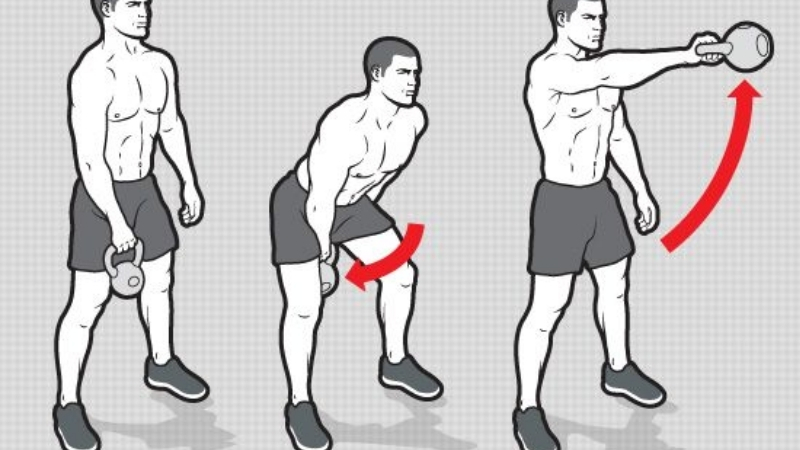
Floor Square, Ceiling Height and Storage
Complexes move you around more than straight sets do. Allow roughly 6 x 8 ft (1.8 x 2.4 m) of clear floor for cleans, snatches and lunges, and about 8 ft (2.4 m) of ceiling for pressing, measured with your arm extended rather than to the top of your head.
Storage is the easy part: one bell lives in a corner in about 8 x 8 in (20 x 20 cm). The mat is usually the bulkier item, so interlocking tiles that stack flat behind a door are worth choosing over a single fixed rubber sheet.
Chaining Movements Instead of Adding Weight
A complex is a fixed sequence performed without setting the bell down, for example clean, press, front squat, row and swing. Five reps of each turns a modest bell into a genuinely demanding set, because fatigue accumulates across the sequence rather than resetting between exercises.
The other lever is density. Running the same total work in less time, week by week, produces progression that a heavier bell would otherwise supply. A timer with audible intervals is what makes this measurable rather than approximate.
Wrist Contact and the Rack Position
Cleans and presses put the bell against the forearm, and a poorly timed clean bangs the wrist hard enough to end the session. Technique fixes most of it, but wrist guards make the learning phase far less unpleasant and cost very little.
Handle finish matters here too. Powder coat holds chalk and behaves predictably in the rack position, while thick vinyl coating rolls awkwardly around the forearm. For workouts built on cleans, a plain powder-coated bell is the safer choice.
Grip Endurance Is the Hidden Limit
In complex work the hands usually quit before the legs do, because the bell is never set down between movements. That makes grip the real ceiling on the best single kettlebell workouts, and it is why chalk belongs on the equipment list rather than being treated as an extra.
Handle finish decides how quickly this happens. Powder coat plus chalk stays predictable through a long sequence, while painted or vinyl-coated handles get slick within a couple of rounds. If your sessions run past twenty minutes, this is the variable worth fixing first.
Where the Equipment Market Sits Right Now
The mid tier remains where the choice is widest, and the compromises below it follow a pattern: a rougher casting seam inside the handle window, thinner paint at the horns, and bases that are not quite flat. None of these are dangerous, but the seam is the one you feel during high-rep cleans.
Adjustable bells have filled a real gap for people with no storage, and they genuinely work for complexes because you can drop the weight mid-session as fatigue builds. The trade-off is a boxier shape and a mechanism that must be checked before every set rather than trusted.
What the category still under-serves is the upstairs flat. Most flooring products assume a garage slab, so quiet, thin, stackable matting for a first-floor room remains a narrow part of the shelf and is worth searching for by name rather than assuming it is included.
Gear for the Best Single Kettlebell Workouts
The equipment list is short because the format is the point. These six items cover the bell itself, the timing, the wrists and the floor, which between them account for almost every reason a session gets abandoned early.
| Product | Type | Spec | Role | Note |
|---|---|---|---|---|
| Yes4All Powder Coated | Cast iron bell | 10-70 lb (4.5-32 kg) | The one bell | Best value |
| Kettlebell Kings Powder Coat | Cast iron bell | Wide size range | High-rep comfort | Smooth handle |
| Bowflex SelectTech 840 | Adjustable | 8-40 lb (3.6-18 kg) | Drop sets mid-complex | Do not drop |
| GymNext Flex Timer | Interval timer | App controlled | Density progression | Visible across room |
| Kettlebell Wrist Guards | Protection | Neoprene sleeve | Clean and rack | Learning phase |
| BalanceFrom Puzzle Mat | Flooring | 1/2 in (12.7 mm) | Noise and floors | Stacks flat |
| Liquid Chalk | Grip | Small bottle | Long sequences | Low mess indoors |
Yes4All Powder Coated Kettlebell
One bell in the 16-20 kg (35-44 lb) range covers almost every complex in this article, and the powder coat is the finish that behaves best when a session runs long and hands get damp. Cost per pound is the lowest in this list by a clear margin.
Casting quality varies unit to unit, so check the handle window by hand on arrival and smooth any seam with fine sandpaper. If your programme is heavy on cleans, that five-minute check is worth doing before the first session rather than after.
Kettlebell Kings Powder Coated
For workouts built on high-rep cleans and snatches, handle quality stops being a luxury. The seamless window and generous span reduce the hot spots that end long sets early, which directly affects how much work you get done in a session.
The price per pound is well above budget cast iron and the practical gain is comfort rather than capability. It makes most sense as a second purchase once you know you train this way several times a week.
Bowflex SelectTech 840 Adjustable Kettlebell
Being able to drop from 35 lb to 25 lb without owning two bells is genuinely useful in a complex, because the press is always the weak link in the chain. It also stores in a single footprint, which suits a living room that has other jobs.
The boxier shape is noticeable in the rack position against the forearm, and the selector needs confirming before each set. It cannot be dropped, so plan the last rep of every set to be set down under control.
GymNext Flex Interval Timer
Density progression only works if the intervals are exact, and a phone timer buried under a towel does not cut it. A wall-mounted display with audible intervals lets you run every-minute-on-the-minute work without breaking position to look at a screen.
It is a single-purpose purchase and it needs a wall or shelf with a power source nearby. A free phone app does the same job less conveniently, so this is a comfort upgrade rather than a requirement for the best single kettlebell workouts.
Kettlebell Wrist Guards
Neoprene sleeves take the sting out of the learning phase for cleans, where the bell inevitably lands hard on the forearm a few times before the timing clicks. They cost very little and they keep beginners training through the week where bruising would otherwise stop them.
They also mask poor technique, which is the honest downside. Use them while learning and then train without them periodically, so the feedback from a badly timed clean still reaches you.
BalanceFrom Puzzle Exercise Mat
Half-inch interlocking tiles cut impact noise and protect hard floors, and they define the working square so your foot position stays consistent across a complex. They stack flat behind a door between sessions, which matters in a room that is not a gym.
Foam takes a permanent dent under a bell parked in one spot, so move the bell after each session. It is also not designed for dropped weights, and dropping should not feature in these workouts anyway.
Liquid Chalk
Grip fails first in a complex, and liquid chalk is the cheapest fix available. Unlike block chalk it leaves no dust on carpet or furniture, which is the difference between a product you actually use indoors and one that stays in the cupboard.
It dries the skin, so frequent use can leave hands cracked, and it needs a minute to dry before the first round. Some formulations leave a light residue on painted bells that is worth wiping off after the session.
Frequently Asked Questions
These are the practical questions that decide whether the best single kettlebell workouts stay in your week beyond the first fortnight.
What weight should the single bell be?
Choose for the weakest movement in the chain, which is almost always the overhead press. For most untrained men that means 16 kg (35 lb) and for most untrained women 8-12 kg (18-26 lb), even though the swing alone could handle more.
How long should a session last?
Twenty to thirty minutes is the sweet spot for complex-based training. Beyond that, technique on cleans and snatches degrades faster than conditioning improves, and the risk of a badly timed rep rises sharply.
How do I progress without buying a second bell?
Shorten the rest, add a round, or add a rep to each movement in the sequence. Running the same total work in less time is the clearest progression signal available, and it is why a timer belongs on this equipment list.
Can I do these workouts every day?
Three to four sessions a week suits most people, with at least one full rest day between the hardest ones. Grip and lower back accumulate fatigue faster than the legs do, and those are the two that force an unplanned break.
See More:
- Ankle weights best
- Best rated ankle weights
- Best home workout equipment budget
- Best resistance bands for men
Final Thoughts
The best single kettlebell workouts trade weight for structure, which is why one well-chosen bell, a timer and a mat outperform a rack of iron that never gets used. Pick the bell for your press, progress by density rather than load, and measure the clear floor square before you plan any lunging sequences.



Write Your Review
No reviews yet. Be the first to share your experience!