
Key takeaways
What's inside
Best home gym gear rarely means another machine. Once dumbbells, a bench and somewhere to pull from are in place, the next real improvements come from accessories that change how much you can load, how the floor behaves and where everything lives. Six of them are worth owning, and the sizing numbers that decide which version to buy are listed here.
As an Amazon Associate we earn from qualifying purchases at no extra cost to you. Product prices and availability are accurate as of the date shown and are subject to change.

#1 Pick

#2 Pick

#3 Pick

#4 Pick

#5 Pick
#6 Pick
#7 Pick

As an Amazon Associate we earn from qualifying purchases at no extra cost to you. Product prices and availability are accurate as of the date shown and are subject to change.
By Chris Parker
🛒 Best Price Today on Amazon
Prime members get fast, free shipping on everything above, plus member-only deals. New members get a 30-day free trial — cancel anytime.
How to Choose the Best Home Gym Gear Worth Buying
The best home gym gear divides cleanly into things that change what you can lift and things that change how the room works. Both matter, but they justify their cost in different ways. The four criteria below sort them before anything reaches a basket.
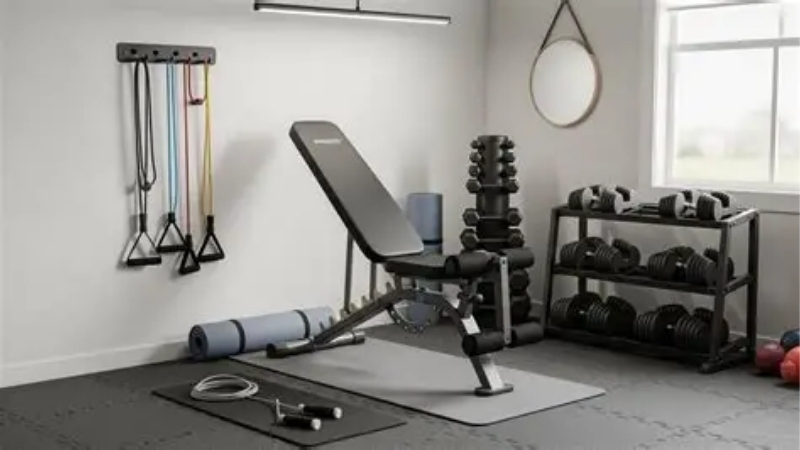
Gear That Changes Load Against Gear That Changes Comfort
Straps, belts and vests are the best home gym gear for altering the load you can handle or where it sits. Straps remove grip as the limiting factor on heavy pulls, and a weighted vest adds external load to body-weight movements that otherwise have a fixed ceiling.
Flooring, storage and mats change the environment instead. They do not make a set heavier, but they determine whether you can train early without disturbing anyone, whether the floor survives, and whether plates end up leaning against a wall.
Neither category is optional in a serious setup, but they are bought at different points. Environment gear should arrive with the first heavy item; load-changing gear only becomes useful once you are strong enough for the limit to bite.
Fit and Sizing Numbers That Matter
Belts are described by width and thickness. Four inches (10 cm) at the back is the common standard, with 10 mm and 13 mm the usual thicknesses. Thicker is stiffer and takes longer to break in; sizing is by waist at the navel, not by trouser size.
Knee sleeves are sized by thickness and circumference. Five millimetres suits general training and warmth, seven millimetres is stiffer and noticeably tighter to put on. A belt or a sleeve is a support garment, not a substitute for coaching on technique.
Weighted vests are described by total load and by increment. A vest adjustable in 1 to 2 lb (0.45 to 0.9 kg) steps is far more useful than a fixed 20 lb one, because body-weight progressions need small, repeatable jumps rather than one large one.
Storage Gear and Floor Gear
A vertical plate tree occupies roughly 2 sq ft and holds several hundred pounds off the floor. Wall pegs use no floor at all but need studs or masonry. Loose plates against a wall are the default arrangement and the worst one for both floor and shins.
Flooring is not decorative. Rubber tiles or stall matting define the working area, absorb the point loads that dent laminate and crack tile, and cut the impact noise that travels through joists to a room below far better than any rug.
Measure the actual dimensions of the space you intend to cover before ordering tiles, and check tile thickness against door clearance. A 20 mm floor build-up can stop a door opening, which is discovered after the adhesive has gone down.
Materials and What Wears Out
Materials divide the best home gym gear as clearly as function does. Leather belts stiffen and hold shape for years but need breaking in; nylon belts are comfortable immediately and flex more under load. Neoprene sleeves lose compression gradually with washing and wear, which is a slow decline rather than a failure.
Cotton straps fray at the loop where they cross the bar, and that is the point to inspect. Rubber flooring compresses under rack feet and can curl at unsecured edges, while cheaper foam tiles dent permanently under anything heavy.
Home training stopped being a temporary arrangement years ago, and accessory quality at the mid tier has improved along with it. The same shift has also filled the category with cosmetic versions of serious gear, so stitching, thickness and material listings matter more than finish.
Top Picks: 6 Pieces of the Best Home Gym Gear
Three pieces of the best home gym gear that change what you can lift and three that change how the room works, chosen so nothing here duplicates something else. The table pairs each item with the single specification that decides sizing or suitability.
| Item | Key specification | Changes | Best bought |
|---|---|---|---|
| Leather lifting belt | 4 in (10 cm) wide, 10-13 mm | Bracing on heavy sets | Once squatting or pulling heavy |
| Padded lifting straps | Cotton, single loop | Grip on heavy pulls | When grip fails before the back |
| Knee sleeves | 5 mm or 7 mm neoprene | Warmth and compression | Cold rooms, high squat volume |
| Interlocking rubber tiles | ~20 mm thick | Floor and noise | Before the first heavy item |
| Adjustable weighted vest | Small 1-2 lb increments | Body-weight ceiling | Once pull-ups get easy |
| Vertical plate tree | ~2 sq ft footprint | Storage and safety | With the first plate set |
1. A Leather Weightlifting Belt
Four inches (10 cm) across the back is the standard for a reason: it gives a consistent surface to brace against on squats and deadlifts without digging into the ribs. Leather holds its shape for years and a single-prong buckle is faster to adjust than double.
Stiff leather needs weeks of use before it stops feeling like a plank, sizing runs by waist measurement rather than clothing size, and a belt supports bracing rather than replacing technique. Anyone unsure how to use one should ask a certified coach first.
2. Padded Cotton Lifting Straps
The cheapest way to stop grip ending a set before the target muscle does. On heavy rows, shrugs and deadlift volume work, straps let the back do the work it is genuinely capable of instead of the set finishing when the fingers give out.
Used on every set they let grip strength stagnate, so most people reserve them for the heaviest working sets. Cotton frays where the loop wraps the bar, which is the point to inspect, and they are unsuitable for anything you might need to drop quickly.
3. Neoprene Knee Sleeves
Compression and warmth for high-volume squatting, particularly in a cold garage or a room that only heats up halfway through a session. Five millimetres suits general training; seven millimetres is stiffer and gives more support out of the bottom position.
Seven millimetre sleeves are genuinely difficult to pull on and get warm quickly, and neoprene loses compression gradually with washing. Sleeves are support garments, not treatment for pain, and any persistent joint problem belongs with a doctor rather than a shopping list.
4. Interlocking Rubber Floor Tiles
The least interesting purchase in this list and among the most used. Tiles absorb the point loads that crack tile and dent laminate, define the training area, and cut impact noise transmitted through joists to any room below far better than carpet does.
Cheaper foam versions dent permanently under rack feet and heavy dumbbells, edges can curl if the area is not fully covered, and total thickness can foul a door that opens inward. Check both before ordering enough tiles to cover a room.
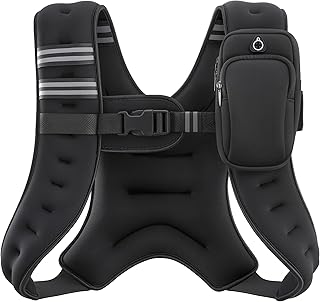
5. An Adjustable Weighted Vest
Body-weight movements have a ceiling set by your own mass, and a vest is the cheapest way past it. Small pocket weights let you add 1 to 2 lb (0.45 to 0.9 kg) at a time to pull-ups, dips and step-ups, which keeps progression measurable.
Vests shift the load high on the torso, which changes balance on anything dynamic, and cheaper models bounce during running or jumping. Fixed-weight vests are cheaper still but lose the small increments that make the tool useful in the first place.
6. A Vertical Plate Tree
Plates need a proper home that is not simply the floor. A tree occupies roughly 2 sq ft, keeps weights at hand height, and removes the shin-height obstacles that loose plates create in a room you probably also have to walk through in the dark.
It is another permanent footprint in a room that may not have one to spare, and lighter trees can become top-heavy if all the weight is loaded on one side. Wall pegs are the alternative wherever the wall structure allows proper fixings.
Frequently Asked Questions
Most questions about the best home gym gear concern whether an item is necessary yet, and which specification to choose. Each answer below is given against published sizing figures and materials rather than general recommendation.
Do I Need a Belt for Home Training?
Not until loads are heavy enough that bracing becomes the limiting factor, which for most people is well into a first year of barbell work. Before that a belt adds cost without adding capability. Learn bracing without one, ideally with coaching.
Which Knee Sleeve Thickness Should I Choose?
Five millimetres for general training, warmth and comfort; seven millimetres for higher squat volume where extra stiffness is wanted. Size by the circumference measurement the manufacturer specifies, and expect seven millimetre sleeves to be a struggle to put on.
Are Lifting Straps Counterproductive?
Only if used on every set. Reserved for the heaviest pulls, they let the target muscles reach failure instead of the grip, which is the point. Keeping some pulling work strapless preserves grip development alongside the heavier loading.
What Flooring Suits an Upstairs Room?
Rubber tiles around 20 mm thick, covering the full working area rather than a patch. Rubber outperforms foam on both point loads and impact transmission through joists, and full coverage stops edges curling and tiles shifting during dynamic work.
See More:
- Best changeable dumbbells
- Best rated yoga mat
- Best mat yoga
- Best home gym equipmen
- Best fitness equipment for home gym
Final Thoughts
The best home gym gear is bought in two waves: flooring and storage as soon as anything heavy arrives, then belts, straps, sleeves and a vest once loads are high enough for them to matter. Measure the floor area first and check door clearance before tiles go down.

Write Your Review
No reviews yet. Be the first to share your experience!