
Key takeaways
What's inside
Best barbell brands do not compete on the same ground. One dominates powerlifting bars, another owns competition weightlifting, a third simply makes the cheapest honest bar available. This guide maps which brand owns which niche, what separates a power bar from a weightlifting one, and how to buy for your training rather than for a name.
As an Amazon Associate we earn from qualifying purchases at no extra cost to you. Product prices and availability are accurate as of the date shown and are subject to change.
As an Amazon Associate we earn from qualifying purchases at no extra cost to you. Product prices and availability are accurate as of the date shown and are subject to change.


By Chris Parker
🛒 Best Price Today on Amazon
Prime members get fast, free shipping on everything above, plus member-only deals. New members get a 30-day free trial — cancel anytime.
Start 30-Day Prime Free Trial →See Today’s Amazon DealsHow the Barbell Market Divides Up
Barbells split into four distinct categories, and most of the best barbell brands specialise in one or two rather than all of them. Understanding that split is how you avoid buying a stiff power bar for Olympic lifting. The criteria below explain what separates the best barbell brands by discipline.
Power, Olympic, Multipurpose and Specialty
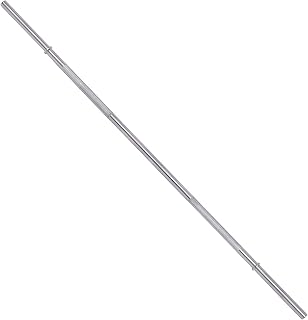
Power bars run 29 mm shafts with aggressive knurl, a centre knurl and minimal whip, built specifically for squats and deadlifts. Olympic weightlifting bars use 28 mm shafts, needle bearings and deliberate whip so the bar loads and unloads through the second pull of a clean.
Multipurpose bars at 28.5 mm split the difference and are what most home gyms should buy. Specialty bars — safety squat, trap, cambered — are a separate market again, and the best barbell brands in that niche are often not the same names as in the main one.
Most home lifters never need more than one bar. A multipurpose shaft handles squats, presses and deadlifts perfectly well, and the second bar only becomes worthwhile when one discipline starts dominating your training rather than sharing it with everything else.
Bushings, Bearings and Sleeve Spin
Bronze bushings give slow, controlled spin and are the correct choice from any of the best barbell brands for powerlifting and general training. Needle bearings spin freely and fast, which matters when a bar has to rotate under your hands during a snatch but is unnecessary for a squat.
Composite bushings sit at the budget end and wear noticeably faster. Whichever you choose, check whether the brand sells replacement bushings and snap rings, because a bar with serviceable sleeves lasts decades while one without becomes disposable the moment the spin degrades.
Knurl Pattern, Centre Knurl and Ring Placement
Knurl marks are not decoration. IPF powerlifting spacing sits at 32 in (81 cm) and IWF weightlifting spacing at roughly 35 in (89 cm), and dual-marked bars carry both. A bar with only one set of rings limits how easily you can standardise your grip.
A centre knurl grips the shirt during a low-bar squat but scratches the neck during cleans, which is exactly why power bars have one and weightlifting bars deliberately do not.
Ring placement also affects how repeatable your grip is. Marks at the wrong spacing for your discipline mean measuring your hand position by feel every set, which sounds trivial until you are chasing a consistent setup at a heavy weight. Multipurpose bars often use a passive centre knurl as a compromise between the two.
Footprint: Bar Length, Weight and Storage
Most Olympic bars are 86-87 in (218-221 cm) long and weigh 44 lb (20 kg), though women’s bars run 79 in (201 cm) at 33 lb (15 kg) with a 25 mm shaft instead. Either needs a rack, and the choice is between vertical and horizontal storage.
A vertical holder claims about 12 x 12 in (30 x 30 cm) of floor but needs roughly 8 ft (2.4 m) of ceiling plus clearance to lift the bar out. Horizontal wall racks span most of a wall instead. Measure both options before deciding which suits your room.
Top Picks: Best Barbell Brands by Discipline
The six best barbell brands below are grouped by what each genuinely does best rather than by any overall ranking. The table maps each to its niche, and the write-ups cover what that brand excels at and where a different name would serve you better.
| Brand | Strongest niche | Typical spin | Spec transparency | Price tier |
|---|---|---|---|---|
| Rogue Fitness | All-round and powerlifting | Bushing and bearing | Full | Premium |
| Eleiko | Competition weightlifting | Needle bearing | Full | Premium |
| REP Fitness | Home gym multipurpose | Bushing | Full | Mid |
| American Barbell | Coatings and longevity | Bushing and bearing | Full | Premium |
| Titan Fitness | Budget with real specs | Bushing | Partial to full | Budget |
| CAP Barbell | Entry level availability | Basic bushing | Limited | Budget |
Rogue Fitness
The broadest range of any brand here, covering power bars, multipurpose bars, weightlifting bars and a long list of specialty options. Specifications are published in full for every model, and replacement bushings and snap rings are sold separately.
Pricing is premium and shipping a 44 lb bar is expensive. Popular models also go out of stock for extended periods, so if you need a specific bar to a deadline, the wait can be longer than the decision took.
Eleiko
The reference name in competition weightlifting, where bar behaviour under a snatch matters more than anywhere else. Needle bearings, calibrated tolerances and consistent whip are what you are paying for, and they are genuinely different in the hand.
It is by some distance the most expensive option here, and almost entirely unnecessary for a home gym doing squats and presses. Buy this only if Olympic lifting is your actual sport rather than an occasional part of your training.
REP Fitness
The sweet spot for most home gyms, offering multipurpose bars with proper specifications at mid-tier pricing. Knurl consistency is good, the whip is tuned for general training rather than competition, and the value is the strongest in this group.
The specialty range is limited and coating options are fewer than the premium brands. If you want a stainless shaft for a damp garage or a specific competition bar, you will be looking elsewhere.
American Barbell
Where coatings are the deciding factor, this is the brand. Stainless shafts and hard chrome sleeves resist corrosion far better than zinc, which is the specification that determines whether a bar in a humid garage looks the same in ten years.
Premium pricing and patchier availability through general retailers are the trade-offs. The range also leans toward training and commercial bars rather than the competition specialties some lifters are specifically hunting for.
Titan Fitness
The budget brand that publishes real tensile figures, which is why it sits here rather than among the anonymous options. For a first bar under moderate loads it is honest value, and the range covers power, multipurpose and several specialty bars.
Machining consistency varies between units and shallow knurl depth is the usual complaint from buyers. Finish blemishes on arrival are routine and warranty support is less established, so treat it as a starting bar rather than a lifetime purchase.
CAP Barbell
The entry point, and the strength is availability — you can usually buy one today rather than waiting for stock. For light home training, a beginner setup or a spare bar, it does the job at the lowest cost in this group.
Specifications are thin and tensile figures are not always published, which is the main reason it ranks last here. Sleeve spin is basic, which makes it unsuitable for Olympic lifting, and the knurl is generally shallower than lifters coming from a commercial gym expect.
Frequently Asked Questions
These four questions cover what people most want settled when comparing the best barbell brands against each other — which bar type to buy, whether premium brands are worth it, women’s bars and where the specialty market sits.
Which bar type should a home gym buy?
A multipurpose bar with a 28.5 mm shaft, bronze bushings and dual knurl marks covers squats, presses, deadlifts and the occasional clean or snatch perfectly well. Specialise only when your training does, since a power bar and a weightlifting bar are both worse at the other job.
Are premium brands actually worth the money?
For a bar you expect to own for decades, the mid tier and upward is worth it for published specifications, serviceable sleeves and a warranty that means something. Beyond that, premium pricing buys coatings and competition tolerances that only matter for specific disciplines.
Do the best barbell brands make women’s bars?
Most of them do. A women’s bar measures 79 in long, weighs 33 lb and uses a 25 mm shaft, and it suits smaller hands regardless of who happens to be lifting it. It is the sensible choice for anyone finding a 28.5 mm shaft hard to grip securely.
What about specialty bars?
Safety squat, trap and cambered bars are a separate market, and the strongest names there are not always the same as for straight bars. Buy specialty bars on their own merits rather than assuming your preferred straight-bar brand is best at them too.
See More:
- Ankle weights best
- Best rated ankle weights
- Best home workout equipment budget
- Best resistance bands for men
Final Thoughts
The best barbell brands each own a niche, so match the maker to your training: multipurpose mid-tier for a general home gym, competition specialists only if you compete, and budget names for a first bar. Check the shaft diameter, spin type and knurl marks against how you actually lift, and measure your storage before a seven-foot bar arrives.


Write Your Review
No reviews yet. Be the first to share your experience!