
Key takeaways
What's inside
Best resistance bands women shop for tend to fall into three formats that get lumped together: short mini loops, fabric hip bands and long tube sets with handles. They load completely different joints, and buying the wrong format is by far the most common reason a set ends up unused in a drawer after a fortnight.
As an Amazon Associate we earn from qualifying purchases at no extra cost to you. Product prices and availability are accurate as of the date shown and are subject to change.


As an Amazon Associate we earn from qualifying purchases at no extra cost to you. Product prices and availability are accurate as of the date shown and are subject to change.
By Chris Parker
🛒 Best Price Today on Amazon
Prime members get fast, free shipping on everything above, plus member-only deals. New members get a 30-day free trial — cancel anytime.
How to Choose the Best Resistance Bands Women Actually Use
The best resistance bands women end up training with are chosen by movement rather than by any category label. Tension should match the exercise and your current strength, not a marketing tier, and the format decides which joints you can load at all. Four questions settle it before any brand comparison.
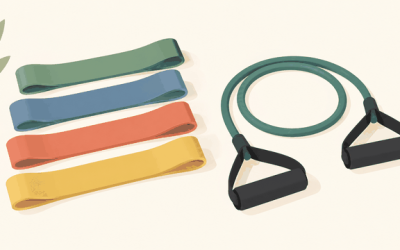
Three Band Formats and What Each One Loads
The best resistance bands women start with are usually mini loops, which sit around the thighs or ankles and load hip abduction, lateral walks, clamshells and glute bridges. They are short, cheap and specific: excellent for hip and glute work, and essentially useless for pressing, rowing or anything that needs an anchor point away from your own body.
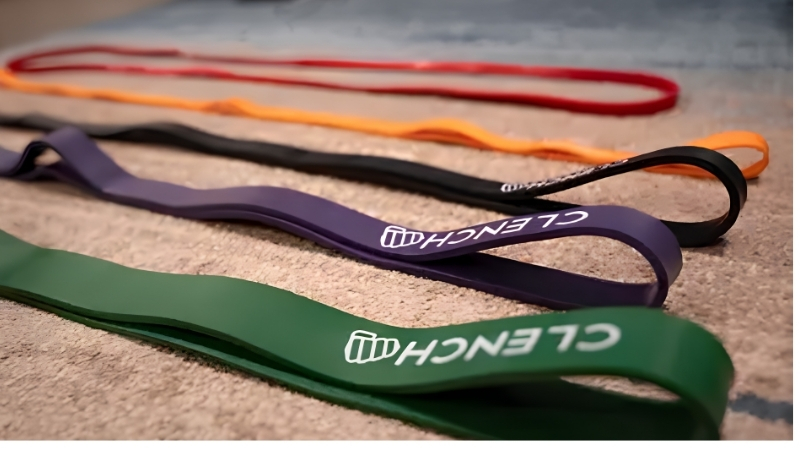
Long loop bands and tube sets are the other two. Long loops handle assisted pull-ups, banded squats and full-body work with your feet as the anchor. Tube sets with handles and a door anchor cover chest press, rows and overhead work, which is the closest thing to a cable machine at home.
Fabric Versus Latex on the Thighs
The rolling problem is real and it is the single biggest complaint about mini loops. A thin latex band placed above the knee migrates upward or downward during lateral walks and squats, so the set becomes a fight with the equipment rather than with the muscle you were trying to load.
Fabric bands solve it. A woven band with an inner grip layer stays where it is placed, sits more comfortably on bare skin and is far more pleasant at higher tensions. The trade is that fabric bands come in fixed tension steps, cannot be stacked, and have a much shorter usable stretch than latex.
Storage Footprint and Anchor Space
Footprint is where bands beat every other format outright. A complete kit of mini loops, fabric bands and a tube set fits in a shoe box and weighs a few pounds, which is why bands survive house moves and small flats better than any other piece of home gym equipment on the market. Nothing else is this portable.
What you need instead is floor and anchor space. Plan for roughly 6 x 6 ft (183 x 183 cm) of clear floor for pressing and rowing with a tube set. Door anchors need a door that opens away from you and a solid frame. Measure the clear area of the room before ordering a full kit.
Price Tiers and What Fails First
The best resistance bands women buy sit in one of the few categories where the mid tier costs very little in absolute terms, which makes shopping at the absolute bottom hard to justify. The difference between a throwaway set and a well-made one is small in money and large in how long it survives regular use.
What gets cut at the bottom is specific. Thin latex laid in fewer layers, plastic clips instead of steel carabiners, printed rather than moulded resistance markings, and no inner safety cord in tube bands. The latex is rarely the first thing to fail; it is almost always the attachment hardware.
Latex itself degrades with UV exposure, heat, oil and small nicks, and it fails suddenly rather than gradually. Store bands out of sunlight, keep them away from anything with a sharp edge, and inspect for surface cracks before each session. Fabric bands last longer but eventually lose elasticity in the weave.
Top Picks: 6 Resistance Band Sets Across Three Formats
These six cover mini loops, fabric hip bands, flat therapy bands, long loops and two tube systems, so the comparison is between formats rather than brands. The best resistance bands women find useful long term usually means owning two of these rather than one, because no single format loads everything.
| Set | Format | Loads | Anchor | Main Drawback |
|---|---|---|---|---|
| Fit Simplify Loop Bands | Latex mini loops | Hips, glutes, shoulders | Body only | Rolls on the thigh |
| Peach Bands Hip Band Set | Fabric hip bands | Hips and glutes | Body only | Fixed steps, no stacking |
| TheraBand Resistance Band Set | Flat therapy bands | Shoulders, rehab work | Hands, furniture | Low top-end tension |
| Whatafit Resistance Bands | Stackable tubes | Full body pressing, rowing | Door anchor, handles | Plastic clips |
| Undersun Fitness Bands | Long flat loops | Full body, assisted pull-ups | Feet, bar, furniture | No handles |
| Bodylastics Stackable | Tubes with safety cord | Higher tension progression | Door anchor, handles | Bulkier stack to manage |
Fit Simplify Resistance Loop Exercise Bands
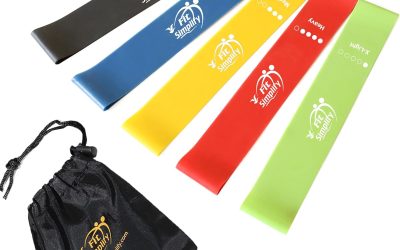
The cheapest useful entry point, and the set most people start with. Five latex mini loops in graded tensions cover hip abduction, clamshells, lateral walks, glute bridges and shoulder warm-ups, and the whole set weighs almost nothing and costs less than a single gym drop-in class.
Thin latex rolls and migrates on bare thighs during lateral walks and squats, which is the standard frustration with this format. The lighter bands also lose tension after several months of heavy use. Treat them as consumables and as a good way to find out which exercises you actually want to load.
Peach Bands Hip Band Set
The fabric answer to the rolling problem. A woven band with an inner grip layer stays exactly where it is placed through lateral walks, squats and hip thrusts, and it is far more comfortable on bare skin at higher tensions than latex is. Three graded bands cover a useful working range.
Fabric cannot be stacked and does not stretch as far, so the tension steps are fixed and the jumps between them are large. It is also more expensive than a latex set and limited strictly to hip and glute work. Buy it alongside a latex or a tube set rather than instead of either one. It is a specialist, not an all-rounder.
TheraBand Resistance Band Set
Flat, wide latex sheeting in colour-coded progressive levels, which is the format used in clinical and rehabilitation settings for good reason. It is gentle at the bottom of the range, easy to grade precisely, and works for shoulder, wrist and rotator cuff work that heavier formats handle badly.
Top-end tension is low compared with tubes or long loops, so this is not the format for progressing squats or presses. The flat sheeting also has to be gripped in the hands, which becomes the limiting factor before the muscle does. If you are using it for rehabilitation, follow guidance from a qualified professional.
Whatafit Resistance Bands Set
The best value full-body kit, with five stackable tube bands, handles, ankle straps and a door anchor. Combined resistance is typically quoted around 150 lb (68 kg) at full stretch, which covers chest press, rows, overhead press, curls and lateral raises without needing any other equipment.
Stacked figures are measured near maximum stretch, so the load in your working range is lower than the headline suggests. The plastic clips are the component that fails first, usually before the latex does, so inspect them regularly. Never stretch a band towards your face during any exercise.
Undersun Fitness Resistance Bands
Five long flat loops with no clips, handles or anchors to fail, covering light through heavy. They handle assisted pull-ups, banded squats, hip thrusts and full-body circuits, and the entire set rolls into a corner of a suitcase, which makes them the practical choice for travel or a very small flat.
Long loops dig into the thighs during squats and hip thrusts unless positioned carefully, and without handles they are awkward for pressing movements. The tension jumps between levels are large compared with a stackable tube system. Excellent as a second set, less convincing as your only source of resistance.
Bodylastics Stackable Resistance Bands
The progression option. Tube bands clip onto a single carabiner so resistance stacks into ranges that keep working as you get stronger, and an inner safety cord runs through each tube to stop it recoiling if the latex tears, which is the engineering detail that justifies the price.
Managing a stack of several tubes takes longer than picking up a dumbbell, and the assembled set is bulkier than mini loops or fabric bands. Handles and anchors are consumable parts that will need replacing before the bands do. It costs well above the entry tier, which is rather the point.
Frequently Asked Questions
The recurring questions about the best resistance bands women choose concern which format to start with, why bands roll, how much tension is enough and whether bands can replace weights. These four answers cover what usually determines a first purchase, and what drives the second one. Format matters more than brand.
Which format should I buy first?
If the goal is hip and glute work, start with fabric hip bands, since they do not roll and you will actually use them. If you want full-body training, start with a stackable tube set and a door anchor. Most people end up owning both, because neither format covers what the other one does.
Why do my bands roll up my thighs?
Because thin latex has a small contact area and slides on skin as the leg changes shape through a movement. Fabric bands with an inner grip layer solve it outright. Wearing leggings rather than shorts helps a little with latex, and placing the band slightly above the knee rather than mid-thigh helps too.
How much tension do I actually need?
Enough to reach failure somewhere between roughly eight and twenty controlled repetitions in the exercise you are doing, and that figure depends on the movement and your current strength rather than on anything else. Hip abduction needs far less than a chest press. Buy a graded set rather than a single band.
Can bands replace weights?
For upper body pressing and rowing they go a long way, particularly with a stackable tube set. For legs they run out sooner, because the strongest muscles in the body outpace band tension quickly. Bands also load unevenly, being lightest where you are weakest, so they complement iron rather than replacing it.
Final Thoughts
The best resistance bands women keep using are matched to the movement, not to a label. Fabric hip bands for glute work because they do not roll, a stackable tube set for pressing and rowing, long loops for assisted pull-ups. Buy a graded set rather than a single tension, and store latex out of direct sunlight.


Write Your Review
No reviews yet. Be the first to share your experience!