
A foldable rowing machine for small spaces can turn a bedroom, apartment, or home office into a practical cardio area without permanently occupying the floor. The right model must fit your full rowing stroke, fold safely, and remain manageable to move. This guide explains how to compare dimensions, resistance, rail length, and storage.
Quick Verdict: What Makes a Good Small-Space Folding Rower?
For most home users, a folding rowing machine is worth buying when it offers full-stroke comfort, a secure folding mechanism, suitable resistance, and a storage configuration that is genuinely convenient.
The best model is not necessarily the shortest machine. A rower that accommodates your legs comfortably and folds into a manageable shape may be more useful than an extremely short machine that restricts your movement.
The most important features include adequate seat travel, a stable frame, a manufacturer-approved storage method, smooth drive components, and manageable equipment weight.
A quiet magnetic rower may be preferable in an apartment, while an air or water machine may appeal to users who prioritize a different resistance feel.
Buyers should measure both the operating area and the storage location before making a decision.
What Is a Foldable Rowing Machine?
Understanding Folding Frame Designs
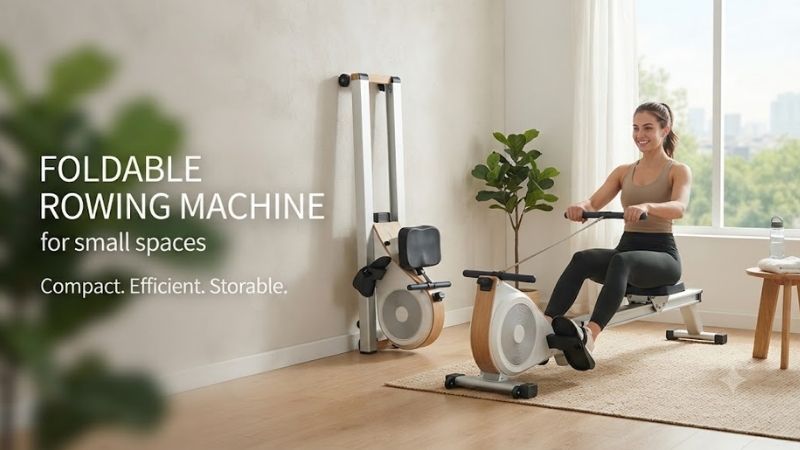
A folding rowing machine has a manufacturer-designed mechanism that changes the equipment’s physical configuration for storage.
This often involves raising the rear rail toward the front of the frame, reducing the machine’s horizontal length.
Other designs use multiple hinged segments or a different folding arrangement.
The critical distinction is that the machine must be built specifically to fold. Users should never improvise a folding method or disassemble load-bearing components without manufacturer approval.
Folding Versus Compact Construction
A compact rower has relatively small assembled dimensions.
A folding rower reduces its storage footprint by changing its configuration.
These characteristics can overlap, but they are not identical.
For example, a short rower might be easy to leave permanently assembled in a room. A longer folding model may provide better legroom during exercise while occupying less floor space between sessions.
Choosing between them requires thinking about how the room will be used throughout the day.
Folding Versus Upright Storage
Some rowing machines can be stored vertically without folding.
These machines retain their normal structure but change orientation.
That is different from a folding mechanism with hinges and locking joints.
Other models, including some performance-oriented rowers, separate into two sections.
A buyer searching for folding equipment should compare all approved storage arrangements rather than assuming every space-saving rower folds in the same way.
Folding Rowing Machine Designs Compared
| Storage Design | How It Works | Main Advantage | Main Limitation |
|---|---|---|---|
| Folding rail | Rear rail pivots upward | Reduces stored length | Requires secure hinge and lock |
| Multi-section folding | Several frame sections change position | Can create a compact stored shape | More moving joints |
| Split-frame storage | Machine separates into pieces | Avoids conventional folding hinge | Requires separation and reassembly |
| Approved upright storage | Assembled machine stands vertically | Small horizontal footprint | Needs ceiling clearance and stability |
| Compact nonfolding | Shorter permanent frame | No folding procedure | May restrict seat travel |
| Permanent full-length | Remains assembled | Immediate workout readiness | Requires dedicated floor space |
How Much Space Do You Need?
Start With Operating Dimensions
A rowing machine is long because the user moves backward and forward along a rail.
Even when the frame is narrow, the assembled length can be substantial.
Measure the exact room area available during exercise.
Pay particular attention to the distance between furniture, walls, doorways, and other equipment.
The machine should not obstruct a normal walking route or emergency exit.
Allow Clearance Beyond the Frame
The published length and width may represent only the equipment itself.
You also need room to sit down, adjust foot straps, reach the handle, and stand up afterward.
Some manufacturers publish a larger recommended operating area.
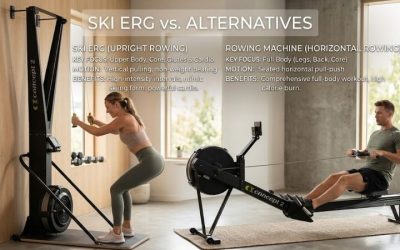
For perspective, Concept2 lists an assembled RowErg footprint of approximately 8 feet by 2 feet and recommends about 9 feet by 4 feet with clearance.
That model separates for storage rather than using a conventional folding rail, but it provides a useful example of why the operating area exceeds the basic frame dimensions.
Measure the Folded Footprint
A machine that folds upward may become much taller than its operating height.
The stored shape could also be wider at certain points because of footrests, handles, or stabilizers.
Check the exact folded length, width, and height.
A product that fits under a desk when horizontal may be too tall to store behind a closet door after folding.
Consider Ceiling Height
Ceiling height is usually less important during ordinary seated rowing than during storage.
However, a raised rail may extend high enough to contact light fixtures, shelves, or ceiling structures.
Measure the complete folding movement, not just the final stored height.
Evaluate Doorways and Hallways
If the rower will be moved between rooms, measure the route.
A machine can fit in its intended storage space while still being difficult to maneuver through a narrow doorway.
Consider the width of the widest frame component and whether transport wheels remain functional in the storage orientation.
Use a Practical Floor Plan
Before purchasing, draw a simple scaled layout.
Mark the full operating rectangle and the proposed storage position.
Include nearby furniture, door swings, walking paths, and outlets if the machine needs power.
This simple exercise often reveals problems that are easy to miss when looking only at product photos.
Choosing the Right Rail Length
Why Rail Length Matters More Than Compact Marketing
Seat travel determines how far the user can move during the rowing stroke.
At the catch, the knees bend and the seat travels forward.
During the drive, the legs extend, pushing the seat backward.
If the machine does not provide sufficient travel, the user may reach the mechanical limit before completing a comfortable stroke.
That restriction can make a compact rower frustrating to use.
Total Length Versus Usable Travel
A rowing machine’s advertised overall length includes its resistance housing, front supports, seat rail, and other components.
The usable travel of the seat may be considerably shorter.
Therefore, buyers should prioritize published inseam compatibility and seat-travel measurements.
A well-designed rower can make effective use of its frame length, while another similarly sized machine may offer less practical legroom.
Why Inseam Is Useful
Inseam provides information about leg length.
Two people of equal height can have different leg proportions.
A rower that fits one person may not fit the other.
When available, compare your inseam with the manufacturer’s recommended range.
Tall Users and Folding Rowers
Tall users should be especially careful when considering inexpensive compact equipment.
Some residential rowers use short rails to achieve a small footprint.
A folding design with a longer rail may be a better compromise.
Do not assume that a foldable model accommodates tall users simply because it unfolds to a substantial overall length.
Shorter Users and Handle Reach
Shorter riders should also consider fit.
The handle should be reachable without excessive shoulder extension.
The footplate geometry and seat position should allow the user to establish a stable catch.
A machine designed primarily around larger riders may feel uncomfortable even when the rail is long enough.
Resistance Systems for Folding Rowers
Magnetic Resistance
Magnetic rowing machines use magnetic braking to resist flywheel rotation.
They are popular for home use because the braking mechanism generally creates less noise than an air fan.
Many compact folding models use manual magnetic resistance.
These machines can be attractive for bedrooms or shared apartments.
However, their seat rollers, belts, and frame still create mechanical sound.
Air Resistance
Air rowers use a fan that responds to pulling effort.
A more forceful drive accelerates the flywheel and creates additional aerodynamic resistance.
This can feel responsive during intervals.
However, fan noise is usually more noticeable than magnetic resistance noise.
Storage design also varies, and not all air rowers have folding rails.
Water Resistance
Water rowers use an impeller moving through water.
The resistance responds to effort, producing a distinctive sound.
Some water machines fold, while others store upright.
Water adds weight and maintenance requirements, making handling particularly important if the machine must be moved frequently.
Hydraulic Resistance
Some compact rowers use hydraulic pistons.
These models can occupy less space because they may use different arm mechanisms instead of a conventional central pull handle.
However, their motion can differ from standard rowing, and hydraulic components may have temperature-related operating limits.
A hydraulic machine should not automatically be considered equivalent to a conventional sliding-seat flywheel rower.
Hybrid Resistance
Hybrid systems may combine air and magnetic braking.
They can offer additional adjustment options.
However, they also introduce more components and potentially greater equipment complexity.
The best resistance type depends on your training goals, noise tolerance, and storage requirements.
Comparing Resistance Types for Small Rooms
| Resistance | Typical Sound | Adjustment Method | Maintenance Considerations | Main Attraction |
|---|---|---|---|---|
| Magnetic | Relatively quiet braking | Manual or electronic | Belt, rail, and electronics | Apartment use |
| Air | Audible fan | Stroke effort and damper | Fan, drive, rail | Responsive training |
| Water | Audible water movement | Stroke effort and tank conditions | Water treatment and tank | Fluid rowing feel |
| Hydraulic | Mechanical movement | Piston settings where provided | Cylinder inspection and use limits | Compact equipment |
| Air-magnetic hybrid | Fan and mechanical sound | Air and magnetic controls | Multiple resistance components | Training flexibility |
Frame Stability and Folding Hardware
What Makes a Folding Frame Stable?
A folding rower must remain rigid in its exercise configuration.
Hinges, locks, and connecting members should hold the frame securely.
The machine should not bend or shift unexpectedly during ordinary rowing.
Correct assembly is essential.
Locking Pins and Hinges
Some folding models use locking pins.
Others use levers, catches, or integrated locking assemblies.
These components must be fully engaged before exercise.
A partially secured rail can create a serious mechanical hazard.
Always follow the manufacturer’s procedure for unfolding and locking the machine.
How Often Should You Inspect the Folding Mechanism?
Inspect visible hinges, pins, and fasteners before use, particularly if the machine is folded daily.
Look for unexpected movement, loose hardware, wear, or damage.
Follow the manual’s specified maintenance schedule.
Floor Leveling
Even a high-quality rower can feel unstable on an uneven floor.
Check the floor surface and use the manufacturer’s adjustment feet where provided.
Avoid placing the machine on a thick, unstable rug.
User-Weight Capacity
Every machine has a rated maximum user weight.
The rating should accommodate the intended user.
Do not exceed it or assume that a steel frame automatically supports more than the manufacturer states.
Shared Household Use
If multiple people will use the same rower, choose a model that accommodates the tallest user’s seat travel and the heaviest user’s rated-capacity requirements.
Also consider whether footplate adjustments and handle positions are easy to change.
Transport Wheels and Moving the Machine
Why Wheels Matter
A folding rower can still be inconvenient if it is heavy or difficult to reposition.
Transport wheels make moving equipment easier.
However, the user may still need to tilt or lift part of the frame.
Evaluate Machine Weight
Compare the assembled machine weight with your ability to manage it safely.
A heavy touchscreen rower may be more difficult to store after every session than a basic magnetic model.
The weight of a water rower may increase substantially when the tank is filled.
Carrying Handles
Some machines provide dedicated handles or approved lifting points.
Others require gripping a specified frame section.
Follow the manufacturer’s instructions instead of lifting by the console, handlebars, or moving rail.
Moving Across Different Flooring
Wheels may perform differently on carpet, hardwood, tile, and exercise mats.
A machine that rolls easily on a hard surface may be difficult to move across deep carpet.
Check the intended transportation method for your home.
Foldable Rowing Machine Noise
Magnetic Models for Quiet Environments
Magnetic braking is commonly chosen for noise-sensitive homes.
The resistance mechanism does not require a large fan moving air.
Nevertheless, the complete machine may produce noise from the seat, belt, and frame.
Water and Air Sound
Water rowers produce an audible splashing or rushing sound.
Air rowers produce fan noise, particularly during powerful strokes.
Some users enjoy these sounds, but others may find them disruptive.
Floor Vibration
Repeated rowing can transmit force into the floor.
This may matter in upper-floor apartments.
A stable equipment mat can help manage some vibration.
Storage Noise
Daily folding and unfolding can create noise if the machine has loose joints or poorly maintained components.
Follow the correct procedure and avoid dropping the rail into position.
Comfort Features Worth Considering
Seat Design
A rowing seat should provide stable support and smooth movement.
Comfort depends on shape, firmness, pressure distribution, and body positioning.
A heavily padded seat is not automatically better.
Excessively soft cushioning may change how the user sits during the stroke.
Seat Height
Low rowing seats can make mounting and dismounting inconvenient for some users.
A higher seat may improve accessibility.
However, verify the actual height because product photographs can be misleading.
Footplate Adjustability
Secure footplates help maintain a consistent position.
The straps should keep the feet appropriately supported without restricting circulation or normal movement.
Handle Grip
Handle diameter and shape affect wrist comfort.
The grip should allow natural hand positioning during the drive.
Avoid models that require awkward wrist bending.
Seat-Rail Smoothness
The seat should travel without excessive friction, binding, or jerking.
Unusual movement may indicate rail misalignment, worn rollers, or incorrect assembly.
Workout Monitors and Connected Features
Basic LCD Displays
For many home users, a basic monitor is sufficient.
Useful information includes time, stroke count, and strokes per minute.
Distance and calorie estimates can provide additional reference points.
Bluetooth Tracking
Some folding rowers connect to smartphone applications.
This can help record sessions and follow guided workouts.
However, Bluetooth compatibility does not automatically mean automatic resistance adjustment.
Electronic Resistance Programs
Some machines can change magnetic resistance through programmed workouts.
These features may be helpful for users who prefer structured intervals.
However, they often require electrical power.
Subscription Costs
Connected fitness systems may charge ongoing fees.
Before buying, check which functions remain available without a paid membership.
Screen Size and Storage
Large screens increase the dimensions and weight of some machines.
They may also require extra space during folding.
A tablet holder can be a simpler alternative.
Which Folding Rower Fits Your Lifestyle?
Small Apartment
Prioritize quiet operation, a compact stored shape, and a manageable moving procedure.
A manual magnetic model is often a practical starting point.
Bedroom
Check the folded height, space around the bed, and whether the machine blocks a closet or doorway.
Noise and floor protection are also relevant.
Home Office
A rowing machine may share space with a desk.
Measure both the exercise configuration and storage area.
Avoid placing the machine where it interferes with desk access.
Living Room
Appearance and ease of moving the machine may matter more when it shares a family space.
Approved upright storage or a convenient folding rail can be attractive.
Dedicated Small Gym
If the machine can remain assembled, folding may be less important than comfortable rail length and quality resistance.
Multi-User Household
Look for broad adjustment ranges and practical user-capacity limits.
A convenient folding mechanism is useful when different people need the room for other activities.
Common Mistakes When Buying a Folding Rower
Choosing Folded Size Without Checking the Stroke
A small stored footprint is useless if the rail cannot accommodate your legs comfortably.
Ignoring the Folding Procedure
Some machines require several steps to fold or unfold.
If storage is inconvenient, you may avoid using the equipment regularly.
Assuming All Magnetic Rowers Are Silent
The complete machine still contains moving components.
Overvaluing Resistance-Level Numbers
More magnetic settings do not necessarily provide a higher maximum workload.
Neglecting Frame Locks
A folding rail must be secured before exercise.
Forgetting About Storage Height
The machine may become much taller when folded.
Buying an Unserviceable Model
Check whether replacement rollers, foot straps, belts, and other parts are available.
A Practical Buying Checklist
Before purchasing, confirm these questions:
-
Does the rower fit the room in its operating configuration?
-
Is the seat travel sufficient for your inseam?
-
Does the stored configuration fit the proposed location?
-
Can you fold, lift, or move the machine safely?
-
Does the resistance system suit your noise preferences?
-
Is the user-weight limit appropriate?
-
Does the frame lock securely before exercise?
-
Is the monitor suitable for your training goals?
-
Can you access replacement parts?
-
Does the warranty cover the components most likely to matter?
Frequently Asked Questions
What Is the Best Foldable Rowing Machine for a Small Apartment?
A model with suitable seat travel, quiet resistance, secure folding hardware, and manageable storage dimensions is generally the best fit. The ideal choice depends on the room and intended user.
Are Folding Rowing Machines as Stable as Nonfolding Models?
They can be stable when properly engineered, assembled, and locked. Folding design alone does not determine structural quality.
Can Tall People Use Folding Rowers?
Yes, provided the usable rail length accommodates their inseam.
Are Magnetic Folding Rowers Quiet?
Magnetic braking is relatively quiet, but mechanical movement and floor vibration still produce sound.
Can You Store Every Folding Rower Upright?
No. Only use the manufacturer’s approved storage positions.
Do Folding Rowers Require Electricity?
Some manual-resistance models do not need external power for resistance. Electronically controlled machines may require an outlet.
Are Folding Rowers Good for Beginners?
Yes, when the equipment fits properly and users begin with controlled technique and appropriate effort.
How Often Should You Check the Folding Hardware?
Inspect visible locks and hinges before use and follow the manufacturer’s maintenance schedule.
Is a Shorter Rowing Machine Always Better for Small Rooms?
No. A slightly longer machine with a convenient storage system may offer better rowing comfort.
Should I Buy a Connected Folding Rower?
Connected features can be useful for guided training, but they are not necessary for basic rowing exercise.
Conclusion
A foldable rowing machine for small spaces should combine full-stroke comfort, stable construction, and genuinely convenient storage. Measure the operating and folded dimensions, verify your inseam fit, and prioritize secure locking hardware. Choose resistance and monitoring features according to your actual workouts.

Write Your Review
No reviews yet. Be the first to share your experience!