
Key takeaways
What's inside
Ankle weights best earn their place when the load is small, the reps are high and the movement is slow: hip abduction, leg raises, weighted walking, step-ups. Get the strap circumference or the increment size wrong and they either slide down mid-set or leave you permanently stuck at a single load with no way to progress.
As an Amazon Associate we earn from qualifying purchases at no extra cost to you. Product prices and availability are accurate as of the date shown and are subject to change.


As an Amazon Associate we earn from qualifying purchases at no extra cost to you. Product prices and availability are accurate as of the date shown and are subject to change.
By Chris Parker
🛒 Best Price Today on Amazon
Prime members get fast, free shipping on everything above, plus member-only deals. New members get a 30-day free trial — cancel anytime.
How to Choose the Ankle Weights Best Suited to Your Training
Ankle weights best serve you when the load matches the job, and buying goes wrong in two predictable places. People buy a pair when they wanted that load on each ankle, and they buy a fixed weight with no route to progression. Both mistakes are avoidable by reading three numbers before anything else.
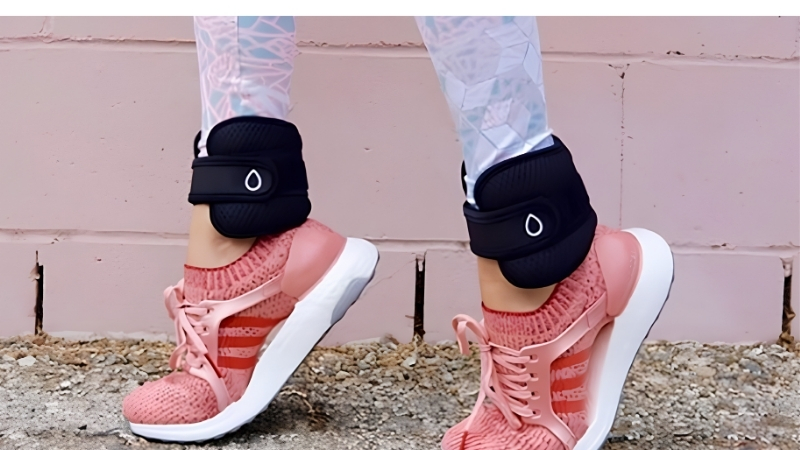
Load Per Ankle, Load Per Pair and Increment Size
Listings use both conventions and rarely make it obvious which one applies. A set described as 10 lb (4.5 kg) may mean 5 lb (2.3 kg) on each ankle or 10 lb on each. Check the specification table rather than the headline, because the difference is a straight doubling of the load you actually train with.
Increment size decides how long the set stays useful. A fixed neoprene cuff gives you one number forever. Adjustable designs that add or remove steel bars in 0.5-1 lb (0.23-0.45 kg) steps let you progress the way you would with dumbbells, which matters for anything beyond casual walking and floor work.
Bulk Around the Joint, Fit Range and Storage
Footprint for the ankle weights best suited to daily wear is measured on your leg rather than on the floor. A slim silicone bangle sits close to the bone and clears shoe collars and trouser hems; a 5 lb (2.3 kg) sand-filled cuff can stand 1.5-2 in (4-5 cm) proud and catches the opposite ankle during lunges.
Most cuffs are built for ankle circumferences of roughly 8-16 in (20-40 cm), and the hook-and-loop overlap runs out at both extremes. Storage is trivial, since a drawer holds the lot, but measure your ankle over the sock you will actually wear before ordering, because returns on worn items are awkward.
Why the Market Mostly Stops at 5 lb
Look across the category and one pattern repeats: the ankle weights best represented on Amazon top out at 2.5-5 lb (1.1-2.3 kg) per ankle, and almost all of them are fixed. That range covers rehabilitation-style movement and weighted walking, which is where the sales volume has always sat.
What remains thin on the ground is genuine progressive loading. Sets reaching 10-20 lb (4.5-9 kg) per ankle in small increments do exist, but they are a small fraction of the listings, they cost several times the budget tier, and they are considerably bulkier. That gap is why many buyers outgrow a first pair within months.
The practical response is to buy for where you expect to be in six months rather than where you are today. If the plan is walking, Pilates and floor work, a light fixed pair is genuinely enough. If the plan is loaded step-ups and hip work, the adjustable route costs less than buying twice.
Top Picks: 6 Ankle Weight Sets From 1 lb to 20 lb
The six sets below span the whole usable range, from 1 lb (0.45 kg) silicone bangles up to bar-loaded cuffs that reach 20 lb (9 kg) per ankle. Which ankle weights best fit your routine depends mostly on whether you need to progress the load over time or simply carry a fixed amount of it.
| Model | Type | Typical Load | Adjustable | Best For |
|---|---|---|---|---|
| Bala Bangles | Silicone over steel | 1-2 lb (0.45-0.9 kg) each | No | Low profile, walking |
| All Pro Adjustable | Steel bar loaded | Up to 20 lb (9 kg) each | Yes, 0.5 lb steps | Progressive loading |
| Henkelion Ankle Weights | Neoprene, iron sand | 1-3 lb (0.45-1.36 kg) each | No | First pair, budget |
| Sportneer Adjustable | Removable sand packets | Mid-range, coarse steps | Partly | Some adjustability |
| Gaiam Ankle Weights | Soft neoprene | Light, quoted per pair | No | Yoga, Pilates, comfort |
| Nordic Lifting | Heavier fixed neoprene | Mid to heavy fixed | No | Known load, better seams |
Bala Bangles
Bala Bangles are the low-profile option. Silicone-wrapped steel in 1 lb (0.45 kg) and 2 lb (0.9 kg) versions sits tight against the bone, so they clear shoe collars and trouser hems and do not clack together during walking lunges or step-ups. They also wipe clean rather than absorbing sweat like neoprene.
The limits are obvious. Two fixed weights, no progression, and a price several times that of a basic neoprene cuff. The hook-and-loop band is short, so very slim or very broad ankles can struggle to get a secure wrap. Fine for walking and floor work, wrong for loaded hip or hamstring training.
All Pro Adjustable Ankle Weights
The All Pro is the progression pick, and the ankle weights best matched to anyone who wants to add load over time. Weight goes on or comes off as individual steel bars, so you move in small steps up to the model ceiling, whether that is 5 lb (2.3 kg), 10 lb (4.5 kg) or 20 lb (9 kg) per ankle.
It is bulky, costs considerably more than a neoprene pair, and the bars need re-seating occasionally so nothing rattles during faster movement. The cuff is wide enough that wearing it under trousers is not realistic. Buy it if you intend to progress, and skip it if you only want light load for walking.
Henkelion Ankle Weights
The budget default and a sensible first purchase. Neoprene cuffs with iron-sand filling come in options from roughly 1 lb (0.45 kg) up to 3 lb (1.36 kg) each, with a long hook-and-loop strap that fits a wide range of ankle sizes and, on some versions, a thumb hole so the same cuff works on the wrist.
Sand filling is the compromise. It shifts inside the cuff, so load distribution is never perfectly even, and a seam failure after a year of hard use leaves grit on the floor. The hook-and-loop loses grip once it collects lint. At this price, treat them as a consumable rather than a permanent purchase.
Sportneer Adjustable Ankle Weights
Sportneer sits between the fixed and the fully adjustable camps. Small iron-sand packets slide out of pockets in the cuff, so you can drop the load for a lighter session without owning two separate pairs. The strap is long and the padding is noticeably thicker than most budget neoprene alternatives.
Adjustment steps are coarse compared with a bar-loaded design, and removing packets leaves empty pockets that bunch under the strap. The cuff is tall on the leg, which some people dislike for long walks. A reasonable compromise if you want some adjustability without the bulk and cost of a steel-bar system.
Gaiam Ankle Weights
Gaiam builds these for comfort rather than for load. Soft neoprene, rounded edges and a broad strap make them the least irritating option for a long walk or a full yoga and Pilates session, where a stiff cuff starts to chafe after twenty minutes of continuous movement and repeated floor contact.
They are fixed weight only and the range is light, while the soft construction means the shape distorts over a year or two. Note that the common sizes are quoted per pair rather than per ankle, so a 5 lb (2.3 kg) set is 2.5 lb (1.1 kg) on each leg. Read the listing carefully before ordering.
Nordic Lifting Ankle Weights
Nordic Lifting covers the middle of the market: heavier fixed cuffs with denser stitching and a wider strap than the budget tier, aimed at people who already know the load they want and have no need for adjustability. Seam and strap construction is the main reason to pay the difference over a basic pair.
Fixed load remains the drawback, and the heavier options are noticeably bulky around the joint. As with every ankle weight, do not run in them, because added mass at the end of a long lever alters your gait and changes how force passes through the knee and hip. Walk, step and train on the floor instead.
Frequently Asked Questions
Questions about which ankle weights best suit a given routine arrive in a predictable order: safety first, then sizing, then the per-leg versus per-pair confusion, then durability. These four answers cover what usually decides the purchase and what most product listings leave unhelpfully vague.
Can I run or jog in ankle weights?
It is not advisable. Adding mass at the end of a long lever changes stride mechanics and increases the load passing through the knee and hip at every foot strike. Walking, step-ups and floor work are the sensible applications. If you have an existing joint issue, speak to a doctor or a physiotherapist before adding any load.
Are ankle weights sold per leg or per pair?
Both conventions are in use, and this is the single most common source of disappointment in the category. A 5 lb (2.3 kg) set frequently means 2.5 lb (1.1 kg) on each ankle. Check the specification table rather than the title, and where a listing is ambiguous, assume the figure is the pair total until proved otherwise.
How long do sand-filled cuffs last?
With a few sessions a week, expect one to three years before the seams or the hook-and-loop become the limiting factor rather than the filling. Sweat is the main enemy, since it degrades the fastening and works at the stitching. Air them out after use and only wash the covers if the manufacturer says you can.
Can I use ankle weights on my wrists?
Many cuffs fit both, and some include a thumb hole for exactly that reason. Be more conservative with load on the wrists, because the shoulder tolerates momentum far less well than the hip does. Light weight for arm circles and walking is fine, but do not swing a loaded arm quickly or through a large range.
See More:
Final Thoughts
The ankle weights best suited to you come down to one decision: fixed or adjustable. For walking, Pilates and light floor work, a soft neoprene pair or a slim silicone bangle is enough. For progressive hip and hamstring work, buy a bar-loaded set once rather than a light pair twice.


Write Your Review
No reviews yet. Be the first to share your experience!