
Key takeaways
What's inside
Jump rope best picks are decided by cable weight and handle bearings, not by the price on the packaging. This guide compares six ropes on cable type and weight, bearing design, adjustable length, the ceiling height each style needs and what your floor has to tolerate, with the real drawback of every option included.
As an Amazon Associate we earn from qualifying purchases at no extra cost to you. Product prices and availability are accurate as of the date shown and are subject to change.

#1 Pick

#2 Pick


#4 Pick

#5 Pick

#6 Pick


As an Amazon Associate we earn from qualifying purchases at no extra cost to you. Product prices and availability are accurate as of the date shown and are subject to change.
By Chris Parker
🛒 Best Price Today on Amazon
Prime members get fast, free shipping on everything above, plus member-only deals. New members get a 30-day free trial — cancel anytime.
How to Choose the Jump Rope Best Suited to Your Space
A rope comes down to three decisions: how heavy the cable is, how freely the handles spin, and how much room you have above and below you. Get those right and the jump rope best suited to you will almost choose itself; get them wrong and even an expensive rope sits in a drawer after a fortnight.
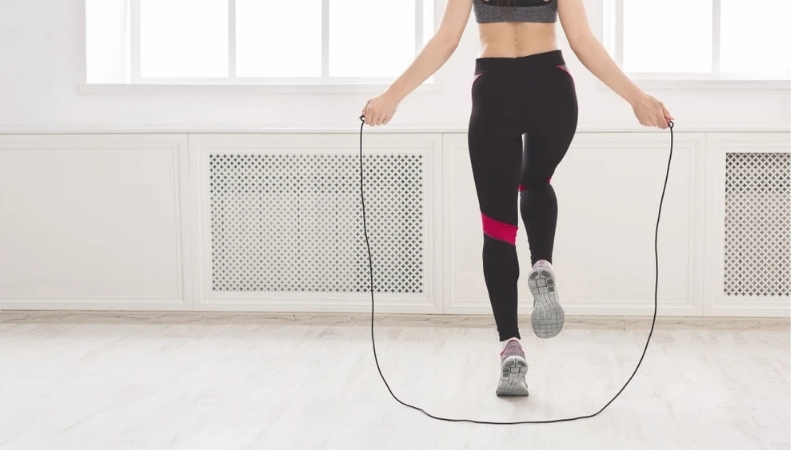
Cable Weight: Speed, Weighted or Beaded
Light coated steel cables spin fastest and suit double-unders and timed speed work, but they give almost no feedback through the handles, so timing errors are hard to feel and correct. They also whip hard against bare shins, which is the usual reason beginners abandon them within the first few sessions.
Weighted cables from about 1/4 lb to 2 lb (0.1 to 0.9 kg) slow the rotation and let you feel where the rope is, which makes learning far easier and adds forearm and shoulder work. Beaded ropes sit in between, giving audible rhythm feedback and tolerating rough outdoor surfaces well.
Handles, Bearings and Adjustable Length
Ball-bearing handles spin freely and stay smooth at speed, while cheaper bushing designs bind slightly and develop a catch over time. For steady single-unders that difference is small, but for fast work it decides whether the rope tangles the moment your rhythm changes mid-set, which is where the jump rope best built for speed earns its price.
Length should let the handles reach roughly armpit height when you stand on the middle of the cable. Screw-adjust or cut-to-length systems both work, but a rope you cut cannot be lengthened again, so measure carefully and leave a little extra before trimming anything.
Durability, Replacement Cables and Outdoor Use
Cables are consumables rather than permanent parts. PVC coatings abrade on concrete and pavement, coated steel eventually frays at the entry point into the handle, and beaded segments crack after enough impacts, so check whether replacement cables are sold separately before buying a system.
Where you skip decides how fast that happens. Smooth indoor floors and rubber mats are gentle on any cable, while rough outdoor surfaces destroy thin coatings quickly, which is the main argument for a beaded rope if most of your skipping happens outside on tarmac or paving.
Ceiling Height, Flooring and Footwear
The rope arcs roughly 12 to 18 in (30 to 45 cm) above your head, so a standard 8 ft (244 cm) ceiling works for most people while a low basement often will not. Add your own jump height to that figure and check for light fittings, since a ceiling fixture is the most common casualty of indoor skipping.
Floors matter just as much as ceilings. Skipping on bare concrete sends impact straight through the joints, so a rubber mat 3/8 in (10 mm) or thicker and a pair of cushioned shoes are both worth having. Measure the floor space as well, since about 4 x 6 ft (122 x 183 cm) is enough for basic work.
Top Picks: Jump Rope Best Options by Training Style
Six ropes covering speed work, weighted training, tracking and budget entry, so the jump rope best suited to a beginner is not confused with one built for double-unders. Specifications are manufacturer figures, and cost is described as a tier rather than a number here.
| Rope | Cable type | Handles | Best for |
|---|---|---|---|
| Crossrope Get Lean | Interchangeable weighted | Clip system, bearings | Learning and progression |
| WOD Nation Speed Rope | Coated steel, adjustable | Ball bearings | Double-unders, speed |
| TANGRAM Smart Rope | Coated cable | LED counter, Bluetooth | Tracking sessions |
| Survival and Cross Rope | Coated steel, adjustable | Bearings, long handles | General fitness work |
| Te-Rich Weighted Rope | Weighted cable and handles | Foam grips | Slower strength-style work |
| DEGOL Skipping Rope | Braided steel in PVC | Memory foam grips | Budget entry |
Crossrope Get Lean: Best for Learning and Progressing
An interchangeable system where weighted cables clip into the same handles, typically starting around 1/4 lb and 1/2 lb (0.1 and 0.2 kg). The extra cable weight makes the rope’s position obvious in the air, which shortens the learning curve dramatically compared with a light speed cable.
It sits in the premium tier, and buying heavier cables later adds to the total rather than being included. The clip system also adds bulk at the handle end, and the fixed cable lengths mean choosing your size correctly at the point of purchase matters more than usual.
WOD Nation Speed Rope: Best for Double-Unders
A thin coated steel cable in ball-bearing handles, adjustable by loosening a screw and trimming or repositioning the cable. It spins fast and stays consistent at high revolutions, which is exactly what double-unders and timed speed sets require from a rope.
Light cables give very little feedback, so mistimed jumps are hard to diagnose, and the steel core stings on contact with bare legs. Adjustment by cutting is also permanent, so measure against your height carefully before removing any length from the cable.
TANGRAM Smart Rope: Best for Tracking
A coated cable rope with an LED display built into the handles that projects the rotation count in front of you as you skip, alongside app connectivity for session history. For anyone motivated by numbers, seeing the count without stopping keeps sets honest.
The electronics need charging and add weight and bulk at the handles, which changes the feel compared with a plain speed rope. Counting can also drift with unusual technique, and a rope with a battery is inherently more to go wrong than one without.
Survival and Cross Rope: Best General All-Rounder
An adjustable coated steel cable in bearing handles, long enough to grip comfortably and set up quickly for different users. It handles steady single-unders, intervals and occasional speed work without specialising in any one of them, which suits most home training well.
As with any thin cable, feedback is limited and contact with bare skin stings. The adjustment mechanism also needs checking periodically, since a cable that slips slightly mid-set changes the effective length and disrupts rhythm without any obvious cause.
Te-Rich Weighted Rope: Best for Slower Strength-Style Work
A weighted cable paired with weighted handles, which slows rotation and puts noticeably more work through the forearms and shoulders. For lower-impact conditioning at a steadier tempo, that extra resistance changes the character of the session considerably.
The weight makes fast work impractical, so double-unders are effectively off the table. Heavier cables also need more ceiling clearance because the arc is wider, and foam grips absorb sweat and eventually need replacing rather than simply being wiped down.
DEGOL Skipping Rope: Best Budget Entry
A braided steel cable inside a PVC coating with memory foam grips and screw adjustment, at the lowest cost in this comparison. For establishing whether skipping will become a habit, it does everything a beginner needs without any meaningful compromise in the first months.
Bushings rather than proper bearings mean the spin is less smooth and can develop a catch with heavy use. The PVC coating also wears through on rough concrete, so keep it to smooth indoor floors or a mat if you want it to last more than a season.
Frequently Asked Questions
These four questions come up whenever someone buys a first rope, and the answers usually decide which style of jump rope best suits the room you have and the goal you are training toward.
How do I size a jump rope correctly?
Stand on the middle of the cable and pull the handles upward: they should reach roughly armpit height. Longer settings suit beginners while shorter ones suit speed work. If the rope adjusts by cutting rather than by a screw, leave extra length initially, since you cannot add any of it back afterwards.
Weighted or speed rope for a beginner?
Weighted, in most cases. The extra cable mass makes the rope’s position obvious in the air, which shortens the learning curve considerably. Speed ropes are faster once technique is established, but they give almost no feedback while you are still developing timing.
Can I skip in an apartment?
Often, with care. A rubber mat 3/8 in (10 mm) or thicker cuts impact noise transmitted through the floor structure, cushioned shoes help, and keeping sessions to reasonable hours matters more than anything else. Check the ceiling height and any light fittings before starting.
How much skipping counts as enough?
The World Health Organization’s 2020 guidance suggests 150 to 300 minutes of moderate activity weekly, and skipping is intense enough that shorter sessions contribute quickly. Build up gradually because of the impact involved, and check with a doctor before beginning a new programme.
See More:
- Hot yoga mat best
- Best dumbbells exercises
- Best workout dumbbells
- Best back exercises using dumbbells
- Best exercise upright bike
- Best exercise stationary bike
Final Thoughts
The jump rope best suited to you depends on cable weight first: weighted for learning, light steel for speed, beaded for outdoor durability. Confirm your ceiling clears the arc by 12 to 18 in (30 to 45 cm), put a mat down on hard floors, and size the rope to armpit height before trimming.





Write Your Review
No reviews yet. Be the first to share your experience!