
Key takeaways
- Half rack: Two upright posts with a base and bar supports. It usually has a smaller footprint and is easier to walk around, but it offers less protection than a full cage if a lift goes wrong.
- Power rack or power cage: Four uprights create an enclosed training area. The safety pins or straps can catch a failed squat or bench press when adjusted correctly. It typically measures about 42 to 50 inches wide, 40 to 50 inches deep, and 80 to 90 inches tall.
- Foldable rack: A wall-mounted frame that folds inward when not in use. It saves floor space but requires a suitable wall, solid installation, and enough room to fold and train safely.
What's inside
The Short Answer
Yes—if you plan to do barbell squats, overhead presses, bench presses, or pull-ups at home, and you have roughly a 4-by-4-foot floor area plus 7.5 to 8 feet of ceiling clearance. A squat rack is one of the most useful pieces of home-gym equipment for progressive strength training. If you mainly use dumbbells, machines, resistance bands, or light workouts, you probably do not need one.
The key distinction is that a squat rack is not automatically a good purchase just because it looks like a complete home gym. It earns its space when you regularly train with a barbell and need adjustable supports and safety equipment. For occasional squats, a pair of adjustable dumbbells may be the more practical choice.
As an Amazon Associate we earn from qualifying purchases at no extra cost to you. Product prices and availability are accurate as of the date shown and are subject to change.

What You Actually Get
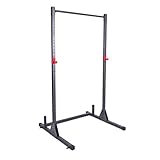
A squat rack is a steel frame that holds a barbell at a comfortable starting height. Depending on the design, it may include adjustable J-hooks, safety bars or straps, a pull-up bar, weight-storage pegs, band pegs, and a landmine attachment.
There are three common formats:
- Half rack: Two upright posts with a base and bar supports. It usually has a smaller footprint and is easier to walk around, but it offers less protection than a full cage if a lift goes wrong.
- Power rack or power cage: Four uprights create an enclosed training area. The safety pins or straps can catch a failed squat or bench press when adjusted correctly. It typically measures about 42 to 50 inches wide, 40 to 50 inches deep, and 80 to 90 inches tall.
- Foldable rack: A wall-mounted frame that folds inward when not in use. It saves floor space but requires a suitable wall, solid installation, and enough room to fold and train safely.
Remember that the rack is only one part of a barbell setup. A standard Olympic bar is about 7 feet long and weighs 20 kilograms, or 44 pounds. You will also need plates, a bench if you want to bench press, and a lifting surface. Rubber flooring or a platform helps protect the floor and reduces noise, although it will not make dropping weights harmless.
Budget racks vary considerably in steel thickness, hole spacing, weld quality, finish, and stability. A basic home power cage may cost about $100 to $250, while a heavier rack designed for frequent use can cost $300 to $1,000 or more before accessories. A low price can be reasonable for light-to-moderate home training, but check the stated weight capacity, base dimensions, hardware, and whether the rack should be bolted down.
Pros
- It supports the main barbell lifts. You can train squats, overhead presses, rack pulls, and, with a bench, bench presses from a consistent starting height.
- It makes progressive overload easier. Adding 5 or 10 pounds to a bar is more straightforward than continually buying heavier dumbbells.
- Safety equipment adds confidence. Properly positioned safety bars or straps can limit how far a bar falls during a failed rep. They do not replace good technique, collars, or a sensible training plan.
- It can replace several smaller pieces of equipment. A rack with a pull-up bar, band pegs, and a landmine can support rows, presses, carries, core work, and upper-body exercises.
- It works for more than one person. A household can adjust the J-hooks and safeties for different heights, provided everyone follows the rack’s instructions and weight limits.
- It can be economical over time. A basic rack plus a bar and plates may cost less than repeated gym memberships, especially if you train consistently for several years.
Cons
- It takes up permanent space. Even a compact rack generally needs a footprint of about 4 by 4 feet, and you need extra clearance in front, behind, and on both sides to load the bar safely.
- Ceiling height can be a problem. A rack that is 83 to 90 inches tall may not fit comfortably in a basement with low ceilings. Add room for pull-ups and overhead pressing; about 96 inches of clear height is more comfortable.
- The total cost quickly exceeds the rack price. A bar may cost $100 to $300, plates can add $150 to $500 or more, and a flat or adjustable bench may cost $80 to $400.
- Small, light racks may move. A narrow rack can tip or shift during pull-ups, racking a heavy bar, or using a landmine unless it is weighted or anchored as directed.
- Assembly takes time. Expect a two-person assembly job to take roughly one to three hours, depending on the rack and your experience.
- It may encourage unnecessary spending. If you rarely use barbells, a rack can become an expensive clothes hanger that occupies valuable living space.
Who Should Buy It
Buy a squat rack if you are committed to barbell training at least two or three times per week. It is especially worthwhile for someone following a strength program built around squats, deadlifts, presses, and bench presses. It also makes sense if you want a home setup that can grow: start with a rack, bar, and a modest plate set, then add accessories as your training develops.
For a budget-conscious buyer, the VEVOR Power Cage Rack is listed at $93.45 and includes a width-adjustable frame, six band pegs, a landmine attachment, and safety bars. Its broad accessory list is appealing for a beginner who wants variety, but inspect the dimensions, fasteners, and stated capacity carefully before purchase. A landmine is useful only if the frame remains stable when loaded.
The CAP FM-CS7000F Power Rack with Pull-Up Bar is listed at $126.64 and has a stated 300-pound capacity. That may be adequate for a beginner or moderate home program, but a 300-pound limit includes the bar and plates, not just the plates. Leave a safety margin rather than training at the maximum.
For either option, confirm that the rack fits your bar, bench, room, and ceiling. Also verify that the safety bars can be adjusted low enough for bench press and high enough to catch a squat. Product listings can change, so treat the listed prices as current reference points rather than permanent prices.
Who Should Skip It
Skip a squat rack if you do not enjoy barbell exercises, have no safe place to install or position one, or live in a space where noise and floor loading are serious concerns. It is also a poor first purchase if your current goal is general fitness, mobility, weight loss, or short cardio workouts.
Beginners who have never lifted may benefit from learning the squat, hinge, and press with a coach before buying a rack. A rack cannot correct poor technique, and safeties must be set correctly for your body and the exercise. If you train alone, avoid testing true one-rep-max lifts at home.
Cheaper Alternatives
| Option | Cost | Trade-off |
|---|---|---|
| Adjustable dumbbells | $100-$500 | Excellent for presses, rows, and squats, but weight jumps may be larger and maximum load is usually lower than a barbell setup. |
| Pair of squat stands | $80-$250 | Smaller and often cheaper than a cage, but generally less stable and less protective during failed lifts. |
| Resistance bands and door anchor | $30-$150 | Portable and quiet, but band resistance feels different from free weights and does not provide the same heavy-loading potential. |
| Weighted vest and kettlebell | $60-$250 | Great for conditioning, goblet squats, carries, and basic strength work; less versatile for heavy pressing and progressive barbell training. |
| Gym membership | $20-$100 per month | No equipment storage or setup at home, but requires travel and ongoing payments. |
FAQ
Is a squat rack the same as a power rack?
Not exactly. “Squat rack” is a broad term for equipment that supports a barbell, while a power rack is an enclosed version with four uprights and adjustable safeties. A half rack and squat stands are also types of squat racks. For solo training, a power rack usually provides the most protection, assuming it is stable and correctly adjusted.
How much room do I need for a squat rack?
Plan on at least 4 feet wide by 4 feet deep for the frame, then add room to load a 7-foot bar. A practical training area is about 8 feet wide by 8 feet deep. Measure ceiling height too: an 80- to 90-inch rack may technically fit under an 8-foot ceiling, but pull-ups and overhead presses can feel cramped. Leave a few inches above the frame and check the rack’s exact height.
Do I need to bolt down a squat rack?
Sometimes. A heavy power cage with a wide base may remain stable for ordinary squats, but pull-ups, kipping movements, heavy racking, and landmine exercises can shift a light frame. Follow the manufacturer’s anchoring instructions. If you cannot safely anchor a rack to your floor, use a stable design with a broad base and avoid movements that make it rock or tip.
What should I buy first: a rack or a barbell?
If your plan includes back squats or barbell presses, buy a compatible rack and bar as a pair, then add plates and a bench if needed. Buying a bar first can leave you with no safe way to start or rack it. For a smaller budget, begin with a rack, a quality 7-foot Olympic bar, bumper or iron plates, and a mat; accessories can wait until you have established a consistent routine.


Write Your Review
No reviews yet. Be the first to share your experience!