
Key takeaways
What's inside
Best manual treadmill is self-powered, running on your own effort with no motor, which means choosing between an intense curved deck and a simple flat one. This best manual treadmill guide compares curved versus flat designs, weight capacity, footprint, and intended use so you match a non-motorized machine to your goals and your space.
As an Amazon Associate we earn from qualifying purchases at no extra cost to you. Product prices and availability are accurate as of the date shown and are subject to change.
By Chris Parker
🛒 Best Price Today on Amazon
Prime members get fast, free shipping on everything above, plus member-only deals. New members get a 30-day free trial — cancel anytime.
Start 30-Day Prime Free Trial →See Today’s Amazon DealsHow to Choose the Best Manual Treadmill
Choosing the best manual treadmill starts with the curved-versus-flat decision, then weighs the weight capacity and build, the footprint and storage, and how you actually intend to use it. Sort those and you avoid overpaying for a runner you will only walk on, or under-buying a machine that cannot handle your pace.
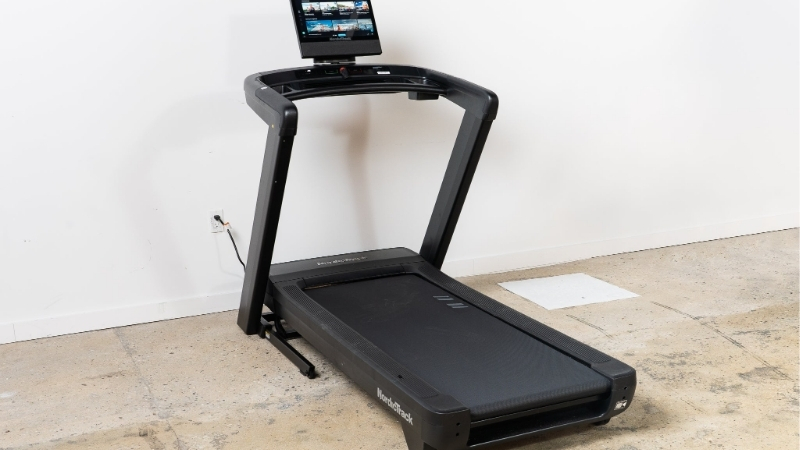
Curved vs Flat Manual
The two types feel completely different. Curved decks, like the AssaultRunner and TrueForm, are self-propelled through a smooth arc that suits running, sprints, and HIIT, engaging more muscle and burning more energy than flat ground, but they cost far more.
Flat manual treadmills, like the Sunny SF-T1407M, use a fixed-incline belt you push with each step, which is cheaper and lighter but harder to start and best kept to walking. Decide which experience you want before anything else, since it drives price and use.
Weight Capacity and Build
Build quality separates premium curved machines from budget flat ones. Curved runners like the AssaultRunner Elite and TrueForm Trainer carry high capacities, up to around 400 lb (181 kg), on heavy belts riding over many bearings, while budget flat models often cap near 220 lb (100 kg).
Running generates two to three times your body weight in force on the belt, so add a buffer of roughly 50 to 75 lb (23 to 34 kg) to your weight when reading the capacity. Budget flat machines also wear faster, often lasting one to three years of regular use.
Footprint and Storage
Manual treadmills vary hugely in size. Curved runners are big and heavy, with the AssaultRunner Elite measuring about 70 in (178 cm) long, and you should add at least 2 ft (61 cm) of clearance on each side for safe use, treating them as permanent fixtures.
Flat manual models are far more portable, with the Sunny SF-T1407M folding to roughly 20 by 23 by 50 in (51 by 58 by 127 cm) and weighing about 49 lb (22 kg). Always measure the actual space where the treadmill will live, in use and stored, before you order.
Intended Use
Match the machine to your training. Serious runners and form work suit the TrueForm Runner or AssaultRunner Elite, HIIT and sprint fans want the instant response of an AssaultRunner Pro, and walkers or beginners are well served by an affordable flat model.
Buying more machine than you need wastes money and floor space, while buying too little leaves you fighting a belt that will not keep up. Be honest about whether you will walk, run, or sprint before you choose.
Top Picks for the Best Manual Treadmill
These picks span budget flat walkers to premium curved runners, so match one to your use and space. Whichever best manual treadmill you choose, measure your footprint and add a weight buffer before buying.
| Model | Type | Capacity | Footprint | Best For | Tier |
|---|---|---|---|---|---|
| AssaultRunner Elite | Curved | High | ~70 in long | Overall / sprints | Premium |
| TrueForm Trainer | Curved | ~400 lb | 64 x 31 in | Running form | Premium |
| AssaultRunner Pro | Curved | High | Large | HIIT | Premium |
| Sunny SF-T1407M | Flat | ~220 lb | Folds ~20 in | Budget walking | Budget |
| Sunny SF-T7723 Pacer | Flat | ~325 lb | Compact | Mid-range flat | Budget |
| Exerpeutic 100XL | Flat | ~325 lb | Compact | Heavier users | Budget |
AssaultRunner Elite – Best Overall
The AssaultRunner Elite is the top curved pick, with a roughly 9-degree front curve, a durable belt gliding over about 100 bearings, a wider deck with side platforms for quick stops, a high weight capacity, and an advanced monitor with Bluetooth and ANT+. It excels at max-effort sprints and high-intensity work.
It carries a premium price, a big permanent footprint, and real weight. For a well-made curved runner that handles sprints and distance alike, though, it is the standout.
TrueForm Trainer – Best for Running Form
The TrueForm Trainer is the form-focused curved runner, measuring 64 by 31 in (163 by 79 cm) with a 400 lb (181 kg) capacity and a shallower front slope plus lighter belt that recruit more of your own force. It rewards good gait and suits longer-distance running.
It is expensive even by curved standards, and its monitor is fairly basic. For runners chasing proper form and an authentic feel, though, few machines compete.
AssaultRunner Pro – Best for HIIT
The AssaultRunner Pro is the interval specialist, with instant speed response, Bluetooth and ANT+, compatibility with the Assault app and Zwift, and a belt rated to last around 150,000 miles. Its immediate acceleration suits sprint intervals perfectly.
Like all curved runners it is premium-priced and has a learning curve for newcomers. For HIIT and sprint training, though, its responsiveness is hard to match.
Sunny SF-T1407M – Best Budget Walking
The Sunny SF-T1407M is the budget flat pick, a non-motorized walker with a fixed 13.5 percent incline, dual weighted flywheels, and a light 49 lb (22 kg) frame that folds to about 20 by 23 by 50 in (51 by 58 by 127 cm). It is well under the price of most manual machines.
Durability is modest with a 220 lb (100 kg) capacity, the incline cannot be changed, and it is strictly for slow walking. As an affordable, portable walking option, though, it delivers real value.
Sunny SF-T7723 Pacer – Best Mid-Range Flat
The Sunny SF-T7723 steps up the flat category with a Pacer Control magnetic resistance system, a 325 lb (147 kg) capacity, and a wider, longer belt with twin flywheels that feels closer to a motorized machine than budget models do. It suits more demanding walkers.
It is heavier and pricier than the entry Sunny, and it is still a flat walker rather than a runner. For a sturdier, smoother flat manual, though, it is a solid middle ground.
Exerpeutic 100XL – Best for Heavier Users
The Exerpeutic 100XL is the flat pick for heavier users and rehab, with a 325 lb (147 kg) capacity and eight levels of magnetic resistance to dial in the effort. That combination suits bigger walkers and controlled recovery work.
It is a flat manual, so it still takes effort to start and is not for running. For higher-capacity, adjustable-resistance walking on a budget, though, it fits the bill.
Frequently Asked Questions
People shopping for the best manual treadmill usually ask about the workout, difficulty, and value.
Are manual treadmills a good workout?
Yes. Because you power the belt yourself, manual treadmills engage more muscle and demand more effort than motorized ones, and curved models in particular are excellent for running and HIIT. Flat models offer a gentler, walking-focused workout.
Are manual treadmills harder to use?
They take more effort, since nothing moves the belt but you. Curved decks feel smooth once you adjust, while budget flat models can be harder to start and are best kept to slower paces. Both reward a short learning period.
Curved or flat manual treadmill?
Curved decks suit running, sprints, and HIIT and cost far more, while flat models are cheaper, lighter, and best for walking. Choose curved if you want to run and have the budget and space; choose flat if you mainly want to walk affordably.
How much space does a manual treadmill need?
Curved runners are large and should be treated as permanent, with about 2 ft (61 cm) of clearance on each side, while flat models fold small for storage. Measure your space in use and folded before buying, since curved machines are heavy to move.
See More:
- best barbell
- best barbell in the world
- best rowing machine for home
- best buy for treadmill
- treadmill at best buy
Final Thoughts
The best manual treadmill matches your training and your space, whether that is a premium curved AssaultRunner or TrueForm for running and HIIT or an affordable flat Sunny for walking. Decide between curved and flat first, add a weight buffer, measure your footprint in use and folded, and you will land a self-powered machine that fits your goals.
As an Amazon Associate we earn from qualifying purchases at no extra cost to you. Product prices and availability are accurate as of the date shown and are subject to change.




Write Your Review
No reviews yet. Be the first to share your experience!