
What's inside
Best fitness equipment for home gym builds comes down to four numbers: load rating, footprint, ceiling clearance and how many movement patterns each piece covers. This guide works through those in order, then compares five foundation pieces that together cover a complete strength programme in a spare room.
As an Amazon Associate we earn from qualifying purchases at no extra cost to you. Product prices and availability are accurate as of the date shown and are subject to change.

#1 Pick

#2 Pick

#3 Pick

#4 Pick

#5 Pick

#6 Pick

#7 Pick

As an Amazon Associate we earn from qualifying purchases at no extra cost to you. Product prices and availability are accurate as of the date shown and are subject to change.
By Chris Parker
🛒 Best Price Today on Amazon
Prime members get fast, free shipping on everything above, plus member-only deals. New members get a 30-day free trial — cancel anytime.
How to Choose the Best Fitness Equipment for Home Gym Training
Buying order matters more than brand when picking the best fitness equipment for home gym use. Each piece should either cover several movement patterns or disappear when you are not using it, and ideally both. The four criteria below are what separate a setup you still use in two years from a rack holding laundry.
Load Ratings and Frame Construction
Every rack and bench carries two separate ratings: maximum user weight and maximum load on the frame. A bench rated to 1,000 lb (454 kg) total behaves differently under a heavy dumbbell press than one rated to 300 lb (136 kg), and the gap shows up as lateral wobble rather than failure.
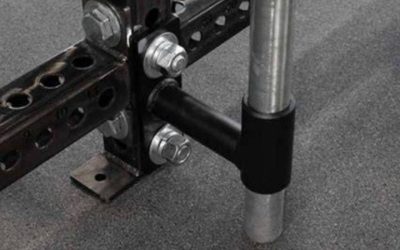
Steel gauge and tube size are the underlying numbers. Eleven-gauge steel is thicker than fourteen-gauge, and a 2 x 3 in (5 x 7.6 cm) upright resists flex better than a 2 x 2 in one. Pop-pin diameter is a fair proxy for how a rack handles a bar being racked hard.
Welds, pin holes and the J-cup contact surface are the stress points that age first. Powder-coat finish protects against surface rust but says nothing about frame stiffness, so treat coating as cosmetic and read the gauge instead.
Footprint, Ceiling Clearance and Storage
Footprint has two values that rarely appear together in a listing: the area a piece needs in use, and the area it needs stored. A folding bench occupies roughly 4 sq ft in use and stands upright in under 2 sq ft. A power rack occupies about 12 sq ft permanently.
Ceiling height is the constraint discovered after delivery. Full cages commonly stand 82 to 84 in (208 to 213 cm), and standing overhead presses need clearance above your fully extended reach with a bar. In a 7 ft (213 cm) basement, a half rack or wall-mounted folding rack is usually the only option.
Measure the actual dimensions of the space you intend to use before ordering, including doorway width, stair turns and the clearance you need to walk around a loaded bar. Assembled dimensions are published; working clearance almost never is.
Movement Coverage Per Square Foot
The best fitness equipment for home gym has to cover a horizontal push and pull, a vertical push and pull, a hinge, a squat pattern and some conditioning. Judge each purchase by how many of those seven it adds per square foot it occupies, not by its feature list.
Adjustable dumbbells plus a bench cover five of the seven in under 6 sq ft, which is why that pairing tops almost every sensible buying order. A rack adds the vertical pull and safe heavy squatting, which is the single hardest thing to replicate at home.
App-connected equipment has now reached the mid-price tier, and guided programming genuinely helps consistency. Check what the hardware does with no subscription active, though, because some machines lose resistance presets or workout tracking entirely when the paid tier lapses.
Assembly, Anchoring and Floor Protection
Racks and machines usually arrive in several heavy boxes and take two to four hours to build, easier with a second person. Check whether the manufacturer requires floor anchoring, because that requirement is not optional on lighter frames and rarely possible in rented flats.
Floor protection is not decorative. Loaded plates and dumbbell ends dent laminate, crack tile and compress carpet permanently. Horse-stall matting or interlocking rubber tiles under the training area cost far less than the flooring they protect.
Subscription-free operation matters for resale too. Equipment whose core function depends on an active account holds value poorly, while mechanical racks, benches and bars stay useful and saleable regardless of what happens to the manufacturer’s software.
Top Picks: 5 Pieces of the Best Fitness Equipment for Home Gym Use
These five picks for the best fitness equipment for home gym are ordered as a buying sequence rather than a ranking, so each one remains useful even if you never buy the next. The table lists the two specifications that decide most purchases in a small room, so you can rule options out before reading further.
| Piece | Footprint | Load rating | Movements added | Buy at stage |
|---|---|---|---|---|
| Bowflex SelectTech 552 | Under 2 sq ft | 52.5 lb (23.8 kg) per hand | Push, pull, hinge, carry | First |
| REP Fitness AB-3000 | ~4 sq ft, folds | Rated to 1,000 lb (454 kg) | Press angles, rows | Second |
| Titan T-3 Power Rack | ~12 sq ft, fixed | Rated to 1,100 lb (499 kg) | Squat, pull-up, safe press | Third |
| 7 ft Olympic barbell | Wall or rack storage | 45 lb (20 kg) bar weight | Heavy hinge and squat | With the rack |
| Bowflex SelectTech 840 | Under 1 sq ft | 8-40 lb (3.6-18 kg) | Swings, conditioning | Optional |
1. Bowflex SelectTech 552 Adjustable Dumbbells
The highest movement coverage per square foot of anything here. One pair replaces fifteen fixed sets, adjusts from 5 to 52.5 lb (2.3 to 23.8 kg) per hand in 2.5 lb steps up to 25 lb, and stores in cradles that slide under a bed or desk.
The plastic shroud cannot be dropped or rested on its ends, and the increment widens to 5 lb above 25 lb. Legs will outgrow the top weight long before the upper body does, which is the argument for eventually adding a barbell and a rack.
2. REP Fitness AB-3000 Adjustable Bench
A bench multiplies what dumbbells can do, unlocking incline and decline pressing, supported rows and step-ups. The AB-3000 is rated well above typical home loads, offers multiple back and seat positions, and folds upright against a wall between sessions.
It is heavier and more expensive than budget folding benches, and the ladder-style adjustment takes a moment longer than a pop-pin. The pad is firm, which suits pressing stability but feels less comfortable during long seated work.
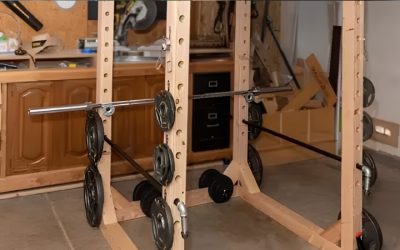
3. Titan T-3 Series Power Rack
The point at which home training stops being limited by dumbbell weight. Eleven-gauge steel uprights and a rated capacity far above realistic home loads mean you can squat and press alone with safety bars set, and the top bar covers the vertical pull.
It stands over 80 in (203 cm), does not fold, and needs roughly 12 sq ft permanently, so low ceilings and shared rooms rule it out. Assembly runs several hours, and some configurations call for floor anchoring or a weight-loaded base.
4. A 7 ft Olympic Barbell and Plates
A standard 7 ft (213 cm) bar weighs 45 lb (20 kg) and is the only practical way to load a squat or deadlift beyond dumbbell range. Buy the bar and plates together with the rack, because a rack without a bar covers almost nothing a bench does not.
Plates are the real cost and the real storage problem, needing a tree or wall pegs rather than a corner. Bumper plates protect floors better but take up more space per pound than cast iron, which matters more in a small room than the price difference does.
5. Bowflex SelectTech 840 Adjustable Kettlebell
An optional addition rather than a foundation piece, covering swings, goblet squats and carries in under 1 sq ft. Six settings from 8 to 40 lb (3.6 to 18 kg) replace a rack of fixed bells, and the dial changes weight in a couple of seconds.
The shell is wider than a cast bell, so it sits differently in the rack position and is less comfortable for long overhead work. It also must not be dropped or used for release-style ballistic work, which rules out some kettlebell programming entirely.
Frequently Asked Questions
Most questions about the best fitness equipment for home gym setups come down to space, sequencing and whether ongoing costs apply. The four answers below stick to measurable constraints rather than general encouragement about staying consistent.
What Should I Buy First?
Adjustable dumbbells, then a bench. Of all the best fitness equipment for home gym options, that pair covers five of the seven core movement patterns in under 6 sq ft and works whether or not you ever add a rack. Buying a cage first is the most common way to end up with expensive equipment that goes unused.
Do I Need a Subscription to Use Modern Equipment?
Mechanical equipment such as racks, benches, bars and adjustable dumbbells needs nothing ongoing. Connected machines vary widely: some keep full manual function without an account, others lose presets or tracking. Check the offline feature list before buying, not after the trial expires.
How Much Ceiling Height Is Enough?
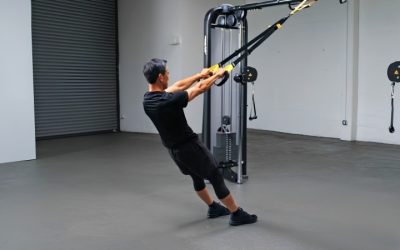
Allow for the rack height plus your extended overhead reach with a bar. Full cages typically stand 82 to 84 in (208 to 213 cm), so a 7 ft (213 cm) ceiling leaves nothing for pressing. Half racks, folding wall racks and suspension trainers are the workable alternatives.
Is Rubber Flooring Really Necessary?
If you use a bar or heavy dumbbells, yes. Point loads from plate edges dent laminate and crack tile, and repeated impact loosens rack feet on soft subfloors. Stall mats or interlocking tiles under the working area cost a fraction of replacing the floor.
See More:
Final Thoughts
The best fitness equipment for home gym use is whatever covers the most movement patterns within the space and ceiling height you actually have. Measure the room first, buy dumbbells and a bench before anything larger, and add a rack only once your training clearly demands it.

Write Your Review
No reviews yet. Be the first to share your experience!