
Choosing an indoor cycling bike vs alternatives requires understanding how riding geometry, resistance, adjustment, and workout style differ. Upright, recumbent, air, and folding bikes serve different needs even when they appear similar. This comparison explains their practical advantages and limitations so you can choose equipment that matches your training priorities.
Quick Verdict: Is an Indoor Cycling Bike the Best Choice?
An indoor cycling bike is designed to provide a stationary riding experience that often emphasizes sport-oriented cycling posture, adjustable fit, and resistance suitable for varied pedaling efforts.
It is particularly relevant to riders who enjoy cycling-specific workouts, cadence-focused sessions, and changes in riding position.
However, an indoor cycling bike is not necessarily the best choice for someone seeking casual seated pedaling, integrated back support, or equipment that folds away after every workout.
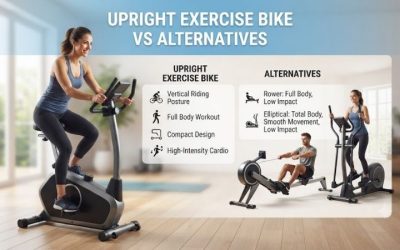
A conventional upright exercise bike can provide similar basic pedaling functionality with a different emphasis on seating and controls. A recumbent machine offers a supported posture. An air bike uses effort-responsive fan resistance, often with moving handles. Folding exercise bikes concentrate on storage flexibility.
The decision should begin with your intended riding experience, not the appearance of the flywheel or the number of resistance settings.
Choose indoor cycling when riding-position adjustment, pedal feel, and cycling-style workouts matter most. Choose conventional upright cycling for straightforward seated cardio, recumbent equipment for back-supported riding, air bikes for fan-resistance exercise, and folding bikes when storage space is the overriding concern.
Quick Comparison Table
| Feature | Indoor cycling | Upright bike | Recumbent bike | Air bike | Folding bike |
|---|---|---|---|---|---|
| Riding posture | Usually sport-oriented | Relatively upright | Reclined and supported | Upright | Upright or semi-recumbent |
| Saddle | Bicycle-style | Bicycle-style | Wider seat with backrest | Model-dependent | Compact saddle |
| Handlebar adjustment | Often substantial | Varies | Usually stationary side grips | Moving handles on many models | Often limited |
| Resistance | Magnetic or friction | Commonly magnetic | Commonly magnetic | Primarily air | Often magnetic |
| Standing riding | Supported on suitable models | Usually not intended | Not intended | Model-dependent | Usually not intended |
| Cadence training | Often emphasized | Possible | Possible | Possible | Possible |
| Storage | Usually fixed-frame | Usually fixed-frame | Usually fixed-frame | Usually fixed-frame | Folding |
| Key advantage | Cycling-style riding | Simple conventional cycling | Supported seating | Effort-responsive resistance | Reduced stored footprint |
| Main trade-off | Fit and saddle comfort | Fewer sport-specific options on some models | Longer footprint | Fan noise | Folding and fit compromises |
Understanding How Indoor Cycling Bikes Differ
The term indoor cycling is sometimes used broadly, but dedicated indoor cycling bikes have mechanical characteristics that can differ from traditional upright exercise bikes.
Frame Geometry and Rider Position
Many indoor cycling bikes allow the rider to lean forward toward the handlebars.
This position may resemble aspects of outdoor bicycle riding, depending on adjustment and frame geometry.
The relationship between the saddle, pedals, and handlebars is important because it influences body positioning during repeated pedaling.
A poorly adjusted indoor cycling bike can create an uncomfortable reach or excessive bending at the hips.
A well-fitted machine should allow controlled movement without requiring the rider to compensate through awkward posture.
Unlike a recumbent machine, a typical indoor cycling bike does not include integrated back support.
This makes its suitability dependent partly on the rider’s comfort with maintaining an unsupported cycling position.

Flywheel and Drivetrain Mechanics
An indoor cycling bike commonly uses a rotating flywheel connected to the pedals through a belt or chain.
Flywheel inertia influences how rotational speed changes during pedaling.
However, the weight of the flywheel alone does not determine the quality of the ride.
Mass distribution, drive ratio, bearing quality, resistance design, and overall frame engineering are also important.
A lighter flywheel paired with an appropriate drivetrain may provide a satisfactory experience, while a heavier flywheel does not guarantee smooth operation.
Buyers should therefore avoid selecting a bike solely because the manufacturer advertises a particularly heavy flywheel.
Fixed-Gear and Freewheel Behavior
Some indoor cycling bikes have a fixed relationship between pedal movement and flywheel rotation.
When the flywheel continues turning, the pedals may continue moving.
This is an important operational characteristic.
The user must follow the manufacturer’s stopping procedure and use the emergency resistance or braking mechanism where provided.
Other machines incorporate mechanisms that allow different pedal behavior.
Do not assume every indoor cycling bike operates identically.
A buyer unfamiliar with fixed-drive cycling should understand the drivetrain before beginning workouts.
Resistance Control
Indoor cycling bikes commonly use magnetic or friction-based resistance.
Magnetic systems create resistance without direct friction-pad contact.
Friction systems use mechanical contact to oppose rotation.
Both can be used for cycling workouts, but their adjustment behavior, wear characteristics, and maintenance requirements differ.
A resistance knob may also serve as an emergency stop on certain bikes.
Its exact function must be checked in the product manual.
Indoor Cycling Bike vs. Upright Exercise Bike
These two categories share the basic action of seated pedaling, but they often emphasize different user experiences.
Riding Posture
An upright exercise bike often places the rider in a relatively relaxed cycling position.
Indoor cycling bikes may support a more forward-leaning posture.
However, category labels are not enough to establish exact geometry.
Some premium upright bikes offer substantial adjustment, while certain indoor cycling bikes have limited handlebar movement.
The correct comparison should examine the range of saddle and handlebar adjustment rather than assuming that all indoor cycling frames are more configurable.
Saddle Adjustment
Saddle height is important on both types.
Some indoor cycling bikes additionally provide fore-aft saddle adjustment.
This allows the rider to change the horizontal relationship between the saddle and crank.
However, the availability of more adjustment points does not automatically guarantee a better fit.
The adjustment range must accommodate the rider’s body proportions.
For shared household use, easy and repeatable settings may be especially useful.
Handlebar Reach
A rider who cannot comfortably reach the handlebars may compensate by rounding the back or shifting excessively on the saddle.
Handlebar adjustment can help accommodate different riding preferences.
Nevertheless, buyers should not assume that any particular adjustment position is ergonomically appropriate.
The bike should support comfortable, controlled pedaling throughout the intended workout.
Seated and Standing Riding
Some indoor cycling bikes are designed for both seated and standing pedaling.
Many ordinary upright bikes are intended primarily for seated use.
Standing places different forces through the pedals, crank, frame, and handlebars.
Never perform standing pedaling unless the manufacturer specifically permits it.
For users who do not intend to stand, this capability may offer little practical advantage.
Console Features
Traditional upright exercise bikes often emphasize preset programs, resistance levels, and built-in displays.
Indoor cycling bikes may emphasize cadence, resistance, power, or connected workout experiences.
These tendencies are not universal.
Some indoor cycling machines have minimal consoles, while certain upright bikes provide extensive connectivity.
Choose according to the data and controls you will actually use.
Best Buyer for Each Type
An indoor cycling bike makes sense when cycling-specific riding position and workout variety are central priorities.
A traditional upright bike may be more appropriate for someone who wants uncomplicated seated cardio without extensive riding-position changes.
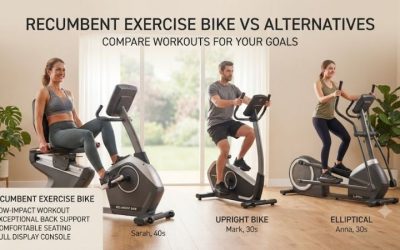
Indoor Cycling Bike vs. Recumbent Bike
The strongest distinction is the seating arrangement.
Saddle vs. Supported Seat
Indoor cycling bikes use bicycle-style saddles.
Recumbent bikes typically include broader seats and backrests.
This changes how the rider’s weight is supported.
Someone comfortable on a bicycle-style saddle may prefer the indoor cycling position.
Someone seeking chair-like seating may prefer a recumbent machine.
Neither seat type is universally more comfortable.
Fit, body proportions, and individual preference remain important.
Pedal Position
Indoor cycling bikes position the crank primarily beneath the rider.
Recumbent bikes position the pedals forward of the seat.
This changes the relationship between the hips, knees, and pedals.
Both require appropriate adjustment for comfortable leg extension.
Upper-Body Position
An indoor cycling bike generally requires the rider to maintain torso position without a backrest.
A recumbent bike supports the torso through its seat.
That support may appeal to people who dislike leaning toward handlebars.
However, back support does not guarantee suitability for someone with back pain or another medical condition.
Workout Intensity
A recumbent bike can support demanding cycling when its resistance capabilities and user effort are sufficient.
An indoor cycling bike can also support gentle workouts.
Therefore, one type should not be categorized as inherently easy and the other as inherently hard.
The main distinction is posture and intended riding style.
Space Requirements
Recumbent bikes are generally longer.
The Schwinn 590R, for example, is listed at 66.4 inches long and 28 inches wide, demonstrating the footprint of a conventional supported-seat machine.
Schwinn Global
Indoor cycling bikes vary in size but often occupy less floor length.
Check the operating dimensions rather than assuming every indoor cycling bike is compact.
Which Should You Buy?
Choose recumbent when supported seating is the priority.
Choose indoor cycling when conventional cycling posture, adjustment flexibility, and sport-oriented riding styles matter more.
Indoor Cycling Bike vs. Air Bike
Air bikes and indoor cycling bikes can both accommodate demanding exercise, but they generate resistance differently.
Magnetic and Friction Resistance
Indoor cycling bikes frequently use selectable magnetic or friction resistance.
This lets the rider adjust the load characteristics through a control.
The exact relationship between setting and workload varies.
Resistance numbers should not be treated as standardized measurements across brands.
Effort-Responsive Air Resistance
An air bike uses a fan.
As the rider increases effort, the fan rotates faster and aerodynamic drag rises.
This can create a naturally responsive resistance experience.
Some air bikes also use moving handles, involving the upper body.
The result is mechanically different from a conventional indoor cycling bike with stationary handlebars.
Pedaling Cadence
Both types permit different pedaling cadences.
However, the relationship between cadence, resistance, and workload depends on the mechanism.
A higher cadence does not always mean the same power output across different bikes.
Upper-Body Movement
Indoor cycling typically focuses on cycling mechanics.
Air bikes with moving handlebars can add coordinated arm movement.
This may appeal to users who enjoy that type of exercise.
However, the added movement makes the workout different rather than automatically superior.
Noise
Air bikes produce airflow sound.
Indoor cycling bikes with magnetic resistance avoid fan-based resistance noise but may still generate drivetrain sound.
For apartments, noise can influence the choice.
Which Should You Buy?
Choose indoor cycling when you want cycling-focused training.
Choose an air bike when fan resistance and coordinated arm-and-leg movement are important to you.
Indoor Cycling Bike vs. Folding Exercise Bike
Folding bikes emphasize space efficiency during storage.
Permanent Setup vs. Folded Storage
An indoor cycling bike commonly remains assembled.
A folding exercise bike can reduce its storage footprint.
If the room has permanent exercise space, folding may offer little benefit.
If the equipment must be stored after each workout, a folding model can be more convenient.
Riding Geometry
Folding bikes often use compact frames.
Some provide upright or semi-recumbent positions.
They may not reproduce the sport-oriented geometry of a dedicated indoor cycling bike.
Standing Pedaling
Most folding exercise bikes are not designed for standing cycling.
Do not assume that a folding bike can support every riding technique used on an indoor cycling machine.
Stability and Locking Mechanisms
Folding designs require secure joints and locks.
Check the manufacturer’s instructions before use.
Resistance Capabilities
Folding bikes can provide suitable resistance for many home workouts.
However, they should not automatically be treated as equivalent to dedicated indoor cycling equipment.
Which Should You Buy?
Choose folding when storage is the main challenge.
Choose indoor cycling when riding mechanics and adjustment capabilities are more important.
Comparing Magnetic, Friction, and Air Resistance
Resistance-system terminology can be misleading when manufacturers emphasize large setting counts or flywheel weights.
Magnetic Resistance
Magnetic systems use braking forces without continuous pad-to-flywheel contact.
They can provide controlled adjustment.
However, actual workload range depends on design.
Friction Resistance
Friction systems use mechanical contact.
They may be relatively straightforward but require appropriate maintenance.
Contact surfaces can wear over time.
Air Resistance
Air systems respond to fan speed.
They offer effort-responsive resistance but generate airflow sound.
Electronic Controls
Some indoor cycling bikes use electronic resistance adjustment.
These may support programmed workouts and connected training.
However, their power requirements and software compatibility should be evaluated.
Which System Provides the Best Ride?
There is no universal winner.
A well-designed magnetic bike may provide a satisfying riding experience.
A friction-based bike may suit users who prefer its characteristics.
An air bike provides a different response to effort.
The complete drivetrain matters more than the resistance label.
Riding Fit and Ergonomics
Saddle Height
The saddle should permit appropriate leg extension throughout the pedal cycle.
An excessively high setting may cause the hips to shift.
An excessively low position may leave the knees overly bent.
Saddle Fore-Aft Position
Horizontal adjustment can change the rider’s relationship to the pedals.
The appropriate position depends on frame geometry and body proportions.
Handlebar Height
Handlebar adjustment may influence torso position.
A user who wants a relatively upright riding posture may prefer a higher position when the design permits it.
Handlebar Reach
Excessive reach can make the riding position uncomfortable.
Check the distance between saddle and handlebars.
Pedals and Foot Retention
Indoor cycling bikes may use toe cages, straps, or compatible clip-in systems.
Foot retention should be adjusted appropriately.
Crank and Drive System
The crank mechanism and drivetrain must support the intended riding style.
Check whether the machine uses a fixed-drive or other configuration.
Performance Tracking and Connectivity
Cadence
Cadence measures pedal revolutions per minute.
It can help riders maintain a consistent rhythm.
Power
Power measurement can provide useful training data when the sensing system is documented.
Not every bike reporting watts uses the same method.
Resistance Levels
Displayed settings may not be directly comparable across manufacturers.
Heart Rate
Some bikes support external heart rate monitors.
Compatibility depends on the protocol and console.
Connected Fitness Apps
Some machines work with compatible training applications.
Check Bluetooth capabilities, supported data fields, and any subscription requirements.
Tracking Consistency
If you want to compare workouts over time, use consistent equipment and measurement methods.
Do not assume equal displayed distance or resistance means equal workload across unrelated bikes.
Space, Noise, and Home Setup
Operating Footprint
Measure the entire machine, including handlebars and stabilizers.
Entry and Exit Clearance
Allow space for mounting and dismounting.
Ceiling Height
Seated cycling generally requires less overhead clearance than standing cardio equipment.
However, standing pedaling can change the user’s height and movement envelope.
Noise
Magnetic, friction, and air systems have different sound characteristics.
Floor Protection
A suitable mat may help protect flooring.
It should not compromise stability.
Transport Wheels
Transport wheels can simplify movement but do not make every bike easy to relocate.
Check total weight and handling instructions.
Maintenance and Long-Term Value
Belt and Chain Drives
Follow manufacturer guidance for inspection and servicing.
Resistance Mechanisms
Magnetic systems, friction pads, and air fans have different maintenance requirements.
Saddle and Handlebar Adjustments
Check locking mechanisms regularly.
Pedals and Cranks
Inspect pedal connections and any foot-retention components.
Electronics
Connected consoles may require updates, power supplies, and compatible software.
Warranty
Review coverage for the frame, mechanical components, and electronics.
Buying Decisions by User Type
Recreational Riders
A conventional upright bike may provide adequate features without the additional riding adjustments of a dedicated indoor cycling machine.
Cycling Enthusiasts
An indoor cycling bike may better match sport-oriented fit preferences and cadence-focused training.
Apartment Residents
A magnetic indoor cycling bike may be practical if its dimensions and noise characteristics suit the room.
Users Seeking Back Support
A recumbent bike deserves consideration.
Users With Limited Storage
A folding model may be more appropriate.
Users Who Want Moving Handlebars
An air bike may better match the desired exercise pattern.
Three Practical Buying Scenarios
Scenario 1: Frequent Cycling Sessions in a Dedicated Room
An indoor cycling bike is often a strong candidate when the buyer has permanent floor space, values saddle and handlebar adjustment, and intends to use cycling-focused workouts.
A folding bike might save storage room but provide unnecessary compromises if permanent space is already available.
Scenario 2: Casual Evening Workouts
A conventional upright bike may provide a convenient balance of seated cycling and simple resistance controls.
An indoor cycling bike is not necessarily required if the user does not want sport-oriented riding positions.
Scenario 3: A Shared Apartment With No Permanent Gym Area
A folding bike may be the more practical purchase.
The smaller stored footprint can matter more than advanced riding mechanics.
However, the user must still verify that the bike fits comfortably when unfolded.
Frequently Asked Questions
Is an Indoor Cycling Bike Better Than an Upright Exercise Bike?
Not universally. Indoor cycling bikes often emphasize sport-oriented riding geometry and adjustment, while conventional upright bikes may prioritize straightforward seated exercise.
Can You Stand on an Indoor Cycling Bike?
Only when the manufacturer supports standing pedaling. Not every bike marketed for indoor cycling has identical operating limits.
Is Magnetic Resistance Better Than Friction Resistance?
Neither is universally better. Magnetic systems avoid direct pad contact, while friction systems use mechanical contact. Performance depends on the complete design.
Are Indoor Cycling Bikes Suitable for Beginners?
They can be, provided the bike fits properly and the user follows the manufacturer’s instructions.
Is an Indoor Cycling Bike Good for a Small Apartment?
Some models are compact enough for apartments, but operating clearance, noise, and storage requirements must be checked.
Does a Heavier Flywheel Mean a Better Bike?
No. Flywheel mass influences inertia, but drivetrain design, resistance control, and overall construction also matter.
Conclusion
When comparing an indoor cycling bike vs alternatives, cycling-specific posture, adjustment, and riding style are the main reasons to choose an indoor cycling machine. Upright bikes may suit simpler seated workouts, recumbent bikes offer back-supported riding, air bikes add effort-responsive movement, and folding bikes address storage needs. Select the equipment that fits your body and preferred training rather than relying on flywheel weight or marketing labels.

Write Your Review
No reviews yet. Be the first to share your experience!