
Key takeaways
-
Compact floor footprint: Fits the available exercise area without obstructing furniture.
-
Stable base: Supports controlled stepping without unwanted rocking.
-
Suitable pedal dimensions: Accommodates the user’s feet securely.
-
Appropriate resistance: Allows a manageable stepping rhythm.
-
Adequate overhead clearance: Provides room for standing movement.
-
Manageable equipment weight: Makes repositioning practical.
-
Clear operating limits: Includes documented user weight and usage restrictions.
-
Simple maintenance: Provides accessible inspection and care instructions.
Choosing a mini stair stepper for small spaces means finding a balance between floor space, stepping comfort, and stability. Compact steppers can fit into apartments, bedrooms, and small home gyms, but their resistance systems and pedal movement vary. This guide explains how to compare designs, measure your exercise area, and choose equipment that fits your routine.
Quick Verdict: What Makes a Mini Stair Stepper Good for Small Spaces?
A mini stair stepper is a compact exercise machine designed to simulate repeated stepping movements while the user stands on two pedals.
Unlike full-sized stair-climbing machines, most mini steppers have no tall frame, built-in staircase, or large console. Their compact construction makes them convenient for homes with limited exercise space.
However, the smallest model is not always the most suitable.
An effective mini stepper must provide a stable standing platform, controlled pedal movement, sufficient foot support, and an appropriate resistance mechanism.
Since the user stands above the machine, balance and stability are especially important.
The best small-space stepper should satisfy several requirements:
-
Compact floor footprint: Fits the available exercise area without obstructing furniture.
-
Stable base: Supports controlled stepping without unwanted rocking.
-
Suitable pedal dimensions: Accommodates the user’s feet securely.
-
Appropriate resistance: Allows a manageable stepping rhythm.
-
Adequate overhead clearance: Provides room for standing movement.
-
Manageable equipment weight: Makes repositioning practical.
-
Clear operating limits: Includes documented user weight and usage restrictions.
-
Simple maintenance: Provides accessible inspection and care instructions.
For many apartment users, a compact hydraulic stepper may provide the basic functionality needed for short home workouts.
However, the exact choice depends on whether you prefer vertical stepping, twisting movement, or a model with additional support features.
Understanding Different Mini Stair Stepper Designs
Mini steppers are available in several configurations.
Although they share the general purpose of providing repeated stepping movement, the mechanical design can change the exercise experience considerably.
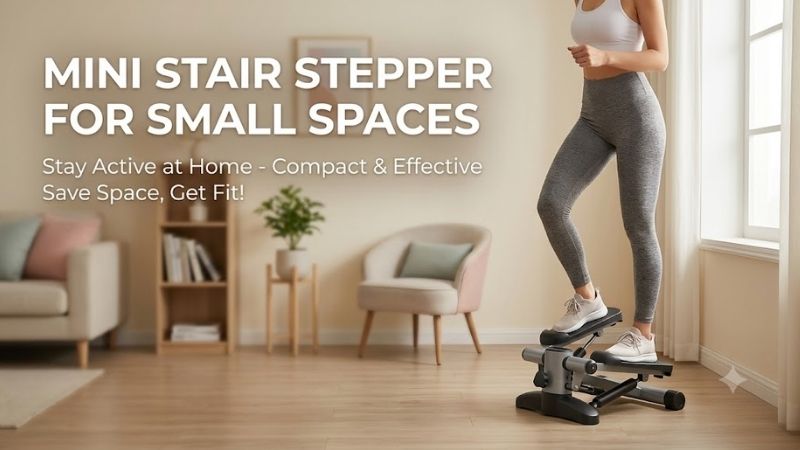
Traditional Up-and-Down Mini Steppers
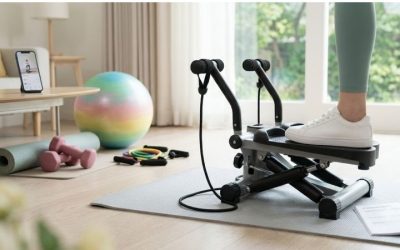
A traditional mini stepper uses two pedals that move through a vertical or slightly angled stepping pattern.
The user alternates pressure between the pedals to create a repeated stepping motion.
Many compact models use hydraulic cylinders to provide resistance.
This design can be suitable for a dedicated exercise corner because it occupies relatively little space.
The main advantage is simplicity.
The user can step onto the machine, establish balance, and begin exercising according to the manufacturer’s instructions.
However, traditional mini steppers do not necessarily reproduce the movement of climbing actual stairs.
Pedal travel may be shorter, and the motion can feel different from a staircase or full-sized stair climber.
Twist Mini Steppers
Twist steppers incorporate lateral or rotating movement into the stepping pattern.
Instead of moving only up and down, the pedals may guide the feet through an angled or twisting path.
This creates a different movement experience from conventional mini steppers.
Some users may prefer this variation, while others find the additional movement less comfortable.
Twisting mechanisms can also influence balance and body positioning.
Buyers should not assume that a twist stepper automatically delivers better results than a traditional model.
The choice should be based on comfort, control, and intended exercise.
Mini Steppers With Resistance Bands
Some mini steppers include removable resistance bands attached to the frame.
These accessories are intended to allow additional upper-body movements during stepping.
However, resistance bands introduce extra safety considerations.
Check the attachment points, band condition, manufacturer instructions, and available movement clearance.
Do not assume that every included band is suitable for demanding strength exercise.
Bands can also interfere with balance if the user performs unfamiliar arm movements while stepping.
For beginners, becoming comfortable with the stepping motion before adding accessories may be a more practical approach.
Mini Steppers With Support Handles
Some compact stepping machines include handles or support structures.
These can change the amount of floor space required and may affect storage convenience.
A handle should not automatically be assumed to provide the same support as a full-sized handrail.
Its intended use, structural capacity, and installation requirements must be verified.
A model with a support structure may be appropriate when the buyer values additional contact points, but it is often less compact than a basic floor stepper.
Hydraulic and Alternative Resistance Designs
Hydraulic resistance is common in mini steppers, but other mechanisms exist.
Resistance systems may differ in their operating feel, adjustment options, heat generation, maintenance, and noise.
A mechanism should be assessed according to the exact manufacturer’s instructions.
Do not assume that all mini steppers can provide identical workout durations or resistance characteristics.
How Much Space Does a Mini Stair Stepper Need?
Compact size is one of the main reasons people consider mini steppers.
Nevertheless, safe operation requires more than enough room for the base alone.
Typical Mini Stair Stepper Dimensions
Many small hydraulic steppers have footprints broadly around 12–20 inches long and 12–18 inches wide, although exact dimensions vary.
Some designs are larger because they incorporate twisting mechanisms, extra stabilizers, or accessory attachments.
For illustration, a machine measuring 16 × 14 inches occupies about 1.6 square feet of floor space.
This is only the machine’s physical footprint.
The actual exercise area must also accommodate the user’s stance, body movement, safe entry and exit, and surrounding clearance.
| Stepper configuration | Space characteristic | Main advantage | Potential trade-off |
|---|---|---|---|
| Basic hydraulic mini stepper | Small base footprint | Compact and simple | No integrated hand support |
| Twist mini stepper | Compact, model-dependent | Additional movement variation | Different balance demands |
| Stepper with resistance bands | Compact base, wider activity area | Optional arm movement | Requires band clearance |
| Stepper with support handle | Larger operating footprint | Additional contact points | Less convenient storage |
| Full-sized stair climber | Large floor and height requirement | Extended climbing mechanism | Unsuitable for many small rooms |
The best choice depends on the usable exercise area, not just the product description.
Measuring the Floor Area
Start by selecting a clear, level portion of the room.
Measure both the available length and width.
Consider nearby furniture, electrical cables, rugs, and other objects that could interfere with stepping.
A stepper that physically fits between a bed and dresser may not leave sufficient room for safe use.
The user should be able to mount and dismount the machine without stepping into an obstacle.
Use the manufacturer’s specified clearance requirements whenever available.
Why Overhead Clearance Matters
Mini steppers raise the user above the normal floor level.
As the pedals move, the height of the feet and body changes.
Therefore, ceiling clearance deserves attention even though the equipment itself is short.
This becomes especially important in rooms with low ceilings, sloped ceilings, hanging light fixtures, or ceiling fans.
The required clearance depends on the machine’s maximum pedal height, the user’s height, and normal body movement.
A tall user may need more room than someone significantly shorter.
Never position the machine where the head could contact an overhead obstruction.
Operating Clearance Around the Machine
A compact floor footprint should not encourage placing the stepper tightly against surrounding furniture.
The user needs space to maintain balance and step off safely.
Some manufacturers specify minimum clearance distances for operation.
Where no clear measurement is provided, evaluate the available area conservatively and avoid tight placements.
Keep the area free from objects that could become hazards if balance is lost.
Planning Storage Space
Most basic mini steppers can be stored as assembled units.
However, their shape, weight, and pedal position influence where they can fit.
Measure any intended storage area before buying.
Possible locations include a closet floor or a dedicated corner.
Do not assume a stepper can be stored on its side or vertically unless the manufacturer permits that orientation.
This is particularly relevant for hydraulic equipment.
Choosing the Right Pedal Design
The pedals are the primary contact points between the rider and the equipment.
Their dimensions, travel, and grip influence the overall experience.
Pedal Size and Foot Placement
A pedal should provide enough surface area for the user’s feet.
The correct fit depends on foot size, footwear, and the pedal shape.
A smaller platform may save space but feel restrictive to users with larger shoes.
Check the manufacturer’s footwear recommendations.
Avoid placing feet in unsupported positions that extend excessively beyond the pedal surface.
Textured and Non-Slip Pedals
Many steppers include textured pedal surfaces designed to improve traction.
A secure pedal surface can help limit unintended foot movement.
However, texture does not guarantee grip under every condition.
Footwear, moisture, dust, and pedal wear can influence traction.
Keep the contact surfaces clean and follow the equipment’s instructions.
Step Height and Pedal Travel
Pedal travel influences how the stepping motion feels.
Some models provide adjustable travel or mechanisms that influence step height.
Others use relatively fixed movement patterns.
More travel does not automatically mean a better machine.
The appropriate movement should allow controlled stepping without forcing uncomfortable joint positions.
If the manufacturer provides adjustment instructions, follow them carefully.
Independent vs. Linked Pedal Movement
Mini stepper mechanisms differ in how the pedals interact.
Some designs mechanically connect the pedals so that movement of one influences the other.
Other designs may use different linkages or resistance arrangements.
This affects the stepping sensation and potentially the ability to maintain a smooth rhythm.
Buyers should examine the exact mechanism rather than assuming every stepper works identically.
Understanding Hydraulic Resistance
Hydraulic cylinders are common components in compact mini steppers.
They help create resistance as the pedals move.
How Hydraulic Steppers Work
In a typical hydraulic arrangement, fluid movement inside a cylinder contributes to resistance.
The stepping mechanism transfers force through the cylinder as the user presses the pedals.
This can provide a compact resistance system without a large flywheel or electrical motor.
However, cylinder design, mechanical leverage, and the overall linkage determine the actual experience.
Two hydraulic steppers can feel different even when they appear similar.
Fixed vs. Adjustable Resistance
Some steppers have limited user-adjustable settings.
Others allow changes to pedal travel, mechanical geometry, or specified resistance characteristics.
Not every adjustment knob directly changes hydraulic resistance.
Review the manual to determine exactly what a control adjusts.
Do not assume that a larger setting number indicates a standardized increase in workload.
Hydraulic Heat During Use
Hydraulic cylinders can become warm during repeated operation because mechanical energy is dissipated through the resistance system.
The amount of heat depends on the design and usage conditions.
Manufacturers may specify limits on continuous operation or require cooling intervals.
These instructions are important and should not be ignored.
Avoid touching hot cylinder surfaces immediately after use, and do not exceed the manufacturer’s operating limits.
Smoothness and Resistance Consistency
A well-functioning stepper should operate within its documented mechanical behavior.
However, hydraulic resistance characteristics can depend on temperature, movement speed, and design.
Users should not expect every step to feel identical under all conditions.
Unexpected sticking, uneven movement, leaks, or unusual noises may indicate a maintenance issue.
Stop using the equipment when its operation appears abnormal.
Frame Stability and User Weight Capacity
Standing exercise creates different stability requirements from seated exercise.
The machine must remain secure while supporting the user through repeated weight shifts.
Importance of a Stable Base
Mini steppers may have compact stabilizing structures.
These should provide suitable support under the manufacturer’s intended operating conditions.
A narrow footprint alone does not prove that a machine is unsafe, but the overall design must resist unwanted movement.
Avoid using a stepper that rocks or shifts noticeably during normal operation.
Understanding Weight Capacity
A manufacturer’s maximum user weight is an operating limit.
It is not a universal quality score.
Two products with similar ratings can have different pedal dimensions, construction, and stability characteristics.
Select a model whose stated capacity accommodates the user.
Do not exceed the published rating.
Frame Materials and Construction
Common components may include metal frames, molded pedal structures, hydraulic cylinders, and mechanical linkages.
The quality of the assembly matters more than a single material description.
Check whether hardware is secured properly and whether the manufacturer’s instructions provide inspection guidance.
Weight vs. Portability
A lightweight stepper can be easier to relocate.
However, stability depends on more than weight alone.
For frequent storage, consider manageable lifting requirements and suitable handling points.
A machine that is slightly heavier but easy to carry may be more convenient than one with awkwardly positioned components.
Noise and Apartment-Friendly Use
Mini steppers are often promoted for apartment exercise, but noise varies.
Hydraulic movement, pedal pivots, floor contact, and mechanical linkages can create sound.
Common Noise Sources
Potential sources include:
-
Pedal pivots and joints.
-
Hydraulic mechanisms.
-
Frame connections.
-
Foot contact with pedal stops.
-
Movement of the base against flooring.
Noise can also increase when hardware becomes loose or components wear.
The presence of hydraulic resistance does not guarantee silent operation.
Reducing Noise on Hardwood Floors
Place the machine on a suitable level surface.
Check that the stabilizers remain in complete contact with the floor.
A compatible protective mat may reduce some floor vibration and protect the finish.
However, it should not interfere with equipment stability.
Avoiding Excessive Pedal Impact
Abruptly forcing the pedals against their travel limits may create additional noise and unnecessary mechanical stress.
Use a controlled stepping rhythm consistent with the manufacturer’s instructions.
Do not attempt to increase intensity by striking the pedal stops aggressively.
Using a Stepper in Shared Housing
In an apartment, consider the floor structure, surrounding rooms, and likely workout times.
Even a relatively quiet machine can transmit repeated vibration through certain floors.
Choose placement carefully and avoid assuming that quiet operation in one building guarantees the same result elsewhere.
Choosing a Mini Stair Stepper for Your Budget
Budget decisions should focus on usable features, stability, and manufacturer support.
Entry-Level Mini Steppers
Basic steppers commonly offer simple hydraulic resistance and minimal electronics.
These may be sufficient for straightforward home stepping sessions.
Check the frame, pedal design, user weight rating, and usage limits.
Midrange Mini Steppers
Midrange equipment may include adjustable travel, more elaborate frames, or additional convenience features.
Evaluate whether these changes improve your intended workout.
A better pedal arrangement or more convenient adjustment can be valuable.
Premium Compact Steppers
Some higher-priced models provide additional mechanisms, workout tracking, or support structures.
These may be appropriate for specific users.
However, advanced features should not be prioritized over safe, comfortable stepping.
Warranty and Maintenance Costs
Review warranty terms and component support.
Hydraulic cylinders, pivots, and related components can require attention.
Look for clear maintenance instructions and accessible customer service.
Buying for Specific Small-Space Situations
Studio Apartments
A compact stepper can fit into a small designated exercise corner.
Prioritize secure floor placement, manageable noise, and a clear storage location.
Bedrooms
Bedrooms may provide enough floor space, but overhead fixtures and nearby furniture deserve attention.
Keep adequate room for stepping on and off.
Home Offices
A home office stepper may offer a convenient way to exercise away from the desk.
Unlike an under-desk elliptical, it requires standing space and cannot ordinarily be used while seated at a conventional workstation.
Small Home Gyms
In a small home gym, a mini stepper can complement other exercise equipment.
The machine should not obstruct the operating clearance of a bench, bike, rack, or other equipment.
Beginners
Beginners should prioritize a stable platform and manageable resistance.
Start with controlled stepping and become familiar with the machine before adding optional resistance bands.
Older Adults
Because a mini stepper requires standing balance, suitability depends on individual mobility and stability.
A compact stepper should not be assumed to provide safe hand support.
Users with balance limitations may need a different exercise machine or individualized professional guidance.
Mini Stair Stepper vs. Other Compact Cardio Equipment
| Equipment | Exercise position | Main advantage | Main limitation |
|---|---|---|---|
| Mini stair stepper | Standing | Compact stepping movement | Balance requirement |
| Under-desk elliptical | Seated | Small equipment footprint | Requires chair compatibility |
| Compact exercise bike | Seated | Cycling movement | Larger operating footprint |
| Walking pad | Standing | Walking exercise | Requires greater floor length |
| Full-size stair climber | Standing | Dedicated climbing mechanism | Large footprint and height |
| Step platform | Standing | Simple step-up exercise | No integrated resistance mechanism |
Mini Stepper vs. Under-Desk Elliptical
A mini stepper is primarily intended for standing movement.
An under-desk elliptical supports seated exercise.
The appropriate choice depends on whether the user wants standing activity or seated pedaling.
Mini Stepper vs. Walking Pad
A walking pad allows walking along a moving belt.
A mini stepper provides a repeating stepping motion from a relatively fixed position.
The mini stepper usually requires less floor length, while a walking pad offers a different movement experience.
Mini Stepper vs. Full-Size Stair Climber
A full-sized stair climber typically provides a substantially larger climbing mechanism.
It also requires more floor area, vertical clearance, and often a more permanent location.
A mini stepper is not mechanically equivalent, but it can be a more practical choice where space is limited.
Setting Up a Mini Stair Stepper Correctly
Choose a Level Floor Surface
Place the machine on a suitable floor in accordance with the manufacturer’s instructions.
Avoid unstable or uneven surfaces.
Check the Pedals and Frame
Inspect visible hardware, pedal mechanisms, and stabilizers.
Make sure any required assembly has been completed correctly.
Confirm Overhead Clearance
Verify that there is enough space above your head throughout the stepping movement.
Step Onto the Machine Carefully
Use the mounting procedure described by the manufacturer.
Establish balance before increasing stepping speed.
Begin With Controlled Movement
Use a manageable rhythm.
Avoid excessive side-to-side movement or forcing the pedals abruptly.
Follow Usage and Cooling Limits
If the manufacturer specifies maximum continuous operating times or cooling periods, follow those requirements.
Common Mistakes When Buying a Mini Stair Stepper
Selecting the Smallest Model Without Checking Stability
A compact footprint is useful only when the machine supports controlled exercise.
Ignoring Hydraulic Operating Limits
Continuous-use restrictions may apply to certain hydraulic mechanisms.
Overlooking Pedal Dimensions
Small pedals may be uncomfortable for users with larger feet.
Assuming Resistance Bands Are Essential
Bands are optional accessories, not a requirement for effective stepper operation.
Ignoring Overhead Clearance
The user’s height and vertical movement must be considered.
Confusing Twist Steppers With Traditional Steppers
Different pedal paths can change balance requirements and comfort.
Frequently Asked Questions
Are Mini Stair Steppers Good for Small Apartments?
They can be practical because many models occupy relatively little floor space.
However, safe operation requires adequate clearance, a suitable floor, and stable equipment.
Do Mini Stair Steppers Need Electricity?
Many basic hydraulic mini steppers operate without electricity.
Some models use batteries for workout displays.
Check the exact product requirements.
Are Mini Stair Steppers Noisy?
Noise levels depend on the mechanism, construction, floor surface, and condition of the equipment.
Hydraulic models are not necessarily silent.
Can You Use a Mini Stair Stepper Every Day?
Usage frequency depends on the individual and the manufacturer’s operating limits.
Some hydraulic models require cooling periods between sessions.
Do not exceed those limits.
Is a Twist Stepper Better Than a Regular Stepper?
Neither is universally better.
They provide different movement patterns and may require different balance control.
Choose based on comfort and intended use.
Can You Store a Mini Stair Stepper Under a Bed?
Only if its dimensions fit and the manufacturer’s storage instructions permit that positioning.
Avoid forcing the machine into a location that could damage components.
Conclusion
The best mini stair stepper for small spaces is one that fits your available floor area while providing stable, controlled stepping. Prioritize suitable pedal dimensions, documented weight capacity, appropriate resistance, adequate overhead clearance, and manufacturer operating limits. A basic hydraulic stepper can be practical for compact home workouts, while twist or accessory-equipped models make sense when their additional movement and features match your needs.


Write Your Review
No reviews yet. Be the first to share your experience!