
Key takeaways
-
Low pedal height: Reduces the risk of your knees contacting the desk.
-
Compact footprint: Allows the machine to fit between desk supports and surrounding furniture.
-
Stable base: Helps prevent sliding during seated pedaling.
-
Adjustable resistance: Accommodates different effort preferences.
-
Smooth motion: Supports a controlled, consistent pedaling rhythm.
-
Manageable weight: Makes repositioning and storage easier.
-
Suitable chair compatibility: Allows proper posture without the chair rolling away.
Choosing an under desk elliptical for small spaces requires more than checking the machine’s footprint. Desk clearance, knee movement, chair stability, and storage all affect usability. This guide explains how to select a compact seated elliptical that fits your workspace, supports comfortable pedaling, and avoids unnecessary features.
Quick Verdict: What Makes an Under Desk Elliptical Suitable for Small Spaces?
An under-desk elliptical is a compact exercise device that allows you to move your legs through an elliptical pedaling motion while sitting in a chair. Unlike a full-size elliptical trainer, it normally does not include an integrated seat, handlebars, or standing exercise platform.
For small apartments, bedrooms, and home offices, the most suitable design is usually a low-profile seated elliptical with stable pedals, adjustable resistance, and enough clearance for natural knee movement.
The machine’s overall dimensions are important, but they are only part of the buying decision. A model may fit beneath your desk when unused yet cause your knees to touch the underside of the desktop once the pedals begin moving.
A practical compact elliptical should provide enough pedal travel for comfortable movement while keeping the equipment stable on the floor.
Prioritize these characteristics:
-
Low pedal height: Reduces the risk of your knees contacting the desk.
-
Compact footprint: Allows the machine to fit between desk supports and surrounding furniture.
-
Stable base: Helps prevent sliding during seated pedaling.
-
Adjustable resistance: Accommodates different effort preferences.
-
Smooth motion: Supports a controlled, consistent pedaling rhythm.
-
Manageable weight: Makes repositioning and storage easier.
-
Suitable chair compatibility: Allows proper posture without the chair rolling away.
For most small workspaces, desk clearance and stability deserve more attention than elaborate electronic displays.
Understanding Compact Under-Desk Elliptical Designs
Under-desk ellipticals are available in several configurations. Although they may look similar, their resistance mechanisms, pedal movement, power requirements, and intended use can differ significantly.
Manual Magnetic Under-Desk Ellipticals
Manual magnetic models use resistance mechanisms controlled by the rider. Many incorporate a flywheel or rotating assembly with magnetic resistance that can be adjusted through a dial.
This design can provide controlled pedaling without requiring electrical power for the resistance mechanism.
The compact construction is especially practical for home offices where electrical outlets are already occupied by computers, monitors, and charging equipment.
Magnetic systems also avoid direct friction contact between resistance pads and a rotating component, although the drivetrain can still produce some mechanical noise.
A manual magnetic elliptical is generally a sensible choice for someone who wants straightforward seated exercise without depending on programmed workouts.
Electronically Controlled Ellipticals
Some compact ellipticals use electronic controls to adjust resistance, track workouts, or operate predefined programs.
These machines can appeal to users who prefer console-based adjustments rather than mechanical dials.
However, electronic features can add complexity, require a power source, and increase the cost.
For buyers who mainly want to pedal while reading or working, advanced programming may contribute little to the actual experience.
Before choosing an electronically controlled model, confirm the power requirements, resistance capabilities, and exact dimensions.
Motorized Under-Desk Ellipticals
Motorized ellipticals use powered mechanisms to move the pedals in certain operating modes.
They differ from conventional manual ellipticals because the user may not need to provide all the force required for pedal movement.
This distinction matters when evaluating exercise intensity.
Powered pedal movement should not be assumed to deliver the same muscular workload as actively pedaling against resistance.
Some devices offer separate active and assisted modes, while others have more limited functionality.
Examine the manufacturer’s operating instructions carefully, particularly if the machine is intended for users with reduced mobility.
A motorized elliptical is not automatically better for small-space exercise simply because it includes additional modes.
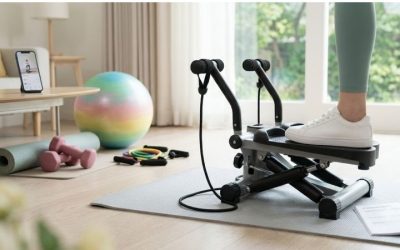
Portable Mini Ellipticals
Portable mini ellipticals emphasize small dimensions and the ability to move the equipment between locations.
These designs may incorporate carrying handles, compact pedal assemblies, or other features intended to simplify storage.
A portable model can be useful when the same room serves as an office, bedroom, and living area.
However, portability involves trade-offs.
A very lightweight machine may require more attention to floor grip, while a heavier device can be difficult to carry despite its compact size.
Choose according to how frequently the equipment will be moved rather than selecting the lightest model automatically.
How Much Space Does an Under-Desk Elliptical Need?
The key advantage of a seated elliptical is its relatively small footprint compared with traditional cardiovascular exercise equipment.
However, the actual space requirement includes the machine, the user’s legs, the chair, and surrounding furniture.
Typical Under-Desk Elliptical Dimensions
Many compact seated ellipticals occupy approximately 20–26 inches in length, 15–21 inches in width, and 9–13 inches in height, depending on the model.
These are broad category estimates rather than specifications for any particular machine.
For reference, a compact elliptical with a footprint of 23 × 18 inches occupies approximately 2.9 square feet of floor area.
That is substantially smaller than the footprint of most conventional stationary exercise bikes.
The following table illustrates common space-planning considerations.
| Design type | Space characteristic | Best use | Potential limitation |
|---|---|---|---|
| Low-profile seated elliptical | Reduced vertical height | Lower desks | Foot and knee clearance still need checking |
| Standard compact elliptical | Small floor footprint | Home offices | May interfere with desk supports |
| Portable seated elliptical | Easier repositioning | Multipurpose rooms | Stability varies by design |
| Motorized mini elliptical | Compact powered mechanism | Seated assisted movement | Requires appropriate power access |
| Under-desk pedal bike | Circular pedal path | Seated cycling | May raise knees higher |
Actual dimensions must be confirmed for the exact product being considered.
Measuring Desk Clearance Correctly
Desk clearance is often the most overlooked factor when shopping for an under-desk elliptical.
Start by measuring the vertical distance between the floor and the lowest obstruction beneath the desk.
Do not measure only to the top of the desktop. Some desks have drawers, crossbars, cable trays, or reinforcement panels that reduce usable space.
Next, measure the available width between the desk legs or other supports.
The elliptical should fit without contacting these structures during use.
Finally, consider the rider’s knee movement.
The maximum machine height does not necessarily represent the highest point reached by the rider’s knee while pedaling.
Knee clearance depends on pedal travel, seat height, leg proportions, and the user’s seated posture.
Why Knee Clearance Matters More Than Machine Height
An elliptical pedal follows a repeating path rather than remaining at a constant height.
As the pedal rises, the knee generally moves upward.
If the desktop is too low, the rider may need to move the chair backward, lower the seat, or alter their posture.
These adjustments can create new problems.
Moving too far backward may make it difficult to reach the keyboard, while lowering the chair excessively can compromise workstation ergonomics.
A suitable under-desk elliptical should allow comfortable leg movement without forcing major changes to the normal working position.
Whenever possible, use the manufacturer’s desk-clearance guidance and confirm the machine fits your body dimensions.
Measuring Storage Space
Storage requirements matter when the elliptical cannot remain beneath the desk permanently.
Measure the location where you intend to keep the equipment between sessions.
Possible storage areas include an open shelf, a closet floor, or an unused space beside furniture.
Do not assume that a machine can be stored vertically unless the manufacturer permits it.
Consider whether the unit has a carrying handle and whether its weight is manageable.
A device that fits on a closet floor but requires awkward lifting may be inconvenient for frequent use.
Choosing the Right Pedal Design and Movement
The pedal mechanism determines how your feet travel during exercise.
Under-desk ellipticals can differ in stride geometry, pedal angle, movement direction, and resistance behavior.
These differences affect comfort and workstation compatibility.
Pedal Height and Foot Position
Lower-profile pedals can be useful beneath desks with limited vertical clearance.
However, a low pedal position alone does not guarantee a suitable riding experience.
The pedal platform should support the foot securely throughout the movement.
Some designs use large textured platforms, while others have smaller pedal surfaces.
The appropriate choice depends on foot size, footwear, and the machine’s intended use.
Pedal placement should allow the user to maintain a controlled motion without the feet slipping.
Elliptical Stride Length
Stride length describes aspects of the distance traveled during the pedal cycle, although manufacturers may define and report it differently.
Compact seated ellipticals generally use much shorter movement paths than full-size standing elliptical trainers.
A shorter stride may help limit movement beneath a desk, but it can also feel restrictive to some users.
A longer pedal path may create a more noticeable leg movement while requiring additional space.
The important question is whether the motion feels natural and fits within the available desk clearance.
Do not compare advertised stride measurements unless their definitions are consistent.
Forward and Reverse Pedaling
Some under-desk ellipticals support both forward and backward pedaling.
Changing direction can alter how the movement feels and may help vary a seated exercise routine.
However, bidirectional operation should be verified for the specific product.
Do not assume every model supports reverse movement or that all resistance mechanisms behave identically in both directions.
When reverse pedaling is permitted, start slowly and maintain a controlled motion.
Pedal Surface and Foot Stability
A stable pedal platform is especially important when using an elliptical while concentrating on another activity.
Textured pedal surfaces can help improve grip.
Some machines also incorporate raised pedal edges or other features designed to keep the feet positioned correctly.
Footwear and pedal design should be compatible with the manufacturer’s recommendations.
Avoid using the machine in a way that allows loose clothing, cables, or nearby objects to contact moving parts.
Resistance Systems and Workout Performance
Resistance controls determine how much effort is required to move the pedals.
The best mechanism depends on whether the elliptical is intended for gentle seated movement or more demanding exercise sessions.
Magnetic Resistance for Everyday Use
Magnetic resistance is commonly found in compact seated ellipticals.
It allows resistance adjustment without the continuous contact associated with some friction-based systems.
This arrangement can be useful in shared workspaces because relatively smooth operation is desirable.
Nevertheless, resistance-system type alone does not determine noise, durability, or overall performance.
Bearings, pedals, housing components, and the floor surface can all influence the experience.
How Many Resistance Levels Are Enough?
Manufacturers may advertise different numbers of resistance settings.
However, resistance levels are not standardized between brands.
Eight settings on one machine may offer a different total workload range from eight settings on another.
For basic seated movement, smooth adjustment and an appropriate resistance range are generally more useful than a large number of settings.
Buyers seeking challenging seated exercise should examine documented resistance capabilities instead of relying on level counts alone.
Manual vs. Motorized Pedaling
Manual ellipticals require the user to move the pedals actively.
Motorized models may offer powered movement.
These two configurations should not be treated as interchangeable.
Active pedaling against resistance requires muscular effort, whereas powered movement can reduce the effort required from the user.
The most suitable choice depends on the intended use.
For conventional seated exercise, an adjustable manual machine is often the straightforward option.
Realistic Exercise Expectations
An under-desk elliptical can add movement to periods otherwise spent sitting.
However, the intensity achieved varies with resistance, cadence, individual fitness, and the equipment design.
It should not automatically be considered a substitute for all moderate- or vigorous-intensity exercise.
Console estimates of calories burned or distance traveled may be approximate.
Focus on consistent use, manageable effort, and comfortable movement rather than assuming particular training outcomes.
Stability, Chair Compatibility, and Floor Protection
Because an under-desk elliptical is used while seated in a separate chair, the chair and machine work together as part of the exercise setup.
Poor compatibility can make even a compact and well-built device inconvenient.
Preventing the Elliptical From Sliding
Some machines may shift across smooth flooring during pedaling.
Non-slip feet and suitable floor surfaces can help limit movement.
A compatible equipment mat may also improve floor protection and grip.
However, mats should not make the unit unstable.
If the elliptical continually slides despite proper placement, review the manufacturer’s setup recommendations rather than improvising unsafe restraints.
Using an Office Chair With Wheels
A rolling office chair can move backward when the rider presses forward against the pedals.
This changes the distance between the user and the equipment and may interfere with comfortable movement.
Some manufacturers provide compatible chair wheel stops or other stabilization accessories.
A stable chair with appropriate locking features may also be useful.
Do not rely on a freely rolling chair if it moves during exercise.
Choosing the Correct Chair Height
Chair height influences knee movement, hip position, and clearance beneath the desk.
A chair that is excessively low may create cramped leg movement.
A chair that is too high may cause the user to reach downward or lose a comfortable foot position.
The goal is to maintain a supported seated posture while allowing the legs to move freely.
If the elliptical can only be used by placing the chair at an uncomfortable working height, the equipment may not be suitable for that workstation.
Protecting Hardwood and Carpeted Floors
The machine should sit securely on the intended flooring.
Hardwood, laminate, tile, and carpet can each affect grip and stability differently.
Follow the manufacturer’s floor-placement recommendations.
If using a protective mat, select one compatible with the floor finish and equipment.
On carpet, check whether the machine remains level and whether the pedal assembly has sufficient clearance.
Avoid using unstable objects beneath the equipment to compensate for uneven flooring.
Noise and Apartment-Friendly Operation
Noise matters when using an under-desk elliptical in an apartment, shared office, or room where people are sleeping nearby.
A quiet machine should produce controlled mechanical movement without excessive rattling or floor vibration.
What Makes an Under-Desk Elliptical Noisy?
Potential noise sources include bearings, moving pedal joints, loose hardware, the resistance assembly, and contact between the machine and floor.
Poor assembly or wear can also produce unwanted sounds.
A magnetic resistance system may avoid some friction-related noise, but it does not make the entire machine silent.
Look for clear maintenance instructions and stable construction.
Reducing Vibration on Hard Floors
Floor vibration can occur when repeated movement transfers through the machine’s base.
Proper leveling and secure assembly are important.
A suitable mat may reduce some vibration transmission, depending on its material and the flooring.
However, avoid promises that a mat will soundproof the machine.
The effectiveness of vibration reduction depends on the complete setup.
Using an Elliptical During Work Calls
For office use, a relatively smooth pedal motion and controlled speed can help limit distracting movement.
The machine should not interfere with typing, chair position, or concentration.
If mechanical sounds are clearly audible during calls, inspect the setup and reconsider whether the machine is suitable for that environment.
Portability and Storage Features
A compact elliptical may occupy very little space while operating, but its storage convenience still depends on weight, handles, and shape.
Carrying Handles and Machine Weight
A built-in carrying handle can make relocation easier.
However, a compact machine can still be relatively heavy due to its resistance assembly and frame.
Check the manufacturer’s stated equipment weight.
Consider whether you can move it safely without bending awkwardly or lifting beyond your capabilities.
Under-Desk Storage
Some ellipticals can remain beneath a desk permanently.
This is convenient when there is sufficient room for both normal chair movement and pedaling.
However, leaving a machine under the desk should not create a trip hazard or interfere with legroom when it is not being used.
A removable device may be preferable for shared desks.
Closet and Furniture Storage
A small elliptical may fit into a closet or designated storage corner.
Before purchasing, measure both the machine and the route required to move it into that area.
Consider whether shelving, doors, or other objects make the storage process inconvenient.
Avoid unsafe vertical or elevated storage arrangements unless expressly supported by the manufacturer.
How to Choose an Under-Desk Elliptical for Your Budget
Price should be assessed alongside practical usability.
An inexpensive machine that fits the workspace and provides suitable resistance may be more useful than a premium model with unnecessary connectivity.
Budget Models
Basic ellipticals commonly focus on manual operation and simple workout tracking.
These can be suitable for users who primarily want controlled seated movement.
Check pedal stability, adjustment range, and available product support.
Avoid choosing a machine solely because it has the lowest advertised price.
Midrange Models
Midrange devices may offer improved adjustment controls, stronger convenience features, or more detailed tracking.
The value depends on the specific implementation.
For office use, stable operation and a compact pedal profile are often more important than advanced workout displays.
Premium Models
Premium ellipticals may include connected features, more sophisticated controls, and additional convenience options.
These features may be worthwhile for frequent users.
However, they should not distract from essential requirements such as desk clearance, comfort, and a stable seated position.
Warranty and Maintenance
Review coverage for the mechanical assembly, electronics, and other components where applicable.
Check maintenance guidance and replacement-part availability.
A compact design does not eliminate the possibility of wear or service requirements.
Buying for Different Small-Space Situations
The ideal machine depends on the layout of your home and how you intend to use it.
Home Offices
For a home office, prioritize desk clearance, chair stability, and unobtrusive operation.
A low-profile manual magnetic model may be appropriate if it fits beneath the desk and allows a comfortable working posture.
Studio Apartments
Studio apartments benefit from equipment that can be moved and stored without major effort.
Look for manageable weight, compact dimensions, and a convenient storage location.
Bedrooms
A bedroom setup should not interfere with bed access, closet doors, or walkways.
Noise and floor vibration may also matter, particularly in shared housing.
Shared Workspaces
Equipment used by multiple people should accommodate different leg lengths, chair heights, and effort preferences.
Simple controls and convenient repositioning can be especially valuable.
Older Adults
A stable seated setup, clear controls, and manageable resistance may be useful.
People with mobility limitations or medical concerns should consider individualized professional guidance before using exercise equipment.
Under-Desk Elliptical vs. Other Compact Cardio Equipment
| Equipment | Primary advantage | Space consideration | Main limitation |
|---|---|---|---|
| Under-desk elliptical | Seated elliptical movement | Small floor footprint | Desk and knee clearance |
| Under-desk pedal bike | Cycling-style movement | Compact floor area | Potentially higher knee movement |
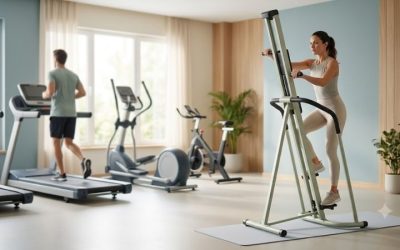
| Mini stair stepper | Standing stepping exercise | Small footprint | Requires balance and vertical clearance |
| Folding exercise bike | Integrated seated cycling | Folded storage possible | Larger operating footprint |
| Walking pad | Walking exercise | Long, narrow footprint | Requires standing space and clearance |
| Compact recumbent bike | Supported seated cycling | Longer permanent footprint | Less convenient storage |
Under-Desk Elliptical vs. Pedal Exerciser
Under-desk ellipticals use an elliptical pedal movement, while conventional pedal exercisers use a circular crank motion.
Either may be suitable for seated exercise.
The better choice depends on available knee clearance, comfort, stability, and resistance characteristics.
Under-Desk Elliptical vs. Mini Stair Stepper
A mini stair stepper is usually operated while standing.
It therefore serves a different use case from an under-desk elliptical.
Choose a mini stepper when you want standing exercise and have sufficient balance and overhead clearance.
Choose a seated elliptical when you need equipment that can be used while sitting.
Under-Desk Elliptical vs. Walking Pad
Walking pads allow walking movement rather than seated pedaling.
They usually require significantly more length and adequate standing clearance.
An under-desk elliptical is more practical where a seated workstation must be maintained.
Setting Up an Under-Desk Elliptical Correctly
Choose a Suitable Floor Position
Place the elliptical on a level surface where the full base remains supported.
Check that the machine does not interfere with desk legs or nearby furniture.
Stabilize the Chair
Use a stable chair arrangement that does not roll away during pedaling.
Follow any manufacturer recommendations for chair accessories.
Adjust Your Seated Position
Sit comfortably with your back supported.
Position the elliptical so your feet can remain on the pedals without excessive reaching.
Test the Complete Pedal Motion
Begin pedaling slowly and verify that your knees do not contact the desk.
Check that the machine remains stable.
Increase Resistance Gradually
Start with manageable resistance and adjust according to the intended workout.
Avoid forcing uncomfortable movement or continuing if the equipment shifts excessively.
Common Mistakes When Buying an Under-Desk Elliptical
Checking Only the Machine Footprint
A small base does not guarantee sufficient knee clearance.
Measure the complete workstation arrangement.
Ignoring Chair Stability
Rolling chairs can move during pedaling.
Make sure the seated setup remains secure.
Assuming All Magnetic Machines Are Silent
Mechanical components can still generate sound.
Examine the complete drivetrain and maintenance requirements.
Choosing Features Over Fit
A sophisticated console cannot compensate for poor pedal clearance or uncomfortable positioning.
Overlooking Storage Weight
A compact device may still be difficult to carry frequently.
Check both dimensions and weight.
Expecting Full-Size Elliptical Performance
Seated ellipticals offer a different exercise experience from standing elliptical trainers.
Choose according to the intended movement and effort level.
Frequently Asked Questions
Can an Under-Desk Elliptical Fit Beneath a Standard Desk?
Many models are designed for desk use, but compatibility depends on the actual desk clearance, pedal path, chair height, and rider’s leg dimensions.
Measure the lowest obstruction under your desk and verify the space needed for knee movement.
Are Under-Desk Ellipticals Good for Small Apartments?
They can be practical because their floor footprint is relatively small.
However, stability, noise, storage, and seating compatibility remain important.
Can You Use an Under-Desk Elliptical While Working?
Yes, provided the equipment allows a comfortable working posture and does not interfere with essential tasks.
The experience depends on the individual, workstation, and pedaling intensity.
Do Under-Desk Ellipticals Need Electricity?
Some manual models do not require wall power for resistance.
Motorized and certain electronically controlled models may require electricity.
Always verify the specific product’s requirements.
Are Under-Desk Ellipticals Better Than Mini Exercise Bikes?
Neither is universally better.
Ellipticals and pedal bikes use different movement patterns.
Choose based on comfort, knee clearance, resistance requirements, and available space.
Can You Store an Under-Desk Elliptical Vertically?
Only when the manufacturer permits that storage position.
Otherwise, use the documented storage orientation to avoid damage or tipping.
Conclusion
The best under desk elliptical for small spaces is one that fits your workstation, accommodates natural knee movement, and remains stable during seated exercise. Prioritize low pedal height, suitable resistance, manageable weight, and chair compatibility before considering advanced electronics. A compact manual magnetic model may be sufficient for everyday use, while specialized designs make sense when they address a specific need.



Write Your Review
No reviews yet. Be the first to share your experience!