
A recumbent exercise bike for small spaces can bring comfortable, back-supported cardio into an apartment, bedroom, or home office. The challenge is finding a bike that fits your floor plan without restricting legroom or access. This guide explains how to compare dimensions, seat adjustment, resistance, and everyday usability.
Quick Verdict: What Should You Prioritize?
A compact recumbent bike should be selected for how comfortably it fits both the rider and the room. Its assembled dimensions matter, but they tell only part of the story. The seat must adjust far enough to accommodate your legs, the pedals must clear surrounding furniture, and you need enough space to sit down and stand up without awkward maneuvering.
For most small-home buyers, the most practical configuration is a magnetic recumbent bike with a sliding seat, supportive backrest, low step-through frame, and a stable base. Transport wheels can also be useful, although most conventional recumbent bikes are not designed to fold away after exercise.
If two machines have similar footprints, prioritize the one offering better seat adjustment and easier entry rather than automatically choosing the shorter model. A bike that saves a few inches but creates an uncomfortable pedaling position is rarely a worthwhile compromise.
Why Choosing a Compact Recumbent Bike Requires More Than Measuring Floor Space
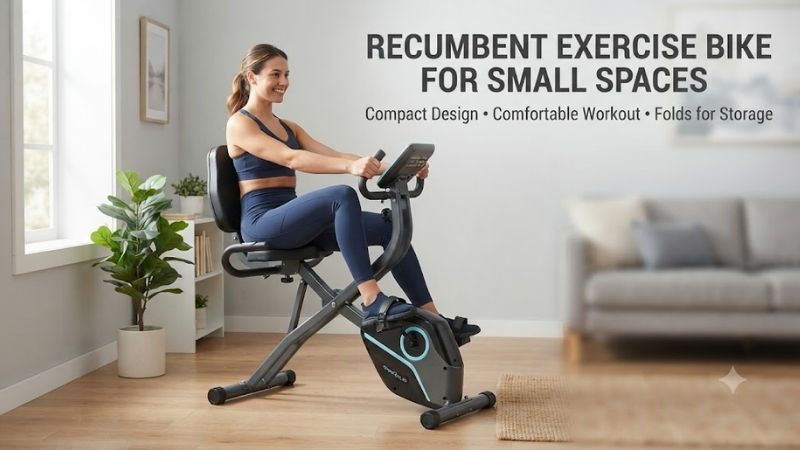
A recumbent bike differs from a conventional upright exercise bike because its seat and pedals are arranged along a more horizontal axis. The rider sits on a relatively broad seat, rests against a backrest, and extends the legs toward pedals positioned in front of the body. This arrangement can feel supportive and familiar to people who prefer seated exercise, but it also creates a longer frame.
The challenge for manufacturers is to reduce overall length while preserving a usable distance between the seat and crank. If the bike becomes too short, taller riders may not be able to extend their legs comfortably. If the adjustment range is too narrow, shorter riders may struggle to reach the pedals even when the machine technically fits the room.
That explains why a product described as compact should not automatically be treated as suitable for every apartment or household. Compactness is a relationship between equipment dimensions, body proportions, room layout, and intended usage.
A bike that measures five feet long may work perfectly in one home office where it stays against a wall. The same machine could be impractical in a slightly larger bedroom if the only available position blocks a closet or leaves no room to approach the seat.
The best buying decision begins by separating three requirements: the space the equipment occupies, the space the rider needs, and the space the household needs to keep functioning normally.
Understanding the Actual Space Requirements
Operating Footprint Versus Usable Exercise Area
Manufacturers usually publish assembled length, width, and height. These measurements describe the equipment itself, but they do not necessarily include the additional clearance recommended for safe use.
Consider the Schwinn 230 Recumbent Bike. Its published assembled dimensions are 64 inches long, 27.7 inches wide, and 44 inches high. That gives a useful reference for a conventional home recumbent model, but a room measuring exactly 64 by 27.7 inches would not be a suitable exercise area. There would be almost no space to approach the bike, change the seat position, or step away after finishing.
A better planning approach is to start with the machine’s footprint and then add the manufacturer’s required clearance. Where clearance recommendations are not published, examine the layout carefully and leave practical room for entry, exit, adjustment, and maintenance.
The location of that additional clearance matters. A recumbent bike generally needs more side access near the seat than a piece of exercise equipment you mount from the rear. A clear floor area behind the backrest may be less useful than sufficient room beside the step-through opening.
How to Measure a Bedroom or Home Office
Begin by identifying the section of the room that can remain available during exercise. Measure its actual length and width rather than estimating from the distance between furniture.
Next, consider the movements that happen around the space. A bedroom may need clearance for a closet door, drawers, and access to both sides of a bed. In a home office, the bike should not prevent a desk chair from rolling backward or restrict the normal path toward the door.
You can mark the proposed bike footprint with removable painter’s tape. Once the dimensions are visible on the floor, walk around the marked area as though the equipment were already installed. Sit in a chair positioned near the future seat location and determine whether you can approach it naturally.
This simple process can reveal important problems. A machine may fit comfortably when no one is moving around, yet become an obstacle every morning when someone opens a wardrobe or needs to reach a nearby electrical outlet.
If the available space is close to the bike’s published dimensions, choose another location or look for a shorter model that still accommodates your inseam.
Choosing the Best Position Against a Wall
Placing a recumbent bike against a wall is often an effective strategy because its narrow width allows the equipment to occupy a strip of floor without projecting too far into the room.
However, which side faces the wall matters.
If the bike has a low opening that allows entry from one side, keep that side accessible. A layout that forces the rider to climb across the frame defeats much of the convenience of the recumbent design.
Also consider the seat adjustment mechanism. On some models, the seat slides along a rail, and moving it backward changes the space available behind the backrest. If the seat is adjusted for a taller rider, the final usable length may differ from the position shown in marketing photographs.
Finally, avoid pressing the equipment tightly against furniture. Allow enough room to clean around the machine and inspect its frame or electrical connections when necessary.
Why Seat Adjustment Matters More Than a Few Inches of Frame Length
The Relationship Between Pedal Reach and Comfort
The seat-to-pedal distance is arguably the most important fit measurement on a compact recumbent bike.
When the pedal reaches the farthest point from the rider, the leg should remain comfortably extended without the knee becoming fully locked. When the pedal approaches the rider, the knee should bend naturally rather than becoming excessively compressed.
A seat positioned too close can produce a cramped pedaling motion. The knees may come unusually close to the torso, and the rider may find it difficult to maintain smooth revolutions. Over longer sessions, this can make the bicycle less appealing regardless of how comfortable the backrest initially feels.
Positioning the seat too far away creates a different problem. The rider may extend the leg excessively, shift the pelvis forward, or lift the hips away from the backrest to reach the pedals. This undermines the support that makes recumbent cycling attractive in the first place.
A good seat adjustment mechanism should allow the rider to find a comfortable middle position rather than requiring an extreme setting.
Sliding Rails Versus Fixed Adjustment Positions
Recumbent bikes use several seat-adjustment systems. Some allow the entire seat and backrest to slide forward or backward along a rail and lock with a lever. Other models rely on a knob, a series of preset holes, or a fixed seat arrangement with limited adjustment.
A sliding seat is particularly valuable when more than one person will use the equipment. The rider can change the seating position quickly, and a household member with a different inseam can establish an appropriate pedal reach without tools.
The Schwinn 230, for example, uses a seat rail slider system with an adjustment lever. This is the kind of practical feature worth considering when evaluating more than the exterior dimensions.
Before buying, check whether the adjustment is accessible while seated and whether it locks securely. Ease of adjustment matters when the seat must be repositioned frequently, but secure locking is more important than convenience.
Why Height Ranges Can Be Misleading
Manufacturers sometimes describe a bike as suitable for a broad range of user heights. These claims provide a starting point but cannot account for every body proportion.
Two people of the same height may have different inseams, torso lengths, and preferred seating positions. A person with relatively long legs may need more pedal reach than someone of equal height with a longer torso.
Whenever possible, use the manufacturer’s inseam guidance and seat-adjustment specifications rather than relying exclusively on a general height recommendation.
If the brand does not publish detailed fit information, this introduces uncertainty. In that situation, a model with a well-documented adjustment range may be preferable to a slightly smaller alternative with unclear sizing.
Seat and Backrest Comfort in Compact Models
Why Back Support Does Not Guarantee a Comfortable Ride
One of the main reasons people choose a recumbent bike is the broad seat and supportive backrest. However, support quality depends on the actual shape of the seating system and how it positions the rider relative to the pedals.
A deeply padded seat may feel pleasant initially but compress too much during longer sessions. A firmer seat may distribute pressure more consistently, although individual comfort varies. Similarly, a wide backrest may feel supportive to one rider but fail to match another person’s torso proportions.
The key is to evaluate the seat and backrest together. When the rider pedals, the backrest should provide stable support without forcing the pelvis to slide forward. The user should not have to lean away from the backrest to complete the pedal stroke.
Compact bikes sometimes use relatively simple seating designs to control size and cost. This is not necessarily a problem, but comfort should not be assumed from the recumbent label alone.
Ventilated Backrests Versus Cushioned Backrests
Some recumbent bikes use a ventilated backrest with open areas that allow air to circulate. Others use a fully padded surface.
A ventilated design can be useful in a warm room because it reduces the amount of material pressing against the back. This may make longer sessions more comfortable, especially when the bike is placed in a bedroom without strong air conditioning.
A padded backrest can offer a different pressure distribution and feel more familiar to users who prefer a conventional cushioned seat.
Neither design is universally better. The most important factors are shape, firmness, fit, and whether the rider can maintain a stable position.
The presence of ventilation also should not be mistaken for guaranteed lumbar support. Support depends on contouring and the rider’s anatomy rather than ventilation alone.
How to Evaluate Seat Height and Entry Convenience
The seat height above the floor can matter as much as the seat-to-pedal distance.
A very low seat may be difficult for some users to reach comfortably when sitting down or standing up. Conversely, a relatively high seat may feel easier to approach but could require stepping farther onto the frame.
For a small apartment, entry convenience becomes even more important because surrounding furniture may restrict movement.
When comparing bikes, evaluate the height of the seat, the step-through opening, and the location of the side handles as a complete arrangement.
A low step-through frame can make entry easier, but only if sufficient room remains on the approach side.
Side handles provide useful hand positions during exercise. However, do not assume they are designed to support unrestricted body weight during transfers unless the manufacturer explicitly states that capability.
Choosing the Right Resistance System
Why Magnetic Resistance Is Popular in Apartments
Most residential recumbent bikes use magnetic resistance because it provides relatively quiet operation and straightforward adjustment.
The pedals transmit motion through a drivetrain to a flywheel or rotating component. The magnetic braking system then creates resistance, requiring the rider to apply effort to maintain cadence.
Because the braking mechanism does not necessarily rely on a friction pad rubbing against the flywheel, it can avoid one common source of operating noise.
This is useful in apartments, bedrooms, and home offices where another person may be working, reading, or sleeping nearby.
However, magnetic resistance does not make the entire bike silent. Belts, bearings, pedals, and frame components still move. A bike with poor assembly or worn components may create noticeable sound regardless of its braking technology.
Manual Magnetic Resistance for Simple Workouts
Manual magnetic bikes typically use a dial or knob to change resistance.
This arrangement is appealing to people who prefer straightforward exercise. You can begin pedaling, adjust the resistance as needed, and complete a session without navigating a complicated console.
Manual controls can also reduce reliance on external electrical power, although the monitor may use batteries.
For someone who mainly wants twenty or thirty minutes of comfortable seated cycling several times per week, simplicity can be a genuine advantage.
There is little reason to pay extra for automated programs if you intend to control workout difficulty yourself.
Electronic Resistance and Preset Programs
Electronically controlled recumbent bikes allow resistance changes through the console. Some include programs that increase and decrease workload at scheduled intervals.
These features are useful when the rider enjoys structured exercise or wants to follow a session without manually changing resistance throughout the workout.
However, electronic systems can increase equipment cost, power requirements, and potential maintenance complexity.
A connected bike may also include Bluetooth training applications. Before purchasing, verify whether the application merely records workout information or can also adjust resistance.
Those are different capabilities, and wireless connectivity alone does not establish automatic resistance control.
Why More Resistance Levels Are Not Always Better
Buyers often compare bikes by counting resistance settings. A machine with twenty-five levels may appear superior to one with eight, but the numbers do not describe a standardized amount of mechanical work.
The actual resistance range depends on the flywheel, drivetrain, and braking system.
A bike with fewer settings may still provide enough progression for recreational exercise. Conversely, a large number of settings may offer finer increments without a substantially higher maximum workload.
For small-space buyers, comfortable low-intensity pedaling, consistent adjustment, and reliable operation are usually more important than the headline resistance count.
A Practical Comparison of Small-Space Recumbent Bike Features
| Feature | Why It Matters | What to Check Before Buying |
|---|---|---|
| Overall length | Determines basic room fit | Exact assembled dimensions |
| Seat adjustment | Determines pedal reach | Inseam range and adjustment mechanism |
| Backrest | Influences seated comfort | Shape, firmness, ventilation |
| Step-through access | Affects mounting and dismounting | Opening height and side clearance |
| Magnetic resistance | Provides controlled pedaling effort | Manual or electronic system |
| User-weight capacity | Establishes the supported loading limit | Manufacturer’s rating |
| Transport wheels | Helps reposition the bike | Actual machine weight and moving procedure |
| Console | Supports workout tracking | Time, cadence, programs, compatibility |
| Power requirements | Affects equipment placement | Outlet or battery requirements |
| Warranty | Influences ownership value | Frame, parts, electronics, labor |
Stability and Weight Capacity in a Smaller Frame
Why Compact Equipment Still Needs a Substantial Base
Reducing overall dimensions does not eliminate the forces generated during exercise.
As the rider pedals, the frame experiences repeated loads through the crank, seat supports, and stabilizers. The bike should remain stable on a level surface without excessive rocking.
A compact recumbent bike may use a narrower base than a larger model, making its structural design particularly important.
Look for clearly stated user-weight capacity, secure seat mounting, and appropriate stabilizer construction.
The machine should not rely on the rider to hold it steady during ordinary use.
How to Interpret User-Weight Ratings
The maximum supported user weight is a safety specification, not a general quality score.
A bike with a higher rating is not automatically more comfortable, quieter, or better suited to a small room.
It does, however, establish an important purchasing boundary.
Choose a machine that accommodates the intended rider within the manufacturer’s stated limit. If several household members will use the bike, consider the heaviest rider.
Avoid assuming that an inexpensive compact model can safely support more than its published capacity simply because the frame is made from steel.
Floor Leveling and Equipment Mats
Even a well-designed frame can rock on an uneven surface.
Some recumbent bikes include adjustable leveling feet. These allow minor corrections when the floor is not perfectly even.
A suitable equipment mat can help protect flooring and may reduce some vibration.
However, an excessively soft mat or thick rug can make a bike less stable.
The goal is a firm, level surface that supports the entire frame without allowing unnecessary movement.
Noise, Vibration, and Shared Living Spaces
What Makes a Recumbent Bike Noisy?
With a magnetic recumbent bike, the main sources of audible sound may come from the drivetrain, pedals, bearings, and frame rather than the magnetic brake.
A correctly assembled belt-driven machine can operate relatively quietly. However, noise levels vary with product design and maintenance.
A recurring click may indicate a pedal issue. Grinding could suggest a bearing or drivetrain problem. Rattling may come from loose hardware or a poorly secured console.
These sounds should not be accepted as normal simply because the machine still functions.
Why Floor Vibration Matters
Even seated cycling creates repeated mechanical forces.
In an apartment, some vibration may transfer through the floor, especially if the machine rocks or sits on an uneven surface.
A stable mat can help protect the floor and manage some vibration, but it cannot guarantee complete sound isolation.
For buyers who exercise early in the morning or late at night, frame stability and drivetrain quality deserve particular attention.
Finding an Apartment-Friendly Location
Place the bike where its frame will not contact cabinets, desks, or other furniture during exercise.
Avoid positioning it directly in a narrow walking path.
If the machine requires electricity, route the cable safely and avoid leaving it stretched across the floor.
A bike tucked into a quiet corner can be practical, but that corner must still provide adequate room to sit down, adjust the seat, and dismount safely.
Workout Consoles: Essential Features Versus Extras
The Metrics Most Home Users Actually Need
For recreational cardio, elapsed time, resistance setting, and cadence are often more useful than an elaborate display.
Time allows the rider to plan consistent workouts.
Resistance settings help repeat a familiar level of effort on the same machine.
Cadence, expressed in revolutions per minute, helps establish a comfortable pedaling rhythm.
Distance and speed are commonly displayed but are generally calculated values on stationary equipment. They should not automatically be treated as equivalent to outdoor cycling.
Calorie figures are estimates and can differ significantly depending on the manufacturer’s algorithm and the information available about the rider.
Heart-Rate Monitoring
Some bikes use contact sensors built into the side handlebars.
These are convenient because the rider can check heart rate without wearing a separate device.
However, readings may vary with hand placement, movement, and skin contact.
Certain models support compatible wireless heart-rate monitors.
If heart-rate-based workouts are important, confirm the bike’s supported connection protocol before purchasing a chest strap.
Do You Need Built-In Programs?
Preset programs can help organize exercise without requiring much planning.
Some change resistance automatically, while others focus on time or workout targets.
These functions can be useful for people who enjoy guided sessions, but they are not essential for basic cardio.
A straightforward bike with an easy-to-read monitor may offer better value when the rider prefers independent workouts.
Connected Applications and Subscriptions
Bluetooth connectivity can support workout tracking and applications on a phone or tablet.
However, compatibility is not universal.
Some applications record data but cannot control the machine. Others require an active subscription for advanced content.
Before buying, determine which functions operate independently and which depend on software services.
That distinction matters for long-term ownership because applications and membership terms may change.
Portability: Can You Move a Recumbent Bike After Every Workout?
Transport Wheels Are Helpful but Not a Complete Solution
Some recumbent bikes include transport wheels near one end of the frame.
These can make repositioning easier, but the user may still need to lift or tilt part of the machine.
This is particularly relevant because full-size recumbent bikes can be relatively heavy.
The Schwinn 230, for example, has a published assembled weight of 81.6 pounds.
A machine in that weight category may be manageable to reposition occasionally using its designed transport method, but moving it through narrow rooms or over thick carpet can still be inconvenient.
Why Permanent Placement Is Often Better
Unlike many compact folding exercise bikes, conventional recumbent bikes usually remain assembled at their full length.
This makes a permanent exercise corner particularly valuable.
If you need to move the equipment after every session, assess that routine realistically before purchasing.
A machine that is difficult to reposition may become an obstacle or discourage regular use.
Folding Recumbent Bikes Versus Semi-Recumbent Alternatives
Some folding exercise bikes advertise recumbent positions.
However, these often use a semi-recumbent seating arrangement rather than the full geometry of a conventional recumbent bike.
The seat, backrest, and pedal location may differ.
A folding semi-recumbent bike can still be a useful option for a very small home, but it should not be treated as an identical substitute.
Choose it because its actual fit and exercise position suit your needs, not simply because it carries a recumbent label.
Comparing Real-World Recumbent Bike Design Approaches
Schwinn 230: A Conventional Recumbent Layout
The Schwinn 230 illustrates a conventional residential recumbent design with a sliding seat, ventilated backrest, magnetic resistance, and built-in workout programming.
Its 64-inch length makes room planning important, but the adjustable seat provides a practical way to accommodate different riding positions.
It also supports Bluetooth connectivity with compatible applications, although users supply their own phone or tablet.
For someone with sufficient space who wants established electronic features, this type of design may be appealing.
Marcy ME-709: A Simpler Home Cycling Approach
The Marcy ME-709 illustrates a more straightforward equipment philosophy.
It emphasizes basic magnetic resistance, a step-through frame, and manual controls rather than an elaborate connected platform.
This kind of bike may be attractive to buyers who want simple recreational exercise without regular app interaction.
However, basic controls do not automatically mean a smaller frame or superior fit.
The exact dimensions, seat adjustment, and capacity must still be checked for the intended user.
What These Examples Teach Buyers
The difference between these approaches is not merely price.
A more connected bike can provide preset workouts and digital tracking, while a simpler model may reduce setup complexity.
The better choice depends on which features the rider will use and whether the frame fits the room.
Avoid assuming that the more expensive option is necessarily better for small spaces.
Which Features Deserve Your Budget?
Prioritize Fit Before Electronics
A good seat adjustment mechanism and supportive backrest are useful during every workout.
A premium display may only matter when the rider chooses to use it.
When comparing two similarly priced bikes, prioritize the seating geometry and stability first.
Consider Resistance According to Your Training
For basic seated cardio, manual magnetic resistance may be sufficient.
For planned interval sessions, electronically controlled resistance can be more convenient.
Choose according to the workouts you expect to perform regularly.
Evaluate Long-Term Repair Support
Before purchasing, investigate whether the manufacturer provides replacement pedals, seat-adjustment hardware, electronic components, and other service parts.
A machine with accessible replacement components may offer greater long-term value than a lower-priced alternative with limited support.
Warranty coverage also deserves attention. Frame, mechanical, electrical, and labor warranties may have different durations.
Calculate Total Ownership Cost
The purchase price is only part of the expense.
Potential costs include shipping, assembly, an equipment mat, electrical use, optional subscriptions, and replacement parts.
A connected bike with ongoing membership fees can become substantially more expensive over several years.
For a budget-conscious household, a simpler bike with good fit and dependable construction may be the more rational purchase.
Matching a Compact Recumbent Bike to Your Lifestyle
For Apartment Residents
A magnetic model with a stable frame and a manageable footprint is often a good starting point.
Prioritize quiet drivetrain operation and a location that does not interfere with daily movement.
For Taller Riders
Seat adjustment and pedal reach are more important than minimum frame length.
Avoid very short models that do not clearly support your inseam.
For Shorter Riders
Verify that the seat can move far enough forward to provide comfortable pedal contact.
A compact exterior does not guarantee appropriate reach.
For Beginners
Look for easy entry, straightforward resistance, a readable monitor, and a comfortable seat.
Complex workout programming is optional.
For Shared Households
A sliding seat with an accessible locking lever can make adjustment between riders much easier.
The machine must also accommodate each person’s weight and leg length.
For People Prioritizing Supported Seating
Focus on seat firmness, backrest shape, and stable hip positioning.
A supportive appearance alone should not determine the purchase.
Common Buying Mistakes and How to Avoid Them
The first mistake is selecting the smallest published footprint without checking pedal reach. Compact dimensions are useful only when the rider can complete a comfortable pedaling cycle.
Another common mistake is ignoring access clearance. A step-through frame provides little benefit when the bike is pushed tightly against furniture on the side needed for entry.
Buyers also sometimes assume that more resistance levels mean better workout quality. The resistance range is not standardized across machines, and comfortable adjustment is more important than the advertised count.
A fourth mistake is choosing a bike solely because it has a soft-looking seat. Seat shape, firmness, backrest position, and adjustment matter more than appearance.
Finally, some buyers underestimate the inconvenience of moving a conventional recumbent bike. Transport wheels do not turn a substantial frame into a truly portable exercise device.
Frequently Asked Questions
What Is the Best Recumbent Exercise Bike for a Small Apartment?
The best choice is a model with dimensions that fit your room, appropriate seat adjustment, stable construction, and relatively quiet resistance. A compact magnetic model is often practical, but exact fit matters more than the product category.
How Much Space Does a Recumbent Exercise Bike Need?
The requirement varies by model. Measure the assembled footprint and add the manufacturer’s recommended clearance for safe entry, exit, and exercise.
Can Recumbent Exercise Bikes Fold for Storage?
Most conventional full-size recumbent bikes do not fold. Some folding bikes offer semi-recumbent positions, but their geometry differs from traditional recumbent equipment.
Are Recumbent Bikes Suitable for Tall People?
They can be, provided the seat-to-pedal adjustment accommodates the rider’s inseam. A compact frame with insufficient adjustment may not be appropriate.
Are Magnetic Recumbent Bikes Quiet Enough for Apartments?
Magnetic braking is generally relatively quiet, but drivetrain sound and floor vibration remain possible. Build quality and maintenance matter.
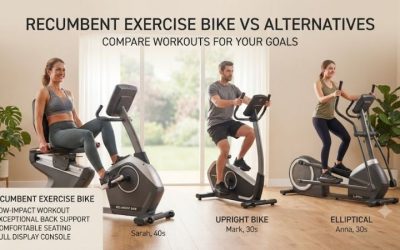
Is a Backrest Better Than an Upright Saddle?
A backrest provides a different type of support, but comfort is individual. Recumbent and upright bikes offer different positions rather than one universally superior design.
Do Recumbent Bikes Need Electricity?
Manual magnetic resistance may operate without external power, although the display can require batteries. Electronic resistance systems often require an outlet.
Can I Use a Compact Recumbent Bike Every Day?
Regular cycling can be appropriate when training intensity, body comfort, and recovery are managed sensibly. Begin with a manageable routine and increase gradually.
Conclusion
A recumbent exercise bike for small spaces should provide sufficient pedal reach, supportive seating, quiet resistance, and convenient access. Compare the full operating area rather than equipment length alone, and prioritize comfortable adjustment over extra electronics. The best purchase fits your body and your home.



Write Your Review
No reviews yet. Be the first to share your experience!