
Key takeaways
What's inside
Best kettlebell training runs into a hardware problem early: the traditional weight jumps are 4 kg apart, which is far too large a step for pressing. This guide compares six options on jump size in lb and kg, handle consistency between weights, coating and finish, and what each one does to the floor it gets set down on after every set.
As an Amazon Associate we earn from qualifying purchases at no extra cost to you. Product prices and availability are accurate as of the date shown and are subject to change.


#2 Pick


#4 Pick

#5 Pick

#6 Pick

#7 Pick

As an Amazon Associate we earn from qualifying purchases at no extra cost to you. Product prices and availability are accurate as of the date shown and are subject to change.
By Chris Parker
🛒 Best Price Today on Amazon
Prime members get fast, free shipping on everything above, plus member-only deals. New members get a 30-day free trial — cancel anytime.
How to Build a Progression for the Best Kettlebell Training
Unlike dumbbells, kettlebells do not step in small amounts. The classic ladder runs 8, 12, 16, 20 and 24 kg, which is 18, 26, 35, 44 and 53 lb, and every jump is a large percentage increase. Planning the best kettlebell training around that constraint is most of the skill in buying bells well.
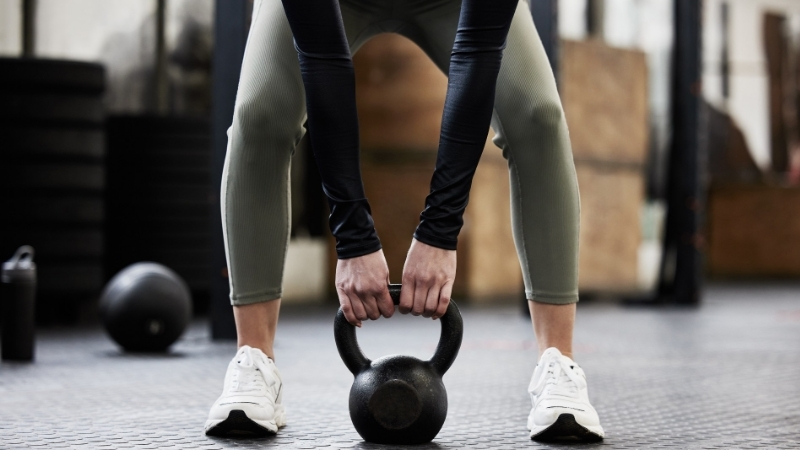
Jump Size: Why One Bell Is Never Enough
Moving from 16 to 20 kg on a press is a 25 per cent increase, which almost nobody absorbs in a single session. Because of that, progression usually happens through repetitions, tempo and exercise variation between bells rather than through added weight, and only occasionally through buying the next size up.
The practical answer is two or three bells rather than one. A lighter bell for pressing and get-ups, a heavier one for two-handed swings, and eventually a third in between covers most of what the best kettlebell training asks for across a normal year of work.
Handle Consistency and Finish Across Weights
On cast iron the handle grows thicker as the bell gets heavier, so a 24 kg feels noticeably different in the hand from a 12 kg does. Competition bells avoid that entirely by standardising outer dimensions near 35 mm at every weight, which keeps technique consistent as you work your way up the ladder.
Finish matters just as much across a full set of bells. Mixing a powder-coated bell with an enamel one means the grip character changes mid-session, so keeping the finish consistent across everything you own removes a variable you would otherwise have to think about during every single transition.
Footprint, Floor Protection and Safe Set-Down
Three bells occupy under 3 ft (91 cm) of wall space, but the training area is the part that needs planning: roughly 6 x 6 ft (183 x 183 cm) of clear floor, about 8 ft (244 cm) of ceiling height for overhead work, and clearance behind you for the bottom of a swing. Measure all three before your first session.
Bells must always be set down under control rather than dropped, since enamel chips, vinyl splits and competition steel dents on a hard edge. A rubber mat 3/8 in (10 mm) or thicker protects both. Powder coating has moved down into the mid tier, which is where sensible ladders now get built. Ask a doctor before beginning a new programme.
Top Picks: Bells for the Best Kettlebell Training Progression
Six options judged on how well they support a progression rather than a single session, since the best kettlebell training depends on what the second and third bell look like. Specifications are manufacturer figures, and cost is described as a tier rather than a number here.
| Kettlebell | Format | Handle across weights | Role in a ladder |
|---|---|---|---|
| Kettlebell Kings Competition | Steel, uniform size | Constant near 35 mm | Technique consistency |
| Kettlebell Kings Powder Coat | Single-cast | Grows with weight | Ballistics anchor |
| CAP Barbell Cast Iron | Single-cast | Grows with weight | Cheap full ladder |
| Bowflex SelectTech 840 | Adjustable, 6 settings | Constant, bulkier body | Light-end coverage |
| Amazon Basics Cast Iron | Single-cast | Grows with weight | Entry bell |
| Yes4All Vinyl Coated | Single-cast | Thicker, coated | Floor-friendly option |
Kettlebell Kings Competition: Best for Consistent Technique
Identical outer dimensions at every weight with a handle standardised close to 35 mm, so moving from 16 kg up to 20 kg changes the load without changing how the bell sits against your forearm. For anyone drilling get-ups and presses across several weights, that consistency removes a genuine variable from practice.
Hollow steel dents if dropped onto a hard edge, and the fixed handle diameter is less comfortable for heavy two-handed swings than thicker cast iron. Building a complete ladder this way is also the most expensive approach in this comparison by some distance.
Kettlebell Kings Powder Coat: Best Ballistics Anchor
Single-cast bells with a chalk-friendly powder coating and a handle wide enough for two hands side by side, which is exactly what heavy swing work needs. As the heavy end of a ladder, it takes the loads that pressing bells never see and holds grip through long sets of repetitions.
The premium tier price makes a full ladder expensive to assemble, so most people buy one or two of these bells and fill the rest of the range with cheaper cast iron. The textured finish also abrades skin during high-repetition snatch work if you train without chalk.
CAP Barbell Cast Iron: Best Value Ladder
Enamel-coated cast iron across roughly 5 to 80 lb (2.3 to 36 kg), which makes buying three or four separate weights realistic rather than aspirational. For most home training, the difference between this and a premium bell shows up in the handle finish rather than in the iron underneath it.
Enamel turns slick once hands sweat and chalk helps less than on powder coat, which limits long swing sets. The handle also thickens noticeably as weights increase, so technique changes slightly each time you move up the ladder rather than staying constant.
Bowflex SelectTech 840: Best Light-End Coverage
An adjustable bell covering roughly 8 to 40 lb (3.6 to 18 kg) across six separate settings, which fills the entire light end of a ladder in one single unit. That range covers pressing, get-ups and lighter flows, and it stores in under 12 x 12 in (30 x 30 cm) of floor.
The bulkier moulded body sits differently on the forearm than cast iron, which matters in the racked position. It cannot be dropped, ruling out release work, and the dial mechanism is the component most likely to give trouble over years of use.
Amazon Basics Cast Iron: Best Entry Bell
A simple coated cast iron bell with a flat base, available across roughly 10 to 60 lb (4.5 to 27 kg), which is enough to establish whether kettlebell work will become a habit before you commit to a full ladder. The shape and balance are entirely conventional, with nothing unusual to relearn later on.
The smoother finish is noticeably less grippy than powder coat during longer sets, and weight tolerance varies slightly from one unit to the next. That variation only matters if you later train with matched pairs, but it is worth knowing before buying two of the same size.
Yes4All Vinyl Coated: Best Floor Protection
Vinyl-coated cast iron in colour-coded weights from about 5 to 50 lb (2.3 to 22.7 kg), designed to be gentler on hardwood and tile than bare iron. In an upstairs room without rubber flooring, that softer coating reduces both damage and noise every time a bell is set down.
The coating makes the handle both thicker and slicker than bare steel, which limits high-repetition swing work considerably. Vinyl also splits at the base after repeated contact with hard floors, and once it has torn it traps grit against the iron underneath where you cannot clean it out.
Frequently Asked Questions
These four questions come up as soon as someone moves past a single bell, and the answers usually decide the shape of the ladder they end up owning and how the best kettlebell training progresses from that point onward across a year.
How many kettlebells do I actually need?
Two bells cover most home training comfortably: a lighter one for pressing and get-ups, and a heavier one for two-handed swings and other ballistics. A third bell in between becomes useful once that gap starts forcing you to choose between a load that is clearly too easy and one that is plainly too heavy for the same movement.
How do I progress when the jumps are 4 kg?
Through repetitions, sets, tempo and exercise selection rather than through weight alone. Adding volume with the same bell, slowing the eccentric, or moving from two-handed to single-arm work all increase the demand without needing the next size up, which is how most kettlebell programmes actually advance over a year.
Are competition bells worth the extra cost?
For technique work across several weights, often yes, since the handle and the outer dimensions never change between bells. For general strength training and swings, cast iron with a powder coat does the same job for considerably less, and the growing handle is not a problem for most people.
Do I need a mat under the bells?
It is strongly recommended. A rubber mat 3/8 in (10 mm) or thicker protects hardwood from chips, cuts vibration through to rooms below and gives a consistent surface for set-downs, which matters more with kettlebells than with dumbbells because the base contacts the floor so much more often.
See More:
- Hot yoga mat best
- Best dumbbells exercises
- Best workout dumbbells
- Best back exercises using dumbbells
- Best exercise upright bike
- Best exercise stationary bike
Final Thoughts
Planning the best kettlebell training means buying for a ladder rather than a single session: a lighter bell for grinds, a heavier one for ballistics, and a consistent finish across both. Keep set-downs controlled on a rubber mat, and measure the clear floor and ceiling before your first swing.



Write Your Review
No reviews yet. Be the first to share your experience!