
Key takeaways
What's inside
Best floor home gym builds start underneath everything else, because the surface decides how much noise travels, how well the rack sits, and whether the concrete or the floorboards survive. This roundup compares six flooring options on thickness, material, coverage per pack and the way each one wears over years of use.
As an Amazon Associate we earn from qualifying purchases at no extra cost to you. Product prices and availability are accurate as of the date shown and are subject to change.

#1 Pick

#2 Pick

#3 Pick

#4 Pick

#5 Pick

#6 Pick

#7 Pick

As an Amazon Associate we earn from qualifying purchases at no extra cost to you. Product prices and availability are accurate as of the date shown and are subject to change.
By Chris Parker
🛒 Best Price Today on Amazon
Prime members get fast, free shipping on everything above, plus member-only deals. New members get a 30-day free trial — cancel anytime.
How to Plan the Best Floor Home Gym Build
Flooring is the one purchase everything else in the room sits on, and it is usually the last thing anybody budgets for. Four questions settle the best floor home gym surface: how much area needs covering, how thick it has to be, how much noise has to be contained, and what the subfloor can tolerate.
Area, Thickness and the Space You Actually Cover
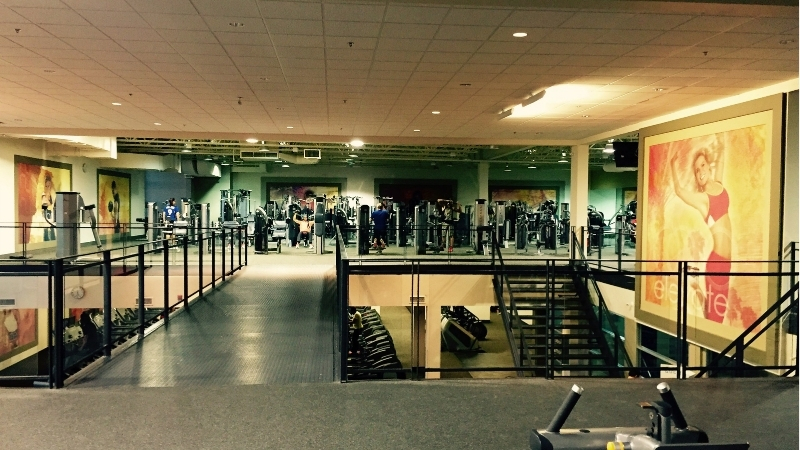
A best floor home gym starts with the training zone rather than the room. A rack with a bench needs roughly 8 x 8 ft (244 x 244 cm) of surface, and a dumbbell area needs about 7 x 7 ft (213 x 213 cm). Covering only those zones rather than the whole room typically halves the bill without changing anything practical.
Thickness follows the training. A quarter inch, or 6 mm, is enough under cardio kit and bodyweight work. Half an inch to three quarters, approximately 12 to 19 mm, handles heavy dumbbell and barbell sessions. Anything dropped from overhead needs a plywood platform on the rubber rather than more rubber.
Material Types and What Each One Absorbs
Recycled rubber stall mats are the default for anything heavy. They are dense, they do not compress underfoot, and cost roughly a third of what branded gym flooring does for the same material. Vulcanized rubber costs a good deal more, holds together better over years and gives off noticeably less odour when new.
EVA foam puzzle tiles sit at the other end. They are light, cheap, warm underfoot and easy for one person to lay, but they dent permanently under rack feet and compress under heavy dumbbells. Foam suits bodyweight training, yoga and light kettlebell work, and it is the wrong material under a loaded barbell.
Noise, Neighbours and Subfloor Protection
Impact noise travels through the structure rather than the air, so density matters more than softness. In an upstairs room or a flat, a dense rubber layer of half an inch or more under the training zone will cut far more transmitted sound than a thick foam tile of exactly the same depth ever manages to.
Subfloor damage is the quieter risk. Rubber can mark vinyl and some laminates, so a canvas drop cloth or a layer of hardboard underneath protects the finish. On bare concrete, sweep and mop first, because any grit trapped under a mat will grind into both surfaces every time weight shifts on top of it.
What Gym Flooring Costs and When It Ships Cheaply
Rubber is priced by weight, and that weight is what makes it expensive to ship anywhere. A single 4 x 6 ft (122 x 183 cm) stall mat at three quarters of an inch weighs close to 100 lb (45 kg), which is why local collection often beats delivery and why real discounts cluster into one period each year.
The gap in this category is the middle of the range. Cheap foam is everywhere and heavy stall mats are everywhere, while dense rubber tiles that install cleanly in a spare bedroom without a van and two people still remain a narrow and expensive slice of what is actually available online today at any price.
Coverage per pack is where budgets quietly go wrong. Puzzle tile packs quote 24 x 24 in (61 x 61 cm) tiles totalling 48 to 96 sq ft (4.5 to 8.9 sq m), and interlocking edges shave a little off the finished area. Order one spare pack to allow for cuts, rather than reordering later from a different production batch.
Top Picks: 6 Flooring Options Compared
These six cover the useful formats for a best floor home gym build, running from recycled stall mats through dense interlocking rubber to cheap foam tiles. Thickness figures are manufacturer specifications. None of these surfaces alone make dropping loaded barbells from overhead safe on a suspended timber floor.
| Flooring | Material | Thickness | Best for |
|---|---|---|---|
| Mohawk Home Rubber Stall Mat | Recycled rubber | 1/2 in / 12 mm | Under a rack or bench |
| American Floor Mats Stall Mat | Recycled rubber | 3/8 in / 10 mm | Lighter dumbbell zones |
| American Floor Mats Warrior Tiles | Rubber | 3/4 in / 19 mm | Heavy lifting corners |
| IncStores Vulcanized Rubber Mat | Vulcanized rubber | Varies | Low odour, long life |
| ProsourceFit Puzzle Exercise Mat | EVA foam | 1/2 in / 12 mm | Bodyweight and yoga |
| AIRHOP Rubber-Top Tiles | Rubber over EVA | 0.56 in / 14 mm | Mixed training rooms |
Mohawk Home Heavy Duty Rubber Stall Mat
At half an inch thick in a 3 x 4 ft (91 x 122 cm) sheet, this sits squarely in the practical middle of the stall mat category. It is dense enough to go under a rack or a bench without compressing, and small enough that one person can carry and position it without help, a trolley or a second set of hands.
It smells strongly of rubber for the first few weeks and wants airing outdoors before it comes inside. The edges do not interlock, so the mats can creep apart slightly under lateral movement. It is also heavy for its size, which makes rearranging a room later more work than moving foam tiles would be.
American Floor Mats Heavy Duty Stall Mat
The three-eighths inch version of the same idea, at 10 mm, trades away some impact absorption for easier handling. For a dumbbell zone, a cardio corner or anywhere the training stays controlled rather than explosive, that thickness is enough, and the reduced weight makes installation a straightforward single-person job.
Ten millimetres is not enough under a loaded barbell or for anything dropped, and a sheet this thin will telegraph imperfections in a rough concrete slab far more than a thicker mat does. Like all recycled rubber it off-gasses at first, and the cut edges will shed a little dust for the first few sweeps.
American Floor Mats Warrior Extreme Duty Tiles
Three quarters of an inch of interlocking rubber is the specification for a corner where heavy work actually happens. The tiles lock together so they do not drift apart under lateral load, and the format means a single person can carry the room in over several trips rather than wrestling full sheets.
The price per square foot sits well above plain stall mats made from the same material, which is simply the cost of the interlocking edges. At 19 mm the tiles are also a genuine step up at doorways, so a threshold ramp or a carefully trimmed edge tile is usually needed wherever the flooring run stops.
IncStores Vulcanized Rubber Premium Mat
Vulcanized rubber is made by heating and pressing recycled rubber into one dense composite rather than binding loose granules together, and the difference shows over years. It holds its edges better, sheds far less dust, and the initial odour is noticeably weaker than it is on standard recycled sheet.
It costs more per square foot than a plain stall mat, which is the whole trade. Weight is comparable, so handling is no easier, and the surface is firm rather than forgiving, which some people dislike for floor work. Warranty terms are longer here than the category norm, which partly offsets the price.
ProsourceFit Extra Thick Puzzle Exercise Mat
EVA foam tiles are the fastest and cheapest way to make a bare room usable. Half an inch of foam supplied in 24 x 24 in (61 x 61 cm) tiles goes down in minutes, cuts with a utility knife, lifts again without leaving any trace, and costs far less than rubber does for the same coverage in a rented flat.
Foam compresses permanently under rack feet and bench legs, and heavy dumbbells leave dents in it that never recover. The surface also gets slippery in socks and scuffs where shoes pivot. Treat it strictly as a bodyweight, yoga and stretching surface, and keep any loaded equipment on rubber instead.
AIRHOP Interlocking Rubber-Top Tiles
These sit between the two materials, pairing a rubber wear layer over a high-density foam base at roughly 0.56 in (14 mm) thick in 24 x 24 in (61 x 61 cm) tiles. The rubber face resists scuffing and dumbbell dents far better than plain EVA does, while keeping the light weight and the easy installation.
The foam core still compresses under sustained point loads, so rack feet and bench legs should sit on something denser. Packs typically cover around 48 sq ft (4.5 sq m), which means that larger rooms need several boxes, and the tile colours may not match exactly between batches ordered a few weeks apart.
Frequently Asked Questions
These come up most often once someone has priced the flooring, realised it costs more than they assumed, and started looking for the sensible place to compromise. The answers below assume a spare room or a single-car garage rather than a purpose-built gym, and a budget that has to stretch to equipment as well.
Do I need to cover the whole room?
Almost never, and this is the easiest saving available. Covering only the training zones, roughly 8 x 8 ft (244 x 244 cm) under a rack and 7 x 7 ft (213 x 213 cm) for dumbbells, protects everything that matters at about half the cost. Measure the equipment footprint before ordering, not the whole floor.
Can I drop weights on the best floor home gym surfaces here?
Setting weights down under control, yes. Dropping loaded barbells from overhead, no, and not on rubber alone at any thickness. That needs a plywood and rubber platform built for the purpose, and on a suspended timber floor upstairs it is not advisable at all, regardless of what has been laid underneath.
How long does the rubber smell last?
Two to four weeks with ventilation for the recycled rubber used in most best floor home gym builds, and less for vulcanized sheet. Airing the mats outdoors for a few days before installation removes most of it. A window left open and a fan running for the first fortnight handles whatever odour remains after that.
Will rubber damage hardwood or vinyl underneath?
It can mark some floor finishes over time, particularly vinyl and certain laminates. A canvas drop cloth or a hardboard layer between the floor and the rubber removes the risk. Sweeping and mopping the subfloor first matters just as much, since any trapped grit does more damage than rubber ever does.
See More:
- Best gym bench for home
- Best weight benches home gym
- Best at home full body workout equipment
- Best resistance bands workout
- Best resistance bands leggings
Final Thoughts
A best floor home gym build is really three decisions: how much area to protect, how thick the layer has to be for the training you actually do, and what the subfloor underneath will tolerate. Rubber for anything loaded, foam for bodyweight, and a platform for genuine drops. Measure the zone before ordering the flooring.


Write Your Review
No reviews yet. Be the first to share your experience!