
Key takeaways
What's inside
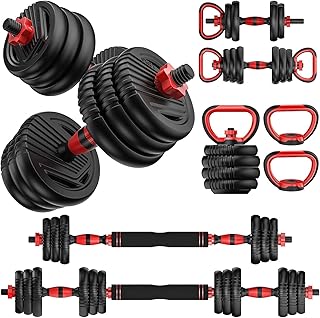
Best lat exercises dumbbells face a problem arm work never does: the back handles far heavier loads than the biceps, so most adjustable sets hit their ceiling within a year. This guide covers weight range, handle length, bench support and the set-down issue, then six picks. Ceiling weight is where most sets run out.
As an Amazon Associate we earn from qualifying purchases at no extra cost to you. Product prices and availability are accurate as of the date shown and are subject to change.




As an Amazon Associate we earn from qualifying purchases at no extra cost to you. Product prices and availability are accurate as of the date shown and are subject to change.
By Chris Parker
🛒 Best Price Today on Amazon
Prime members get fast, free shipping on everything above, plus member-only deals. New members get a 30-day free trial — cancel anytime.
How to Choose the Best Lat Exercises Dumbbells
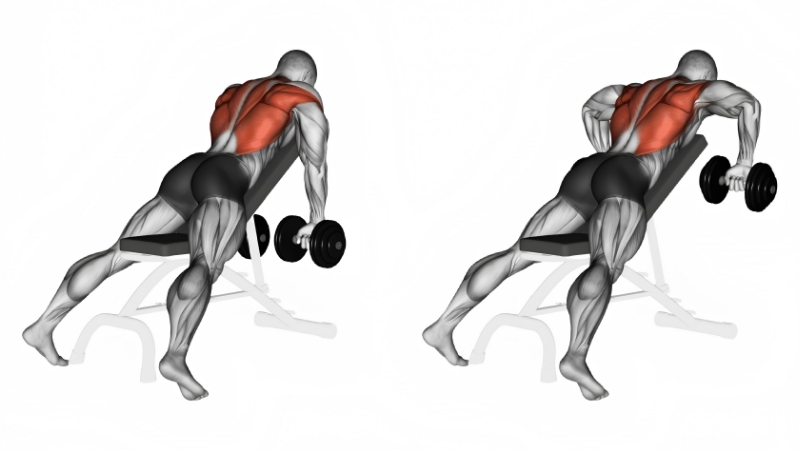
Rows and pullovers load heavier than almost anything else you will do with dumbbells at home. Choosing the best lat exercises dumbbells therefore starts with the ceiling weight, then moves to handle length, bench compatibility and whether you can set the dumbbell down safely between sets.
Weight Ceiling Is the First Filter
Single-arm rows commonly run heavier than pressing movements for the same person, and trained lifters often work between 50 and 90 lb (22.7 and 41 kg) per hand. That range sits above or right at the ceiling of most popular adjustable sets, which stop at 50 or 52.5 lb (22.7 or 23.8 kg).
Increment size matters less here than it does on arm work. A 5 lb (2.3 kg) jump on a 70 lb row is roughly seven percent, which is a normal progression step. That means sets with coarse increments but high ceilings are a better fit for back work than fine-stepping sets with low ceilings.
Expandable systems change the calculation. Buying a 50 lb base now and adding a kit later to reach 70 or 90 lb (32 or 41 kg) costs far less than replacing a complete set, and it avoids the common outcome of outgrowing a purchase in the first eighteen months.
Handle Length, Shape and Row Range of Motion
A row finishes when the dumbbell reaches the ribs or hip. Long handles contact the torso earlier, which shortens the pull before the shoulder blade has finished moving. Dial-type sets stay 16.9 in (43 cm) long at every weight, so this is a fixed cost rather than something that improves with load.
Pullovers add a second requirement: you hold one head of the dumbbell in both palms. Round or hex heads with a flat inner face work well, while block-style adjustables with a rectangular cage are awkward and can dig into the hands under load through the stretched position.
Bench Support and the Floor Footprint
Footprint for the best lat exercises dumbbells is larger than for arms because the bench is not optional. Single-arm rows need a bench or a solid surface for the supporting hand, and chest-supported rows need an incline bench, which together claim roughly 6 x 6 ft (1.8 x 1.8 m) of clear floor plus storage.
A folding adjustable bench stands upright in about 1.5 sq ft (0.14 sq m) when not in use, which is why it beats a fixed flat bench in most homes. Check the rated capacity against your body weight plus the dumbbell, since chest-supported rows put both onto the frame.
Underneath, protect the floor. Heavy dumbbells get set down at the end of every row set, and 70 lb (32 kg) landing on laminate marks it immediately. Interlocking tiles or a rubber mat solve this cheaply. Measure the actual floor area and bench storage spot before ordering anything.
Set-Down Limits and Durability
Adjustable dumbbells must not be dropped, and heavy row work is exactly where people forget. The plate mechanisms are not built for impact, most warranties exclude it, and a plate breaking loose is a real failure mode rather than a theoretical one. Lower the weight rather than releasing it.
Fixed cast iron has no such restriction, which is a genuine argument for owning a couple of heavy pairs alongside an adjustable set. Rubber-coated hex dumbbells absorb the set-down, do not roll, and have no mechanism that can wear out over years of heavy use.
The wider point is that strength work is a specific weekly requirement, not an optional extra. The WHO 2020 guidelines call for muscle-strengthening activity on two or more days per week alongside aerobic work, and the CDC reports fewer than one in four US adults meet both. Consult a doctor before starting a new programme.
Top Picks: Best Lat Exercises Dumbbells for Home Rows
Six best lat exercises dumbbells picks below, ordered by how well they handle the loads back work actually requires. A bench is included deliberately, because a high-ceiling dumbbell with nowhere to brace is of limited use for single-arm and chest-supported rowing.
| Option | Ceiling per hand | Increment | Best for |
|---|---|---|---|
| NUOBELL 80 | 80 lb (36 kg) | 5 lb (2.3 kg) | Highest adjustable ceiling |
| PowerBlock Elite EXP | 50 lb, kits to 90 lb (41 kg) | 2.5 lb (1.1 kg) | Expandable path |
| CAP Rubber Hex Pairs | Per pair bought | Per pair bought | Setting down hard |
| Yes4All Spinlock | Plate dependent | Plate dependent | Cheapest heavy loading |
| Bowflex Results Series 552 | 52.5 lb (23.8 kg) | 2.5 lb then 5 lb | Fast changes, low ceiling |
| Flybird Adjustable Bench | Not applicable | Not applicable | Chest-supported rows |
NUOBELL 80: Highest Adjustable Ceiling
A twist-handle set running 5 to 80 lb (2.3 to 36 kg) per hand across 16 settings, built largely from steel rather than plastic. That ceiling covers heavy single-arm rows for most home lifters, and the loaded shape sits closest to a conventional gym dumbbell in the hand.
Increments are 5 lb throughout, which is fine for rows and coarse for arms. It is the most expensive option here. The twist mechanism needs the dumbbell seated correctly in the cradle, and it must never be dropped, which is a real constraint on heavy row sets. Premium tier.
PowerBlock Elite EXP: Best Expandable Path
A selector-pin block covering 5 to 50 lb (2.3 to 22.7 kg) at Stage 1, in a cube of roughly 12 x 6 x 6.25 in (30 x 15 x 16 cm). Expansion kits take it to 70 and 90 lb (32 and 41 kg), so the ceiling problem is deferred rather than paid for up front.
The rectangular cage is awkward for pullovers, where you hold one head in both palms. Adder weights slow adjustment. It cannot be dropped, and a full Stage 3 pair is genuinely heavy to move. Mid tier at Stage 1, with kits sold separately.
CAP Rubber Hex Dumbbells: Best for Setting Down Hard
Solid rubber-coated hex heads on a knurled steel handle, with no mechanism to fail and no restriction on how you put them down. For heavy rows taken close to failure that matters, and the flat inner faces make them the most comfortable option here for pullovers.
Space is the cost. A useful spread of heavy pairs needs several feet of rack and a floor rated for it, and each pair is a separate purchase. Rubber smells strongly when new. Budget to mid tier per pair, expensive across a full range.
Yes4All Adjustable Spinlock: Cheapest Heavy Loading
Threaded steel handles with cast iron plates and screw-on collars, letting you build genuinely heavy dumbbells for a fraction of a selectorised set. Plates can be added over time as budget allows, and the handles double as a loadable system for other movements.
Changing weight takes 30 to 60 seconds per side. Collars work loose during heavy rows, which needs checking between sets rather than trusting. Loaded length grows quickly and contacts the ribs early on a row. Budget tier, slow but effective.
Bowflex Results Series 552: Fast Changes, Real Ceiling
A dual-dial set covering 5 to 52.5 lb (2.3 to 23.8 kg) per hand, changing weight in about three seconds. For circuits and drop sets on back work that speed is genuinely useful, and the 2.5 lb steps below 25 lb suit the accessory work done alongside rows.
The 52.5 lb ceiling is the problem for lat work specifically, and there is no expansion path. The handle stays 16.9 in (43 cm) long at all weights, shortening row range of motion. Note also that the CPSC recalled over 3.7 million earlier SelectTech units in June 2025. Mid tier.
Flybird Adjustable Bench: The Missing Half
A folding multi-angle bench moving through incline, flat and decline, standing upright against a wall when stored. It unlocks chest-supported rows, single-arm rows with proper bracing and pullovers, none of which work well from the floor or a chair.
The pad is narrower and thinner than a commercial bench, noticeable under heavy loads. Ladder adjustment is slower than a pop-pin. Rated capacity varies by model, so check it against body weight plus dumbbell before ordering. Budget to mid tier.
Frequently Asked Questions
These four questions cover what people ask when choosing the best lat exercises dumbbells, mostly about ceiling weight and support. Answers stay with equipment behaviour; for technique or any existing back or shoulder issue, work with a certified trainer or your doctor.
What weight ceiling do I need for rows?
Trained lifters commonly row between 50 and 90 lb (22.7 and 41 kg) per hand, which is above where most adjustable sets stop. If you already train, choose an 80 lb set or an expandable system rather than a 50 lb set you will outgrow within about a year.
Do I need a bench for lat work?
Effectively yes. Single-arm rows need something solid to brace against, and chest-supported rows need an incline. A folding adjustable bench adds those options while storing upright in around 1.5 sq ft (0.14 sq m), which is why it beats a fixed flat bench in most homes.
Can I do pullovers with block-style dumbbells?
You can, but the rectangular cage digs into the palms through the stretched position and is uncomfortable under load. Round or rubber hex heads with flat inner faces are markedly better for this movement, which is one reason to keep a heavy fixed pair alongside an adjustable set.
How do I set heavy dumbbells down safely?
Lower them under control rather than releasing them, and protect the floor with interlocking tiles or a rubber mat. Adjustable dumbbells of every mechanism are damaged by impact and most warranties exclude it, so plan the end of the set before you start it.
See More:
- Best beginner jump rope
- Best boxing jump rope
- Best boxer jump rope
- Best cheapest yoga mat
- Best workout exercise equipment
Final Thoughts
The best lat exercises dumbbells are the ones with a ceiling above 50 lb, a handle short enough to finish the pull, and a bench to brace on. Favour expandable systems, keep a heavy fixed pair for sets taken to failure, and measure the floor and bench storage space before ordering.


Write Your Review
No reviews yet. Be the first to share your experience!