
Key takeaways
What's inside
Best bicep and tricep exercises with dumbbells stall for one reason at home: the weight jumps are too big. Arm work lives between 10 and 40 lb, where a 5 lb step is a huge increase. This guide covers all six movements, the load band each one sits in, and the gear that makes them genuinely progressible week to week at home.
As an Amazon Associate we earn from qualifying purchases at no extra cost to you. Product prices and availability are accurate as of the date shown and are subject to change.
As an Amazon Associate we earn from qualifying purchases at no extra cost to you. Product prices and availability are accurate as of the date shown and are subject to change.




By Chris Parker
🛒 Best Price Today on Amazon
Prime members get fast, free shipping on everything above, plus member-only deals. New members get a 30-day free trial — cancel anytime.
Start 30-Day Prime Free Trial →See Today’s Amazon DealsHow to Equip Arm Training at Home
The best bicep and tricep exercises with dumbbells have the narrowest load band and the smallest useful increments in the whole gym, which is exactly the opposite of what most adjustable sets are designed for. The four criteria below explain what the best bicep and tricep exercises with dumbbells actually require.
Load Bands Across the Six Movements
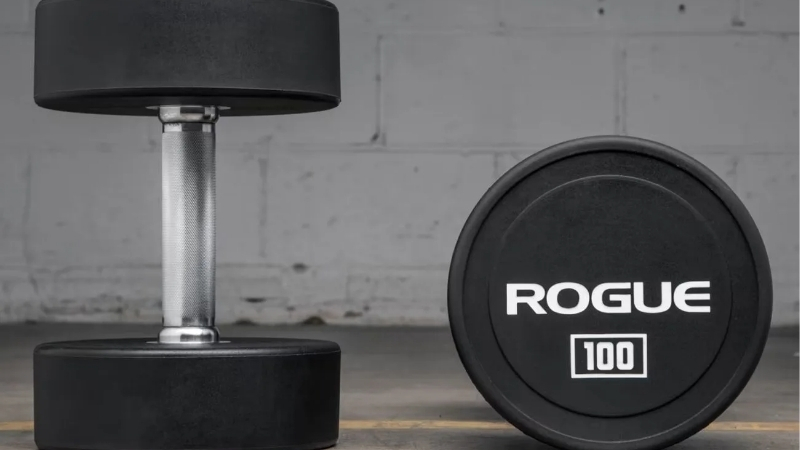
Among the best bicep and tricep exercises with dumbbells, standing curls sit around 20-40 lb (9-18 kg) per hand, with hammer curls slightly higher because the neutral grip is stronger, and incline curls lower because the stretched position reduces leverage substantially.
Tricep work runs similar. Overhead extensions land near 20-35 lb (9-16 kg), skullcrushers with dumbbells around 15-30 lb (7-14 kg) per hand, and kickbacks lower again at 10-20 lb (4.5-9 kg). Nothing in this list needs a heavy dumbbell.
Increment Size and Why It Decides Progress
Going from 20 to 25 lb on a curl is a 25 percent jump, and almost nobody can absorb that in a single session. That is why arm training stalls on sets with 5 lb steps and progresses steadily on sets offering 2.5 lb (1.1 kg) increments.
Check where the fine increments actually apply on any set you consider. Many adjustable systems offer 2.5 lb steps only below 25 lb and switch to 5 lb above that, which covers most of the bicep and tricep range but not the top of it for stronger lifters.
Bench Angles and Which Movements Need Them
Three of the best bicep and tricep exercises with dumbbells need a bench. Incline curls require roughly 45-60 degrees to put the long head of the biceps under stretch, and lying skullcrushers need flat, while everything else can be done standing with no equipment beyond dumbbells.
An adjustable bench that reaches those angles is the second purchase after the dumbbells themselves. A fixed flat bench covers skullcrushers but leaves incline curls out entirely, which removes the single most useful stretched-position movement available for the biceps.
Seated positions matter for the triceps too. An upright bench back supports overhead extensions and stops the lower back arching as the weight travels behind your head, which is where most people lose control of the movement.
Footprint: The Smallest Setup in the Gym
The best bicep and tricep exercises with dumbbells need about 5 x 5 ft (1.5 x 1.5 m) standing, and a bench adds another 50 x 25 in (127 x 64 cm) when open. Overhead extensions need roughly 8 ft (2.4 m) of ceiling measured where you stand rather than the room’s highest point.
A single adjustable pair in its cradles claims about 32 x 12 in (81 x 30 cm) of floor. That makes this the cheapest and least space-hungry training in any home gym, which is worth remembering if space is what has been stopping you.
Top Picks: Gear for Bicep and Tricep Dumbbell Work
Six items cover all six movements, though only two are enough to start training this week. The table shows the role each fills and the order to buy them in, so you can begin with a dumbbell pair and a bench rather than assembling everything at once.
| Item | Role | Key spec | Buy order |
|---|---|---|---|
| Bowflex SelectTech 552 | All six movements | 5-52.5 lb, 2.5 lb steps | First |
| FLYBIRD Adjustable Bench | Incline curls, skullcrushers | Folds upright | First |
| PowerBlock Elite EXP | Fine progression higher up | 2.5 lb adder weights | Alternative |
| Amazon Basics Neoprene Set | Kickbacks and light work | 2-12 lb pairs | Later |
| Gymreapers Wrist Wraps | Wrist support on extensions | Around 18 in | Cheap add-on |
| BalanceFrom Rubber Mat | Bench stability and noise | Roughly 6-8 mm | Apartment |
Bowflex SelectTech 552
The single most efficient purchase for arm training, because 2.5 lb increments below 25 lb cover exactly the band where curls and extensions live. One pair replaces fifteen, and the dial changes weight in about three seconds between movements.
Above 25 lb the increments jump to 5 lb, which limits progression on hammer curls for stronger lifters. The dumbbells are also physically bulky at light settings, which makes kickbacks and rear-delt style movements more awkward than a small fixed dumbbell.
FLYBIRD Adjustable Weight Bench
The bench turns four movements into six by making incline curls and lying skullcrushers possible. It folds upright to roughly 28 x 18 in between sessions and adjusts through the 45-60 degree band incline curls actually need.
The narrow pad gives less shoulder support during heavier pressing, though arm work rarely loads it enough to matter. The light frame does creep on hard flooring, so put it on a mat rather than directly onto laminate or tile.
PowerBlock Elite EXP
The 2.5 lb adder weights inside the block work throughout the range rather than only below 25 lb, which makes this the better choice if your curls are already above that point and you want to keep progressing in small steps.
The square cage around your hand limits wrist rotation, which some people dislike specifically on hammer curls and kickbacks where the wrist wants to move. Try the movement at a light setting before committing to the full system.
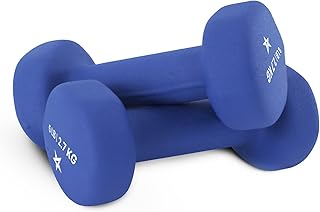
Amazon Basics Neoprene Dumbbell Set
Small fixed dumbbells in the 2-12 lb band are genuinely the right tool for kickbacks and light extension work, where an adjustable set is oversized and clumsy in the hand. The coating also stops them rolling when set down mid-set.
They are single-purpose and will do nothing else in your gym, so they only really make sense once your training is well established. Storage is trivial but they still claim a shelf you may want for something else.
Gymreapers Wrist Wraps
The cheapest item here and the one that most changes how overhead extensions feel. Wraps stabilise the wrist against the backward bend a heavy dumbbell creates overhead, which lets the triceps reach fatigue before the wrist complains.
They support the wrist rather than the elbow, so they do nothing for elbow discomfort during skullcrushers. If the elbow is what hurts, reduce range and load rather than adding support, and see a doctor if it persists beyond normal soreness.
BalanceFrom Puzzle Exercise Mat
A mat stops the bench feet skating during incline work, spreads the load across the floor and cuts the noise a dumbbell makes when set down. In a flat it is what makes an early-morning arm session possible without a conversation upstairs.
Interlocking foam compresses permanently under bench feet and leaves dents over time. That is cosmetic rather than structural, but budget for replacing a tile or two after a couple of years in a fixed position.
Frequently Asked Questions
These four questions cover the practical side of programming the best bicep and tricep exercises with dumbbells — which six movements to run, how to order them, weekly volume and whether dedicated arm work is necessary at all.
Which six exercises should the programme contain?
Standing dumbbell curl, hammer curl, incline curl, overhead extension, lying dumbbell skullcrusher and kickback. That covers both biceps heads at short and stretched positions, plus the tricep long head overhead and the lateral head at a shorter length.
How should I order them?
Heaviest first while you are fresh: standing and hammer curls, then incline curls, then tricep work from overhead extensions down to kickbacks. Alternating a bicep and a tricep movement keeps the session short without reducing the effort on either.
How much weekly volume do arms need?
Ten to twenty hard sets per muscle a week suits most people, across two sessions. Remember that rows already load the biceps and pressing already loads the triceps, so several of those sets are covered before you add any isolation work.
Do I need dedicated arm work if I do compounds?
Compounds build a base, but they rarely take the biceps into a stretched position or load the tricep long head overhead. Ten minutes of the best bicep and tricep exercises with dumbbells twice a week covers what pressing and rowing miss.
See More:
- Ankle weights best
- Best rated ankle weights
- Best home workout equipment budget
- Best resistance bands for men
Final Thoughts
The best bicep and tricep exercises with dumbbells need one pair spanning roughly 10 to 40 lb with 2.5 lb increments, plus a bench that reaches 45-60 degrees. Buy the increments rather than the top-end weight, order movements heaviest first, and stop if elbow or wrist pain persists past ordinary soreness.


Write Your Review
No reviews yet. Be the first to share your experience!