
Key takeaways
What's inside
Best boxer jump rope shopping gets confusing because boxer rope is both a style and a product name. The style means long handles and a cord with enough mass to hold its arc through footwork. This guide covers what qualifies, how to size it, the floor space required, and six ropes worth owning. Handle length is the real giveaway.
As an Amazon Associate we earn from qualifying purchases at no extra cost to you. Product prices and availability are accurate as of the date shown and are subject to change.


As an Amazon Associate we earn from qualifying purchases at no extra cost to you. Product prices and availability are accurate as of the date shown and are subject to change.
By Chris Parker
🛒 Best Price Today on Amazon
Prime members get fast, free shipping on everything above, plus member-only deals. New members get a 30-day free trial — cancel anytime.
How to Choose the Best Boxer Jump Rope
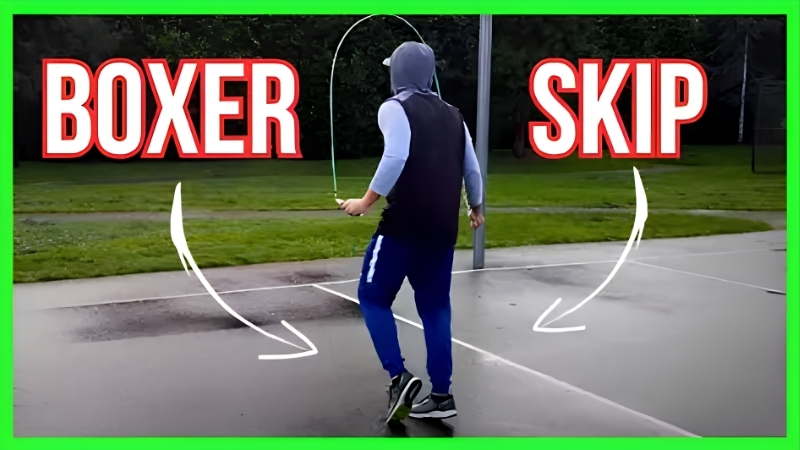
The best boxer jump rope is built around a different movement than a speed rope. The boxer skip and running step shift your weight side to side and front to back, so the cord has to hold a stable arc while your feet stop doing anything symmetrical. That points to specific handle and cord choices.
What Actually Makes a Rope a Boxer Rope
Two features define the category. Handles run long, typically around 5.5 in (14 cm), giving the wrist room to lead the rotation during crossovers. Cord sits in the 5 mm PVC range with a string core running through it, which stops the cord stretching under spin force and keeps the arc consistent.
The classic version weighs roughly 5 oz (140 g) complete for a 10 ft (3.05 m) length. That is heavier than a speed cable and much lighter than a weighted conditioning rope. Leather cords were the historical standard and still exist, though they wear faster and dislike damp or abrasive surfaces.
Most of the useful options sit in the mid price band. Drop below it and manufacturers substitute thin uncored cable and hollow handles, which is where the familiar complaints about stretching arcs and cracked grips originate. The substitution is not always obvious from a product listing.
Sizing for the Boxer Skip and Running Step
Stand on the cord mid-point, pull the handles up, and aim for the tops to land between armpit and shoulder height. Footwork drills favour the longer end of that range, because a travelling step needs a slightly wider arc than a stationary two-foot bounce does.
Ropes that adjust by screw clamp are worth paying for. Trim-to-length cord is permanent, and boxer rope length tends to shorten by 2 to 4 in (5 to 10 cm) once your elbows settle in against the ribs. Reversible adjustment means one rope covers that whole transition.
Footprint: The Corner You Actually Need
Footwork travels, so the best boxer jump rope needs more floor than most people budget for. Allow a clear rectangle of roughly 5 by 7 ft (1.5 by 2.1 m), and treat that as a minimum rather than a comfortable figure once the running step enters the routine.
Overhead, allow standing height plus about 12 in (30 cm). At 6 ft (183 cm) an 8 ft (2.44 m) ceiling works but leaves nothing spare, and any pendant fitting inside the arc will be hit eventually. A shorter cord raises the arc, so trimming never fixes a low ceiling.
Underfoot, a 6 to 8 mm rubber mat cuts impact noise into the floor below and protects the cord from grit that would otherwise abrade the sleeve. Measure the actual corner, including furniture overhang and light fittings, before you order anything at all.
Where Boxer Ropes Fail Over Time
The cord is the wear part and everything else usually outlasts it. PVC used indoors over a mat can run for years, while the same cord on concrete frays within months. Cold weather is the other failure mode, since PVC becomes brittle and can snap outright below freezing.
Handles fail more rarely, and when they do it is at the dowel or the cord entry point rather than the body. Grip is a different issue: bare aluminium turns slippery once you sweat through a session, which is why tape and dimpled plastic remain common on boxing-specific ropes.
Home rope work also lines up with the broader activity picture. The WHO 2020 guidelines set 150 minutes of moderate activity per week plus two strength sessions as the adult target, and the CDC reports fewer than one in four US adults meet both. Check with a doctor before starting a new programme.
Top Picks: Best Boxer Jump Rope Models for Home Training
All six best boxer jump rope candidates below are assessed on handle length, cord construction, the surfaces they tolerate and their genuine weak point. Cord is a consumable in every case, so brands that sell replacement cord separately are worth a small premium over those that do not.
| Rope | Cord | Handle length | Best for |
|---|---|---|---|
| Elite Jumps Boxer Rope | 5 mm PVC, string core | 5.5 in (14 cm) | The category standard |
| EliteSRS Overcomer Beaded | 1 in (25 mm) beads on polycord | Long, freestyle friendly | Concrete and outdoors |
| DEGOL Skipping Rope | Steel wire in PVC sleeve | Foam padded | Lowest entry price |
| Redify Weighted Rope | 9 mm cotton plus 9 mm PVC | Aluminium | Two cords, one purchase |
| BOXROPE Vol. I | PVC, about 15 percent heavier | Screw adjust with tape | Reversible sizing |
| Crossrope Get Lean Set | 1/4 lb and 1/2 lb coated | Clip-in | Heavy and light intervals |
Elite Jumps Boxer Rope: The Category Standard
This is the rope the category is named after: 5 mm PVC with an internal string core, 10 ft (3.05 m) long, roughly 5 oz (140 g) complete, on 5.5 in (14 cm) unbreakable plastic handles with dimpled grips. It fits jumpers up to about 6 ft 4 in (193 cm) and holds a steady arc through footwork.
Sizing requires trimming the cord, which makes errors permanent and rules out sharing the rope across different heights. There is no bearing system, so fast rotation feels notchy. Budget to mid tier.
EliteSRS Overcomer Beaded Rope: Best for Concrete
Thick-walled 1 in (25 mm) beads on a polycord core, 10 ft (3.05 m) supplied, shortened by unthreading and removing beads. Beads shrug off asphalt and concrete that would shred PVC in weeks, and the long handles genuinely help with crossovers and freestyle transitions.
The noise on tile or hardwood indoors is significant and becomes a neighbour issue in a flat without a mat. Rotation is slower than a PVC boxer cord. Bead removal cannot be undone. Mid tier.
DEGOL Skipping Rope: Lowest Entry Price
Braided steel wire inside a PVC sleeve on memory foam handles, adjustable across roughly 9 ft (2.7 m) of usable cord. The padded grips are more comfortable through long sets than bare plastic, and the screw clamp makes sizing reversible rather than permanent.
The cable is faster and lighter than a proper boxer cord, so the arc feels thin during footwork. The coating scuffs on concrete and the clamp works loose unless tightened hard. Budget tier.
Redify Weighted Jump Rope: Two Cords, One Purchase
Comes with a 9 mm braided cotton cord and a 9 mm solid PVC cord on aluminium handles running double ball bearings, roughly 1 lb (0.45 kg) in total. The cotton cord is slow and quiet indoors while the PVC cord picks up speed, so a single box covers two training modes.
The aluminium handles become slippery with sweat and offer little texture to compensate. Cotton frays fast on rough ground. At this weight the shoulders fatigue well before three minutes for most people, so it suits intervals more than continuous rounds. Budget to mid tier.
BOXROPE Vol. I: Best Reversible Sizing
A PVC cable roughly 15 percent heavier than a standard speed cord at a light overall weight near 5.3 oz (150 g). Screws in both handles handle length adjustment, so nothing is cut and the change can be undone as your technique tightens up over the first month.
Grip tape ships separately, meaning the handles feel thin until you wrap them yourself. Some jumpers find the handles bulky for smaller hands. Mid tier pricing.
Crossrope Get Lean Set: Best Heavy and Light Pairing
A clip-in handle system with interchangeable coated cords at 1/4 lb (0.11 kg) and 1/2 lb (0.23 kg). Switching cords between rounds takes seconds, which suits alternating a light footwork round with a heavier conditioning round in the same session.
It is comfortably the most expensive option here, and the associated app pushes a subscription irrelevant to the hardware. Cord lengths are fixed by height with no adjustment. The clips add a wear point that a solid cord does not have. Premium tier.
Frequently Asked Questions
The questions below come up repeatedly from people setting up the best boxer jump rope at home rather than in a gym. Each answer sticks to equipment behaviour and space requirements instead of promising outcomes from any particular training format or session length.
What is the difference between a boxer rope and a speed rope?
A boxer rope uses long handles near 5.5 in (14 cm) and a heavier 5 mm PVC cord with a string core, holding a stable arc during footwork. A speed rope uses short handles and thin coated cable for maximum rotation. They are complementary tools rather than substitutes for one another.
Should I buy leather or PVC?
PVC is the practical default. Leather has a distinct feel and a traditional sound, but it wears faster, dislikes damp, and does not tolerate rough surfaces well. String-cored PVC delivers similar arc stability with far better durability and a much lower replacement cost over time.
How much clear space does footwork need?
Plan for roughly 5 by 7 ft (1.5 by 2.1 m) of clear floor, plus standing height and around 12 in (30 cm) of ceiling clearance overhead. The running step travels more than a static bounce, so measure with movement in mind rather than measuring where you stand still.
Do I need a mat underneath?
On tile, concrete or an upper floor, yes. A 6 to 8 mm rubber mat cuts impact noise transmitted into the structure and stops grit abrading the cord sleeve. On carpet it matters less for noise, though a mat still gives a more consistent rebound surface for the rope.
See More:
- Best beginner jump rope
- Best boxing jump rope
- Best cheapest yoga mat
- Best workout exercise equipment
Final Thoughts
The best boxer jump rope is a long-handled rope with a string-cored 5 mm PVC cord, sized to shoulder height and used over a mat. Add a beaded cord if you train outdoors and a weighted cord if you want shoulder conditioning. Measure your corner and ceiling before you order.





Write Your Review
No reviews yet. Be the first to share your experience!