
Key takeaways
What's inside
Best rated yoga mat shortlists are decided by three numbers and one material: thickness in millimetres, length in inches, weight in pounds, and what the top surface is actually made of. This guide compares six popular mats on those exact terms, plus how each one wears after a year of regular practice at home.
As an Amazon Associate we earn from qualifying purchases at no extra cost to you. Product prices and availability are accurate as of the date shown and are subject to change.


#2 Pick


#4 Pick


#6 Pick


As an Amazon Associate we earn from qualifying purchases at no extra cost to you. Product prices and availability are accurate as of the date shown and are subject to change.
By Chris Parker
🛒 Best Price Today on Amazon
Prime members get fast, free shipping on everything above, plus member-only deals. New members get a 30-day free trial — cancel anytime.
How to Choose the Best Rated Yoga Mat for Home Practice
The best rated yoga mat options are marketed on colour and pattern, then bought again a year later because of grip or a permanent dent under one knee. The four criteria below are the ones that predict whether a mat is still usable in twelve months, listed in the order they tend to matter.
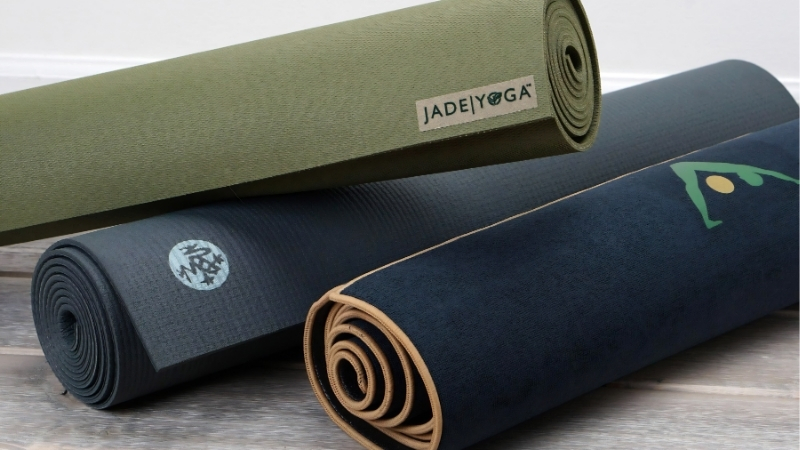
Thickness and Joint Support
Most of the best rated yoga mat options run 4 to 6 mm thick. A 4 mm mat keeps you closer to the floor, which helps balance postures because the surface deforms less under the ball of the foot. A 6 mm mat is easier on knees and elbows during kneeling work, at the cost of a slightly less stable base.
Above that sit 8 to 12 mm foam mats, usually sold for general floor exercise rather than yoga. They are comfortable for stretching and core work but too soft for standing sequences, where the extra give makes single-leg balance noticeably harder to hold.
Surface Material and Grip When You Sweat
PVC, TPE, natural rubber and polyurethane behave differently once moisture appears. Closed-cell PVC resists absorbing sweat, which makes it hygienic but slick until the surface is broken in. Polyurethane tops grip better as they get damp, which is why they dominate hot yoga recommendations.
Natural rubber sits between the two and adds real tackiness dry, though it carries a distinct smell when new that fades over several weeks. It also contains latex, so anyone with a latex sensitivity should rule it out before comparing anything else about the mat.
Footprint, Length and Rolled Storage Size
Most mats are 68 in (173 cm) long, some are 71 to 74 in (180 to 188 cm), and a few reach 84 in (213 cm). Anyone over about 5 ft 9 in (175 cm) will find their hands or heels off the end of a 68 in mat during a full plank or savasana.
Width is usually 24 to 26 in (61 to 66 cm), and a wider mat needs correspondingly more clear floor. Measure the actual dimensions of the space you plan to practise in before ordering, including the clearance you need on each side to extend your arms without hitting furniture.
Rolled diameter matters for storage and carrying. A 6 mm PVC mat rolls to roughly 5 to 6 in (13 to 15 cm) across and can weigh 7.5 lb (3.4 kg), which is heavy for a daily commute. Thinner travel mats fold flat into a bag but offer almost no cushioning.
Durability, Wear Points and Warranty
Mats fail in predictable places: permanent compression under knees and elbows, surface flaking where hands land in downward dog, and edge curl from being stored rolled the wrong way. Cheap foam mats generally show the first two within six months of regular use.
Warranty terms are a reasonable proxy for expected life. A lifetime guarantee on a dense PVC mat signals that the manufacturer expects compression resistance rather than surface longevity, while shorter terms on rubber mats reflect that the top layer is the consumable part.
According to the World Health Organization, adults are advised to get at least 150 minutes of moderate activity plus two muscle-strengthening sessions each week, which works out to roughly 22 minutes a day. A mat that survives that frequency is a different product from one used twice a month.
Top Picks: 6 of the Best Rated Yoga Mat Options
The six best rated yoga mat picks below cover the range from budget foam to premium rubber, and each is a clear best fit for a particular type of practice rather than a general ranking. The table lists the specifications most likely to change your decision.
| Mat | Thickness | Length | Weight | Surface | Best for |
|---|---|---|---|---|---|
| Manduka PRO | 6 mm | 71 in (180 cm) | ~7.5 lb (3.4 kg) | Closed-cell PVC | Longest service life |
| Manduka PROlite | 4.7 mm | 71 in (180 cm) | ~4 lb (1.8 kg) | Closed-cell PVC | Carrying to class |
| Liforme Original | 4.2 mm | 72.8 in (185 cm) | ~5.5 lb (2.5 kg) | Polyurethane over rubber | Alignment and damp grip |
| JadeYoga Harmony | 5 mm | 68 or 74 in | ~5 lb (2.3 kg) | Open-cell natural rubber | Dry tackiness |
| Lululemon The Mat | 5 mm | 71 in (180 cm) | ~5.2 lb (2.4 kg) | Polyurethane over rubber | Hot and sweaty sessions |
| Gaiam Essentials | 10 mm | 72 in (183 cm) | ~2.2 lb (1 kg) | NBR foam | Budget floor work |
1. Manduka PRO
The reference mat for anyone who wants to buy once. At 6 mm and roughly 7.5 lb (3.4 kg) it is dense enough that knees do not bottom out, and the closed-cell PVC surface does not absorb sweat, so cleaning is a wipe rather than a wash. Manduka backs it with a lifetime guarantee.
Two real drawbacks: it is slippery out of the box and needs a genuine break-in period before the surface grips reliably, and the weight makes it a poor travel companion. If it will live in one room and be used several times a week, neither is a serious objection.
2. Manduka PROlite
The same closed-cell construction in a 4.7 mm, roughly 4 lb (1.8 kg) package. It is the sensible choice if the mat has to be carried to a studio or folded into a car boot regularly, and it keeps the durability characteristics that make the thicker version worth owning.
The thinner profile means less cushioning under knees and elbows, which is noticeable during long kneeling sequences. It shares the break-in requirement of its bigger sibling, so expect the first several sessions to feel slicker than you would like.
3. Liforme Original
Best in class for two specific needs: grip that improves as the surface gets damp, and printed alignment markers that give beginners a visual reference for foot and hand placement. At 72.8 in (185 cm) it is also longer than most, which suits taller practitioners.
It sits at the top of the price range, and the polyurethane top layer is the consumable part, so it shows wear where hands land before the rubber base gives out. It contains natural rubber, which rules it out for anyone with a latex allergy.
4. JadeYoga Harmony
Natural rubber with an open-cell surface gives this mat genuine tackiness dry, which is what people mean when they say a mat feels grippy immediately rather than after a break-in period. It comes in 68 in and 74 in (173 and 188 cm) lengths at 5 mm.
The open-cell structure absorbs sweat, so it needs proper drying rather than being rolled up damp. New mats have a strong rubber smell that takes several weeks to fade, and the surface wears faster than dense PVC under heavy weekly use.
5. Lululemon The Mat 5 mm
A polyurethane top over a natural rubber base, aimed squarely at hot yoga and anyone whose hands slide within ten minutes. Grip holds up as the surface becomes damp, and at 5 mm and around 5.2 lb (2.4 kg) it balances cushioning against portability reasonably well.
The polyurethane layer marks easily, picking up scuffs and discolouration from rings, jewellery and grit carried in on feet. It is also priced well above mid-range mats without offering a longer warranty than several cheaper options.
6. Gaiam Essentials Thick Mat
The budget entry point, and honest about what it is: a 10 mm NBR foam mat at roughly 2.2 lb (1 kg) that is comfortable for stretching, core work and floor-based mobility. The thickness protects knees and elbows better than any of the premium mats above.
Foam compresses permanently under sustained pressure, so expect visible dents within months of frequent use, and the soft surface makes standing balance postures harder. Treat it as a general floor mat that also handles gentle yoga rather than a dedicated practice mat.
Frequently Asked Questions
Most of the confusion around the best rated yoga mat comes down to thickness, surface chemistry and how long a mat should reasonably last. The four answers below address the questions that change which mat you should buy rather than how you should use it.
How Thick Should a Yoga Mat Be?
Four to five millimetres suits most practices, balancing joint padding against stability in standing postures. Choose 6 mm if kneeling work causes discomfort, and treat 8 to 12 mm foam as a floor-exercise mat rather than a yoga mat, because balance becomes measurably harder as thickness increases.
What Is the Difference Between Open-Cell and Closed-Cell?
Open-cell surfaces absorb sweat into the material, which improves grip but requires thorough drying and periodic deep cleaning. Closed-cell surfaces repel moisture, wipe clean in seconds and last longer hygienically, but they usually need a break-in period before they stop feeling slick under damp hands.
How Long Should the Best Rated Yoga Mat Last?
A dense PVC mat used three or four times a week commonly stays serviceable for several years, with the surface texture wearing before the cushioning fails. Rubber and polyurethane mats typically show top-layer wear sooner, and budget foam mats often develop permanent compression dents within six to twelve months.
Do I Need to Talk to Anyone Before Starting?
If you have an existing injury, joint condition or any medical concern, speak to a doctor or a certified instructor before beginning a new exercise programme. Equipment guidance covers what a mat does mechanically, not what any individual body should be doing on it.
See More:
Final Thoughts
Choosing the best rated yoga mat comes down to matching thickness to your joints, surface material to how much you sweat, and length to your height. Confirm the rolled size against your storage space and the floor area against your room, and a well-chosen mat will outlast several cheaper replacements.

Write Your Review
No reviews yet. Be the first to share your experience!