
Key takeaways
-
Overall dimensions: Measure the assembled machine rather than relying on product photography.
-
Adjustable seat position: Confirm the seat can move far enough for your leg length.
-
Stable frame: Look for a secure base that does not shift during normal pedaling.
-
Step-through accessibility: Consider how easily you can sit down and stand up.
-
Magnetic resistance: A practical option for controlled indoor workouts with relatively little resistance-system maintenance.
-
Transport and storage: Check whether the bike has wheels, folds, or must remain assembled.
-
Realistic room clearance: Allow space for getting on, getting off, adjusting the seat, and accessing nearby furniture.
Finding a recumbent exercise bike for small spaces means balancing comfort, stability, and limited floor space. The right model should provide supportive seating, smooth pedaling, and enough adjustment without overwhelming your room. This guide explains how to compare compact designs, measure available space, and choose features worth paying for.
Quick Verdict: What Makes a Recumbent Bike Good for Small Spaces?
A compact recumbent exercise bike can be an excellent home cardio option when you want a supported riding position but have limited room for fitness equipment. Unlike an upright exercise bike, a recumbent model positions the rider behind the pedals, with a wider seat and backrest supporting the upper body.
That seating arrangement changes how the machine fits into a home. Recumbent bikes tend to be longer than upright bikes because they must accommodate both the seat and the forward pedal assembly. Therefore, finding a genuinely compact model involves more than choosing a bike advertised as small or lightweight.
For most buyers, the best compact recumbent exercise bike is one that fits the available floor area, accommodates their leg length, offers comfortable entry and exit, and provides enough resistance for regular cardiovascular exercise.
A particularly small bike is not automatically the best purchase. A machine with inadequate seat adjustment, limited pedal clearance, or a narrow base may be frustrating even when its advertised dimensions look appealing.
The most important buying priorities are:
-
Overall dimensions: Measure the assembled machine rather than relying on product photography.
-
Adjustable seat position: Confirm the seat can move far enough for your leg length.
-
Stable frame: Look for a secure base that does not shift during normal pedaling.
-
Step-through accessibility: Consider how easily you can sit down and stand up.
-
Magnetic resistance: A practical option for controlled indoor workouts with relatively little resistance-system maintenance.
-
Transport and storage: Check whether the bike has wheels, folds, or must remain assembled.
-
Realistic room clearance: Allow space for getting on, getting off, adjusting the seat, and accessing nearby furniture.
A stationary compact model is generally preferable when you have a permanent exercise corner. A folding design may be more useful when the room serves several purposes, provided the folded configuration actually solves your storage problem.
The decision should begin with the room and the rider, not the number of resistance levels or electronic features on the console.
Understanding Different Recumbent Exercise Bike Designs
Not every exercise bike advertised for small spaces provides the same riding position. Some are conventional recumbent machines with shorter frames, while others are convertible bikes that trade some of the traditional recumbent design for reduced storage requirements.
Understanding these differences helps prevent buying a machine that occupies less space but does not provide the comfort or functionality you expected.
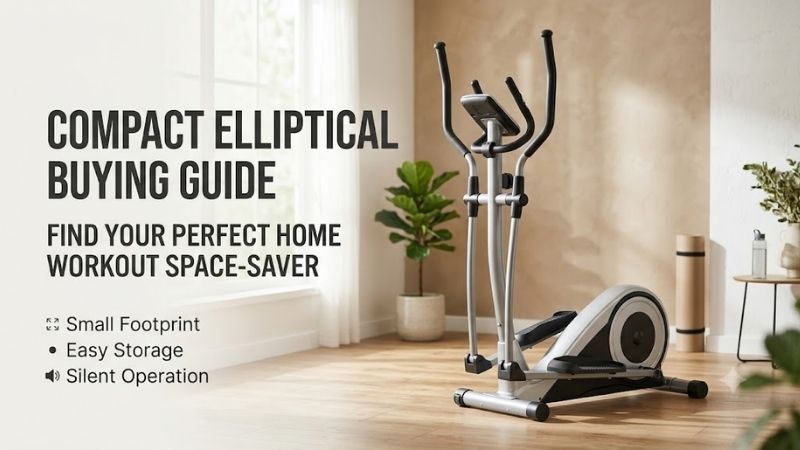
Compact Fixed-Frame Recumbent Bikes
A compact fixed-frame recumbent bike uses a conventional horizontal seating arrangement, usually with the seat behind the pedal assembly and a backrest supporting the rider.
Compared with larger recumbent machines, compact versions may have shorter frames, smaller consoles, simpler seat assemblies, or fewer convenience features. These changes can reduce the overall footprint without fundamentally changing how the equipment operates.
The principal advantage is convenience during regular use. Once assembled and positioned, the machine can remain ready for a workout. You do not have to unfold the frame, lock hinges, or move it out of storage each time.
However, manufacturers can reduce frame length only so far before rider fit becomes a concern. Taller users, particularly those with longer inseams, should confirm the maximum pedal-to-seat distance rather than assuming a compact bike will fit.
A fixed-frame model is usually a sensible starting point for anyone who wants a recumbent riding position and has sufficient permanent floor space.
Folding Recumbent-Style Exercise Bikes
Folding recumbent-style bikes are designed to reduce the storage footprint when not in use. Many use an X-frame or similar folding arrangement, with a seat that supports a semi-reclined riding posture.
These machines can be practical in bedrooms, home offices, and multipurpose living rooms where permanently installed fitness equipment would interfere with daily activities.
However, a folding bike should not automatically be considered equivalent to a conventional recumbent machine.
Some folding designs position the rider more upright, use smaller backrests, or place the pedals in a different relationship to the hips. Their seats and frames may also offer less adjustment than larger fixed-frame models.
Before buying, examine both the riding configuration and the folded configuration. The folded dimensions matter, but so do the effort required to fold the machine and the safety of its locking mechanisms.
Choose this style when storage is the primary challenge and you are comfortable with a potentially more upright riding position.
Semi-Recumbent and Convertible Bikes
Convertible exercise bikes combine elements of upright and recumbent cycling. Depending on the design, the rider may be able to change the frame configuration or seat position to create two different riding arrangements.
This versatility can be attractive when multiple people prefer different cycling postures or when storage space is limited.
The trade-off is that the semi-recumbent position may provide a different level of back support and pedal alignment from a dedicated recumbent bike.
A convertible bike may also have more adjustment points or locking mechanisms that need to be checked before use.
For buyers who specifically want a supported, reclined seating arrangement, a dedicated recumbent machine generally deserves consideration first. A convertible model makes more sense when flexibility and compact storage take priority over a traditional recumbent riding position.
Pedal Exercisers and Under-Desk Alternatives
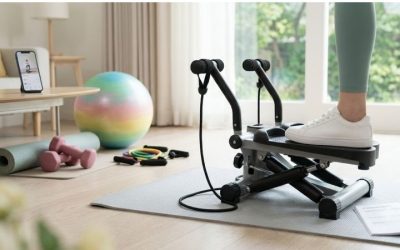
A portable pedal exerciser occupies much less space than a recumbent bike because it typically consists of a small pedal assembly placed on the floor.
You can use one while sitting in an ordinary chair, provided the chair is stable and the equipment is positioned correctly.
Nevertheless, a pedal exerciser is not a complete substitute for a recumbent exercise bike. It generally lacks an integrated seat, adjustable backrest, dedicated frame geometry, and the same overall stability arrangement.
Resistance mechanisms and available workout intensity also vary considerably.
A pedal exerciser may be useful when there is no room for a full stationary bike. However, if your priorities include a consistent riding position, integrated back support, and a dedicated cardio setup, a proper compact recumbent bike will usually be the more suitable category.
How Much Space Does a Recumbent Exercise Bike Need?
Available floor space is often the deciding factor when shopping for home exercise equipment. Unfortunately, product dimensions do not always explain how much usable room a machine actually requires.
A bike may fit physically between two pieces of furniture yet leave insufficient clearance for the rider to mount it comfortably.
The correct approach is to evaluate the entire exercise area rather than measuring the equipment alone.
Typical Footprint of a Compact Recumbent Bike
Recumbent exercise bikes vary considerably in size. Many conventional home models occupy roughly 55–70 inches in length and 22–30 inches in width, although smaller and larger designs are available.
These figures are broad planning references, not guaranteed dimensions for a particular product.
The following table provides an illustrative way to evaluate potential configurations.
| Bike configuration | Illustrative footprint | Main consideration |
|---|---|---|
| Short fixed-frame recumbent | 52 × 24 in | Seat travel and leg extension |
| Standard home recumbent | 62 × 26 in | Greater permanent floor requirement |
| Larger recumbent design | 70 × 29 in | More difficult placement in small rooms |
| Folding recumbent-style bike | Model-dependent | Separate operating and folded measurements |
The illustrative dimensions above are useful for comparing room layouts. They are not specifications for particular models.
A machine measuring 52 inches long and 24 inches wide occupies about 8.7 square feet of floor area before additional clearance is included.
That number may sound manageable, but it does not represent the entire space needed for practical use.
Why Operating Clearance Matters More Than Footprint Alone
The actual exercise area includes the bike and the surrounding space required to use it safely.
You need enough clearance to approach the seat, position your feet, sit down, adjust the equipment, and exit without bumping into nearby furniture.
For initial room planning, allowing approximately 24 inches of unobstructed access on the mounting side is a useful starting estimate. This is not a universal manufacturer requirement, and the necessary clearance depends on the frame, user mobility, and room layout.
Additional space may be necessary if the seat slides backward during adjustment or if a nearby cabinet, door, or desk interferes with movement.
A compact recumbent bike positioned tightly against a wall might fit on paper but become inconvenient when the rider needs to adjust the seat or step around the frame.
Always follow the manufacturer’s specified operating clearances where available.
Measuring a Small Room Before Buying
Start by selecting the part of the room where you would realistically use the bike. This might be an unused bedroom corner, the end of a home office, or a section of the living room.
Measure the available length and width after accounting for permanent furniture.
Next, identify nearby doors, drawers, desk chairs, and storage cabinets. These objects can require more clearance than expected, especially when they need to operate while the bike remains in place.
A practical measurement sequence includes checking the longest unobstructed floor area, the available access route to the seat, and the space needed to move the bike into its final position.
If the machine will be stored after each workout, measure the storage area separately. A narrow closet opening or tight doorway may become a problem even when the folded bike fits inside the closet itself.
Finally, confirm that the chosen floor area is level and suitable for the equipment’s weight and stabilization requirements.
Example: Fitting a Recumbent Bike Into a 6 × 7 Foot Area
Consider a home office with an available exercise corner measuring 6 feet by 7 feet.
That provides a rectangular area approximately 72 inches wide and 84 inches long.
A hypothetical bike measuring 55 inches long and 24 inches wide would physically fit within this space.
However, whether it fits comfortably depends on how the bike is oriented. Positioning the frame along the longer wall may leave more useful clearance near the seat than placing it across the shorter dimension.
You must also consider the location of the office chair, desk drawers, and room entrance.
If the mounting side remains unobstructed and the manufacturer permits the proposed clearances, the layout may be workable.
If the bike blocks the only walking route or prevents the desk chair from moving backward, the setup is not practically suitable even though the floor dimensions appear sufficient.
A useful approach is to mark the proposed frame dimensions on the floor with removable tape. Then simulate entering, sitting, and standing in the planned location before making the purchase.
Choosing the Right Seat and Riding Position
For a recumbent exercise bike, seat design is central to the buying decision.
A compact frame can save valuable space, but poor seat geometry may make regular workouts uncomfortable. This is especially important because recumbent cycling requires the rider to maintain a relatively consistent seated position.
The most suitable bike should accommodate your body dimensions without requiring you to stretch excessively toward the pedals or sit too close to the crank assembly.
Seat Adjustment Range and Leg Extension
Seat adjustment determines whether the machine can accommodate your leg length.
Most conventional recumbent bikes adjust the distance between the seat and pedals through a sliding seat mechanism. Some compact models instead use fixed adjustment positions or different frame arrangements.
The critical requirement is a comfortable pedaling motion throughout the entire crank rotation.
At the farthest pedal position, your knee should retain a slight bend rather than becoming fully locked. Your hips should remain stable against the seat, without rocking forward to reach the pedal.
If the seat is too close, your knees may remain excessively bent throughout the pedal cycle. If it is too far away, you may have to reach with your legs and move your hips away from the backrest.
Both situations can make cycling uncomfortable.
Manufacturer fit guidance should take precedence over generalized advice, particularly when a bike has an unusual pedal arrangement.
Backrest Support and Seat Cushioning
A primary reason people choose recumbent bikes is the supported seating position.
A well-designed backrest can reduce the effort required to maintain an upright torso compared with unsupported stationary cycling. However, backrest shape, angle, and contact area all affect perceived comfort.
Some models provide broad padded backrests, while others use ventilated mesh or molded support panels.
Padded designs may feel softer initially, but cushioning alone does not guarantee comfortable long-term use. The shape and angle must suit the rider.
Ventilated backrests can allow air circulation around the back, although actual comfort depends on the individual design.
When comparing compact bikes, consider whether the backrest stays aligned with the seat as its position changes. A design that preserves the relationship between seat and backrest may be more comfortable than one that changes support geometry during adjustment.
For longer sessions, supportive fit is generally more important than a thick cushion or decorative upholstery.
Seat Width and Rider Comfort
Seat width influences how body weight is supported during exercise.
A wider seat may offer more room for riders who dislike narrow bicycle saddles, but the ideal width depends on individual anatomy.
Excessively wide seating can also interfere with natural leg movement in some riders.
Rather than choosing the widest available seat automatically, examine its contour, padding density, and relationship to the pedals.
Check whether the side handles are comfortably positioned. Handles that sit too close to the rider’s hips may be inconvenient, particularly when entering or leaving the machine.
If several household members will share the bike, prioritize adjustable fit over a seat designed around one body size.
Step-Through Frames and Easy Access
A step-through frame allows the rider to approach the seat without lifting a leg over a high central support.
This feature can be useful for people who prefer a straightforward entry route or find high-step exercise bikes awkward.
However, step-through designs differ. Some have a relatively open space between the seat and console, while others still include frame elements that require careful foot placement.
Evaluate how the user will approach the bike, where they can hold the frame for balance, and whether the seat is positioned at a comfortable height.
Handholds should be used only as the manufacturer intends. Console housings, moving seat components, and accessory trays should not be assumed to support body weight.
If the bike is being purchased for someone with balance or mobility limitations, entry and exit deserve as much attention as the riding experience.
Resistance Systems for Apartment-Friendly Workouts
The resistance system determines how a recumbent bike creates pedaling effort.
For small homes, the most relevant considerations are smooth operation, adjustment range, maintenance demands, noise, and the ability to produce appropriate workout intensity.
Magnetic systems are common in home recumbent bikes, but the details vary among manufacturers.
Manual Magnetic Resistance
Manual magnetic resistance typically uses a mechanical control to change the relationship between magnets and a rotating component.
This changes the resistance experienced during pedaling without requiring friction pads to press directly against a flywheel.
A major advantage is straightforward operation. The rider can generally change resistance using a dial, without navigating complicated electronic menus.
Depending on the model, the bike may also operate without a wall outlet for its resistance mechanism, although the console might use batteries.
For a small apartment where simplicity is valued, this can be a practical arrangement.
However, manual magnetic systems differ in their resistance ranges and adjustment precision. A higher number printed on the control does not necessarily indicate greater maximum resistance.
Buyers should examine available manufacturer information and avoid assuming that all magnetic bikes deliver the same workout experience.
Electronic Magnetic Resistance
Electronically controlled magnetic systems use a console or control interface to adjust resistance.
These systems may support preset workout programs, incremental resistance changes, and compatibility with selected training applications.
The additional features can be appealing for riders who want structured sessions or prefer pressing buttons instead of turning a manual dial.
Nevertheless, electronic resistance does not automatically mean better performance.
Actual pedaling quality still depends on the drivetrain, resistance mechanism, frame stability, and overall engineering.
Electronic systems may also require a power connection, which can affect where the bike can be placed.
For a narrow bedroom or home office, a power cable stretching across a walking route is an avoidable inconvenience. Plan outlet access and cable routing before purchasing.
Is Magnetic Resistance Quiet Enough for an Apartment?
Magnetic resistance is often attractive for indoor equipment because it avoids the continuous friction contact used by some other resistance systems.
However, it would be misleading to call every magnetic recumbent bike silent.
The drivetrain still contains moving components, which may include bearings, belts, cranks, and pedals. Depending on the design, these can produce mechanical noise.
Vibration may also travel through the frame and into the floor, especially if the machine is placed on uneven surfaces.
For apartment use, look for a well-supported frame, properly fitted stabilizers, and clear manufacturer maintenance instructions.
A suitable equipment mat may help protect flooring and reduce some vibration transmission, but it cannot eliminate every sound.
Avoid relying on unspecified claims such as whisper-quiet operation unless credible measurements or meaningful independent evaluations are available.
How Many Resistance Levels Do You Really Need?
Resistance level counts can appear prominently in product descriptions.
One bike may advertise eight levels, another sixteen, and another considerably more. These numbers are not directly comparable across manufacturers.
There is no universal resistance-level standard that guarantees the same workload on different machines.
A bike with a smaller number of well-spaced adjustments may provide more useful resistance than one with numerous settings but a narrow overall range.
For casual cardiovascular exercise, gradual and controllable resistance adjustment is usually more important than the largest advertised level count.
Riders seeking challenging intervals should investigate whether the bike can provide adequate workload at higher settings.
The most useful question is not simply how many levels the console displays, but whether the available range accommodates your intended training.
Frame Stability, Weight Capacity, and Build Quality
A compact exercise bike must maintain adequate stability despite its reduced dimensions.
Small equipment is not automatically unstable, but a lightweight or narrow design can become problematic if its frame geometry and construction are poorly suited to the rider.
Pay particular attention to how the machine contacts the floor and how it responds to normal pedaling forces.
Why Frame Stability Matters
Recumbent cycling generally involves less upper-body movement than some other exercise activities, but the machine must still resist rocking and unwanted movement.
Pedaling creates repeated forces through the crank assembly and frame. Seat adjustments can also change the rider’s position relative to the stabilizers.
A properly assembled bike on a suitable surface should remain stable during ordinary use within its stated limits.
Look for a frame with secure connections, appropriately sized stabilizers, and leveling adjustments when provided.
A narrow frame may be convenient for storage, but its stability should be supported by credible design information rather than assumed from appearance.
When evaluating a folding model, examine how the locking system secures the riding configuration.
Hinges and locking pins should be easy to inspect and engage correctly before a workout.
Understanding Manufacturer Weight Capacity
Manufacturers commonly publish a maximum user weight rating.
This value represents the manufacturer’s stated operating limit under the conditions specified for that machine. It should not be interpreted as a complete measure of frame quality or durability.
For example, two bikes with the same rated user capacity may differ significantly in seat design, adjustment range, stability, and construction.
Buyers should choose equipment whose stated maximum user weight accommodates the intended rider.
It is also sensible to account for clothing, accessories, and any other loads the manufacturer instructs users to include.
Never exceed the specified rating.
Rather than comparing advertised weight capacity alone, consider whether the entire machine is appropriately sized and configured for the rider.
Bike Weight Versus Portability
A lightweight exercise bike may appear more convenient for a small home.
However, the relationship between machine weight and usability is not straightforward.
A heavier bike may be less convenient to relocate, but machine weight alone does not establish better stability or stronger construction.
Likewise, a lightweight bike is not necessarily unsuitable if its frame is engineered appropriately.
The practical question is whether the owner can safely move the machine when necessary.
Some bikes include transport wheels that engage when the machine is tilted. Others require lifting or more extensive disassembly.
If the bike will remain in one location, transportability may be a secondary consideration.
If it must be moved daily, manageable weight, comfortable lifting points, and an unobstructed route become essential features.
Storage and Portability in Small Homes
Storage is one of the largest differences between a compact stationary recumbent bike and a folding alternative.
The best storage system is not necessarily the one that produces the smallest folded dimensions. It is the one that fits your routine without creating excessive effort or additional safety concerns.
When a Folding Frame Is Worth Choosing
Folding frames are most useful when there is no permanent area available for exercise equipment.
A bedroom might provide enough open floor space during the day but require that space for other activities afterward.
In that situation, a folding bike can allow the same floor area to serve more than one purpose.
However, folding and unfolding become part of every workout.
Before buying, consider how many steps are involved, whether the process requires bending or lifting, and whether the locking mechanism can be operated safely.
The folded machine must also fit the intended storage area.
A model that becomes shorter but much taller when folded might work well in a closet with generous vertical clearance, yet be unsuitable beneath a low shelf.
Transport Wheels and Moving the Bike
Transport wheels are useful when a fixed-frame machine needs occasional repositioning.
They can reduce the need to lift the entire bike, but the equipment may still need to be tilted to engage the wheels.
This movement should be performed according to the manufacturer’s instructions.
Small wheels may work adequately on hard, smooth floors while becoming difficult to roll over thick carpet, raised thresholds, or uneven surfaces.
Consider the entire route between the exercise area and storage location.
A narrow hallway, doorway threshold, or furniture corner may make a theoretically portable bike inconvenient in daily practice.
For frequent movement, transport design matters almost as much as total machine weight.
Vertical Storage and Wall Clearance
Some folding exercise bikes can be stored in a relatively upright position.
However, not every model is designed to stand independently when folded.
Do not assume a bike can be leaned against a wall or placed vertically unless the manufacturer specifically permits that storage configuration.
An unsecured folded machine can tip if disturbed by a person, pet, or nearby furniture.
When checking folded dimensions, look for documented stability requirements and recommended storage orientation.
If a folding bike must be stored in a shared living space, its storage position should not obstruct exits, walkways, or frequently used cabinets.
Storage Frequency and Long-Term Convenience
The frequency with which you expect to use the bike should influence the design you select.
A fixed machine may encourage convenient workouts because it is always ready.
A folding machine can preserve living space but requires preparation before each session.
Neither arrangement is inherently superior. The best choice depends on your schedule and room layout.
If you plan to ride most days and can dedicate a small corner to the equipment, a compact fixed-frame model may be less troublesome.
If you exercise only occasionally or share the room with other activities, the additional folding process may be an acceptable trade-off.
Console Features and Technology: What Is Actually Necessary?
Exercise bike consoles range from simple battery-powered displays to more advanced electronic interfaces.
For small-space buyers, convenience and readability often matter more than having a large number of programs.
Technology should support the workout without making the machine unnecessarily difficult to operate or position.
Basic Workout Tracking
A basic console may display workout duration, estimated distance, pedaling speed, and other exercise information.
These measurements can help riders follow a consistent routine.
However, displayed distance on a stationary bike is generally a calculated estimate rather than physical travel distance. It should not be treated as equivalent to outdoor cycling mileage.
Calorie displays also require caution because they may rely on generalized assumptions rather than individualized physiological measurements.
For most home users, workout duration and a consistent method of monitoring effort are sufficient starting points.
A large touchscreen is unnecessary if a straightforward display already supports the intended sessions.
Heart Rate Monitoring
Some recumbent bikes include heart rate sensors integrated into the handles.
These can provide convenient readings during certain riding conditions, but accuracy may vary with grip, movement, sensor design, and individual factors.
If accurate heart rate monitoring is important, check whether the machine supports a compatible external monitor.
Do not assume that Bluetooth connectivity automatically includes compatibility with every heart rate device.
For general home cycling, riders can also use perceived exertion to judge workout intensity.
The ability to speak comfortably during moderate exercise, for example, can provide a practical indication of effort without depending entirely on a console estimate.
Bluetooth and Fitness App Compatibility
Bluetooth connectivity may allow a bike to communicate with compatible training applications.
However, the term Bluetooth-enabled does not establish what data the bike can transmit or which applications it supports.
Some models offer basic connectivity, while others can transmit cadence, speed estimates, resistance information, or workout data through supported protocols.
Certain apps may require specific features that are not present on every bike.
Before paying extra for connected features, verify compatibility with the exact application and device you intend to use.
For riders who simply want to pedal while watching television, these features may offer little practical benefit.
Console Size and Room Placement
A large console can affect how a compact bike fits into a room.
It may increase overall height, interfere with the view of a television, or limit placement beneath shelving.
Check the complete assembled dimensions, including display structures and accessory holders.
A tablet shelf or entertainment console can be convenient, but accessories must not interfere with safe entry, visibility, or pedaling.
For smaller rooms, a low-profile display may be more practical than a large screen that adds bulk without improving essential workout functionality.
How to Choose a Recumbent Exercise Bike for Your Budget
The lowest purchase price does not always represent the lowest long-term cost.
An inexpensive bike may meet your needs perfectly, but only if the fit, construction, adjustment features, and intended usage align with your expectations.
Budget comparisons should focus on functional differences rather than treating expensive electronic features as automatic improvements.
Budget-Friendly Compact Recumbent Bikes
Entry-level machines commonly emphasize basic resistance adjustment, simple consoles, and straightforward construction.
For someone planning occasional low- to moderate-intensity sessions, this may be sufficient.
However, price alone cannot establish suitability.
A low-cost model may offer limited seat adjustment, fewer convenience features, or a frame design that is less practical for multiple users.
Before choosing an inexpensive machine, examine the manufacturer’s dimensional information, user weight rating, warranty terms, and support arrangements.
Look especially carefully at the adjustment range. A low price is not worthwhile if the rider cannot achieve a suitable pedal position.
For many households, an uncomplicated bike that fits correctly may be a better purchase than an elaborate machine with features that will rarely be used.
Midrange Models and Practical Upgrades
Midrange recumbent bikes may provide more elaborate resistance controls, improved consoles, broader adjustment options, or additional comfort features.
The value of these upgrades depends on the individual model.
For small-space use, a better-designed seat adjustment mechanism may be more beneficial than additional workout programs.
Similarly, convenient transport wheels could justify a price difference if the bike must be moved regularly.
Look for improvements that directly address your intended use rather than paying for every available feature.
If two machines fit the room and rider equally well, compare the ease of assembly, service support, replacement-part availability, and warranty conditions.
Premium Features Worth Considering
Higher-priced recumbent bikes may include large screens, advanced workout programming, electronic resistance, and more sophisticated seat designs.
These can be worthwhile for riders who use the equipment frequently and genuinely benefit from the added functionality.
However, premium features can increase the size, weight, electrical requirements, and complexity of a machine.
For a limited living space, those consequences deserve attention.
An elaborate console is of limited value if the equipment blocks a doorway or requires permanent space that the household cannot comfortably spare.
Premium pricing should be justified by practical benefits, documented quality, or features that support a specific need.
Warranty, Maintenance, and Ownership Costs
Warranty terms are important because exercise bikes contain moving and electronic components that may eventually require attention.
Review the coverage for the frame, mechanical components, electronics, and labor where applicable.
Warranty length alone does not guarantee product reliability. Coverage conditions, exclusions, and support availability also matter.
Check whether the manufacturer provides replacement parts or service guidance.
Maintenance requirements should be evaluated before purchase, especially if the machine will be used frequently.
Some tasks may involve periodic hardware inspection, cleaning, or checking moving assemblies according to the manual.
Avoid assuming that magnetic resistance makes an entire exercise bike maintenance-free.
Buying for Specific Small-Space Living Situations
The same exercise bike may be a good choice for one household and a poor choice for another.
Room layout, storage availability, rider characteristics, and exercise habits all influence the buying decision.
Best Features for Studio Apartments
In a studio apartment, equipment often shares space with sleeping, working, and living areas.
A compact footprint and unobtrusive appearance may therefore matter more than advanced workout programming.
First, determine whether the machine can remain assembled without disrupting daily movement.
If a dedicated corner is available, a compact fixed-frame recumbent bike with quiet magnetic resistance may be convenient.
If the bike must be removed after each session, investigate folding recumbent-style models and their actual stored dimensions.
Also consider equipment mats, floor suitability, and the route used to move the bike.
Avoid choosing a storage solution that requires unsafe lifting or forces equipment into an unstable position.
Best Features for Bedrooms
Bedrooms often contain furniture that restricts usable floor dimensions.
A bike positioned near a bed may fit physically yet interfere with access to drawers, closets, or bedside tables.
Measure these functional clearances before ordering.
A simple console and magnetic resistance system may be appropriate when entertainment features are unnecessary.
If the bike will be used early in the morning or late in the evening, consider potential mechanical noise and vibration transmission.
The machine should not obstruct access to doors or other required room pathways.
For bedrooms with limited space, folding storage may be useful, but a compact stationary model can still be practical if it has a permanent, unobstructed position.
Best Features for Home Offices
A home office can be an effective location for a recumbent exercise bike if the layout supports both work and exercise.
The most important consideration is whether the bike interferes with the desk chair, storage furniture, or computer equipment.
A model with transport wheels may allow occasional repositioning.
If the office is used for calls or meetings, the noise characteristics of the machine may matter.
A basic console can be sufficient because a computer or television may already provide entertainment.
However, a recumbent bike should not be assumed to function as an under-desk workstation. Its seating position and pedal arrangement generally differ from equipment specifically designed for desk use.
Best Features for Older Adults
Older adults may appreciate the supported seating position offered by recumbent bikes, but suitability depends on the person and equipment.
A step-through frame, accessible handles, stable seat, and straightforward controls may be particularly valuable.
Seat height and entry clearance should be considered carefully.
The bike should also allow an appropriate pedal position without requiring excessive reaching or awkward movement.
An easy-to-read console and conveniently positioned resistance controls can reduce unnecessary complexity.
For individuals with significant balance concerns, mobility restrictions, or health conditions affecting exercise, professional guidance may be appropriate before choosing equipment or beginning a new routine.
Best Features for Taller Riders
Taller riders may encounter difficulties with compact recumbent bikes because shortening the frame can reduce the available seat-to-pedal distance.
A bike that looks appropriately sized in product photographs may not provide adequate leg extension.
Check the manufacturer’s stated user-height guidance, if available, and confirm whether it refers to the specific model and seat configuration.
Inseam and body proportions can matter as much as overall height.
A long adjustable seat rail or broad adjustment range can be useful, but do not assume the bike fits without checking.
For a particularly tall rider, choosing a somewhat longer frame may be preferable to compromising the riding position simply to save a few inches.
Best Features for Shared Household Use
When several people use the same bike, the adjustment mechanism becomes an everyday consideration.
Look for a seat that can be repositioned conveniently and locked securely.
If users have substantially different leg lengths, verify that the full adjustment range accommodates everyone.
Resistance controls should also be easy for each user to understand.
A bike with electronically controlled resistance may offer convenient workout changes, but simple manual controls may be equally effective for households that do not need programmed sessions.
Each user should establish an appropriate seat position rather than assuming one setting works for everyone.
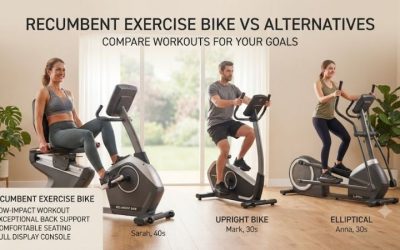
Recumbent Bike vs. Other Compact Cardio Equipment
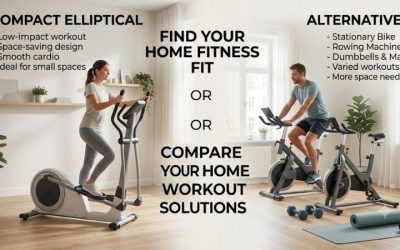
A compact recumbent exercise bike is only one way to add cardiovascular training equipment to a small home.
Other machines may occupy less floor area or provide a different training experience.
The best option depends on comfort, preferred movement, intensity, storage, and available space.
| Equipment type | General space consideration | Primary advantage | Main trade-off |
|---|---|---|---|
| Compact recumbent bike | Longer floor footprint | Supported seated riding position | Requires more length than many upright designs |
| Upright exercise bike | Often shorter footprint | Efficient use of floor space | Less back support |
| Folding exercise bike | Reduced storage footprint on suitable models | Can be stored between sessions | Riding position and folding convenience vary |
| Under-desk pedal exerciser | Very small equipment footprint | Portable seated pedaling | No integrated seat or backrest |
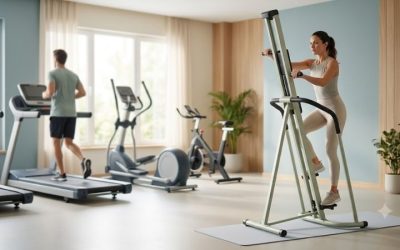
| Compact elliptical | Model-dependent | Standing elliptical movement | Requires adequate standing clearance |
| Walking pad | Relatively narrow floor footprint | Walking-based exercise | Requires safe walking area and appropriate storage |
Recumbent Bike vs. Upright Exercise Bike
An upright exercise bike generally positions the pedals below the rider and uses a more conventional bicycle-style saddle.
This arrangement often allows a shorter frame.
For extremely small spaces, an upright bike may therefore be easier to accommodate.
However, the riding posture requires a different relationship between the torso, hips, seat, and handlebars.
A recumbent bike provides a supported sitting arrangement that some riders find more comfortable.
The choice should be based on the desired riding position, fit, and available floor area.
If maximizing space efficiency is the overriding priority, an upright design deserves consideration. If back support and seated comfort are more important, the additional length of a recumbent machine may be worthwhile.
Recumbent Bike vs. Folding Exercise Bike
This comparison depends on the folding bike’s design.
Some folding models provide a semi-recumbent position, while others are primarily upright bikes with an adjustable configuration.
The major advantage of folding equipment is storage flexibility.
A conventional recumbent machine generally offers a dedicated seating arrangement without needing the frame to fold or unfold.
If you have enough permanent floor space, a compact fixed-frame machine may provide a simpler daily routine.
If the room must be cleared after every workout, the storage convenience of a folding model may be more important.
Buyers should compare both operating and storage dimensions rather than relying on the term folding.
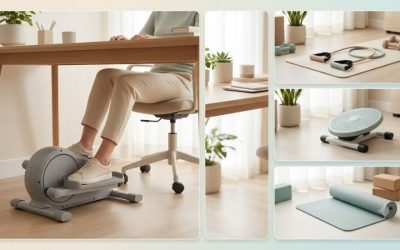
Recumbent Bike vs. Under-Desk Elliptical
Under-desk ellipticals offer a compact way to move the legs while seated.
Their movement patterns and resistance systems differ from those of conventional recumbent bikes.
A recumbent bike integrates the seat, backrest, frame, and pedals into a dedicated exercise station.
An under-desk elliptical relies on a separate chair and usually emphasizes a much smaller equipment footprint.
The latter may be appropriate when storage is the primary concern or a full-sized machine cannot fit.
However, its smaller size should not be interpreted as equivalent workout capability.
Compare the intended exercise intensity, stability requirements, and seating arrangement before choosing between them.
Setting Up a Compact Recumbent Exercise Bike Correctly
Even a well-designed bike can become uncomfortable or inconvenient when positioned poorly.
Correct setup begins with room placement and continues through assembly, seat adjustment, resistance selection, and basic safety checks.
Choose a Level, Suitable Floor Surface
Place the machine on a floor surface that meets the manufacturer’s requirements.
An uneven surface can affect frame stability and create unwanted movement.
If the bike has adjustable leveling feet, use them according to the instructions rather than improvising supports.
A compatible equipment mat may protect the floor from scuffing and help manage some vibration, but the mat must not make the bike unstable.
Consider the combined load of the machine and rider and any relevant flooring restrictions.
Heavy equipment or uncertain structural conditions may require assessment by a qualified professional or building management.
Position the Bike for Easy Entry and Exit
Orient the machine so the intended access side is unobstructed.
Avoid placing the seat directly beside furniture that prevents the rider from sitting down or standing comfortably.
Make sure nearby electrical cables, rugs, and loose items do not create tripping hazards.
If the bike uses a power adapter, route the cable where it will not cross the user’s path or become caught in moving components.
Confirm that the bike remains within the operating clearances specified by the manufacturer.
Do not sacrifice necessary access space simply to place the equipment closer to a wall.
Adjust the Seat Before Pedaling
Sit in the normal riding position with your back supported.
Place your feet on the pedals and slowly move through the pedal rotation without applying substantial resistance.
At the point of greatest leg extension, the knee should remain slightly bent.
Your hips should stay in contact with the seat rather than shifting forward.
If the position feels cramped or requires reaching, stop and adjust the seat.
Lock the adjustment mechanism securely before beginning the workout.
Never try to adjust a sliding seat while actively pedaling unless the manufacturer’s instructions explicitly permit a particular adjustment method.
Start With Controlled Resistance
Begin with a manageable resistance setting that allows a smooth, steady pedal stroke.
The appropriate intensity depends on individual fitness, experience, and exercise goals.
There is no need to select a high resistance setting immediately.
Instead, verify that the pedals rotate comfortably and the frame stays stable.
Increase resistance gradually when appropriate.
If the pedal motion causes discomfort, unusual joint strain, or difficulty maintaining your position, stop and reassess the setup rather than forcing the movement.
Inspect the Bike Regularly
Follow the maintenance and inspection schedule provided by the manufacturer.
Common checks may include the seat lock, pedals, frame connections, stabilization components, and visible signs of wear.
Keep the machine clean and prevent moisture from accumulating around electronic components.
Listen for new or unusual mechanical sounds.
Some normal operating noise is expected, but persistent knocking, grinding, or movement may indicate a problem requiring investigation.
Do not continue using equipment with damaged components, an unstable frame, or a defective locking mechanism.
Common Mistakes When Buying a Small Recumbent Exercise Bike
Several purchasing mistakes can turn an otherwise promising machine into an inconvenient piece of equipment.
Most are preventable through careful measurement and realistic consideration of the rider’s needs.
Choosing the Smallest Bike Without Checking Fit
A short frame may be attractive, but frame length is only one consideration.
If the seat cannot move far enough from the pedals, taller users may be unable to achieve an appropriate leg position.
Conversely, a bike with a long minimum seat-to-pedal distance may be unsuitable for shorter riders.
Always verify the usable adjustment range.
Saving a few inches of floor space should not come at the expense of an appropriate riding position.
Ignoring Entry and Exit Clearance
Product dimensions typically describe the equipment itself.
They may not explain how much additional room is needed to sit down, stand up, or adjust the seat.
A bike placed against a wall or beneath furniture can create access problems even when its footprint fits.
Plan for real movement around the machine before deciding where it will go.
Assuming Every Folding Bike Is Fully Recumbent
Some folding bikes use semi-recumbent arrangements that differ noticeably from conventional recumbent machines.
The seat angle, pedal position, and backrest support may not match buyer expectations.
Review the actual riding geometry instead of relying solely on marketing terminology.
Paying for Features You Will Rarely Use
Large screens, connected applications, and extensive workout libraries can be appealing.
However, they may provide little benefit if your routine consists of straightforward stationary cycling.
Prioritize fit, stability, resistance control, and support before spending extra on electronics.
Treating Weight Capacity as a Quality Score
A high advertised maximum user weight does not automatically demonstrate superior durability.
It is a stated load limit, not a complete assessment of engineering quality.
Consider construction, adjustment features, warranty coverage, and documented support alongside the rating.
Overlooking Assembly and Delivery Requirements
Recumbent bikes can arrive partially assembled and may require tools, hardware installation, and careful handling.
Before ordering, check package dimensions, delivery arrangements, and assembly instructions.
A machine that fits the exercise corner may still be difficult to move through a narrow doorway or staircase in its shipping carton.
If assembly is beyond your capabilities, investigate available assembly services before purchase.
Frequently Asked Questions
What Is the Smallest Recumbent Exercise Bike for an Apartment?
There is no universally smallest recumbent bike because conventional, folding, and semi-recumbent designs use different frame arrangements.
For the smallest storage footprint, a folding recumbent-style bike may be appropriate. For a traditional supported recumbent position, a compact fixed-frame design is more directly comparable.
Measure both the operating space and the storage area, and confirm that the seat adjustment fits the rider.
The smallest advertised dimensions should not outweigh safe entry, stable operation, or proper leg extension.
Can You Put a Recumbent Exercise Bike in a Bedroom?
Yes, provided the bedroom has sufficient floor space, the floor is suitable, and the equipment does not block access routes.
Consider the bike’s operating dimensions, mounting clearance, nearby furniture, and potential noise.
Magnetic resistance may be appealing in this setting, but it does not guarantee silent operation.
Use the manufacturer’s placement and maintenance instructions, and avoid positioning the machine where it interferes with doors or walkways.
Are Folding Recumbent Exercise Bikes as Good as Regular Ones?
They can be suitable for many home workouts, but they are not necessarily equivalent.
Folding models often prioritize compact storage, while fixed-frame recumbent bikes emphasize a dedicated riding configuration.
Differences may include seat support, pedal geometry, adjustment range, stability, and resistance capabilities.
A folding design is worth considering when storage requirements are strict. A conventional recumbent bike may be preferable when you want an integrated supported seat and do not need to put the equipment away after each session.
How Much Clearance Should You Leave Around a Recumbent Bike?
The manufacturer’s minimum operating clearance should guide placement whenever it is provided.
For preliminary planning, approximately 24 inches of unobstructed access on the side used to enter the bike can be a helpful estimate, but the actual requirement depends on the rider and machine.
Also account for seat adjustment, nearby furniture, and any other clearances specified in the manual.
The advertised footprint alone is not enough to determine whether the bike fits safely.
Are Compact Recumbent Bikes Suitable for Tall People?
Some are, but not all compact models have enough seat adjustment for tall riders.
Leg length, inseam, seat position, and pedal geometry matter more than overall height alone.
Check the manufacturer’s fit information and maximum seat-to-pedal adjustment.
If a compact bike does not permit comfortable leg extension, a longer model is likely a better choice than riding in an excessively cramped position.
Do Recumbent Exercise Bikes Need Electricity?
Some recumbent bikes operate without household electricity for their resistance mechanisms, while others require power for electronic resistance adjustment or additional features.
A manual magnetic model may use batteries for its display.
Electronically controlled models may need an electrical outlet or another specified power source.
Check the requirements of the exact model before buying, especially if your intended exercise area does not have convenient access to power.
Conclusion
The right recumbent exercise bike for small spaces should fit both your room and your body. Prioritize verified assembled dimensions, adequate entry clearance, adjustable seat geometry, stable construction, and manageable resistance over unnecessary technology. Choose a compact fixed-frame bike for a permanent exercise area or a folding recumbent-style model when storage is essential, provided its riding position meets your needs.


Write Your Review
No reviews yet. Be the first to share your experience!