
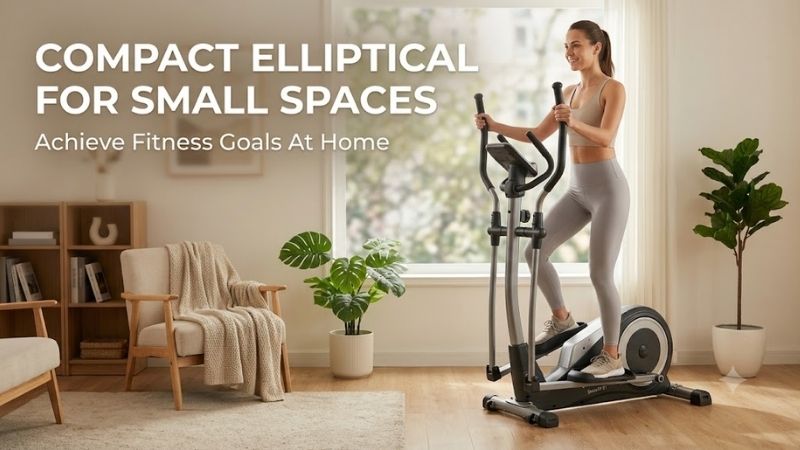
A compact elliptical for small spaces can provide standing cardio without requiring the footprint of a full-size gym machine. However, shorter frames often mean reduced stride length, different pedal motion, or less adjustment. This guide explains how to balance floor dimensions, rider comfort, resistance, stability, and storage before buying.
Quick Verdict: Prioritize Stride Comfort Over the Smallest Footprint
For most buyers, the best compact elliptical is a stable machine that accommodates comfortable lower-body movement while fitting within the available room.
Magnetic resistance is often attractive for home use because it provides controlled adjustment with relatively little braking-system noise. However, an elliptical’s stride length and pedal path are just as important as its resistance settings.
A model with an extremely short stride may technically qualify as compact but feel restrictive for taller users. Conversely, a machine with a slightly larger footprint may provide a noticeably more natural movement.
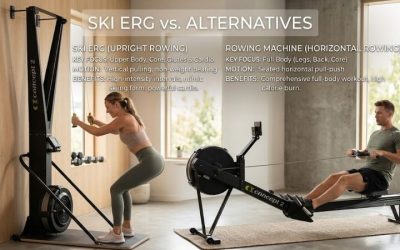
Ceiling clearance must also be considered. Unlike a rowing machine or seated exercise bike, an elliptical elevates the user above the floor, and the body’s vertical movement can further increase headroom requirements.
The smartest purchase balances floor area, stride geometry, weight capacity, stability, and practical storage rather than minimizing equipment dimensions at any cost.
Why Compact Ellipticals Are More Difficult to Design Than They Appear
The Relationship Between Frame Size and Pedal Movement
An elliptical trainer guides the feet along a repeated path that typically combines horizontal and vertical movement.
The exact shape varies between machines. Some designs produce a relatively long, shallow stride resembling walking or running, while others create shorter, more vertical movements.
A full-size gym elliptical can use a long frame to accommodate substantial pedal travel. A compact machine must fit its linkage, flywheel, resistance mechanism, and supports into a smaller area.
That can require compromises.
Manufacturers may shorten the stride, change the pedal path, use a different drive arrangement, or prioritize vertical movement.
These solutions are not automatically bad. They simply produce different exercise experiences.
A buyer expecting the long stride of a commercial elliptical may be disappointed by a small residential model even when the machine functions exactly as designed.
Why a Compact Footprint Is Not the Whole Story
A compact elliptical occupies less floor area than many conventional machines, but the user also needs space to mount, dismount, and move safely.
The moving handlebars may extend beyond the apparent central frame.
The user’s arms and torso can also require clearance that is not obvious from product photographs.
This makes room planning more complicated than comparing assembled length and width.
An elliptical that fits neatly against a wall when unused may require additional space once the pedals and handlebars begin moving.
Compact Elliptical Versus Mini Elliptical
A compact conventional elliptical usually supports standing exercise with a full-height frame, handlebars, and a guided pedal mechanism.
A mini elliptical may consist primarily of a low pedal platform.
Some mini units are designed for seated exercise beneath a desk. Others are intended for standing use and require different balance considerations.
These categories should not be treated as interchangeable.
If you want traditional standing elliptical movement with moving handlebars, choose equipment expressly designed for that purpose.
If your main requirement is seated leg movement, a dedicated under-desk elliptical may be more practical.
Understanding Stride Length
What Stride Length Means
Stride length describes a measurement associated with the horizontal travel of the feet during elliptical motion.
However, manufacturers may use different measurement methods.
Published numbers should therefore be treated as model-specific rather than universally comparable.
A longer stride generally provides more horizontal travel, but the total movement experience also depends on pedal trajectory, step height, and linkage geometry.
Why Short Strides Feel Different
On a compact machine, the feet may travel through a shorter horizontal path.
This can create a movement that feels closer to stepping than to long-stride elliptical training.
Some users find this comfortable for basic cardio.
Others, particularly taller riders accustomed to commercial gym ellipticals, may feel restricted.
The difference becomes noticeable because the machine guides the feet through a fixed path. Unlike walking outdoors, the user cannot simply lengthen each step freely.
Is an 11-Inch Stride Enough?
An 11-inch stride is common on some compact residential ellipticals.
For example, the Sunny Health & Fitness SF-E905SMART has a published 11-inch stride.
That can be suitable for users who prefer short, controlled movement, but it is substantially shorter than the stride offered by many larger gym ellipticals.
It should not be assumed comfortable for everyone.
A shorter user might find the motion acceptable, while a taller person may prefer more horizontal travel.
Because body proportions and movement preferences differ, height alone cannot determine the ideal stride.
Why Taller Users Should Be Careful
Longer legs may make a very short fixed stride feel unnatural.
A user may compensate by changing knee movement, torso position, or cadence.
If the machine forces an uncomfortable movement pattern, the fact that it fits the room does not make it a good purchase.
When possible, compare supported user-height guidance and stride specifications.
If detailed fit information is unavailable, consider a machine with a longer, better-documented pedal path.
Stride Length Versus Step Height
Stride length describes one aspect of movement.
Step height describes vertical travel or another height measurement associated with the pedal mechanism.
A machine can have a short horizontal stride with a substantial vertical component.
This may feel more like climbing than walking.
Neither arrangement is inherently superior, but the movement should match your expectations.
How to Measure Floor Space Correctly
Start With Assembled Dimensions
Measure the exact proposed exercise area before shopping.
Record the usable floor length and width.
A compact elliptical may have a relatively small frame, but do not assume the published dimensions include all moving components or recommended clearance.
For example, the Sunny SF-E905SMART measures approximately 40.7 inches long, 26.4 inches wide, and 59.8 inches high.
This makes it substantially shorter than many full-size ellipticals, but it still requires space for the rider and moving handlebars.
Add Entry and Exit Clearance
Most elliptical users mount from the rear or another manufacturer-approved position.
The mounting path should remain clear.
A machine positioned too close to a bed or cabinet may be difficult to approach safely.
Also consider how you will step off after exercise, particularly when fatigued.
Check Handlebar Movement
Moving handlebars can extend through a noticeable path.
Their operating clearance may exceed the apparent size of the stationary frame.
Ensure that the grips cannot strike nearby furniture.
Consider the Surrounding Walking Path
A compact elliptical should not obstruct the room’s normal movement.
If a machine blocks a door, closet, or desk, its footprint may be impractical even when the dimensions fit.
A designated corner with adequate clearance is usually more convenient than a location requiring furniture to be moved before every workout.
Ceiling Height: A Critical Buying Requirement
Why Ellipticals Require More Headroom
The user’s feet stand on raised pedals rather than directly on the floor.
As the pedals move, the body may rise and fall.
This increases the rider’s head height above the floor.
The machine’s assembled height does not capture this requirement.
A model standing five feet tall may still be unsuitable for a room with a low ceiling when a tall user stands on it.
Pedal Height and Step-Up Height
Some manufacturers provide information about the lowest and highest pedal positions.
The Sunny SF-E905SMART, for example, publishes pedal step heights of approximately 6.5 to 12.8 inches.
These figures help illustrate how much the user’s standing position can be elevated.
However, published measurements should be interpreted according to the manufacturer’s definitions. The maximum pedal height is not necessarily identical to the additional headroom required in every body position.
How to Check Available Headroom
Measure the ceiling height at the intended exercise position.
Then review the manufacturer’s minimum ceiling requirements or headroom recommendations.
Account for the rider’s height and the highest approved pedal position.
Do not rely solely on a rough calculation when model-specific guidance is available.
This is particularly important in basements, attic rooms, or spaces beneath sloped ceilings.
Ceiling Fans and Light Fixtures
Nearby fixtures can reduce practical clearance.
A ceiling fan or pendant light may create a hazard even when the ceiling height appears sufficient.
Choose a location with unobstructed headroom throughout the exercise movement.
Magnetic Resistance and Workout Control
Why Magnetic Resistance Works Well at Home
Magnetic ellipticals use braking systems that oppose flywheel rotation.
This creates exercise resistance without necessarily requiring a friction pad to remain in contact with the rotating component.
For apartments, the relatively quiet braking mechanism can be a major advantage.
However, the complete elliptical still contains moving joints, pedals, bearings, and a drivetrain.
Actual noise depends on construction and maintenance.
Manual Magnetic Resistance
Manual controls typically use a dial.
They allow the user to change resistance without navigating a complex console.
This can be suitable for straightforward recreational exercise.
Electronic Resistance
Electronically controlled models may provide button-based adjustments, preset workouts, or connected applications.
These features can be convenient for structured sessions, but they increase electronic complexity and often require power.
Why More Levels Are Not Always Better
An elliptical offering sixteen resistance settings does not automatically generate more maximum resistance than one offering eight.
The level count represents selectable positions, not a standardized mechanical workload.
The useful question is whether the system provides comfortable progression for your intended workouts.
Smooth Resistance Matters
Resistance should change predictably.
Unusual sticking, scraping, or jerky pedal movement may indicate a mechanical issue.
A compact elliptical that moves smoothly at ordinary training intensities can be more practical than a feature-rich model with inconsistent movement.
Flywheel Position and Elliptical Design
Front-Drive Ellipticals
Front-drive designs place the main resistance assembly toward the front.
They may produce particular movement characteristics depending on their linkage geometry.
Rear-Drive Ellipticals
Rear-drive designs position the resistance mechanism farther back.
These can create different pedal paths and frame requirements.
Center-Drive Designs
Center-drive machines place the mechanism near the middle of the exercise area.
Some offer compact footprints and relatively upright positioning.
Why Drive Position Is Not Enough
A front-drive machine is not automatically better or worse than a rear-drive model.
Stride geometry, linkage design, stability, and rider fit matter more than the location of the flywheel alone.
Buyers should evaluate the actual motion rather than assuming a particular drive position guarantees a natural stride.
Pedal Design and Foot Comfort
Footplate Size
Pedals should provide enough space for suitable athletic shoes.
Very narrow platforms can feel restrictive.
Non-Slip Surfaces
Textured footplates help reduce unwanted movement.
The surface should remain secure during normal operation.
Pedal Spacing
The lateral distance between the pedals influences stance width.
A machine with widely separated pedals may feel different from one with narrower positioning.
Fixed Pedal Paths
Most compact ellipticals guide the feet through predetermined movements.
This makes fit particularly important because the user cannot freely change the path.
Footwear
Wear suitable athletic shoes according to the manufacturer’s instructions.
Avoid footwear that slips or interferes with the footplate surface.
Handlebar Design and Upper-Body Movement
Moving Handlebars
Moving handlebars allow coordinated arm and leg movement.
The exact motion depends on the linkage design.
Stationary Handlebars
Some ellipticals provide fixed grips for users who prefer to focus on lower-body movement or maintain a consistent upper-body position.
Why Handlebar Reach Matters
The moving grips should remain comfortable throughout their travel.
A user should not need to overextend the shoulders or lean excessively to maintain contact.
Pulse Sensors
Certain models include contact heart-rate sensors.
These offer convenient estimates but may be affected by grip quality and movement.
Stability and Support
Handlebars provide intended grip positions, but they should not be assumed suitable for supporting unrestricted body weight unless the manufacturer states otherwise.
Stability and Frame Construction
Why Stability Is Important
The rider stands above the machine while the pedals move.
This creates changing loads through the frame.
A compact elliptical should remain stable during ordinary use.
User-Weight Capacity
The manufacturer’s weight rating establishes the supported loading limit.
For example, the Sunny SF-E905SMART is rated for a maximum user weight of 220 pounds.
This may be adequate for some buyers but unsuitable for others.
Stabilizer Width
Front and rear stabilizers help distribute forces.
A narrow footprint can save space, but frame design must still provide adequate stability.
Floor Leveling
A level surface is important.
Some machines include adjustable feet to reduce rocking.
Frame Materials
Steel is common in residential elliptical construction.
However, material alone does not determine structural quality.
Assembly
Correct assembly is essential.
Loose joints or incorrectly secured handlebars can affect both stability and movement quality.
Noise and Vibration
Magnetic Resistance Noise
Magnetic braking generally avoids substantial fan noise.
However, the machine still produces mechanical sound.
Joint and Linkage Noise
Ellipticals contain multiple moving connections.
These may produce squeaks or clicking if worn, misaligned, or inadequately maintained.
Pedal Noise
Pedal assemblies can develop unusual noise when components loosen or wear.
Floor Transmission
Standing movement can transfer vibration into the floor.
A suitable equipment mat may reduce some vibration and protect the surface.
Apartment Placement
Choose a stable location away from furniture that could be contacted by moving handlebars or the frame.
Workout Monitors and Smart Features
Basic Metrics
Time, speed, distance estimates, and estimated calories are common.
These can be useful for general activity tracking.
Resistance Level
The selected resistance setting helps users repeat familiar workouts.
Heart Rate
Some machines use contact pulse sensors.
Others support compatible wireless devices.
Bluetooth
Bluetooth may connect the elliptical to fitness applications.
However, supported functions vary.
Workout Programs
Preset programs can provide structured changes in resistance.
Guided Training
Premium connected equipment may offer instructor-led sessions.
These functions are useful for some users but not essential for basic cardio.
Subscription Costs
Check whether advanced content requires ongoing payment.
Storage and Transport
Are Compact Ellipticals Foldable?
Some are, but many conventional compact models do not fold.
A small assembled footprint should not be confused with folding storage.
Transport Wheels
Wheels can simplify repositioning.
However, the user may still need to tilt the machine.
Machine Weight
A compact elliptical can still be relatively heavy.
Consider whether it must be moved daily.
Upright Storage
Do not store an elliptical vertically unless the manufacturer expressly permits that arrangement.
Permanent Placement
For many homes, a dedicated corner is more practical than moving the equipment after every workout.
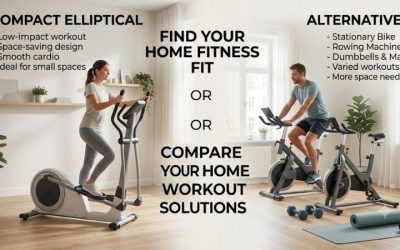
Comparing Compact Elliptical Alternatives
| Equipment Type | Main Advantage | Main Limitation |
|---|---|---|
| Conventional compact elliptical | Standing cardio with guided pedal movement | Short stride on some models |
| Mini standing elliptical | Small equipment footprint | Different balance demands |
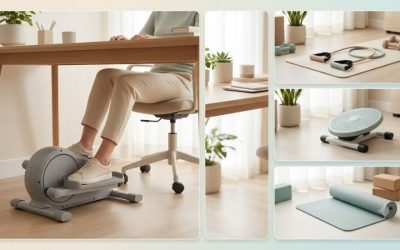
| Under-desk elliptical | Seated exercise and portability | Not conventional standing cardio |
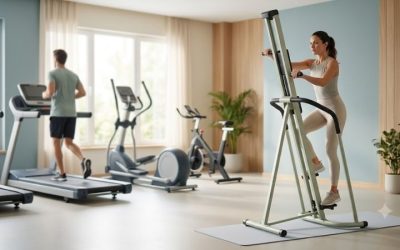
| Air walker | Simple gliding movement | Different resistance and pedal geometry |
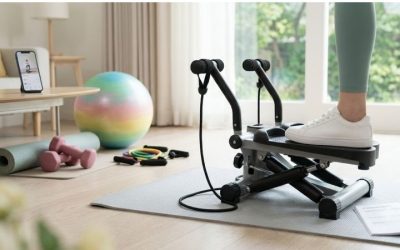
| Compact stepper-elliptical | Vertical movement in a small area | Less walking-like stride |
| Full-size elliptical | Often longer stride | Larger floor footprint |
When to Choose an Under-Desk Elliptical
An under-desk elliptical can be useful when the primary goal is seated movement.
However, it generally does not reproduce the training position of a full-height standing elliptical.
When an Air Walker Makes Sense
Air walkers provide a swinging or gliding motion.
They may be compact and straightforward, but they do not necessarily offer the resistance control or pedal path of a magnetic elliptical.
When to Choose a Larger Machine
If a very short stride feels restrictive, a longer elliptical may be worth the additional floor space.
Comfortable exercise is more important than minimizing dimensions.
Buying by Budget
Entry-Level Compact Ellipticals
Budget models often provide manual magnetic resistance, short strides, and basic displays.
They can be suitable for recreational exercise when fit and stability are appropriate.
Midrange Machines
Midrange equipment may offer additional resistance settings, improved frame construction, and connected tracking.
Premium Compact Ellipticals
Premium models may use different movement mechanisms, advanced consoles, or guided workouts.
However, higher price does not guarantee that the stride will suit every user.
Total Ownership Cost
Consider shipping, assembly, maintenance, optional subscriptions, and replacement parts.
A machine with accessible service components may provide better value over time.
Common Buying Mistakes
Choosing the Shortest Frame
A very small elliptical may have an uncomfortable or restrictive stride.
Ignoring Ceiling Clearance
Standing on raised pedals increases the rider’s head height.
Assuming Compact Means Foldable
Many compact ellipticals remain fully assembled.
Comparing Resistance Levels as Standardized Loads
Different brands use different braking systems.
Overlooking User-Weight Limits
Always respect the manufacturer’s rating.
Buying Without Checking Handlebar Clearance
Moving handlebars require space beyond the static frame.
Assuming Bluetooth Controls Resistance
Connected functions depend on the exact machine.
Ignoring Parts Support
Pedal rollers, bearings, belts, and electronic components may eventually require service.
A Practical Buying Checklist
Measure the available floor area and ceiling height.
Confirm the assembled dimensions and manufacturer-recommended exercise clearance.
Compare stride length and pedal movement with your preferences.
Check the user-weight capacity and supported rider dimensions.
Choose an appropriate resistance system.
Evaluate footplate size, pedal spacing, and handlebar reach.
Review stability, assembly, transport wheels, and maintenance requirements.
Finally, compare workout monitors, connected features, warranty coverage, and long-term cost.
Frequently Asked Questions
What Is the Best Compact Elliptical for a Small Apartment?
The best choice is a stable machine with a comfortable stride, appropriate resistance, a manageable footprint, and adequate ceiling clearance.
Is an 11-Inch Stride Too Short?
It can be suitable for some users but restrictive for others. Body proportions and preferred movement matter more than the number alone.
Are Compact Ellipticals Good for Tall People?
Some are, but shorter stride lengths may feel uncomfortable. Compare fit guidance and pedal geometry carefully.
Are Magnetic Ellipticals Quiet?
Magnetic braking is generally relatively quiet, but pedals, bearings, joints, and frame movement still create sound.
Can You Use a Compact Elliptical Every Day?
Regular exercise can be appropriate when intensity, comfort, and recovery are managed sensibly.
Is a Compact Elliptical Better Than a Mini Stepper?
They provide different movements. An elliptical uses a guided pedal path, while a mini stepper generally emphasizes vertical stepping.
Do Compact Ellipticals Need Electricity?
Manual magnetic models may operate without external power for resistance. Electronic machines may require an outlet.
Can You Store a Compact Elliptical Upright?
Only if the manufacturer expressly approves that position.
Are Compact Ellipticals Good for Beginners?
They can be suitable when the machine provides comfortable movement, stable support, and manageable resistance.
Is a Larger Elliptical Worth the Extra Space?
It may be worthwhile when the additional frame length provides a more comfortable stride and better fit.
Conclusion
A compact elliptical for small spaces should provide a comfortable stride, stable construction, suitable resistance, and sufficient overhead clearance. Measure the operating area carefully and compare actual movement geometry rather than footprint alone. Prioritize body fit and long-term reliability before extra digital features.
Write Your Review
No reviews yet. Be the first to share your experience!