
Key takeaways
What's inside
Best affordable yoga mat is a question of arithmetic rather than taste. A foam mat that dents permanently after eight months is not cheap, it is just cheap twice, so the number worth comparing is price divided by years of realistic use. Six picks below, judged on exactly that rather than on how they photograph in a studio.
As an Amazon Associate we earn from qualifying purchases at no extra cost to you. Product prices and availability are accurate as of the date shown and are subject to change.


As an Amazon Associate we earn from qualifying purchases at no extra cost to you. Product prices and availability are accurate as of the date shown and are subject to change.
By Chris Parker
🛒 Best Price Today on Amazon
Prime members get fast, free shipping on everything above, plus member-only deals. New members get a 30-day free trial — cancel anytime.
How to Choose the Best Affordable Yoga Mat
The best affordable yoga mat for one person is a waste of money for another, and the variable is frequency. Somebody practising twice a month and somebody practising five times a week are buying different products, even though the listings look identical. Three numbers separate them before any brand comparison starts.
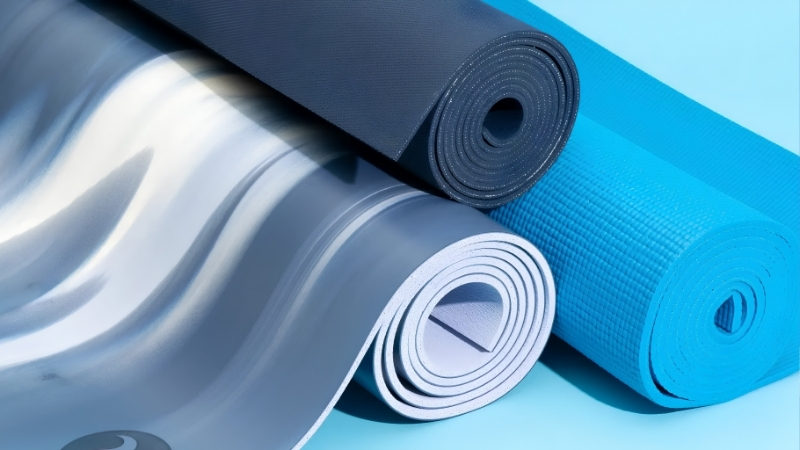
Cost Per Year of Use, Not Cost Per Mat
Materials set the replacement cycle on the best affordable yoga mat far more than branding does. NBR and PER foam, which is what the entire bottom tier is made from, typically gives six to twelve months of three-session weeks before permanent compression appears under the knees and elbows. TPE stretches that to roughly two or three years.
Do the division before you buy. A cheap foam mat replaced every year and a mid-tier TPE mat that lasts three cost broadly similar money over five years, except that with the foam route you spend most of that time on a flattened surface with peeling edges. Frequency decides which side of that line you sit on.
Thickness, Length and Rolled Storage Footprint
Thickness falls into three usable bands. Around 3-4 mm gives maximum stability and the smallest pack size. Between 5 and 6 mm is the all-round choice most people should default to. Anything from 8 to 13 mm cushions the joints well but makes balance poses genuinely wobbly, because your foot sinks unevenly.
Footprint matters in two states. Unrolled, a standard mat occupies 72 x 24 in (183 x 61 cm), around 12 sq ft (1.1 sq m). Rolled, a 13 mm foam mat is roughly 6-7 in (15-18 cm) in diameter against 4-5 in (10-13 cm) for a 5 mm mat. Measure the clear floor area and the storage spot before ordering.
What Disappears Below the Mid Tier
The price floor for the best affordable yoga mat is defined entirely by material. Below a certain point you are buying moulded foam rather than TPE, PVC or natural rubber, because foam is the cheapest thing to produce at thickness and the easiest to print on. It is also the fastest to take a permanent dent.
Three other things get cut alongside it. Surface texture is embossed shallowly rather than moulded deep, so grip fades as the pattern wears flat. Edges are cut rather than sealed, which is why budget mats start peeling at the corners. Thickness tolerance across the sheet loosens, so the mat is not uniformly flat.
The mid tier is where the choice is widest and where TPE and decent PVC live, and it is not far above the floor in absolute money. Above it you are paying for natural rubber, polyurethane tops and long warranties, which only start making sense at four or five sessions a week.
Top Picks: 6 Affordable Yoga Mats Rated by Lifespan
These six run from the cheapest usable foam up to entry-level TPE from a studio brand. The best affordable yoga mat in the group depends entirely on how often you practise, so the table below lists a realistic lifespan at three sessions a week rather than an average star rating.
| Mat | Material | Thickness | Size | Realistic Life at 3x Weekly |
|---|---|---|---|---|
| BalanceFrom GoYoga All-Purpose | High-density foam | 1/4 or 1/2 in (6.4 or 12.7 mm) | 71 x 24 in (180 x 61 cm) | Around 1 year |
| Amazon Basics Extra Thick | NBR foam | 1/2 in (12.7 mm) | 74 x 24 in (188 x 61 cm) | Around 1 year |
| Gaiam Essentials Thick | NBR foam | 2/5 in (10 mm) | 72 x 24 in (183 x 61 cm) | 1 to 2 years |
| Retrospec Solana | TPE foam | 1/2 or 1 in (12.7 or 25.4 mm) | Standard length | 1 to 2 years |
| Toplus Yoga Mat | TPE | 1/4 in (6 mm) | 72 x 24 in (183 x 61 cm) | 2 to 3 years |
| Manduka Begin | TPE | 5 mm | 68 or 71 in (173 or 180 cm) | 3 years or more |
BalanceFrom GoYoga All-Purpose Mat
The category benchmark for low cost, sold in 1/4 in (6.4 mm) and 1/2 in (12.7 mm) versions at 71 x 24 in (180 x 61 cm) with a carry strap included. As a first mat for stretching, floor work and occasional classes it does everything asked of it and costs very little to find out.
High-density foam compresses permanently under the knees within a year of regular use, the cut edges lift at the corners, and it becomes slick rather than grippy once you sweat on it. Do not put dumbbells or a kettlebell down on it, because point loads leave craters that never recover.
Amazon Basics 1/2-Inch Extra Thick Exercise Mat
The longest mat here at 74 x 24 in (188 x 61 cm), which genuinely matters if you are over about 5 ft 10 in (178 cm) and tired of your heels hanging off the end. NBR foam at 1/2 in (12.7 mm) gives generous cushioning for floor work, sit-ups, planks and kneeling positions alike.
Thick foam is unstable for standing balance work, so this is a floor-exercise mat that happens to suit gentle yoga rather than the reverse. Expect the same compression and edge-peel timeline as any NBR mat, and expect a noticeable manufacturing smell for the first week or two after unrolling.
Gaiam Essentials Thick Yoga Mat
At 2/5 in (10 mm) and 72 x 24 in (183 x 61 cm), this sits between a yoga mat and a general exercise mat, and the construction is a step above the very cheapest foam. The included strap is more useful than it sounds if the mat has to live somewhere other than the floor it is used on.
The trade-off is the same one every thick mat makes: comfortable on the knees, vague underfoot in tree pose or warrior three. Surface grip is adequate dry and poor once damp. It will still outlast the bottom tier by several months, which is where the modest price difference earns itself back.
Retrospec Solana Yoga Mat
Sold in half-inch and one-inch thicknesses, the Solana is aimed at people who want cushioning first and yoga second. The one-inch version is effectively a floor mat and is excellent for kneeling work, core exercises and anything where the discomfort is coming from a hard surface rather than the movement.
At that thickness, standing poses are compromised and the rolled diameter becomes awkward to store in a small flat. TPE holds its shape better than NBR but it is still a foam, so heavy point loads will mark it. Choose the half-inch if you actually intend to do yoga on it.
Toplus Yoga Mat
This is where affordable stops meaning disposable. TPE at 1/4 in (6 mm) over 72 x 24 in (183 x 61 cm) gives the balance most people want: enough padding for knees, thin enough that standing poses feel connected to the floor, and a moulded texture that holds grip better than embossed foam.
TPE is closed-cell, so it wipes clean but goes slippery under sweat rather than tackier, which makes it a poor choice for hot yoga. It is lighter than rubber, which is good for carrying and bad for stability on carpet. Avoid leaving it in direct sunlight, as heat accelerates surface breakdown.
Manduka Begin
Manduka’s entry mat, 5 mm TPE in 68 in (173 cm) and 71 in (180 cm) lengths, with a different texture on each side so you can pick more cushion or more grip. It is the most expensive option here and still comfortably within affordable territory, and it should outlast every foam mat on this list.
Two caveats. The 68 in version is short for anyone above average height, so check the length option before ordering rather than assuming. And like all closed-cell surfaces it loses grip as sweat builds, so a mat towel is a sensible companion purchase for warmer rooms or more vigorous sequences.
Frequently Asked Questions
Most questions about the best affordable yoga mat concern lifespan, materials and smell, because those are the three things listings describe least honestly. These four answers cover what changes between the tiers and what you can reasonably expect from a mat at the lower end of the market.
How long should an affordable yoga mat last?
At roughly three sessions a week, budget NBR foam gives six to twelve months before permanent dents appear at the knees and elbows. TPE typically manages two to three years, and PVC or natural rubber can run five or more. Storage matters too: leaving a mat rolled tightly in sunlight shortens all of those figures.
Is TPE better than foam?
For yoga, generally yes. TPE holds its thickness far longer, takes a deeper moulded texture and weighs less. It is still closed-cell, so it will not out-grip natural rubber when damp, and it is not indestructible under point loads. For pure floor cushioning, thick NBR foam is more comfortable and much cheaper.
Why does a new mat smell?
Residual manufacturing compounds, and it is normal across foam, TPE and PVC alike. Unroll the mat and leave it in a ventilated room, ideally out of direct sun, for a few days to a couple of weeks. Natural rubber mats smell strongest and take longest. If it never fades, that is a quality signal.
Can I put a budget mat in the washing machine?
No. Foam and TPE both delaminate and lose their surface texture in a machine, and the weight of a soaked mat is hard on a drum. Wipe with a damp cloth and a little mild soap, then dry it flat and completely before rolling, since moisture trapped inside a rolled mat is what creates lasting odour.
See More:
- Best home pull-up bar
- Best at home pull up bar
- Best in house pull up bar
- Best rated ab roller
- Best yoga travel mat
Final Thoughts
The best affordable yoga mat is decided by how often you unroll it. For occasional stretching, budget foam is sensible and annual replacement is cheaper than paying up front. At three or more sessions a week, 5-6 mm TPE costs less per year and stays flat far longer.




Write Your Review
No reviews yet. Be the first to share your experience!