
Key takeaways
What's inside
Best beaded jump rope exists for a reason speed ropes cannot match: the beads give the rope enough mass to hold a predictable arc, and the click on each pass supplies timing you can hear rather than watch. That makes them the tool for freestyle and tricks.
As an Amazon Associate we earn from qualifying purchases at no extra cost to you. Product prices and availability are accurate as of the date shown and are subject to change.
As an Amazon Associate we earn from qualifying purchases at no extra cost to you. Product prices and availability are accurate as of the date shown and are subject to change.



By Chris Parker
🛒 Best Price Today on Amazon
Prime members get fast, free shipping on everything above, plus member-only deals. New members get a 30-day free trial — cancel anytime.
Start 30-Day Prime Free Trial →See Today’s Amazon DealsWhy the Best Beaded Jump Rope Suits Freestyle Work
Freestyle jumping involves crossovers, releases and side swings where the rope has to stay where you put it, which is what the best beaded jump rope is built to do. A light cable collapses in those positions; a segmented beaded rope keeps its shape, which is the entire argument for the format.
Mass, Arc Stability and Wind
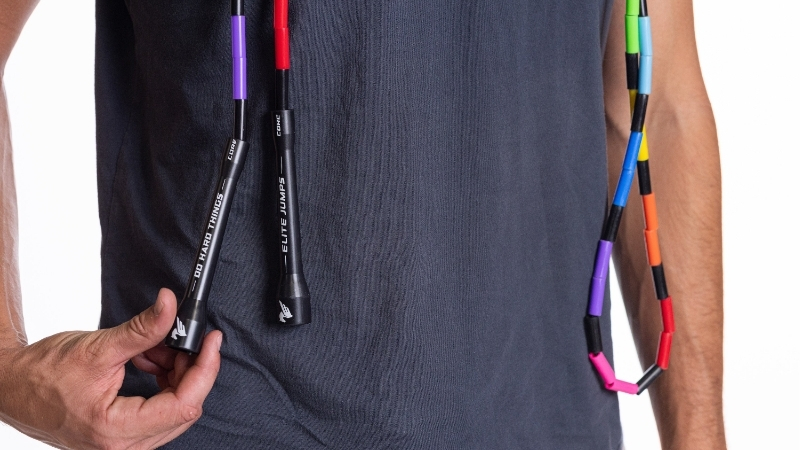
Beads add distributed weight along the whole rope rather than at the handles, which keeps the arc open through crossovers and releases. That distributed mass is also what makes beaded ropes usable outdoors where a light cable would be pushed around by wind.
The trade-off is speed. A beaded rope cannot match a 2 mm steel cable for revolutions per minute, so it is the wrong tool for timed double-under work and the right one for anything involving rope manipulation.
Audible Timing and Learning Speed
The click on ground contact tells you exactly when the rope passes, which lets you learn timing without looking down. That single feature shortens the learning curve for beginners and makes complex sequences easier to keep in rhythm.
It also makes beaded ropes loud. On a hard indoor floor the noise carries, which matters in a flat with neighbours below, so a mat or an outdoor surface is worth planning for before buying.
Footprint, Length and Sizing
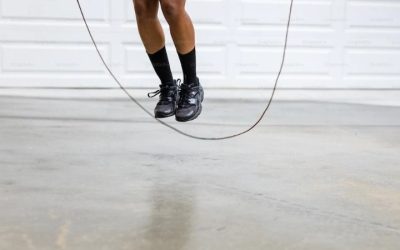
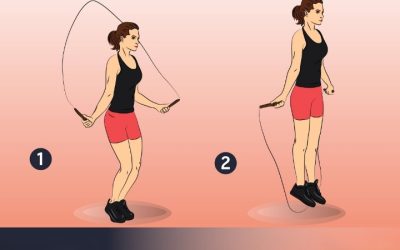
Sizing is done by standing on the middle of the rope: the handles should reach roughly to the armpits for general jumping, and to the sternum for a faster, tighter arc. Most beaded ropes are sized by removing beads.
Allow around 6 x 6 ft (1.8 x 1.8 m) of clear floor and about 9-10 ft (2.7-3 m) of ceiling, since the rope passes above your head. Low ceilings and light fittings are the usual reason a session moves outdoors.
Repairability and Wear Points
Beaded ropes are the only rope type that is genuinely repairable. A frayed nylon core is rethreaded and the beads reused, so a snapped rope is a ten-minute fix rather than a replacement, which is why they last years in club use.
Wear concentrates at the two beads nearest the ground and at the core where it enters the handle. Rotating the rope end for end evens out the bead wear and roughly doubles the life of the segments.
Beaded Versus Cable for Conditioning
For interval conditioning the choice depends on what limits you. A cable rope allows faster turnover and higher rep counts, while beads add enough resistance that shoulders and forearms fatigue sooner at the same duration.
That extra load is useful rather than a flaw. Using the best beaded jump rope for shorter, harder intervals and a cable for longer efforts covers both ends without owning three ropes, and the beaded version doubles as the tricks rope.
Market Context for Rope Types
This category sits between the school sports channel and the fitness market, so specifications vary widely in how they are stated. Some list bead count and core material, others only overall length, which makes direct comparison harder than it should be.
Below the mid tier the compromises are predictable: thinner nylon cores that fray at the end beads, plastic that cracks rather than flexes on concrete, and inconsistent bead spacing that produces an uneven click. The end beads are the first thing to inspect.
The useful development is that spare beads and cord are now sold separately at low cost. That changes the economics of the category entirely, since a maintained beaded rope outlasts several replacement speed ropes.
Top Picks: Best Beaded Jump Rope
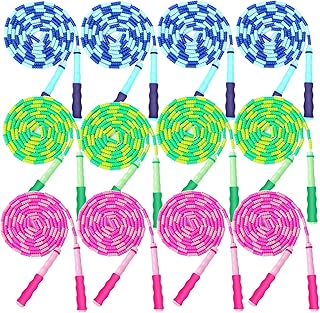
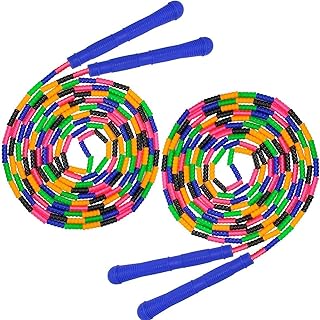
These seven span club-grade ropes, budget options, children’s sizes and the repair parts that keep them going. Each entry gives the honest weakness rather than repeating the listing.
| Product | Bead Type | Core | Best For | Note |
|---|---|---|---|---|
| Elite Jumps Beaded Rope | Segmented plastic | Nylon | Freestyle and tricks | Club standard |
| Buy Jump Ropes Beaded | Segmented plastic | Nylon | Competitive freestyle | Consistent spacing |
| Crown Sporting Goods Beaded | Segmented plastic | Nylon | Budget entry | Beads crack sooner |
| Champion Sports Segmented Rope | Segmented plastic | Nylon | School and group use | Widely available |
| Heavy Beaded Rope | Larger beads | Nylon | Outdoor and wind | Tiring over time |
| Children’s Beaded Rope | Small beads | Nylon | Young beginners | Short length only |
| Spare Beads and Cord Kit | Replacement parts | Nylon | Repairs and resizing | Buy with the rope |
Elite Jumps Beaded Rope
The club standard, and the usual answer to the best beaded jump rope question for anyone doing freestyle work. Bead spacing is consistent enough to give an even click, and the arc holds through crossovers without collapsing.
It is noisier than a cable rope on hard floors and cannot match one for pure speed. The end beads wear faster than the rest, which is normal for the format but means periodic rotation or replacement.
Buy Jump Ropes Beaded Rope
Aimed at competitive freestyle, with tight tolerances on bead spacing that produce a clean, even rhythm at higher speeds. For anyone learning sequences where timing has to be exact, that consistency is the reason to pay more.
The price sits above general-purpose beaded ropes and the practical benefit is precision rather than durability. For casual jumping the difference is not worth the cost.
Crown Sporting Goods Beaded Rope
The budget entry, and perfectly serviceable for learning. The rhythm cue is identical regardless of price, so a first rope at this level gets you jumping and tells you whether the format suits you.
Beads crack rather than flex when struck against rough concrete, and spacing is less consistent, which occasionally produces an uneven click. Both matter more once you start timing sequences.
Champion Sports Segmented Rope
Widely stocked and built for school use, which means it survives being handled by groups and stored badly. For a household with several users of different heights it is the practical choice, since resizing is straightforward.
It is heavier than freestyle-specific ropes, which makes long sessions more tiring, and the beads are larger and louder. It is a general-purpose rope rather than a specialist one.
Heavy Beaded Rope
Larger beads add mass, which holds the arc firmly in wind and gives strong feedback on each rotation. Outdoors on an exposed surface this is the version that behaves predictably when lighter ropes do not.
The weight is tiring over sessions longer than a few minutes and it stings noticeably on a missed rep. It is also slower again than a standard beaded rope, so it suits conditioning rather than tricks.
Children’s Beaded Rope
Shorter lengths with smaller beads suit younger jumpers, and the audible click helps children find the rhythm far faster than a smooth rope does. The lighter beads also sting less on a missed pass.
The short length limits it to one user size, and the lighter beads hold the arc less well outdoors. Children outgrow these quickly, so buying with spare cord to lengthen is worthwhile.
Spare Beads and Cord Kit
The cheapest item here and the one that changes the economics of the whole category. A frayed core is rethreaded in ten minutes, and spare beads let you resize the rope as users grow or techniques change.
Bead diameters vary between brands, so a kit bought separately may not match your rope exactly. Buying the kit alongside the rope from the same source avoids that mismatch entirely.
Frequently Asked Questions
These questions come up whenever someone moves from a cable speed rope to a segmented one and finds it behaves completely differently.
Are beaded ropes good for fitness or only tricks?
Both, but they excel at rope manipulation rather than raw speed. The best beaded jump rope holds its arc through crossovers and releases, while a light cable is faster for timed double-under work and interval conditioning.
How do I size one correctly?
Stand on the middle of the rope and pull the handles up. Armpit height suits general jumping and sternum height gives a faster arc. Beaded ropes resize by removing beads, so a slightly long rope is not a problem.
Are they too loud for indoor use?
On bare hard floors, usually yes. A 1/2 in (12.7 mm) interlocking mat cuts the impact noise considerably, though the click itself remains. Anyone above a neighbour should plan for matting or train outdoors.
How long should one last?
Years, if you rotate the rope end for end and rethread the core when it frays. The beads outlast the cord by a wide margin, which is why a spare cord is the single most useful accessory to own alongside the rope itself. Club ropes maintained this way commonly outlast several replacement speed ropes bought over the same period.
See More:
- Ankle weights best
- Best rated ankle weights
- Best home workout equipment budget
- Best resistance bands for men
Final Thoughts
The best beaded jump rope earns its place through arc stability and an audible rhythm rather than speed, which makes it the right choice for freestyle, tricks and outdoor jumping. Buy spare cord and beads at the same time, rotate the rope end for end as it wears, and check your ceiling height before jumping indoors.


Write Your Review
No reviews yet. Be the first to share your experience!