
Key takeaways
What's inside
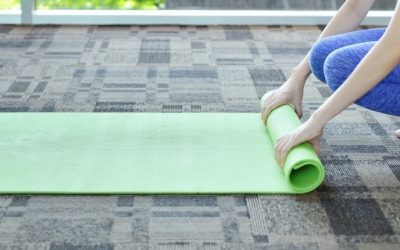
Best yoga mat for carpet is counterintuitive: you want a firmer, denser mat rather than a thicker one. Carpet already supplies the cushioning, and soft foam laid on top sinks unevenly and rolls under your hands. Here is what actually stays flat.
As an Amazon Associate we earn from qualifying purchases at no extra cost to you. Product prices and availability are accurate as of the date shown and are subject to change.
As an Amazon Associate we earn from qualifying purchases at no extra cost to you. Product prices and availability are accurate as of the date shown and are subject to change.


By Chris Parker
🛒 Best Price Today on Amazon
Prime members get fast, free shipping on everything above, plus member-only deals. New members get a 30-day free trial — cancel anytime.
Start 30-Day Prime Free Trial →See Today’s Amazon DealsHow to Choose the Best Yoga Mat for Carpet
Carpet changes the problem entirely, which is why the best yoga mat for carpet is not the best mat generally. On a hard floor a mat provides cushioning and grip; on carpet it only needs to provide a stable, non-shifting surface, because the padding is already there. That inverts most of the usual buying advice.
Thickness, Density and Why Thin Wins
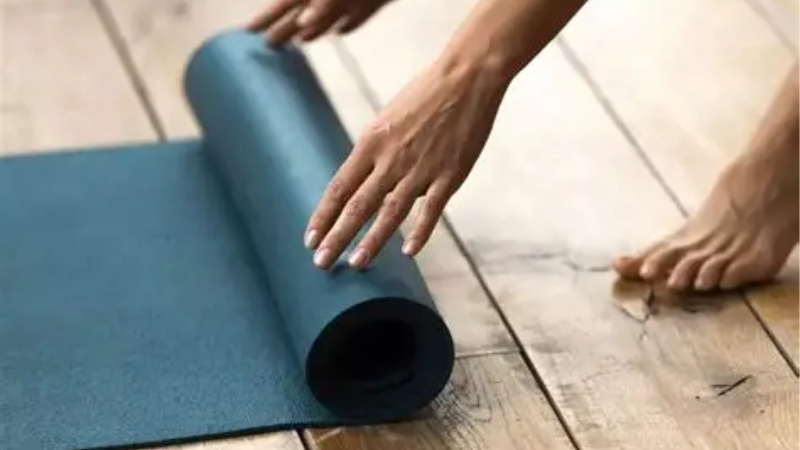
A dense mat around 4-6 mm is the sweet spot on carpet. Thicker options of 8-12 mm compress unevenly on top of pile, which makes balance poses genuinely unstable because your standing foot sinks further than your planted hand.
Density matters more than thickness. A firm 6 mm mat such as a dense PVC or natural rubber sheet resists deformation far better than a soft 10 mm foam mat, and that resistance is what keeps a downward dog from feeling like standing on a mattress.
Footprint, Storage and Mat Dimensions
Standard mats run around 68 in (173 cm) long, with longer versions at 71 in (180 cm), 74 in (188 cm) and 85 in (216 cm). Anyone over about 5 ft 9 in (175 cm) should look at the longer options, since heels and hands both need to land on the mat.
Rolled storage is roughly 5-6 in (13-15 cm) in diameter, and weight ranges from about 2.5 lb (1.1 kg) for a travel mat to around 7.5 lb (3.4 kg) for a dense studio mat. Measure the clear floor rectangle you have before choosing a length.
Grip: Open-Cell Versus Closed-Cell
Open-cell surfaces absorb moisture and grip better as you sweat, but they also absorb everything else and need regular cleaning. Closed-cell surfaces resist moisture and stay hygienic, but they can become slippery once your palms are damp.
On carpet the grip that matters is between mat and floor as much as between hand and mat. A heavier, denser mat stays put on pile through its own weight, while a light mat slides regardless of how grippy its top surface is.
Pile Type Changes the Answer
Low-pile and loop carpet behaves almost like a hard floor, so a standard 5-6 mm mat sits flat and needs little thought. Plush, shag and thick underlay are the difficult cases, because the surface moves independently underneath the mat during transitions.
On deep pile the best yoga mat for carpet is the heaviest dense option you are willing to store, since weight is what stops the mat travelling. A thin rubber mat over a non-slip underlay is the alternative where storage or portability rules out a studio-weight mat.
Market and Seasonal Context
The mid tier of the mat market offers the widest choice and the clearest trade-offs. Below it you get thinner surface layers that peel at the edges, foam that takes permanent dents at knee and elbow positions, and a stronger initial smell that takes weeks to fade.
Practice moves indoors as evenings draw in through autumn, which is precisely when carpeted spare rooms and living rooms become the default training space. That is the season when the carpet problem stops being theoretical for most people.
The gap in the market is still the small home. Most mats are designed around studio use where the floor is hard and flat, so genuinely carpet-appropriate advice is thin on the ground and the specification sheets rarely mention floor type at all.
Top Picks: Best Yoga Mat for Carpet
These seven cover the dense studio mats that work best on pile, the alignment options and the budget entries, plus an underlay for anyone determined to keep a thicker mat. Each entry gives the honest weakness.
| Mat | Thickness | Material | Length | Carpet Verdict |
|---|---|---|---|---|
| Manduka PRO | 6 mm | Closed-cell PVC | 71 or 85 in | Dense and stays flat |
| Jade Harmony | 5 mm | Natural rubber | 68 to 80 in | Excellent hand grip |
| Liforme Yoga Mat | 4.2 mm | Rubber and eco-polyurethane | 185 cm (73 in) | Thin, firm, alignment marks |
| Lululemon Reversible 5mm | 5 mm | Rubber with PU top | 71 in | Grippy when damp |
| Yoga Design Lab Combo | 3.5 mm | Rubber with microfibre | 70 in | Thin but light |
| Gaiam Essentials | 10 mm | NBR foam | 72 in | Too soft on pile |
| Non-Slip Rug Underlay | 2-3 mm | PVC mesh | Cut to size | Stops sliding |
Manduka PRO
At 6 mm of dense closed-cell PVC and around 7.5 lb (3.4 kg), this is the mat most often described as the best yoga mat for carpet, and the weight is the reason. It sits on pile without shifting and it does not compress unevenly under a standing foot.
The surface is slippery when new and needs breaking in over several weeks before grip develops properly. It is also heavy to carry and sits at the premium end of the price range, which makes it a commitment rather than a first mat.
Jade Harmony
Natural rubber at 5 mm gives the best hand grip on this list, which matters because a mat that stays put on carpet is useless if your palms still slide. Available lengths run from 68 in (173 cm) upward, covering taller practitioners.
Natural rubber has a strong smell for the first few weeks and degrades under direct sunlight, so it should not be left on a sunny windowsill. It also wears faster than PVC at knee and elbow contact points.
Liforme Yoga Mat
At 4.2 mm this is the thinnest of the premium mats and that thinness is an advantage on carpet, because there is less material to deform. The printed alignment system is genuinely useful for anyone practising alone without a teacher watching.
It is expensive, the surface is grippy but soft enough to scuff, and the eco-polyurethane top layer shows wear at high-contact spots sooner than PVC does. It also needs storing rolled rather than folded.
Lululemon Reversible 5mm
The polyurethane top layer grips well specifically when damp, which suits warmer or more vigorous practice. At 5 mm on a rubber base it has enough density to stay stable on carpet without the bulk of a foam mat.
The PU surface marks easily and absorbs oils, so it needs wiping after every session. The reversible design means one side is significantly less grippy, which some people find confusing rather than useful.
Yoga Design Lab Combo Mat
A 3.5 mm rubber base with a microfibre towel top is the option for anyone whose hands slide badly. The towel layer grips better as it dampens, and the thinness means almost no deformation on pile.
It is light, which is the drawback on carpet: less weight means more chance of the mat travelling during transitions. The microfibre surface also requires washing regularly rather than wiping down.
Gaiam Essentials Thick Mat
A 10 mm NBR foam mat is included here as the counter-example, because it is what most people buy for carpet and it is usually the wrong choice. It does excel for floor exercises where you are kneeling or lying rather than balancing.
On carpet it compresses unevenly, which undermines balance poses and makes plank positions feel unstable. Foam also takes permanent dents at knee and elbow positions within months of regular use.
Non-Slip Rug Underlay
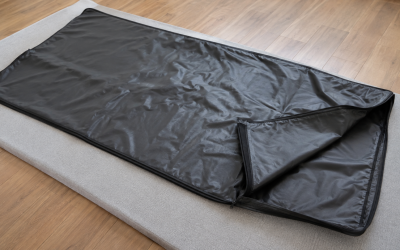
A sheet of PVC mesh underlay cut to mat size is the cheapest fix if you already own a mat that slides on carpet. It grips the pile from below and adds only 2-3 mm of thickness, so it does not create the instability a thicker mat would.
It does nothing for a mat that compresses unevenly, so it solves sliding rather than sinking. Cheaper mesh also breaks down over a year or two and can shed small particles into the carpet pile.
Frequently Asked Questions
These questions come up whenever someone discovers that the thick mat they bought for a carpeted room made everything harder rather than easier.
Should I get a thicker mat because the floor is soft?
No, the opposite. The best yoga mat for carpet is dense and relatively thin, usually 4-6 mm, because the carpet already provides cushioning and additional soft foam compounds the instability rather than helping.
Why does my mat slide on carpet?
Light mats travel on pile because there is not enough weight to hold them and the pile itself moves underneath. A heavier dense mat solves it through weight alone, and a non-slip underlay solves it for a mat you already own.
Do I need a longer mat?
If you are over roughly 5 ft 9 in (175 cm), yes. Standard 68 in (173 cm) mats leave heels or hands on the carpet in long poses, which defeats the point. Longer versions run to 85 in (216 cm).
How do I stop the new mat smell?
Unroll it and leave it in a ventilated room away from direct sunlight for a few days. Natural rubber has the strongest initial smell and takes the longest to settle, usually a couple of weeks with regular airing.
See More:
- Ankle weights best
- Best rated ankle weights
- Best home workout equipment budget
- Best resistance bands for men
Final Thoughts
The best yoga mat for carpet is dense rather than thick, because pile already supplies the cushioning and soft foam on top only adds instability. A 4-6 mm mat with real weight stays flat and stops travelling, and an underlay fixes sliding on a mat you already own. Measure your clear floor rectangle before choosing a length.

Write Your Review
No reviews yet. Be the first to share your experience!