
Key takeaways
What's inside
Best barbell pad choices hinge on foam density rather than thickness. A thick pad made of soft foam compresses to nothing under 200 lb on your hips, which is exactly when you need it. This guide covers foam density, pad length, closure type and how the pad fits your particular bar, then compares six pads across squat and hip thrust use.
As an Amazon Associate we earn from qualifying purchases at no extra cost to you. Product prices and availability are accurate as of the date shown and are subject to change.
As an Amazon Associate we earn from qualifying purchases at no extra cost to you. Product prices and availability are accurate as of the date shown and are subject to change.


By Chris Parker
🛒 Best Price Today on Amazon
Prime members get fast, free shipping on everything above, plus member-only deals. New members get a 30-day free trial — cancel anytime.
Start 30-Day Prime Free Trial →See Today’s Amazon DealsHow to Choose a Barbell Pad
Barbell pads look interchangeable and are not. Under a heavy hip thrust the difference between dense and soft foam is the difference between comfort and a bruise, and the four criteria below explain what the best barbell pad actually needs to do under load.
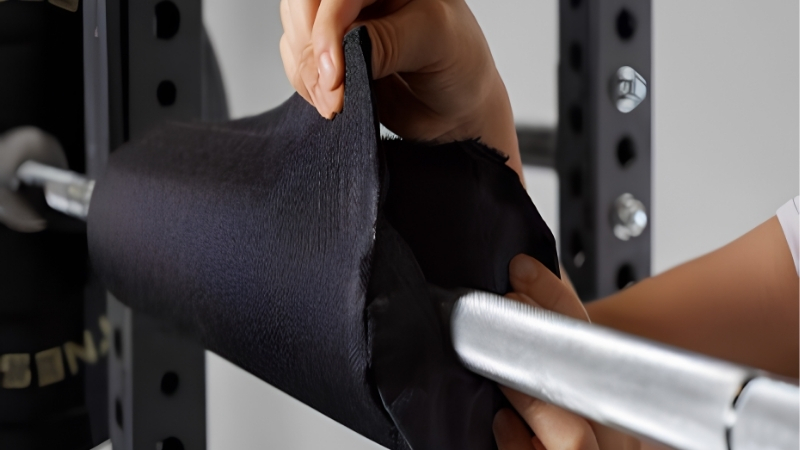
Foam Density Versus Thickness
Thickness in the listing tells you nothing on its own about the best barbell pad. A 2 in (5 cm) pad of soft open-cell foam compresses almost completely under a loaded bar, leaving the bar effectively resting on your hip bone with a thin sleeve between.
Closed-cell or high-density foam at 1.5 in (38 mm) outperforms a soft 2.5 in pad every time. Press the pad firmly with a thumb when it arrives: if it bottoms out easily under hand pressure, it will certainly do the same under 200 lb across your hips.
Density also determines how long the pad lasts. Soft foam takes a permanent flat spot within months of heavy use, while dense foam recovers its shape between sessions and stays useful for years rather than a single training block.
Inner Diameter and Bar Fit
Most versions of the best barbell pad are sized for an Olympic bar, but shaft diameters actually run 25 to 32 mm depending on the bar, so a pad that fits loosely will rotate during a set. That rotation is what causes the bar to creep sideways under a hip thrust.
Check whether the pad has a velcro closure or is a fixed sleeve. Velcro pads fit a wider range of bars and come off easily; fixed sleeves grip better but must be slid on from the sleeve end, which means unloading the bar to fit or remove them.
Length and Where the Load Actually Sits
Length on the best barbell pad runs 15-20 in (38-51 cm). For squats, shorter is fine because the load sits across the traps and the contact area is narrow. For hip thrusts, longer is better, because hip width varies and a short pad leaves the bar on bone at the edges.
Seventeen inches is a reasonable all-round length for mixed use. If hip thrusts are the main use and you are broader across the hips, look toward the 20 in end, since a pad that stops short is the most common complaint about pads sold for squatting.
Footprint and Storage Between Sessions
A pad occupies almost nothing — roughly 18 x 6 x 6 in (46 x 15 x 15 cm) rolled and weighing about 1 lb (0.45 kg), so it hangs on a hook or drops into a gym bag. That makes it one of the few pieces of gym equipment with no space cost at all.
Storage still matters for longevity. Leaving a pad compressed under a loaded bar between sessions sets a permanent flat spot into the foam, and heat degrades foam considerably faster than use does. Hang it rather than leaving it on the bar in a hot garage.
Top Picks: Best Barbell Pad Options
The six best barbell pad options below run from budget sleeves through to dense hip thrust pads. The table lists the specs that decide the purchase, and each write-up names a genuine drawback so you can weigh density, length and closure type against what you actually train.
| Pad | Foam | Approx length | Closure | Price tier |
|---|---|---|---|---|
| Iron Bull Strength Advanced | High density | Around 17 in (43 cm) | Velcro | Mid |
| Gymreapers Barbell Pad | High density | Around 17 in (43 cm) | Velcro | Mid |
| ProsourceFit Squat Pad | Medium density | Around 17 in (43 cm) | Velcro | Budget |
| Dark Iron Fitness Pad | High density | Around 17 in (43 cm) | Velcro | Budget to mid |
| Rogue Barbell Pad | Dense closed cell | Around 18 in (46 cm) | Fixed sleeve | Mid |
| Hampton Thick Pad | Very high density | Around 20 in (51 cm) | Fixed sleeve | Premium |
Iron Bull Strength Advanced Squat Pad
Denser foam than most budget pads and a velcro closure that grips a range of shaft diameters, which makes this a sound default for someone doing both squats and hip thrusts. It holds its shape under load rather than compressing flat.
At around 17 in it is on the shorter side for heavy hip thrusts if you are broad across the hips, where the bar can reach bone at the pad edges. The velcro also collects chalk dust and loses some grip over a year of regular use.
Gymreapers Barbell Pad
Comparable density with slightly better stitching quality, and the velcro closure is wide enough to grip firmly without needing a specific bar diameter. It stays in position through a set rather than rotating, which is the main practical difference from cheap pads.
The price sits above the budget options for what is functionally a foam sleeve, and the same 17 in length limitation applies for hip thrusts. Chalk exposure degrades the velcro over time, as with every velcro-closure pad.
ProsourceFit Squat Pad
The value option, and adequate for squatting where the contact area is narrow and the load is spread across the traps. It costs very little and does the basic job of stopping a knurled bar sitting directly on bone.
The foam is noticeably softer than the mid-tier pads and will compress substantially under a heavy hip thrust. If hip thrusts are the main reason you are buying a pad, spend more on density rather than saving here.
Dark Iron Fitness Barbell Pad
Good density at a lower price than the mid-tier brands, with a velcro closure and a slightly grippier outer surface that resists sliding along the bar during a set. For a first pad it delivers most of what the more expensive options do.
Stitching quality varies between individual units and the seam is usually the first thing to fail. The outer cover also marks easily where it contacts a knurled bar repeatedly, which is cosmetic but noticeable within a few months.
Rogue Barbell Pad
A dense closed-cell fixed sleeve rather than a velcro wrap, which grips the bar far more securely and will not creep sideways under a heavy hip thrust. The foam resists compression better than anything at the budget end.
Being a fixed sleeve, it must be slid on from the sleeve end, which means unloading the bar to fit or remove it. That is a real inconvenience if the same bar is shared between people or used for other movements in the same session.
Hampton Thick Pad
The premium choice for heavy hip thrusting, with very high density foam and a 20 in length that covers wider hips properly. Under genuinely heavy loads the difference from a budget pad is immediately obvious rather than marginal.
It is expensive relative to the category and considerably more pad than a squatter needs. As a fixed sleeve it also requires unloading the bar to fit, and the bulk makes it less convenient to store in a gym bag.
Frequently Asked Questions
These four questions cover what people most want settled about the best barbell pad before buying one — whether pads are needed for squats, hip thrust requirements, whether pads affect bar position and how long foam lasts.
Do I need a pad for squatting?
Most people do not. A pad raises the bar off your traps and can make the load feel less stable, and many lifters find building trap mass solves the discomfort instead. Pads matter far more for hip thrusts, where the bar sits on bone.
What should I look for in a hip thrust pad?
Density first, then length. Aim for high-density foam that does not compress under thumb pressure, and a length toward 20 in if you are broad across the hips. Thickness alone is a poor guide and cheap thick pads bottom out under load.
Does the best barbell pad change my squat position?
Yes, slightly. A pad raises the bar by its thickness and rounds the contact surface, which can make a low-bar position less secure. If you squat low-bar to heavy loads, that instability is a reason many powerlifters avoid pads entirely.
How long does a barbell pad last?
One to three years depending on foam density and how it is stored. Heat and permanent compression are what kill foam rather than use, so hang the pad rather than leaving it on a loaded bar in a hot garage between sessions.
See More:
- Ankle weights best
- Best rated ankle weights
- Best home workout equipment budget
- Best resistance bands for men
Final Thoughts
The best barbell pad is judged by foam density rather than thickness, with length chosen for hip thrusts rather than squats. Press it with a thumb on arrival, choose velcro if the bar is shared and a fixed sleeve if it is not, and hang it up rather than leaving it compressed on the bar.


Write Your Review
No reviews yet. Be the first to share your experience!