
Key takeaways
What's inside
Best home gym power cage decisions are made with a tape measure long before any spec sheet matters. Ceiling height, doorway width and the floor left over after the frame goes in rule out most options immediately. This roundup compares six cages on footprint, steel, safety systems and what each one gives up.
As an Amazon Associate we earn from qualifying purchases at no extra cost to you. Product prices and availability are accurate as of the date shown and are subject to change.

#1 Pick

#2 Pick

#3 Pick
#4 Pick

#5 Pick

#6 Pick

#7 Pick

As an Amazon Associate we earn from qualifying purchases at no extra cost to you. Product prices and availability are accurate as of the date shown and are subject to change.
By Chris Parker
🛒 Best Price Today on Amazon
Prime members get fast, free shipping on everything above, plus member-only deals. New members get a 30-day free trial — cancel anytime.
How to Judge a Home Gym Power Cage
The best home gym power cage for a given room decides what that room can be used for, and it is also the one purchase nobody wants to disassemble and send back. Four things settle whether a given frame works: the space it claims, the steel it is built from, the safety system inside it, and whether it stays put without being bolted to the floor.
Footprint, Ceiling Height and Working Clearance
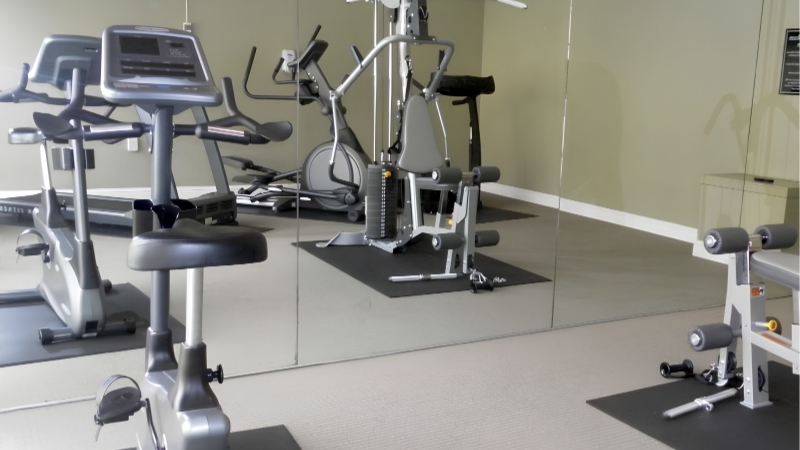
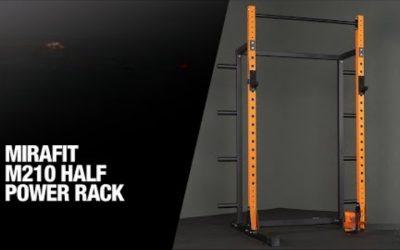
A standard best home gym power cage runs close to 48 in (122 cm) wide and 48 in (122 cm) deep, with taller frames reaching 82 to 86 in (208 to 218 cm). Compact models designed for basements stay under 7 ft (213 cm) overall, which is the number that really matters when there are joists or pipes running overhead.
The frame is only part of the claim on the room. Add roughly 24 in (61 cm) of working space each side for loading plates and for stepping in and out, which puts a realistic total near 8 x 8 ft (244 x 244 cm) of dedicated floor. Inside upright spacing near 24 in (61 cm) is what lets a 7 ft Olympic bar sit properly.
Overhead pressing inside the cage needs the bar path plus your standing reach, which is usually the constraint that pushes people toward a shorter frame. Measure the actual area where the cage will live before ordering, including the doorway width and any turn at the top of a staircase the boxes must come up.
Steel Gauge, Hole Spacing and Rated Capacity
Almost every best home gym power cage in this bracket uses 2 x 2 in (5 x 5 cm) uprights, so the wall thickness of that tube is the real variable. Fourteen-gauge steel is the budget standard and carries the loads most home lifters reach. Eleven-gauge is thicker and noticeably more rigid when a loaded bar comes down onto the safeties.
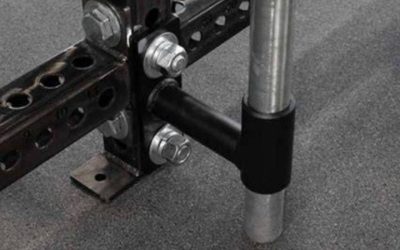
Hole spacing decides how precisely the J-cups and safety bars can be positioned. Two-inch spacing throughout is workable for squats. Racks offering one-inch spacing through the bench-press zone let the safeties sit close enough to the chest to be genuinely useful, which matters most to anyone training alone without a spotter.
Safety Bars, Stability and Attachment Ecosystem
Pin-and-pipe safeties are the common budget solution and they work, though the pipe rotates in use and shows wear over time. Strap safeties are quieter and kinder to the bar knurling but need a deep frame and careful tensioning. Flip-down arms cost more and take up the least internal space of the three.
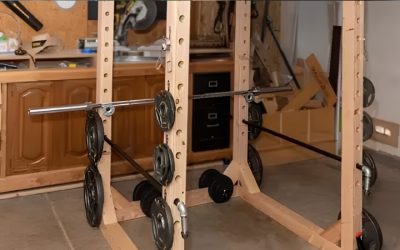
Stability without bolting comes down to mass. Frames under 150 lb (68 kg) will shift during aggressive pull-ups, and the standard fix is loading 50 to 100 lb (23 to 45 kg) of plates onto rear storage horns rather than drilling into a slab. Heavier cages above 200 lb (91 kg) will usually stay put on their own without help.
Where Power Cage Pricing and Features Sit Now
The market for a best home gym power cage has shifted toward bundling. Where a budget cage once meant bare uprights and two safety pins, the same money now often includes a lat pulldown, a low row, dip handles and plate storage. That is genuinely more equipment per pound spent, though the bundled pulleys are rarely as smooth as separate units.
The trade-off sits in the pulley ratio and the cable hardware. Cheaper all-in-one cages use a fixed lat carriage that only pulls straight down, while the better ones add adjustable pulleys on the uprights. Cable and pulley parts are also the wear items, so check whether replacements are sold separately before committing.
Freight is what keeps prices sticky. Steel is heavy and expensive to move, so meaningful discounts on cages appear rarely and tend to cluster into one or two periods a year rather than rotating monthly. Where local collection is offered, it usually saves more than any advertised sale on the same frame.
Top Picks: 6 Power Cages Worth the Floor Space
These six span the realistic range for a best home gym power cage, from a budget walk-in frame to a bundled unit with pulleys built in. Figures below are manufacturer specifications. None of these are competition frames, and none should be used for barbell work without the safeties correctly set first.
| Cage | Steel | Rated capacity | Best for |
|---|---|---|---|
| Fitness Reality 810XLT Super Max | 2 x 2 in, 14 gauge | ~800 lb / 363 kg | A first cage on a budget |
| Sportsroyals Multi-Function Rack | 2 x 2 in | High, bundled pulleys | Low ceilings, all-in-one |
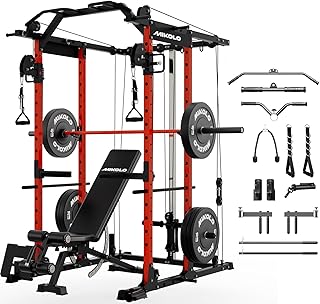
| Mikolo K6 2.0 Power Cage | Heavier tube | High | Heavier working loads |
| HulkFit Pro Series Power Cage | 2 x 2 in | ~1,000 lb / 454 kg | Value per pound of steel |
| Titan Fitness T-3 Series | 2 x 2 in, 11 gauge | High | Long-term expansion |
| REP Fitness PR-1100 | 2 x 2 in | Mid to high | Brand ecosystem |
Fitness Reality 810XLT Super Max Power Cage
This remains the most heavily reviewed budget cage available, and it earns the position honestly. The 2 x 2 in (5 x 5 cm) frame is rated around 800 lb (363 kg), the walk-in space is generous for the price, the safety bars adjust across nineteen height levels, and rear stability bars stop the frame twisting under a loaded bar.
The frame weighs only about 133 lb (60 kg), which is light enough to shift during hard pull-ups, and there are no holes provided for bolting it to the floor. The hole spacing is the wider two-inch pattern, so bench safeties cannot be set as precisely as they can on a mid-tier frame with a tighter zone.
Sportsroyals Multi-Function Power Rack
The argument for this one is the density of features in a small frame. Overall height stays under 7 ft (213 cm), which suits basements and garages with low joists overhead, and the bundled pulley system adds lat pulldowns, low rows and cable work without a separate machine taking up more of the floor.
Bundled cables are never as smooth as those on a dedicated functional trainer, and the pulley ratio means the load at the handle does not match the plates loaded. The compact depth also reduces room inside the cage for a bench at steeper angles. Cable and pulley parts wear, so check replacement availability before buying.
Mikolo K6 2.0 Power Cage
This is the option for anyone who already knows they will be loading real weight. Heavier tube and a substantially higher frame mass make it noticeably more rigid than the budget cages here, and the attachments arrive bundled in the box rather than being sold separately over the following two years.
The weight that buys the rigidity is also the problem. It is a genuine two-person assembly, it wants a permanent home, and getting the boxes into an upstairs room is a real obstacle. Price sits well above the entry tier, and the accessory ecosystem is narrower than it is with the established American brands.
HulkFit Pro Series Power Cage
HulkFit sits between the budget and the mid tiers, and offers a strong ratio of rated capacity to price, with frames listed around 1,000 lb (454 kg). For a garage corner where the cage will stay put permanently, it gives more steel per pound spent than most of the alternatives sold at the same money.
Finish quality is where the saving shows. Powder coat scuffs at the J-cup contact points sooner than on pricier frames, and hardware tolerances mean some pins need working in. The attachment range is limited to the manufacturer’s own parts, so long-term expansion is narrower than it would be with a standard bolt pattern.
Titan Fitness T-3 Series Power Rack
The T-3 is the usual step up once the budget frames start to feel flexible under load. Eleven-gauge steel in 2 x 2 in (5 x 5 cm) uprights makes it markedly more rigid under load, and the accessory line is deep enough that the cage grows into a full station over the years rather than being replaced by one.
It costs meaningfully more, weighs considerably more and takes two to four hours to assemble, usually with a second person for the uprights. Powder coat on the hardware is average for the price, and shipping damage to box corners is common enough that inspecting everything on delivery is worth the time.
REP Fitness PR-1100 Power Rack
REP racks are bought as much for the system as for the frame. The PR-1100 sits in the practical middle on height and capacity, and the wider REP catalogue means lat attachments, dip bars and storage remain available years later, which is not always true of the budget brands sold through marketplaces.
The frame is lighter than the heavy-duty racks in the same catalogue, so it benefits a good deal from plate storage loaded onto the rear to anchor it. Lead times on accessories can be long, and the price sits above equivalently rated marketplace cages that bundle rather more hardware in the box up front.
Frequently Asked Questions
These are the questions that come up once the shortlist is down to two or three frames and a tape measure has finally been taken to the ceiling and the doorway. The answers below assume a single-car garage or a spare bedroom rather than a purpose-built gym room with proper commercial clearance overhead.
How much ceiling height does the best home gym power cage need?
Allow 88 to 90 in (224 to 229 cm) to the lowest obstruction for a full-height frame with comfortable pull-ups. Compact cages under 7 ft (213 cm) still work below that but cut overhead room further again. Measure up to pipes, lights and garage door tracks rather than to the ceiling surface itself first.
Do I need to bolt the cage to the floor?
Usually not, provided the frame is heavy enough. Cages under 150 lb (68 kg) will shift during aggressive pull-ups, and loading 50 to 100 lb (23 to 45 kg) of plates onto the rear storage horns solves it without drilling. Anchoring is still safer for maximum-effort lifts if the floor happens to allow it.
Are the bundled lat pulldowns any good?
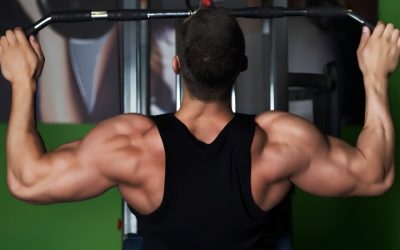
They are usable rather than excellent. Fixed carriages pull straight down only, the pulley ratio means the handle load differs from the plates you actually loaded, and the cable itself is a wear part. For a home setup where the alternative is no cable work at all, the bundle is still well worth having.
Can I drop a loaded barbell inside a cage?
Onto correctly set safety bars, yes, since that is exactly what they are there for. Onto the bare floor, no, not without a platform built for the purpose, and certainly not on a suspended timber floor in an upstairs room. Never set the safety bars above the depth you actually reach at the bottom of a lift.
See More:
- Best gym bench for home
- Best weight benches home gym
- Best at home full body workout equipment
- Best resistance bands workout
- Best resistance bands leggings
Final Thoughts
Choosing the best home gym power cage is a measuring exercise before it is a shopping one. Settle ceiling height, footprint and delivery access first, then compare steel gauge, hole spacing and safety systems. Budget frames handle ordinary home training well, and heavier steel buys rigidity rather than raw safety. Measure the room before ordering.

Write Your Review
No reviews yet. Be the first to share your experience!