
Key takeaways
What's inside
What is best thickness for yoga mat has no single answer, because every millimetre trades joint cushion against balance and portability. A 4 to 5 mm mat suits most practitioners, but the right pick depends on your style, your floor and your joints, so this guide maps 2 mm to 10 mm and names a mat for each tier.
As an Amazon Associate we earn from qualifying purchases at no extra cost to you. Product prices and availability are accurate as of the date shown and are subject to change.
By Chris Parker
🛒 Best Price Today on Amazon
Prime members get fast, free shipping on everything above, plus member-only deals. New members get a 30-day free trial — cancel anytime.
Start 30-Day Prime Free Trial →See Today’s Amazon DealsHow to Answer What Is Best Thickness for Yoga Mat
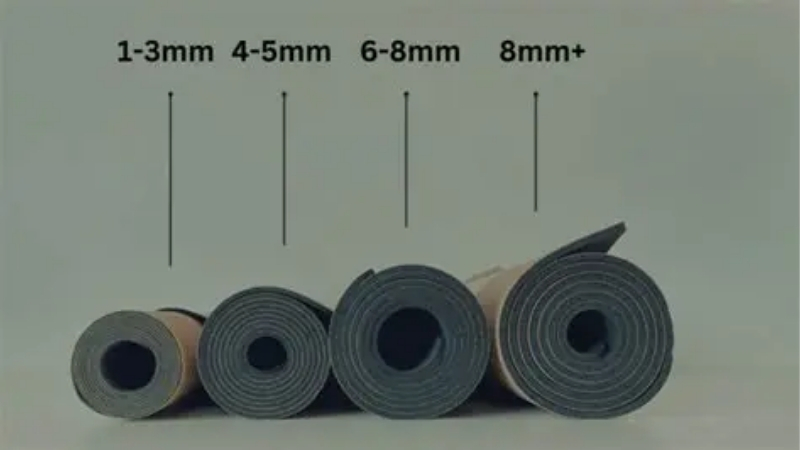
Thickness changes a practice in three ways: how much your joints are protected, how stable you feel in balances, and how heavy the mat is to carry. Answering what is best thickness for yoga mat means weighing those three against your own body and practice, not chasing the thickest mat.
The Three-Way Trade-Off
More foam under your knees means less direct contact with the floor, and balance is largely a feedback problem: the more cushion, the less you feel the ground. A thick 8 to 10 mm mat pampers the joints but makes standing balances wobblier, while a thin 2 to 3 mm mat anchors you but offers little padding.
Weight is the third factor. Thicker mats use more material and get heavier to roll and carry, with a premium 6 mm mat running over 6 to 7 lb (3 kg), so studio commuters feel every extra millimetre on the walk. Home practitioners who leave a mat down can ignore weight and prioritise cushion.
There is no universally best number, only the best trade-off for you. This is why what is best thickness for yoga mat depends on whether you value floor feel, joint protection or portability most on any given day, and why many committed yogis eventually own more than one.
Matching Thickness to Your Style
Dynamic, fast styles reward thinner, firmer mats. Vinyasa, Ashtanga and Power Yoga benefit from 3 to 4 mm, which keeps you anchored through quick transitions and standing balances. A 4 to 5 mm mat is the all-round studio default, cushioning knees while staying stable for most practices.
Slower and floor-based styles reward more cushion. Yin, restorative and meditation, plus Pilates floor work, benefit from 6 to 8 mm or more, where you spend time kneeling and lying down and balance feedback matters less. If you practise a real mix, 4 to 5 mm is the reliable middle ground.
Floor, Body and Joints
Your floor changes the maths. Hardwood and concrete amplify hardness, so a 5 to 6 mm mat works better there, while carpet already adds cushion, making a 4 mm mat feel like a thicker one. For outdoor practice on grass or uneven ground, go thicker at 6 mm or more for protection.
Your joints matter too. Sensitive or older knees, wrists and hips do better with 6 mm or more, and beginners still building strength often find 5 to 6 mm the most forgiving while they learn. Extra cushioning is comfort, not treatment, so if you have a joint condition or are pregnant, check your setup with a doctor or a qualified physical therapist first.
Density, Length and Footprint
Density matters as much as thickness. A dense natural-rubber mat at 4 mm protects joints and stays stable better than a cheap PVC foam mat at 8 mm, because dense material spreads pressure evenly. Press your thumb in firmly: a mat that springs back quickly signals good density, whichever thickness you choose.
Size is the footprint to check. Standard mats run 68 to 72 in (173 to 183 cm) long; taller practitioners want an 84 in (213 cm) mat so hands and feet stay on at full stretch. Measure your height against the mat length and confirm your floor space before ordering, since a thicker mat also rolls up bulkier to store.
Top Mats Answering What Is Best Thickness for Yoga Mat
These six span the tiers behind what is best thickness for yoga mat, from a 1.6 mm travel mat to a 12.7 mm cushion, so you can match the pick to your practice. Density and grip vary as much as thickness. All are widely available on Amazon.
| Mat | Thickness | Material | Best for |
|---|---|---|---|
| Jade Yoga Voyager | 1.6 mm | Natural rubber | Travel, floor feel |
| Liforme Original | 4.2 mm | Natural rubber / PU | Grip and alignment |
| Manduka X | 5 mm | PVC, closed-cell | All-round sweet spot |
| Gaiam Premium | 6 mm | PVC foam | Beginners on a budget |
| Manduka PRO | 6 mm | Dense PVC | Buy-it-once cushion |
| BalanceFrom GoYoga | 12.7 mm (1/2 in) | Foam | Max cushion, floor work |
Jade Yoga Voyager (1.6 mm)
At the thin extreme, this natural-rubber travel mat gives maximum floor contact and feedback, folding small enough to pack in a suitcase, ideal for Ashtanga and alignment-led practice or for anyone carrying a mat between cities who wants to feel every detail of the ground.
The minimal padding offers little joint protection, so kneeling and lying poses feel hard, and rubber has a natural smell when new. As the pick for travel and pure floor feel, it stands out. Best for balance-focused and travelling yogis.
Liforme Original (4.2 mm)
A grippy natural-rubber and PU mat at a stable 4.2 mm, with alignment markers printed on the surface and class-leading traction that improves when damp, making it a favourite for sweaty Vinyasa and precise, alignment-led practice.
It sits at the premium end on price and, as natural rubber, is heavier and not for those with a latex sensitivity. As the pick for grip and alignment at an all-round thickness, it excels. Best for hot and alignment-focused yoga.
Manduka X (5 mm)
The everyday sweet spot: a 5 mm closed-cell PVC mat with a crosshatch grip that needs no break-in, cushioning knees while staying stable for standing and balance poses, and light at about 3.4 lb (1.5 kg) to carry to class.
The closed-cell surface grips well dry but less so when very sweaty, and it is a mid-to-premium price. As the best all-round thickness for most practitioners, it leads. Best everyday sweet spot.
Gaiam Premium (6 mm)
An affordable 6 mm (roughly 1/4 in) PVC foam mat with noticeable padding for knees, wrists and hips, a sticky textured surface and fun designs, the entry-level favourite that proves you do not need to spend much to start well.
The foam is less dense and durable than premium mats, so it wears sooner with heavy use, and 6 mm makes balances slightly wobblier than a 4 to 5 mm mat. As the best budget beginner mat, it delivers. Best for beginners on a budget.
Manduka PRO (6 mm)
The buy-it-once pick: a dense 6 mm PVC mat with springy, joint-friendly cushioning, a closed-cell surface that seals out sweat and a build so durable it routinely lasts teachers a decade, backed by a lifetime guarantee.
It is heavy at over 6 lb (3 kg) and the surface needs a short break-in before it grips its best. As the pick for premium 6 mm cushion that lasts, it stands out. Best buy-it-once mat.
BalanceFrom GoYoga (12.7 mm / 1/2 in)
At the thick extreme, this 1/2 in (12.7 mm) foam mat maximises cushion for kneeling, lying and Pilates floor work, protecting joints where you spend time on the ground and suiting restorative practice and sensitive knees.
That thickness makes standing balances noticeably wobblier and the foam dents under point pressure, so it is a floor-work and restorative tool rather than a balance mat. As the pick for maximum cushion where you spend most of the session on the floor, it works. Best for restorative and floor-based practice.
Frequently Asked Questions
Common questions people ask when working out what is best thickness for yoga mat.
What thickness is best for beginners?
A 5 to 6 mm mat is the most forgiving while you learn, cushioning knees and wrists so you can focus on the poses. As your balance and strength improve, you may prefer a thinner 4 mm mat for more stability in standing work.
Is a thicker yoga mat always better?
No. Thicker mats cushion joints but blunt balance feedback and weigh more, so they are a trade-off, not an upgrade. A dense 4 mm mat can protect joints better than a cheap 8 mm foam one, which is why density matters as much as thickness.
What thickness for bad knees or joints?
Choose 6 mm or more for extra cushion where you kneel and lie down, or add a folded blanket under the knees on a thinner mat. Cushioning is comfort, not treatment, so check with a doctor or physical therapist if you have a joint condition.
What thickness is best for travel?
A thin 2 to 3 mm mat is easiest to pack and gives the best floor feel, at the cost of joint padding. Mats like the 1.6 mm travel styles fold small for a suitcase; pair one with a towel if you need a little extra cushion.
See More:
- Best flooring for home gym over concrete
- Best collapsible exercise bike
- Best fold away exercise bike
- Best exercise bike folding
- Best home upright exercise bike
Final Thoughts
The honest answer to what is best thickness for yoga mat is that it depends: 4 to 5 mm for most, thinner for travel and balance, thicker for kneeling, restorative and sensitive joints, with density mattering as much as the number. Match the thickness to your style, floor and body, check the length against your height, and what is best thickness for yoga mat becomes a choice you make with confidence.
As an Amazon Associate we earn from qualifying purchases at no extra cost to you. Product prices and availability are accurate as of the date shown and are subject to change.



Write Your Review
No reviews yet. Be the first to share your experience!